经济回暖

Search documents
个人所得税连续两个月高增,背后可能有四个原因
Xin Lang Cai Jing· 2025-06-23 09:39
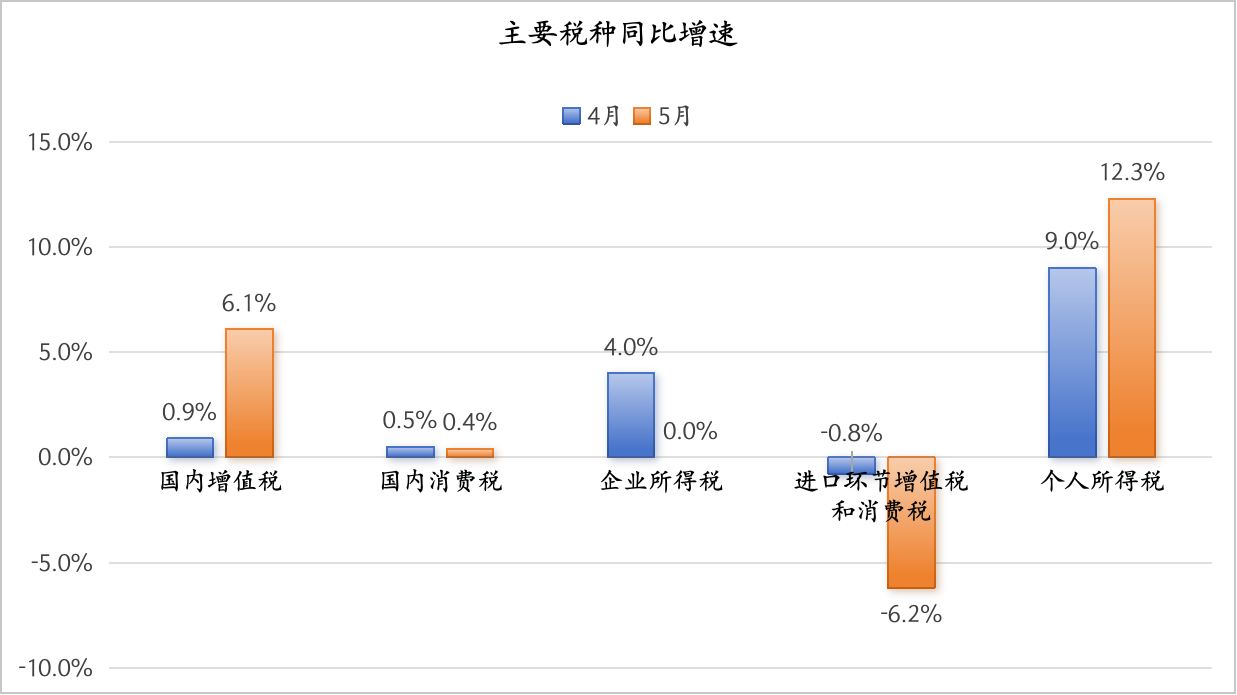
Group 1 - The core viewpoint of the articles highlights a significant increase in personal income tax (PIT) revenue, with a year-on-year growth of 8.2% from January to May, surpassing the overall tax revenue growth rate of -1.6% [1] - In May, the PIT growth accelerated to 12.3% compared to April, indicating a strong performance among major tax categories [1] - Analysts attribute the high growth in PIT to a combination of economic recovery, enhanced tax administration, wage adjustments, and dividend income [1][3] Group 2 - The marginal recovery in residents' income is a primary driver of the PIT increase, with urban residents' disposable income growing by 4.9% year-on-year in Q1, a 0.3 percentage point increase from Q4 of the previous year [3] - The active second-hand housing market in several cities has also contributed to the rise in PIT revenue [3][4] - The implementation of the "Golden Tax" Phase IV system has strengthened tax collection efforts, utilizing big data and artificial intelligence to monitor tax compliance [7][8] Group 3 - Wage adjustments and dividend income are significant factors influencing the PIT growth, with wages and dividends accounting for nearly 80% of PIT revenue [8] - The potential for continued high PIT growth in the second half of the year is supported by the expectation of further wage adjustments and stable dividend policies [8] - Despite potential economic uncertainties and a cooling real estate market, the likelihood of PIT experiencing negative growth remains low [10]

制造业PMI强势反弹至49.5%!大型企业重返扩张区间,经济回暖信号来了
Sou Hu Cai Jing· 2025-06-02 23:58
Group 1 - The manufacturing Purchasing Managers' Index (PMI) for May recorded 49.5%, an increase of 0.5 percentage points from the previous month, indicating signs of improvement in manufacturing activity and positive changes in economic operations [1] - The production index reached 50.7%, up 0.9 percentage points from last month, indicating a recovery in production activities [1] - The new orders index was at 49.8%, rising 0.6 percentage points, suggesting a rebound in market demand [1] Group 2 - Large enterprises showed significant performance, with the PMI index rising to 50.7%, an increase of 1.5 percentage points, returning to the expansion zone [1] - The equipment manufacturing and consumer goods industries had PMIs of 51.2% and 50.2%, respectively, up 1.6 and 0.8 percentage points from the previous month [1] - High-tech manufacturing continued its positive development trend, with a PMI of 50.9%, remaining in the expansion zone for four consecutive months [1] Group 3 - Positive signals emerged in foreign trade, with the new export orders index and import index at 47.5% and 47.1%, respectively, increasing by 2.8 and 3.7 percentage points [1] - The export container freight index rose to 1117.61 points, up 0.9%, indicating a sustained positive market trend [1] - Port cargo throughput remained high, with a total of 27134.8 million tons, a month-on-month increase of 2.8% [1] Group 4 - The production and business activity expectation index was stable at 52.5%, up 0.4 percentage points, reflecting overall confidence among manufacturing enterprises [2] - Continuous implementation of growth-stabilizing policies, including interest rate cuts, has supported the rebound in manufacturing PMI [2] - Multiple leading indicators suggest that the economic operation in the second quarter is likely to maintain a stable trend, with improvements in manufacturing sentiment and export data providing strong support for economic stability [2]
经济回暖前,钱不好挣,这6样东西别再买了,纯属浪费钱
Sou Hu Cai Jing· 2025-05-24 03:23
Core Viewpoint - The article discusses the challenges faced by businesses and individuals in the current economic climate, emphasizing the need for cost-cutting measures due to declining profits and increased difficulty in generating income [1]. Group 1: Economic Challenges - The impact of the COVID-19 pandemic has led to a sluggish real economy, resulting in layoffs and salary cuts for many companies [1]. - Business owners express that it has become increasingly difficult to secure orders, leading to thinner profit margins [1]. Group 2: Cost-Cutting Recommendations - The article suggests six items that should not be purchased to save money until the economy improves: - **Storage Boxes**: Excessive storage boxes are unnecessary; it is better to declutter and keep only essential items [3]. - **Cosmetics**: Hoarding cosmetics is wasteful; it is recommended to buy only what is needed and use it before purchasing more [4][6]. - **Clothing**: Many young people buy excessive new clothes; it is advised to keep a limited number of versatile outfits instead [8]. - **Personal Care Products**: Expensive shampoos and body washes are not necessary; affordable alternatives can provide similar quality [8]. - **Books**: Buying numerous books is impractical; borrowing from libraries or purchasing e-books is a more economical option [9]. - **Disposable Items**: Using reusable items instead of disposables can save money and reduce waste [11].