
美国国债

Search documents
高盛CEO警告:若美债增速失控,“清算时刻”终将到来!
Jin Shi Shu Ju· 2025-11-12 09:05
Group 1 - Goldman Sachs CEO David Solomon warns that if the current fiscal path continues without significant economic acceleration, the U.S. will ultimately "pay the price" for its soaring national debt, which has reached $38 trillion [1] - Solomon highlights that the debt has increased more than threefold from approximately $10 trillion in 2008, with aggressive fiscal stimulus embedded in the operating model of democratic economies [1] - The Peter G. Peterson Foundation indicates that the debt growth rate is set to accelerate further, with projections showing an increase from $37 trillion to $38 trillion by 2025, marking the fastest growth rate outside of the pandemic [1] Group 2 - Solomon emphasizes that the solution to the massive debt issue lies not in tax increases but in enhancing growth, noting a significant difference between a 3% growth trajectory versus the current 2% trend [2] - He expresses cautious optimism regarding growth potential, citing three key factors: corporate technology applications, a surge in infrastructure investments (with major companies expected to invest $350 billion this year), and a regulatory shift towards a systematic review of necessary rules [2] - Solomon acknowledges that while there are risks associated with AI investments in 2025, the acceleration of technology could lead to a leap in productivity [2] Group 3 - Despite long-term debt concerns, Solomon maintains a positive outlook on the short-term economic performance, stating that the current situation is "good" and the likelihood of a recession in the near term is low [3] - He notes that policy uncertainty is a commonality across administrations, and businesses must adapt, while the independence of the Federal Reserve and financial stability mechanisms play a crucial role globally [3] - Solomon stresses the importance of continuously attracting creditors to finance the debt, warning that if the debt continues to swell, "the ultimate solution to the fiscal dilemma will be the American people themselves" [3]
特朗普承诺2000美元退税难落地,国会死磕资金黑洞,民众期盼成空
Sou Hu Cai Jing· 2025-11-12 08:39
Core Viewpoint - Trump's promise of "at least $2000 tax refund" has stirred significant public interest, appealing to the financial concerns of American households facing rising costs [1][3] Group 1: Financial Implications - The revenue from tariffs has reportedly exceeded $220 billion, but distributing $2000 to every American would require over $320 billion, indicating a shortfall [3] - The U.S. national debt is increasing, with annual interest payments alone reaching $1.4 trillion, making it unlikely that funds will be available for widespread payouts [3][10] Group 2: Legislative Challenges - Any distribution of tariff refunds would require Congressional approval, which has historically been difficult to achieve for large-scale cash distribution proposals [7][8] - Recent Senate votes have rejected related authorizations, highlighting the low probability of such a plan being implemented [8] Group 3: Economic Reality - The anticipated cash refunds may not materialize as expected, with potential outcomes being minor tax reductions rather than substantial cash payments [5] - In the context of rising inflation and increased living costs, any small tax refunds may not significantly alleviate financial burdens for families [5][13] Group 4: Political Strategy - The $2000 tax refund appears to be a calculated electoral promise aimed at garnering support rather than a feasible financial plan [12] - The focus should shift from potential refunds to actual reductions in living costs for American families [13]


高盛CEO警告:美国38万亿美元国债或迎“清算时刻”,支付利息开支已超1.2万亿美元,规模超过国防支出!多个机构警告,可能进一步推升通胀压力削弱居民购买力
Sou Hu Cai Jing· 2025-10-31 08:30
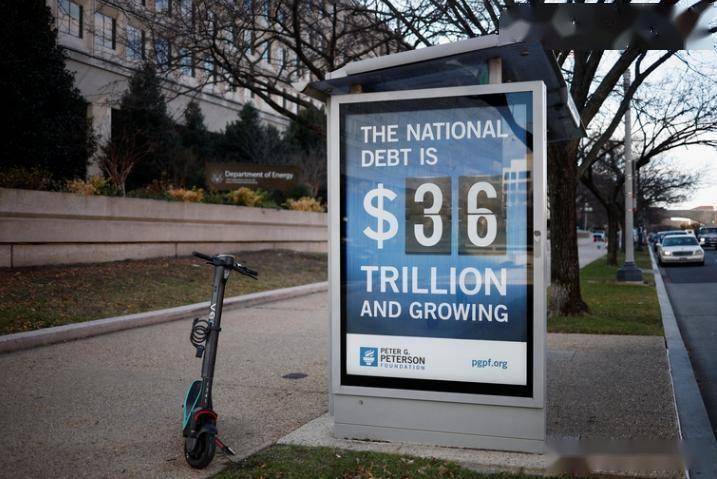
Group 1 - The CEO of Goldman Sachs, David Solomon, expressed concerns about the rapid increase in U.S. national debt, which has surpassed $38 trillion, and warned of potential "clearing" consequences if economic growth does not improve [2] - Since the 2008 financial crisis, the national debt has increased by over $7 trillion, with the pandemic accelerating government borrowing [2] - The current debt growth rate is nearly $70,000 per second, rising from $34 trillion in January 2024 to the current level, although Solomon maintains that the overall condition of the U.S. economy is good and the likelihood of recession is low [2] Group 2 - The cost of servicing the debt has rapidly eroded fiscal space, with interest payments exceeding $1.2 trillion, accounting for approximately 17% of federal spending, surpassing defense expenditures [2] - Budget oversight organizations have warned that this trend may further increase inflationary pressures and weaken consumer purchasing power [2] - Despite concerns about the potential weakening of the U.S. dollar's status as a reserve currency, Solomon disagrees, noting that global capital continues to flow into U.S. markets, indicating the attractiveness of dollar-denominated assets [2] Group 3 - The Trump administration claims that the fiscal deficit has decreased by about $350 billion this year compared to last year, attributing this to spending controls and improved revenues, although overall debt continues to grow [3] - Solomon emphasized that the ability to avoid future fiscal pressures depends on the overall economy's capacity for stronger expansion; otherwise, the debt burden will accumulate to a significant level [3]


上周外国央行持有美国国债增加363.4亿美元
Mei Ri Jing Ji Xin Wen· 2025-10-30 22:03
Group 1 - Foreign central banks increased their holdings of U.S. Treasury securities by $36.34 billion last week, compared to an increase of $4.754 billion in the previous period [1]
美国国债突破38万亿美元,较2000年增长近6倍,相当于GDP的125%!很大程度上是由美联储在2008年金融危机和新冠疫情期间印发数万亿美元所致
Sou Hu Cai Jing· 2025-10-28 07:31
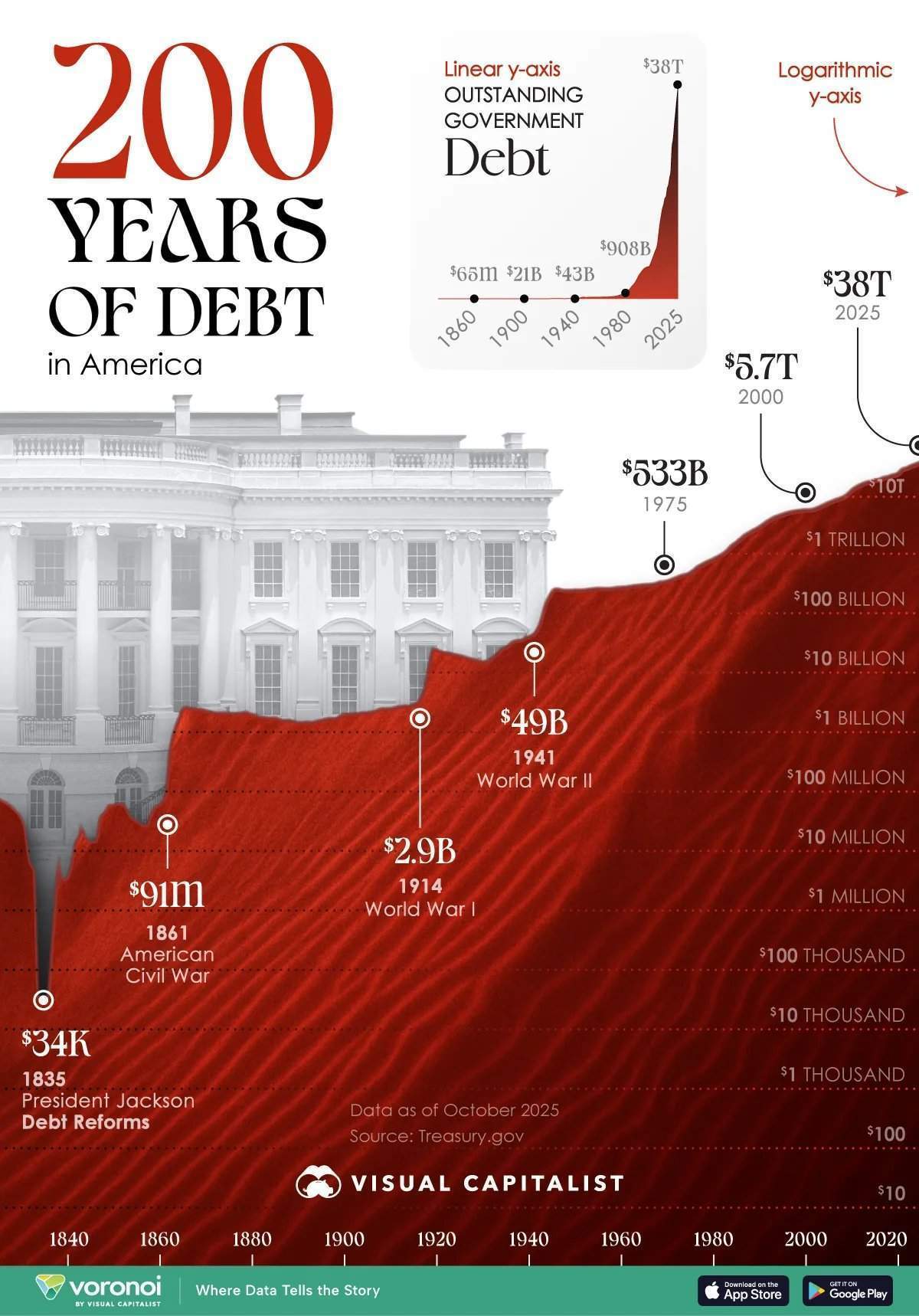
Core Insights - The total U.S. national debt has surpassed $38 trillion as of October 22, marking an increase of nearly six times since 2000, which is equivalent to 125% of GDP. This surge is largely attributed to the trillions of dollars printed by the Federal Reserve during the 2008 financial crisis and the COVID-19 pandemic [1]. Group 1 - The U.S. national debt reached over $38 trillion, a significant milestone [1] - The national debt has increased nearly sixfold since the year 2000 [1] - The current debt level represents 125% of the U.S. GDP [1] Group 2 - The national debt was $2.57 trillion in 1950 and grew to $5.33 trillion by 1975 [3] - Economic growth in the mid-20th century reduced the debt-to-GDP ratio from 106% in 1946 to 23% in 1974 [3]
美国国债,庞氏骗局
Sou Hu Cai Jing· 2025-10-26 00:21
Core Insights - The U.S. national debt has surpassed $38 trillion as of October 21, marking a continuous trend of record-high debt levels [1][3] - The speed at which the U.S. government accumulates debt has significantly accelerated over time, with the latest increase of $1 trillion occurring in just two months [7][9] - The current debt level is approximately 130% of the GDP, which is significantly above the international debt warning threshold of 60% [26] Debt Accumulation Trends - Historical context shows that it took 147 years for the U.S. to accumulate its first $1 trillion in debt, while the most recent $1 trillion increase occurred in just two months [7][9] - The average time taken to increase the national debt by $1 trillion has decreased from 4.1 years in the 1980s to just two months in the current period [7][9] Debt Management Practices - The U.S. government is borrowing new debt not only to pay off maturing old debt but also to cover ongoing expenditures, leading to an increase in total debt [16][27] - The federal government’s revenue for the fiscal year 2024 is projected at $4.9 trillion, while the debt stands at $38 trillion, indicating a severe imbalance [26][27] Implications of Debt Levels - The current debt situation resembles a Ponzi scheme, where new debt is used to pay off old debt without any actual repayment of principal, raising concerns about sustainability [27] - The U.S. national debt is not just a federal issue but reflects broader economic vulnerabilities, suggesting potential risks for future financial stability [27][28]

美国国债突破38万亿了,我们来捋一下他用的年限。从0到1万亿美元,用时约192年,美国联邦债务规模在1981年首次突破1万亿美元
Sou Hu Cai Jing· 2025-10-24 15:54
Core Insights - The U.S. national debt has surged to $38 trillion, indicating a rapid and alarming increase in borrowing [1][5] - The timeline of debt accumulation shows a drastic acceleration, with the last $1 trillion added in just two months, suggesting a potential annual increase of $6 trillion [5][6] - The reliance on debt to finance government spending is becoming unsustainable, with interest payments projected to exceed $1 trillion in 2024 [6][8] Debt Accumulation Timeline - From $0 to $1 trillion took 192 years, while reaching $10 trillion took only 27 years [3] - The jump from $10 trillion to $20 trillion occurred in 9 years, and from $20 trillion to $30 trillion in just 5 years [3][5] - The most recent increase from $30 trillion to $38 trillion happened in only 3 years, with the last trillion added in a mere two months [5][6] Economic Implications - The U.S. government is expected to run annual deficits exceeding $1.5 trillion over the next decade, with no viable plans for spending cuts or tax increases [8] - The ongoing issuance of debt raises concerns about the sustainability of this financial strategy, likening it to living on credit [8][9] - Trust in U.S. debt is waning, as evidenced by significant reductions in holdings by countries like Japan and China, leading to a potential decrease in demand for U.S. Treasury bonds [11][12] Global Impact - The increase in U.S. debt is seen as a redistribution of global wealth, with the U.S. printing money and the world bearing the costs [11][13] - The strength of the dollar is inversely affecting other economies, and a potential collapse of this system could have severe repercussions for the U.S. itself [11][13]
美国国债:9月CPI低于预期,强化降息预期
Sou Hu Cai Jing· 2025-10-24 14:21
Core Insights - The U.S. Consumer Price Index (CPI) for September showed a slight increase that was below expectations, reinforcing market predictions for a Federal Reserve interest rate cut [1] - The delayed CPI report, impacted by the federal government shutdown, revealed a core CPI month-over-month increase of 0.2%, lower than the anticipated 0.3% [1] - The overall CPI year-over-year rose by 3.0%, still above the Federal Reserve's target [1] Market Reactions - U.S. Treasury yields rose, with the 2-year Treasury yield dropping by 5 basis points, indicating sensitivity to monetary policy changes [1] - The benchmark 10-year Treasury yield fell below 4% following the CPI data release [1]
美国国债首破38万亿美元
Sou Hu Cai Jing· 2025-10-23 23:12
Core Insights - The total U.S. national debt has surpassed $38 trillion for the first time, indicating a significant increase in the country's debt levels amid ongoing government shutdowns [1] Group 1: Economic Impact - The ongoing government shutdown is causing a disruption in economic activities and fiscal decisions, leading to an increase in national debt [1] - The shutdown has resulted in the interruption of salaries for hundreds of thousands of federal employees, further exacerbating economic challenges [1] Group 2: Historical Context - The U.S. Office of Management and Budget reported that the 2013 government shutdown resulted in losses amounting to $2 billion, highlighting the financial repercussions of such events [1]
国债突破38万亿美元! 美国债务状况因“停摆”雪上加霜
Zhong Guo Xin Wen Wang· 2025-10-23 04:46
Core Points - The total U.S. national debt has surpassed $38 trillion, marking a record high and highlighting the accelerated accumulation of debt on the U.S. balance sheet [1] - The ongoing government shutdown exacerbates the debt situation, leading to stagnation in economic activity and fiscal decision-making [1] - A significant portion of the electorate, 81%, views the national debt as a concerning issue, reflecting widespread public anxiety [1] Group 1 - The U.S. national debt has increased dramatically, surpassing $38 trillion, with a growth rate twice that of the past two decades [1] - The longest government shutdown in U.S. history, which lasted 35 days in 2018, resulted in an economic loss of $11 billion [1] - The Peterson Foundation projects that interest payments on the national debt will rise from $4 trillion over the past decade to $14 trillion over the next decade [1] Group 2 - Concerns about the rising national debt may undermine investor confidence in the U.S. economy, as noted by Morgan Stanley's global strategist [2] - Major credit rating agencies, including Moody's, S&P, and Fitch, have downgraded the U.S. credit rating due to increasing debt levels [2] - The Chair of the Federal Budget Accountability Committee warns that the current debt level is unsustainable and calls for fiscal discipline and welfare reform [2]