
责任投资

Search documents
深耕投资能力 做好“五篇大文章”
Zhong Guo Zheng Quan Bao· 2025-12-01 20:25
Core Viewpoint - The China Securities Regulatory Commission (CSRC) emphasizes the importance of investor-centric principles in the public fund industry, highlighting the need for financial institutions to focus on the best interests of investors while promoting key areas such as technology finance, green finance, inclusive finance, pension finance, and digital finance as part of the strategy for building a strong financial nation [1] Group 1: Investor-Centric Approach - The company has served over 70 million clients and achieved a total profit of 97.123 billion yuan for investors, with dividends amounting to 56.416 billion yuan as of June 30 [1] - The company actively responds to the public fund industry's fee reform by lowering management fees for multiple products and initiating trials for floating fee rate products, thereby aligning the interests of management and investors [1][2] Group 2: Technology Finance Development - The company has increased its investment in technology-related sectors, with a focus on new energy, new materials, semiconductors, biotechnology, and clean energy, resulting in a technology stock holding of 83.7 billion yuan, accounting for 48% of its total holdings as of June 30 [3] - The company has expanded its technology research team, increasing the number of technology-focused fund managers by 70% since the end of 2020, to enhance its investment capabilities in the technology sector [3][4] Group 3: Product Innovation - The company manages 40 technology-themed funds with a total scale of 94.372 billion yuan, including actively managed funds focused on new energy and technology innovation [4] - The company has launched various ETFs related to strategic emerging industries, extending its investment tools to include technology-themed bond ETFs [4] Group 4: Pension Finance Initiatives - The company has established a dedicated pension and asset allocation department, managing six pension target funds with a total scale of 1.731 billion yuan as of September 30 [7] - The company emphasizes pension education through community outreach and educational initiatives to enhance public understanding of personal pension planning [7] Group 5: Green Finance Commitment - The company manages six green finance-themed funds with a total scale of 11.022 billion yuan, focusing on ESG-related investments since 2008 [8] - The company has developed a localized ESG rating system covering all A-shares and Hong Kong stocks, integrating international standards with local characteristics [8] Group 6: Digital Transformation - The company has strengthened its information technology team and enhanced AI capabilities to improve digital governance and operational efficiency [9] - The company has implemented digital platforms for investment research and trading, improving lifecycle management of investment instructions [9]
中国、欧盟和巴西发起成立碳市场开放联盟
2 1 Shi Ji Jing Ji Bao Dao· 2025-11-19 07:11
Core Insights - China, along with the EU and Brazil, has established the "Open Coalition on Compliance Carbon Markets" during the COP30 to enhance international cooperation in carbon markets [1][2] - The coalition aims to create a framework for cross-national cooperation, coordinating carbon pricing mechanisms and emission trading systems to achieve a transparent and credible global compliance carbon market [1][2] Group 1: Carbon Market Developments - The coalition is a continuation of the outcomes from COP29, which laid the institutional foundation for its operation [2] - The coalition operates on a voluntary basis for countries/regions to join, promoting compliance carbon market practices and standard alignment [2] Group 2: China's Carbon Market Impact - The national carbon market has led to a 2.9% cumulative reduction in carbon emission intensity from power generation units from 2019 to 2024 [3] - The carbon market has reduced the growth rate of total carbon emissions in the power sector, resulting in a cumulative reduction of 357 million tons compared to predictions without a carbon market [3] - The implementation of the carbon market has lowered social reduction costs by approximately 40.5 billion yuan [3]
全球负责任投资大会召开 易方达基金与海外机构共商可持续经济解决方案
Zhong Zheng Wang· 2025-11-18 03:44
Core Viewpoint - The 2025 Global Responsible Investment Conference, hosted by the United Nations Principles for Responsible Investment (PRI) in São Paulo, Brazil, focuses on "Global Challenges, Resilience in Investment Strategies, and Investment Opportunities" [1] Group 1: Company Initiatives - E Fund Management is one of the early adopters of responsible investment in China, having joined PRI in 2017 and continuously integrating ESG research into its investment practices [1] - E Fund has been invited to the conference for the third consecutive year, engaging in dialogues with global participants to share China's responsible investment practices [1] Group 2: ESG Development in China - The ESG research director of E Fund, Cheng Jie, highlighted that although ESG in Asia started relatively late, significant progress has been made in regulatory frameworks, data availability, asset management capabilities, and corporate awareness [2] - The "dual carbon" goals are driving China's industrial structure and financial system towards a green and low-carbon transition, with asset management institutions shifting from ESG research to practical investment applications [2] Group 3: Collaborative Efforts - A sub-forum titled "Responsible Investment Practices in Emerging Markets: China and Brazil" was hosted by E Fund's chief ESG researcher, Wei Yixi, featuring discussions on innovative practices in ESG between China and Brazil [2] - E Fund and Itaú Asset Management jointly released the "China-Brazil Responsible Investment White Paper," which outlines the latest developments and case studies in sustainable information disclosure, classification standards, and product standards between the two countries [3]
紫顶股东服务创始合伙人唐淑薇:守护中小股东权益 搭建中外资本市场信任桥梁
Shang Hai Zheng Quan Bao· 2025-10-21 18:18
Core Viewpoint - The article emphasizes the importance of protecting minority shareholders' rights and building trust between domestic and foreign capital markets in China, highlighting the evolving landscape of corporate governance and shareholder services since the establishment of Ziding Shareholder Services in 2016 [1] Group 1: Trends in Corporate Governance - Three positive changes are driving governance upgrades in China's capital market: the regulatory system upgrade represented by the new "National Nine Articles" and the new Company Law, which significantly enhances legal protection for listed companies and shareholder rights; an increasing awareness among listed companies regarding sustainable information disclosure and investor relations management, particularly among state-owned enterprises, which are expected to achieve near-complete ESG report disclosure this year; and a rapid rise in the rights awareness of institutional investors, with more domestic investment institutions actively exercising voting rights and opposing harmful actions to long-term company value [2] Group 2: Shareholder Services Evolution - The concept of shareholder services is evolving, shifting from serving controlling or major shareholders to focusing on minority shareholders, with the core aim being to help them effectively exercise their rights within the legal framework, particularly their voting rights [2] Group 3: Neutrality and Professional Judgment - Ziding operates as a neutral third party, basing all voting recommendations on whether proposals genuinely align with minority shareholders' interests and contribute to long-term company value, emphasizing that their research reports serve facts and professional judgment rather than any specific shareholder group [3] Group 4: Bridging Information Gaps for Foreign Investors - Ziding has developed a digital platform to help investors track meeting agendas and proposal content, significantly improving the efficiency and accuracy of shareholder actions, while advancements in AI translation technology are lowering the barriers for foreign investors to understand Chinese disclosure materials [4][5] Group 5: Recommendations for Foreign Institutions - For foreign institutions planning to enter the Chinese market, three recommendations are provided: to understand the latest developments in Chinese laws and regulations, particularly the new Company Law that lowers the threshold for shareholder proposals; to utilize the increasingly comprehensive public information disclosure from listed companies; and to engage in active communication during investor engagement activities, especially with central state-owned enterprises [5]
过去十年年化投资回报率超8% 外部管理人精英荟萃 风险偏好与目标精心匹配 诺贝尔基金会“长钱术”揭秘
Zhong Guo Zheng Quan Bao· 2025-10-14 20:20
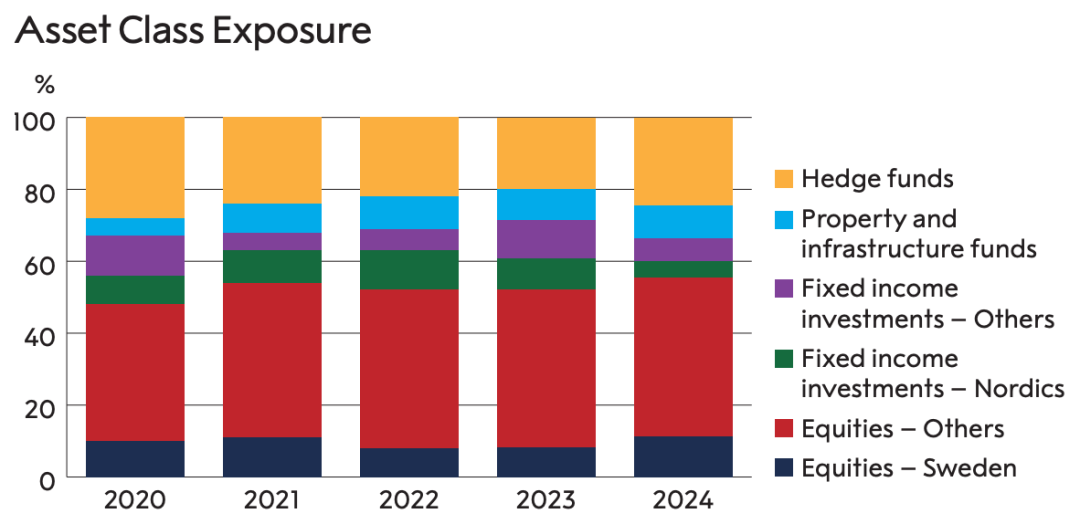
Core Insights - The Nobel Prize fund has grown from 31 million kronor to nearly 6.8 billion kronor by the end of 2024, achieving a growth of approximately 220 times since its inception [1][2] - The Nobel Foundation employs a cautious investment strategy, aiming for an annual return of at least 3% adjusted for inflation, while maintaining balanced financial risk management [2][8] Investment Performance - The total asset value of the Nobel Foundation reached 67.97 billion kronor by the end of 2024, an increase of 5.64 billion kronor from 62.33 billion kronor at the end of 2023 [2] - The investment return for 2024 was 11.6%, with a five-year annualized return of 9.2% and a ten-year annualized return of 8.3% [2][8] Asset Allocation - As of the end of 2024, the investment portfolio consisted of 66 billion kronor, with allocations including equity funds (56%), real estate and infrastructure funds (9%), fixed income and cash (12%), and alternative assets (24%) [2][5] - The Nobel Foundation's expenditures for 2024 totaled 135.8 million kronor, with 55 million kronor allocated for prize money [2][3] External Management - The Nobel Foundation utilizes a range of external managers for its investments, including prominent firms such as BlackRock, Sequoia Capital, and Millennium Management [5][6] - The investment strategy is divided into four main categories: equities and private equity, real estate and infrastructure, hedge funds, and fixed income, managed by various external institutions [5][6] Governance and Responsible Investment - The investment committee of the Nobel Foundation is responsible for asset allocation decisions and the selection of external managers, focusing on their investment philosophy, performance history, and risk management systems [8][9] - The foundation adheres to the Principles for Responsible Investment (PRI), integrating environmental, social, and governance (ESG) considerations into its investment processes [8][9] Future Outlook - The Nobel Foundation anticipates advancements in investment management systems, potentially incorporating AI to enhance analysis and decision-making efficiency [9] - The foundation remains confident in its long-term capital preservation capabilities, focusing on structural trends and maintaining a balanced risk profile [9]
诺贝尔基金会“长钱术”揭秘
Zhong Guo Zheng Quan Bao· 2025-10-14 20:17
Core Insights - The Nobel Prize fund has grown from 31 million kronor to nearly 6.8 billion kronor by the end of 2024, achieving a growth of nearly 220 times since its inception in 1901 [1][2] - The Nobel Foundation employs a careful investment strategy that includes external management, diversified asset allocation, and responsible investment principles to ensure the sustainability of the prize fund [1][6] Investment Performance - The Nobel Foundation's total asset value reached 67.97 billion kronor by the end of 2024, an increase of 5.64 billion kronor from 62.33 billion kronor at the end of 2023 [2] - The annualized investment return over the past five years was 9.2%, with a return of 11.6% in 2024 [2][5] - The foundation aims for an average annual return of at least 3% after inflation adjustments to cover its expenses [2] Asset Allocation - As of the end of 2024, the Nobel Foundation's investment portfolio consisted of 66 billion kronor in various assets, including equity funds (56%), real estate and infrastructure funds (9%), fixed income and cash (12%), and alternative assets (24%) [2][3] - The foundation's investments are managed by external institutions, including BlackRock, Swedish Commercial Bank, Sequoia Capital, and several top hedge funds [3][4][5] Governance and Management - The Nobel Foundation's investment committee is responsible for asset allocation decisions and selecting external managers, focusing on their investment philosophy, performance history, and risk management [6] - The foundation adheres to the United Nations-supported Principles for Responsible Investment (PRI), integrating environmental, social, and governance (ESG) considerations into its investment processes [6][7] Future Outlook - The foundation's CFO expressed confidence in the long-term sustainability of the fund, emphasizing a balanced approach to risk and investment goals [7] - The potential integration of advanced systems and AI in investment management is anticipated to enhance decision-making and efficiency in the future [7]
谁在帮诺贝尔奖赚钱?百年奖项背后的220倍理财密码
Zhong Guo Zheng Quan Bao· 2025-10-14 04:50
Core Insights - The Nobel Prize fund has grown from an initial 31 million kronor to nearly 6.8 billion kronor by the end of 2024, achieving a growth of nearly 220 times since its inception [2][3] - The Nobel Foundation employs a robust investment strategy that includes external management, diversified asset allocation, and responsible investment principles to ensure the sustainability of the prize fund [1][3] Investment Strategy - The Nobel Foundation's investment portfolio is highly diversified, with 56% in equity funds, 9% in real estate and infrastructure funds, 12% in fixed income assets, and 24% in alternative assets [3] - The annualized investment return over the past five years has been 9.2%, with a return of 11.6% for 2024 [3] Financial Performance - As of the end of 2024, the total asset value of the Nobel Foundation reached 67.97 billion kronor, an increase of 5.64 billion kronor from the previous year [3] - The total expenditure for the Nobel Prize and operations in 2024 was 135.8 million kronor, with prize payouts amounting to 55 million kronor [7] External Management - The Nobel Foundation collaborates with various external managers, including BlackRock, Sequoia Capital, and other top-tier investment firms, to manage its assets [9][12] - The selection of external managers is based on their investment philosophy, historical performance, risk management systems, and commitment to responsible investment practices [15] Responsible Investment Principles - The Nobel Foundation is a signatory of the UN-supported Principles for Responsible Investment (PRI) and engages in annual dialogues with external managers regarding ESG criteria [15] - The foundation avoids investments in controversial sectors, including weapons manufacturing and coal production, adhering to a negative screening list [15] Future Outlook - The Nobel Foundation aims to achieve an average annual return of at least 3% adjusted for inflation, focusing on long-term structural trends while balancing risk and return [16]

社保基金投资运营持续稳健 2024年收益率为8.1%
Zhong Guo Jing Ji Wang· 2025-10-10 00:31
Core Insights - The National Social Security Fund achieved a strong investment performance in 2024, with an investment income of 218.418 billion yuan and an investment return rate of 8.1% [1] - The total assets of the fund reached 3,322.462 billion yuan by the end of 2024, with domestic investments accounting for 86.82% and foreign investments for 13.18% [1] Investment Strategy - The fund adopted a "steady progress, promote stability through progress" strategy, maintaining a stable stock risk exposure and benefiting from the rebound in the A-share market [1] - There was an increased allocation to fixed-income assets, effectively capturing investment opportunities from the continuous decline in interest rates [1] - The fund actively increased equity investments and optimized overseas investment layouts to diversify risks and stabilize overall returns [1][2] Stock Investment - The fund remains optimistic about the long-term investment value of domestic stocks, leveraging its advantages as a long-term and patient capital [2] - It closely monitors capital market dynamics and regulatory policies to enhance its secondary asset allocation analysis framework [2] - The fund is advancing index investment initiatives and establishing index replication products to improve stock investment quality [2] Real Economy Investment - The fund is increasing investments in key sectors and major projects, supporting national strategies and regional coordinated development [2] - It emphasizes market-oriented and legal principles, utilizing long-term capital to support national strategies through various investment vehicles [2] Fixed Income Investment - The fund has strategically increased investments in bank deposits and domestic and foreign bonds, effectively utilizing fixed-income assets as a safety net [3] - It supports national strategies related to basic livelihoods, sustainable investments, and rural revitalization through targeted bond investments [3] Market Impact - The fund's stability, professionalism, and sustainability contribute to the smooth operation of the capital market and enhance market pricing efficiency [3] - It plays a crucial role in stabilizing market expectations and guiding resource allocation towards national strategic areas, especially in the context of an aging population [3]
社保基金投资运营持续稳健
Jing Ji Ri Bao· 2025-10-09 22:36
Core Insights - The National Social Security Fund achieved a strong investment performance in 2024, with an investment income of 218.418 billion yuan and an investment return rate of 8.1% [1] - The total assets of the fund reached 3,322.462 billion yuan by the end of 2024, with domestic investments accounting for 86.82% and foreign investments 13.18% [1] Investment Strategy - The fund adopted a "steady progress, promote stability through progress" strategy, maintaining a stable stock risk exposure and benefiting from the rebound in the A-share market [1][2] - The fund emphasized long-term investment and value investment principles, enhancing its professional management capabilities to support the national social security system [2] Stock Investment - The fund remains optimistic about the long-term investment value of domestic stocks, leveraging its advantages as a long-term and patient capital [2] - It is actively improving its overseas stock research system and optimizing existing structures while adhering to risk prevention measures for foreign assets [2][3] Fixed Income Investment - The fund increased investments in bank deposits and domestic and foreign bonds, effectively utilizing fixed income assets as a safety net [3] - It supports national strategies related to basic livelihood, sustainable investment, and rural revitalization through targeted bond investments [3] Market Impact - The fund's strategic stability and proactive market engagement have contributed positively to market expectations and confidence amid external pressures and market volatility [3] - The fund plays a crucial role in the healthy development of the capital market by guiding resource allocation towards national strategic areas and stabilizing market expectations through long-term investments [3]
全国社保基金高收益率背后的“投资大智慧”
Zheng Quan Ri Bao· 2025-10-08 16:12
Core Insights - The National Social Security Fund (NSSF) achieved an investment income of 218.418 billion yuan with an investment return rate of 8.10% for the year, and a cumulative investment income of 1,900.998 billion yuan since its establishment [1][2][3] - The NSSF's investment strategy emphasizes long-term, value, and responsible investing, aligning with China's economic growth and national strategies [1][2] Investment Performance - The NSSF's average annual investment return since inception stands at 7.39%, reflecting a strong performance in the context of China's resilient economy [1][3] - The fund's asset allocation is heavily focused on domestic investments, with 86.82% of assets allocated to domestic markets by the end of 2024, creating a positive feedback loop between economic growth and fund appreciation [1][2] Policy Environment - Recent policy improvements, including the "National Nine Articles" and guidelines for promoting long-term capital market participation, have facilitated a more predictable and transparent market environment for the NSSF [2] - These policies support the NSSF's focus on long-term investments and value discovery, enhancing its operational framework [2] Strategic Alignment - The NSSF's investment decisions are closely aligned with national strategies, focusing on sectors such as renewable energy and rural revitalization, which are expected to yield stable long-term returns [2] - The fund's approach to investment not only captures policy-driven opportunities but also aims to achieve a balance between economic benefits and social value [2] Investment Operations - The NSSF employs a professional investment operation strategy, leveraging its long-term capital advantages to navigate market volatility effectively [3] - The fund's investment philosophy resonates with other long-term capital market participants, reinforcing stability in the capital market and supporting sustainable economic growth [3] Conclusion - The NSSF's investment success underscores the importance of synchronizing with China's economic trajectory and maintaining a commitment to value investing for sustained returns [3]
