
碳排放权交易市场

Search documents
生态环境部发布《关于做好2026年全国碳排放权交易市场有关工作的通知》
Xin Lang Cai Jing· 2026-02-13 04:07
Core Viewpoint - The Ministry of Ecology and Environment of China has issued a notification regarding the management of the national carbon emission trading market for 2026, focusing on key emission units in the power generation, steel, cement, and aluminum smelting industries, with specific guidelines for data management, quota allocation, and compliance [1][19]. Group 1: Key Emission Unit Management - Provincial ecological environment departments are required to establish a list of key emission units for 2027, including those with annual direct emissions of 26,000 tons of CO2 equivalent [20][21]. - The list of key emission units must be published by October 31, 2026, through the national carbon market management platform and provincial websites [21][2]. Group 2: Data Quality Management - Provincial departments must implement data quality management for greenhouse gas emissions in the specified industries, following the technical specifications set by the Ministry [3][21]. - By December 31, 2026, a data quality control plan must be developed for the key emission units [4][21]. - Monthly carbon emission data must be stored electronically within 40 days after each month ends [5][22]. Group 3: Reporting and Verification - Key emission units must submit their 2025 greenhouse gas emission reports by March 31, 2026 [6][23]. - Technical audits of these reports must be completed by June 30, 2026, for the power generation sector, and by July 31, 2026, for the steel, cement, and aluminum sectors [7][23]. Group 4: Quota Allocation and Compliance - Quotas for carbon emissions will be pre-allocated to key emission units in the steel, cement, and aluminum sectors by April 10, 2026, and to the power generation sector by June 30, 2026 [8][25]. - By September 20, 2026, the final allocation of quotas based on verification results must be completed [9][26]. - Compliance with the quota must be fulfilled by December 31, 2026 [10][27]. Group 5: Management of Other Key Industries - Other industries such as petrochemicals, chemicals, construction materials, non-ferrous metals, paper, and civil aviation with emissions of 26,000 tons of CO2 equivalent must also report their emissions [11][28]. - Reports from these industries must be submitted by March 31, 2026, and verified by December 31, 2026 [12][28]. Group 6: Strengthening Implementation - Local ecological environment departments are urged to enhance their management capabilities and training related to carbon emission data quality and quota compliance [30][31]. - Strict enforcement of regulations regarding carbon market data quality and compliance is emphasized to prevent fraudulent activities [31].
五矿期货黑色建材日报-20260213
Wu Kuang Qi Huo· 2026-02-13 02:09
1. Report Industry Investment Rating No relevant information provided. 2. Core Viewpoints of the Report - The black - building materials market is currently in a bottom - game stage with a mix of long and short factors. In the short term, the black - building materials are likely to continue the weak - range oscillation pattern, and the trend opportunity is not clear. Attention should be paid to inventory inflection points around the Spring Festival, the recovery strength of plate demand, and marginal changes in "dual - carbon" policies [2]. - For the whole year of 2026, it is still believed that the long - position trend of commodities will continue, but in the short term, the sharp adjustment of precious metals after a sharp rise has dragged down the sentiment of non - ferrous metals and commodity long - positions, which may still suppress the overall market atmosphere [8][15]. 3. Summary by Related Catalogs Steel Products Market Quotes - The closing price of the rebar main contract was 3050 yuan/ton, down 4 yuan/ton (- 0.13%) from the previous trading day. The registered warehouse receipts on that day were 16,903 tons, with a net decrease of 0 tons compared to the previous day. The position of the main contract was 2.0295 million lots, a decrease of 34,123 lots. In the spot market, the aggregated price of rebar in Tianjin was 3150 yuan/ton, and that in Shanghai was 3220 yuan/ton, both unchanged from the previous day [1]. - The closing price of the hot - rolled coil main contract was 3218 yuan/ton, down 10 yuan/ton (- 0.30%) from the previous trading day. The registered warehouse receipts on that day were 297,854 tons, an increase of 21,435 tons. The position of the main contract was 1.5337 million lots, a decrease of 18,682 lots. In the spot market, the aggregated price of hot - rolled coils in Lecong was 3250 yuan/ton, and that in Shanghai was 3240 yuan/ton, both unchanged from the previous day [1]. Strategy Views - The short - term impact of the "dual - carbon" policy on the steel supply - demand pattern is relatively limited, but it helps to raise the cost center and restrict the downward space of steel prices. Near the Spring Festival, the supply and demand of rebar have a seasonal decline, and the inventory is in the accumulation stage, but the overall inventory - accumulation rhythm is still controllable. The demand for hot - rolled coils has declined, the production decline is relatively slow, and the inventory has also increased slightly. The supply - demand structure is generally neutral [2]. Iron Ore Market Quotes - The main contract of iron ore (I2605) closed at 762.00 yuan/ton, with a change of - 0.07% (- 0.50). The position changed by - 9039 lots to 497,900 lots. The weighted position of iron ore was 854,500 lots. The spot price of PB fines at Qingdao Port was 767 yuan/wet ton, with a basis of 52.20 yuan/ton and a basis rate of 6.41% [3]. Strategy Views - In terms of supply, the overseas iron ore shipments in the latest period have declined significantly. Affected by cyclones, the shipments from Australia have dropped sharply, and the shipments of three major Australian mines have decreased significantly. The shipments from Brazil have decreased slightly, and the shipments from non - mainstream countries have remained stable. The near - end arrivals have decreased month - on - month. In terms of demand, the daily average pig iron output according to the Steel Union's statistics has increased to 2.3049 million tons. The resumption of blast furnaces is mainly due to the planned resumption after the previous blast furnace overhauls, and at the same time, some blast furnaces in certain regions have started annual overhauls. The profitability rate of steel mills has declined slightly. In terms of inventory, the port inventory is at the highest level in the same period of the past five years and has decreased month - on - month. Near the Spring Festival, the inventory has accelerated the transfer to the factories, driving up the port clearance volume. The steel mills' procurement rhythm has accelerated, and the imported ore inventory has increased significantly. Overall, overseas shipments are gradually entering the off - season and are declining month - on - month, while pig iron production is in a recovery trend, and there is no obvious marginal contradiction in supply and demand. Before the Spring Festival, there is a certain risk - aversion sentiment among funds, and it is expected that the iron ore price will oscillate weakly. Attention should be paid to overseas ore shipments, the start - up situation of domestic terminal demand after the Spring Festival, and the pig iron production rhythm [4]. Manganese Silicon and Ferrosilicon Market Quotes - On February 12, the main contract of manganese silicon (SM605) closed down 0.41% at 5800 yuan/ton. In the spot market, the price of 6517 manganese silicon in Tianjin was 5720 yuan/ton, equivalent to 5910 yuan/ton on the futures market, unchanged from the previous day, with a premium of 110 yuan/ton over the futures price. The main contract of ferrosilicon (SF605) closed down 1.36% at 5500 yuan/ton. In the spot market, the price of 72 ferrosilicon in Tianjin was 5700 yuan/ton, unchanged from the previous day, with a premium of 200 yuan/ton over the futures price [7]. Strategy Views - In the medium - to - long - term, it is still believed that the long - position trend of commodities will continue. In the short term, the sharp adjustment of precious metals has dragged down the market sentiment. From the perspective of the fundamentals of the varieties themselves, the supply - demand pattern of manganese silicon is still not ideal, with a loose structure, high inventory, and weak downstream demand in the building materials industry. However, these factors have mostly been reflected in the price. The supply - demand structure of ferrosilicon remains basically balanced, and there is marginal improvement with the overhaul and production conversion of some factories. The future market trends of manganese silicon and ferrosilicon are mainly affected by the direction of the black - building materials sector and the overall market sentiment, as well as the cost - push from manganese ore in the manganese - silicon segment and the supply contraction (or contraction expectation) in the ferrosilicon segment due to losses or "dual - carbon" policies. Particular attention should be paid to possible sudden situations in the manganese - ore segment and the progress of "dual - carbon" policies [9]. Coking Coal and Coke Market Quotes - On February 12, the main contract of coking coal (JM2605) closed down 0.31% at 1120.0 yuan/ton. In the spot market, the price of low - sulfur main coking coal in Shanxi was 1547.1 yuan/ton, a decrease of 3.5 yuan/ton from the previous day. The spot price converted to the delivery - warehouse price was 1356.5 yuan/ton, with a premium of 236.5 yuan/ton over the futures price. The price of medium - sulfur main coking coal in Shanxi was 1270 yuan/ton, unchanged from the previous day. The spot price converted to the delivery - warehouse price was 1253.0 yuan/ton, with a premium of 133 yuan/ton over the futures price. The price of Mongolian No. 5 clean coal in Wubulangjinquan Industrial Park was 1227 yuan/ton, unchanged from the previous day. The spot price converted to the delivery - warehouse price was 1202 yuan/ton, with a premium of 82 yuan/ton over the futures price. The main contract of coke (J2605) closed down 0.18% at 1664.0 yuan/ton. In the spot market, the price of quasi - first - grade wet - quenched coke at Rizhao Port was 1470 yuan/ton, unchanged from the previous day. The spot price converted to the delivery - warehouse price was 1725.5 yuan/ton, with a premium of 61.5 yuan/ton over the futures price. The price of quasi - first - grade dry - quenched coke in Lvliang was 1550 yuan/ton, unchanged from the previous day. The spot price converted to the delivery - warehouse price was 1766 yuan/ton, with a premium of 102 yuan/ton over the futures price [11]. Strategy Views - In the short term, although there are many overseas coal - related disturbances with a bullish atmosphere, they have no direct and substantial impact on the domestic coking - coal fundamentals. The sharp rise and fall of precious metals have magnified the overall volatility of the coking - coal futures price and put pressure on the market sentiment. In terms of the supply - demand structure, coking coal and coke are gradually becoming more relaxed. Although there is still some restocking by downstream enterprises, as the Spring Festival is approaching, the restocking is coming to an end, and the restocking willingness of downstream steel mills is significantly low. Therefore, the restocking is not expected to form a strong price - driving force. In addition, although the coking - coal futures price often shows abnormal fluctuations, the short - term upward driving force is not strong due to insufficient fundamental support and an unfavorable market - sentiment environment. Considering the current time node, there is a risk of a phased price correction after the Spring Festival. However, coking coal is expected to have a relatively smooth upward trend in 2026, especially from June to October [14][15][16]. Industrial Silicon and Polysilicon Market Quotes - Industrial silicon: The closing price of the main contract of industrial silicon (SI2605) was 8335 yuan/ton, with a change of - 0.42% (- 35). The weighted contract position changed by - 7100 lots to 417,094 lots. In the spot market, the price of non - oxygen - blown 553 industrial silicon in East China was 9200 yuan/ton, unchanged from the previous day, with a basis of 865 yuan/ton for the main contract. The price of 421 industrial silicon was 9650 yuan/ton, unchanged from the previous day, with a basis of 515 yuan/ton for the main contract after conversion [18]. - Polysilicon: The closing price of the main contract of polysilicon (PS2605) was 49015 yuan/ton, with a change of - 0.34% (- 165). The weighted contract position changed by - 808 lots to 64,320 lots. In the spot market, the average price of N - type granular silicon according to the SMM standard was 50 yuan/kg, unchanged from the previous day. The average price of N - type dense material was 52.25 yuan/kg, a decrease of 0.5 yuan/kg from the previous day. The average price of N - type re - feeding material was 53.25 yuan/kg, a decrease of 0.4 yuan/kg from the previous day. The basis of the main contract was 4235 yuan/ton [21]. Strategy Views - Industrial silicon: In February, the supply and demand of industrial silicon are both weak. The supply may contract significantly, and the demand is also weak. Although the supply - demand balance sheet is expected to improve to some extent, the upward driving force is insufficient in the weak commodity - market atmosphere. It is expected that the price of industrial silicon will oscillate weakly before the Spring Festival, and attention should be paid to the price adjustment caused by market - sentiment fluctuations [20]. - Polysilicon: In February, the supply of polysilicon continues to decrease, and the silicon - wafer production is expected to remain stable. The high inventory in the silicon - material segment is expected to be slightly reduced. The spot - price game continues, and the market is in a wait - and - see state before the Spring Festival. The polysilicon futures is expected to oscillate, and attention should be paid to the post - festival demand feedback and spot prices [22]. Glass and Soda Ash Market Quotes - Glass: On Thursday at 15:00, the main contract of glass closed at 1065 yuan/ton, down 0.56% (- 6). The price of large - size glass in North China was 1030 yuan, unchanged from the previous day, and that in Central China was 1110 yuan, also unchanged. On February 12, the weekly inventory of float - glass sample enterprises was 55.352 million cases, an increase of 2.288 million cases (+ 4.31%) from the previous week. In terms of positions, the top 20 long - position holders increased their long positions by 16,548 lots, and the top 20 short - position holders decreased their short positions by 7627 lots [24]. - Soda ash: On Thursday at 15:00, the main contract of soda ash closed at 1162 yuan/ton, down 1.36% (- 16). The price of heavy soda ash in Shahe was 1128 yuan, unchanged from the previous day. On February 12, the weekly inventory of soda - ash sample enterprises was 1.588 million tons, an increase of 0.0096 million tons (+ 0.961%). Among them, the inventory of heavy soda ash was 756,400 tons, an increase of 10,400 tons, and the inventory of light soda ash was 831,600 tons, a decrease of 800 tons. In terms of positions, the top 20 long - position holders decreased their long positions by 16,540 lots, and the top 20 short - position holders decreased their short positions by 8571 lots [26]. Strategy Views - Glass: Downstream processing enterprises are in the final stage of production, mainly making rigid - demand purchases, and their inventory is generally at a low level. The daily melting volume of glass is at a historical low, and there are still plans for cold - repair and transformation of production lines. However, due to the lack of substantial demand recovery or policy support, the market has insufficient upward momentum. It is expected that the market will continue to oscillate in the short term, with the main - contract reference range of 1030 - 1120 yuan/ton [25]. - Soda ash: The demand for heavy soda ash remains weak, and the daily melting volumes of float glass and photovoltaic glass are at a low level. In the relatively loose supply - demand structure, the market shows a weak and stable oscillation trend. Although the glass demand is expected to remain stable during the Spring Festival, there is no clear upward driving force, and it is expected that the soda - ash price will continue to run weakly. The main - contract reference range is 1140 - 1230 yuan/ton [27].
黑色建材日报-20260212
Wu Kuang Qi Huo· 2026-02-12 01:09
Report Industry Investment Rating There is no information provided regarding the report industry investment rating in the given content. Core Viewpoints - The black series is currently in a bottom - game stage with a mix of long and short factors. In the short term, it is likely to continue the weak and volatile pattern in the range, and the trend opportunity is not clear. Attention should be paid to inventory inflection points around the Spring Festival, the recovery intensity of plate demand, and marginal changes in "dual - carbon" related policies [3]. - For iron ore, it is expected to fluctuate weakly before the Spring Festival. Future focus should be on overseas ore shipping and domestic hot - metal production rhythm [5]. - For manganese silicon and ferrosilicon, in the long - term, it is believed that the commodity bulls will continue, but in the short term, the sharp adjustment of precious metals may suppress the market atmosphere. Future market drivers may come from the overall black market sentiment, cost - push from manganese ore for manganese silicon, and supply contraction (or contraction expectations) for ferrosilicon due to losses or "dual - carbon" policies [9][10]. - For coking coal and coke, although it is thought that coking coal may have a smooth upward trend in 2026, in the short term, the upward catalyst is not strong, and there may be a risk of price correction after the Spring Festival [15][17]. - For industrial silicon, it is expected to fluctuate weakly before the Spring Festival, with supply and demand both weak in February, and the upward driving force is insufficient [21]. - For polysilicon, the supply continues to decrease, the supply - demand relationship marginally improves, and the high inventory in the silicon material link is expected to be slightly reduced. The futures market is expected to fluctuate, and attention should be paid to the demand feedback and spot prices after the Spring Festival [23]. - For glass, it is expected to continue the volatile consolidation trend in the short term, with the reference range of the main contract being 1030 - 1120 yuan/ton [26]. - For soda ash, it is expected to continue the weak operation, with the reference range of the main contract being 1140 - 1230 yuan/ton [28]. Summary by Categories Steel Products Market Quotes - The closing price of the rebar main contract in the afternoon was 3054 yuan/ton, up 2 yuan/ton (0.065%) from the previous trading day. The registered warehouse receipts on the day were 16,903 tons, a net increase of 1,193 tons. The open interest of the main contract was 2.0637 million lots, a net decrease of 1,877 lots. In the spot market, the aggregated price of rebar in Tianjin was 3150 yuan/ton, unchanged from the previous day; the aggregated price in Shanghai was 3220 yuan/ton, also unchanged [2]. - The closing price of the hot - rolled coil main contract was 3228 yuan/ton, up 8 yuan/ton (0.248%) from the previous trading day. The registered warehouse receipts on the day were 276,419 tons, a net increase of 23,219 tons. The open interest of the main contract was 1.5524 million lots, a net increase of 9,529 lots. In the spot market, the aggregated price of hot - rolled coils in Lecong was 3250 yuan/ton, unchanged from the previous day; the aggregated price in Shanghai was 3240 yuan/ton, also unchanged [2]. Strategy Viewpoints - The sentiment in the commodity market has recovered, but the prices of finished steel products have continued to be weak. In the short term, the new carbon - trading policy has limited direct impact on the steel supply - demand pattern, but it helps to raise the cost center and restrict the downward space of steel prices. Near the Spring Festival, the supply and demand of rebar have both declined seasonally, and the inventory has entered the accumulation stage, but the overall inventory - accumulation rhythm is still controllable; the demand for hot - rolled coils is relatively stable, the output has decreased slightly, and the inventory has also increased slightly, with the supply - demand structure being generally neutral [3]. Iron Ore Market Quotes - The main contract of iron ore (I2605) closed at 762.50 yuan/ton, with a change of +0.13% (+1.00). The open interest changed by - 6983 lots to 507,000 lots. The weighted open interest of iron ore was 867,900 lots. The PB powder at Qingdao Port was 767 yuan/wet ton, with a basis of 51.70 yuan/ton and a basis rate of 6.35% [4]. Strategy Viewpoints - On the supply side, the overseas iron ore shipping volume has declined significantly in the latest period. The shipping volume from Australia has decreased sharply due to cyclones, and the shipping volume from Brazil has decreased slightly. The shipping volume from non - mainstream countries has remained basically stable, and the near - end arrival volume has decreased month - on - month. On the demand side, the average daily hot - metal output in the latest period was 228.58 tons, a month - on - month increase of 0.6 tons, lower than expected. The port inventory has continued to increase and is at the highest level in the same period in the past five years, which exerts pressure on the absolute price. It is expected that the iron ore price will fluctuate weakly before the Spring Festival, and future focus should be on overseas ore shipping and domestic hot - metal production rhythm [5]. Manganese Silicon and Ferrosilicon Market Quotes - On February 11, the main contract of manganese silicon (SM605) closed up 0.10% at 5824 yuan/ton. In the spot market, the price of 6517 manganese silicon in Tianjin was 5720 yuan/ton, equivalent to 5910 yuan/ton on the futures surface, unchanged from the previous day, with a premium of 86 yuan/ton over the futures price. The main contract of ferrosilicon (SF605) closed down 0.07% at 5574 yuan/ton. In the spot market, the price of 72 ferrosilicon in Tianjin was 5700 yuan/ton, unchanged from the previous day, with a premium of 124 yuan/ton over the futures price [8]. Strategy Viewpoints - In the long - term, it is believed that the commodity bulls will continue, but in the short term, the sharp adjustment of precious metals may suppress the market atmosphere. The supply - demand pattern of manganese silicon is still not ideal, but these factors may have been priced in. The supply - demand structure of ferrosilicon is basically balanced, and there is marginal improvement. Future market drivers may come from the overall black market sentiment, cost - push from manganese ore for manganese silicon, and supply contraction (or contraction expectations) for ferrosilicon due to losses or "dual - carbon" policies [9][10]. Coking Coal and Coke Market Quotes - On February 11, the main contract of coking coal (JM2605) closed up 0.40% at 1123.5 yuan/ton. In the spot market, the price of low - sulfur coking coal in Shanxi was 1550.6 yuan/ton, unchanged from the previous day, and the spot price converted to the futures delivery price was 1360 yuan/ton, with a premium of 236.5 yuan/ton over the futures price; the price of medium - sulfur coking coal in Shanxi was 1270 yuan/ton, a month - on - month decrease of 10 yuan/ton, and the spot price converted to the futures delivery price was 1253.0 yuan/ton, with a premium of 129.5 yuan/ton over the futures price; the price of Mongolian 5 cleaned coal in Wubulangjinquan Industrial Park was 1227 yuan/ton, unchanged from the previous day, and the spot price converted to the futures delivery price was 1202 yuan/ton, with a premium of 78.5 yuan/ton over the futures price. The main contract of coke (J2605) closed up 0.12% at 1667.0 yuan/ton. In the spot market, the price of quasi - first - grade wet - quenched coke at Rizhao Port was 1470 yuan/ton, unchanged from the previous day, and the spot price converted to the futures delivery price was 1725.5 yuan/ton, with a premium of 58.5 yuan/ton over the futures price; the price of quasi - first - grade dry - quenched coke in Lvliang was 1550 yuan/ton, unchanged from the previous day, and the spot price converted to the futures delivery price was 1766 yuan/ton, with a premium of 99 yuan/ton over the futures price [12]. Strategy Viewpoints - Overseas coal - related disturbances have been frequent recently, and the sentiment is bullish, but it has no direct and substantial impact on the domestic coking coal market. The price of coking coal has fluctuated significantly due to the sharp rise and fall of precious metals. In the short term, the upward catalyst for coking coal prices is not strong, and there may be a risk of price correction after the Spring Festival. However, coking coal may have a smooth upward trend in 2026, especially during the period from June to October [15][17]. Industrial Silicon and Polysilicon Market Quotes - For industrial silicon, the closing price of the main contract (SI2605) was 8370 yuan/ton, with a change of - 0.06% (- 5). The weighted contract open interest increased by 5762 lots to 424,194 lots. In the spot market, the price of non - oxygen - blown 553 industrial silicon in East China was 9200 yuan/ton, unchanged from the previous day, with a basis of 830 yuan/ton for the main contract; the price of 421 industrial silicon was 9650 yuan/ton, unchanged from the previous day, and the basis of the main contract after converting to the futures price was 480 yuan/ton [19]. - For polysilicon, the closing price of the main contract (PS2605) was 49180 yuan/ton, with a change of +0.47% (+230). The weighted contract open interest decreased by 700 lots to 65,128 lots. In the spot market, the average price of N - type granular silicon was 50 yuan/kg, unchanged from the previous day; the average price of N - type dense material was 52.75 yuan/kg, unchanged from the previous day; the average price of N - type re -投料 was 53.65 yuan/kg, unchanged from the previous day. The basis of the main contract was 4470 yuan/ton [22]. Strategy Viewpoints - For industrial silicon, the supply and demand are both weak in February. The supply may shrink significantly, and the demand is also weak. It is expected to fluctuate weakly before the Spring Festival, and the upward driving force is insufficient [21]. - For polysilicon, the supply continues to decrease, the supply - demand relationship marginally improves, and the high inventory in the silicon material link is expected to be slightly reduced. The futures market is expected to fluctuate, and attention should be paid to the demand feedback and spot prices after the Spring Festival [23]. Glass and Soda Ash Market Quotes - For glass, the main contract closed at 1071 yuan/ton on Wednesday afternoon, up 0.09% (+1). The price of large - size glass in North China was 1030 yuan, unchanged from the previous day; the price in Central China was 1110 yuan, also unchanged. On February 5, the weekly inventory of float glass sample enterprises was 53.064 million boxes, a month - on - month increase of 0.5 million boxes (+0.95%). In terms of open interest, the top 20 long - position holders increased their long positions by 7689 lots, and the top 20 short - position holders increased their short positions by 14,869 lots [25]. - For soda ash, the main contract closed at 1178 yuan/ton on Wednesday afternoon, up 0.60% (+7). The price of heavy soda ash in Shahe was 1128 yuan, a month - on - month increase of 7 yuan. On February 5, the weekly inventory of soda ash sample enterprises was 1.5811 million tons, a month - on - month increase of 36,900 tons (+0.95%), including 746,100 tons of heavy soda ash, a month - on - month increase of 30,000 tons, and 835,000 tons of light soda ash, a month - on - month increase of 6900 tons. In terms of open interest, the top 20 long - position holders reduced their long positions by 5356 lots, and the top 20 short - position holders increased their short positions by 5814 lots [27]. Strategy Viewpoints - For glass, downstream processing enterprises are in the final stage, with weak purchasing willingness. The daily melting volume of glass is at a historical low, and there are still plans for cold - repair and transformation of production lines. It is expected to continue the volatile consolidation trend in the short term, with the reference range of the main contract being 1030 - 1120 yuan/ton [26]. - For soda ash, the demand for heavy soda ash is still weak, and the daily melting volumes of float glass and photovoltaic glass are at a low level. The market is in a weak and stable volatile state, and it is expected to continue the weak operation, with the reference range of the main contract being 1140 - 1230 yuan/ton [28].
【早盘三分钟】1月29日ETF早知道
Xin Lang Cai Jing· 2026-01-29 01:44
Core Insights - The article highlights the strong performance of the non-ferrous metals sector, driven by macroeconomic policies and structural changes in supply and demand, with the sector leading among 31 A-share sub-industries [22][6] - The chemical sector also shows significant growth, with the chemical ETF reaching a new high since July 2022, supported by policy constraints on high-energy and high-carbon emission industries [8][22] Market Overview - As of January 28, 2026, the Shanghai Composite Index, Shenzhen Component Index, and ChiNext Index have respective ten-year price-to-earnings ratio percentiles of 99.88%, 93.66%, and 50.51% [1] - The market temperature gauge indicates a bullish sentiment with a 75% threshold [1] Sector Performance - The non-ferrous metals sector saw a significant inflow of capital, totaling 32.53 billion, while the banking and communication sectors also attracted substantial investments [16] - The top-performing sectors on January 28, 2026, included non-ferrous metals (+5.92%), coal (+3.54%), and oil and petrochemicals (+3.42%) [16] ETF Performance - The non-ferrous ETF (159876) surged by 6.95%, marking a historical high, and has attracted over 1.4 billion in net inflows over the past 20 days [22][19] - The chemical ETF (516020) increased by 2.48%, continuing its upward trend [22][8] Future Outlook - The non-ferrous metals sector is expected to maintain its strong performance due to emerging demands in AI and renewable energy, alongside domestic policies aimed at regulating industry competition [22][6] - The chemical sector is anticipated to benefit from the expansion of the carbon trading market and the implementation of carbon quota systems, which may reshape cost structures and accelerate the elimination of outdated capacities [8][22]


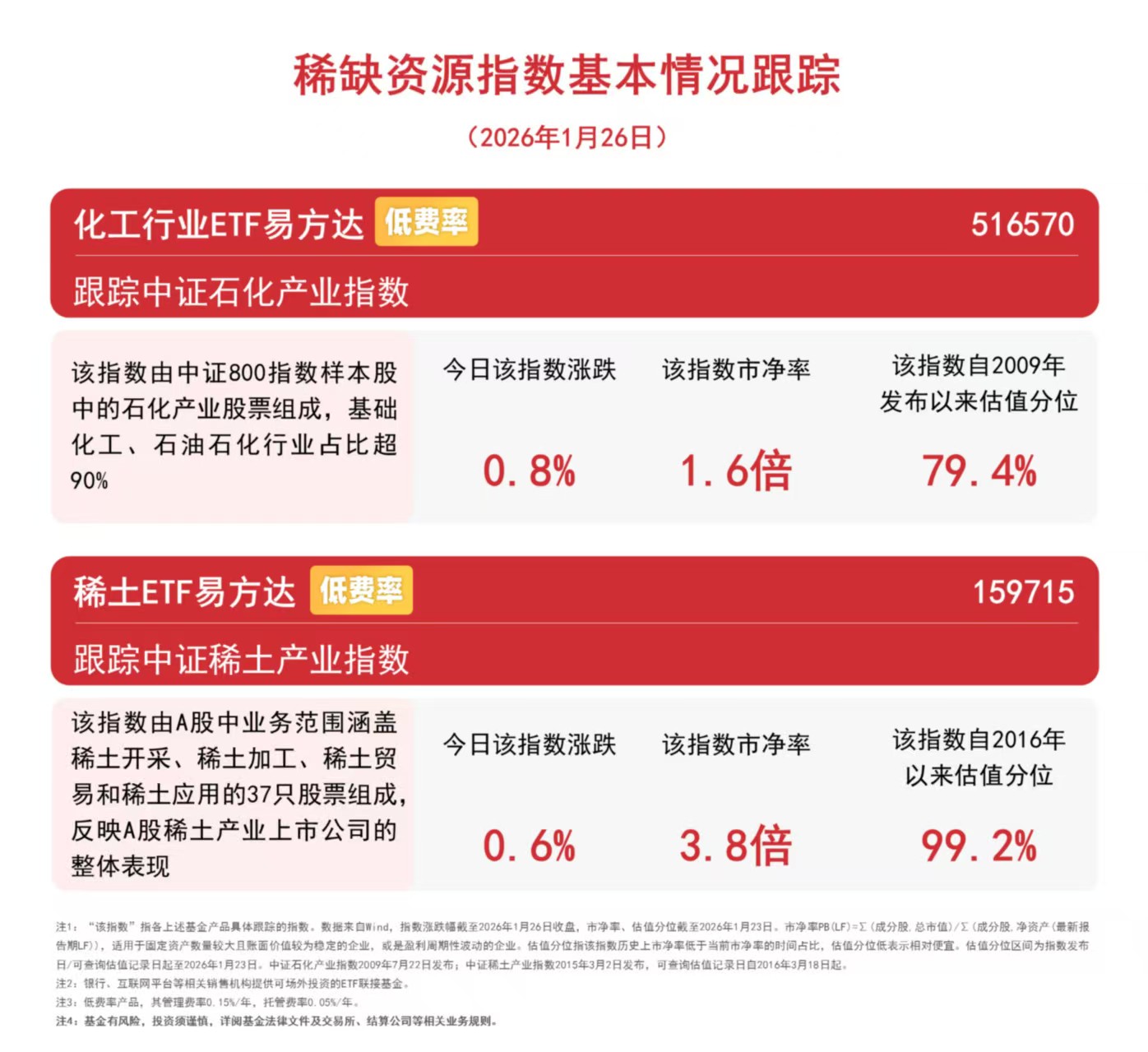
石油石化股走强,化工行业ETF易方达(516570)标的指数实现六连涨
Mei Ri Jing Ji Xin Wen· 2026-01-26 13:01
Group 1 - The core viewpoint of the article highlights a collective rise in the oil and petrochemical stocks, with China National Offshore Oil Corporation (CNOOC) increasing over 6%, China Petroleum by 5%, and both Sinopec and Yuntianhua rising over 3% [1] - The China Petroleum and Chemical Industry Index rose by 0.8%, marking a six-day consecutive increase, while the China Rare Earth Industry Index increased by 0.6% [1] - Market analysis suggests that the "14th Five-Year Plan" for carbon emission control is intensifying, which will impose policy constraints on the supply side of high-energy-consuming or high-carbon-emission sub-industries, potentially reshaping cost curves in certain sectors [1] Group 2 - The expansion of the carbon trading market and the expected implementation of carbon quota systems are anticipated to accelerate the elimination of outdated production capacity, benefiting industry leaders in energy efficiency in the long term [1]
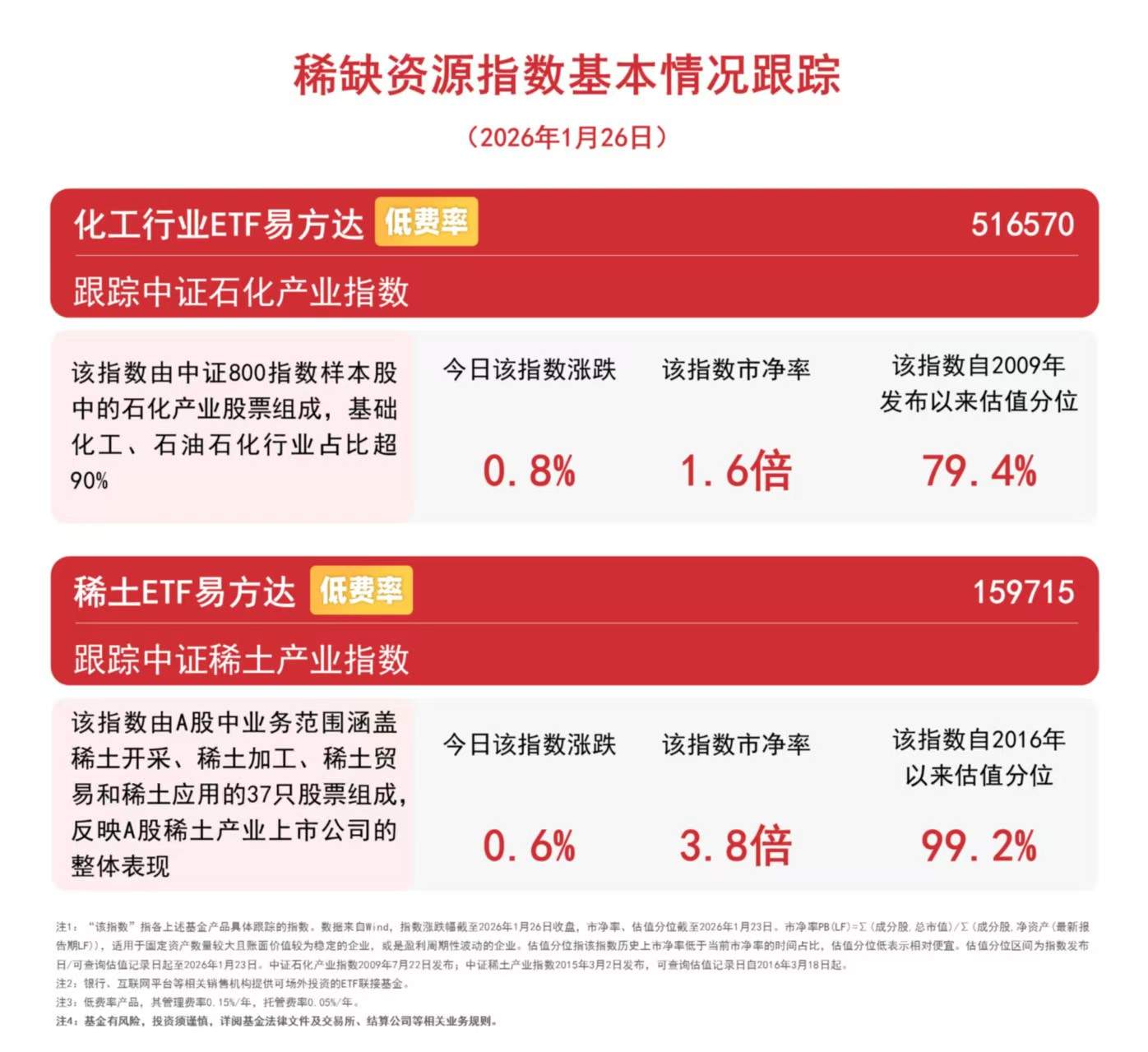
石油石化股走强,化工行业ETF易方达标的指数实现六连涨
Mei Ri Jing Ji Xin Wen· 2026-01-26 11:42
Group 1 - The core viewpoint of the article highlights a collective rise in the oil and petrochemical stocks, with China National Offshore Oil Corporation (CNOOC) increasing over 6%, China Petroleum by 5%, and both Sinopec and Yuntianhua rising over 3% [1] - The China Petroleum and Chemical Industry Index rose by 0.8%, marking a six-day consecutive increase, while the China Rare Earth Industry Index increased by 0.6% [1] - Market analysis suggests that the enhanced carbon emission control measures under the "14th Five-Year Plan" will impose constraints on the supply side of high-energy consumption or high-carbon emission sub-industries, potentially reshaping industry cost curves and accelerating the elimination of outdated production capacity, which is favorable for leading companies in energy efficiency [1]
锚定“双碳”目标 专家详解差异化推进逻辑
Xin Lang Cai Jing· 2025-12-31 15:54
Core Viewpoint - The article emphasizes the importance of differentiated strategies for achieving China's dual carbon goals, highlighting the need for tailored approaches based on regional and industry-specific characteristics [1][3]. Group 1: Regional Strategies - The eastern regions should lead in technological innovation and green service industries, while resource-rich areas like Northwest China should focus on local renewable energy consumption and zero-carbon manufacturing [2]. - Urban areas need to concentrate on energy system transformation and synergistic effects among transportation, buildings, and networks, whereas rural areas are emerging as new focal points for the dual carbon strategy [2]. - Shanxi Province is implementing a comprehensive approach from rural to urban areas, with pilot projects for near-zero carbon emission communities, involving an investment of nearly 300 million yuan across multiple initiatives [2]. Group 2: Industry Strategies - Traditional high-energy-consuming industries require differentiated management and the use of transition financial tools to support orderly transformation [3]. - Emerging industries should be encouraged to integrate deeply into the green low-carbon industrial chain and enhance carbon technology innovation while engaging with carbon markets for dual incentives [3]. - The carbon trading market is expanding from the power sector to include high-energy industries like steel and cement, with a shift towards integrated systems for renewable energy development [3]. Group 3: Overall Coordination - Achieving the dual carbon goals necessitates respecting regional and industry differences while enhancing overall coordination to avoid fragmented progress [3]. - The core reasons for regional differences include development stages, resource endowments, and strategic positioning, while industry differences stem from emission baselines, technology maturity, and transition costs [3]. - The future of China's dual carbon efforts will focus on precise measures to enhance transformation effectiveness, with tighter regional collaboration expected under the guidance of the 14th and 15th Five-Year Plans [3].
推进“双碳”目标,专家呼吁建立专利标准质量认证融合型制度
Xin Jing Bao· 2025-12-05 14:08
Group 1 - The 5th Carbon Neutrality and Green Development Conference emphasizes the necessity of collaborative efforts across industries and sectors to achieve carbon neutrality goals, highlighting the importance of technology, standards, and international cooperation [1] - The conference theme "Walking the Carbon Road, Starting a New Green Journey" focuses on systematic implementation paths and industrial transformation opportunities under carbon neutrality goals, promoting policy implementation and green technology innovation [1] - Current data indicates that China's energy consumption intensity is 1.5 times the world average, with fossil energy consumption remaining high and energy demand expected to continue growing rigidly until 2035 [1] Group 2 - As the world's largest carbon emitter and a major developing country, China's carbon market development is crucial for achieving its dual carbon goals and will significantly impact global climate governance [2] - The carbon trading market is identified as a key tool for optimizing the allocation of limited emission space resources, transforming them into tradable assets [2] - The essence of carbon neutrality is to replace traditional resource-consuming energy solutions with advanced new energy manufacturing, thereby promoting the development of new productive forces [2] Group 3 - The establishment of a fusion system for patents, standards, and quality certification is necessary to address existing institutional and data barriers, as highlighted by a former vice minister of the Ministry of Science and Technology [3] - The conference introduced three national standards related to greenhouse gas product carbon footprint quantification and two international carbon accounting verification council standards [3]
全国碳市场直面三大高耗能行业:钢铁、水泥、铝冶炼迎来减排“大考”,行业或加速洗牌
Zhong Guo Neng Yuan Wang· 2025-12-04 07:48
Core Points - The Ministry of Ecology and Environment has issued the "Quota Plan" for the national carbon emission trading market, focusing on the steel, cement, and aluminum smelting industries for the years 2024 and 2025 [1] - The plan emphasizes a dynamic linkage between enterprise quota and actual output, without setting an absolute cap on carbon emissions, ensuring necessary development space for industries [2] - The carbon quota distribution will target the most carbon-intensive production enterprises, which account for over 98% of emissions in their respective sectors [2] Group 1 - The "Quota Plan" outlines the allocation and management of carbon quotas for key emission units in the steel, cement, and aluminum industries, with the first quota compliance expected within the year [1] - Industries such as chemicals, petrochemicals, civil aviation, and paper-making are in the preparatory phase for inclusion in the carbon trading market, aiming for comprehensive coverage by 2027 [1][6] - The plan encourages companies to optimize production processes and adopt low-carbon technologies, such as electric arc furnaces and hydrogen reduction methods, to achieve deeper decarbonization [3] Group 2 - The Ministry of Ecology and Environment is enhancing the management of carbon emission data quality, which is crucial for the national carbon market's construction [4] - Measures include improving the accounting and reporting verification system, and encouraging companies to innovate data quality management techniques using technologies like blockchain and IoT [4][5] - Following the market expansion in 2025, it is expected that 1,500 new key emission units will be added, covering over 60% of national CO2 emissions [4] Group 3 - The expansion of the carbon trading market will be conducted in a phased manner, based on the maturity of each industry and the quality of data available [6][7] - The Ministry aims to gradually include additional sectors, with a target for the carbon trading market to cover major industrial emission sectors by 2027 [7]
环保公用事业行业周报:10月用电量增速全面提升至10.4%,创年内新高-20251123
CMS· 2025-11-23 15:15
Investment Rating - The report maintains a "Recommendation" rating for the industry [2] Core Insights - The environmental and public utility sectors experienced declines, with the environmental index down 6.02% and the public utility index down 4.33%, indicating a larger drop compared to the overall market [6][23] - The report highlights a significant increase in electricity consumption, with a year-on-year growth of 10.4% in October, marking a new high for the year [10][21] - The coal industry is facing a reduction in production, with national raw coal output declining by 3.8%, 3.2%, and 1.8% in July, August, and September respectively [6] - The report suggests investment opportunities in the electricity sector, particularly recommending companies like Guodian Power and Anhui Energy, which are expected to see valuation recovery [6] Summary by Sections Key Event Analysis - In October, total electricity consumption reached 857.2 billion kWh, a year-on-year increase of 10.4%, with significant growth in the first and third industries [10][21] - The Ministry of Ecology and Environment released allocation plans for carbon emissions trading for the steel, cement, and aluminum industries for 2024 and 2025, indicating a move towards free allocation based on carbon emissions [21][22] Market Review - The environmental and public utility sectors saw significant declines, with the environmental sector up 15.11% year-to-date, outperforming the CSI 300 index [6][23] - The electricity sector's year-to-date growth is only 1.77%, lagging behind the CSI 300 and the ChiNext index [6][23] Key Data Tracking - As of November 21, 2025, the price of Qinhuangdao 5500 kcal thermal coal is 820 CNY/ton, stable compared to the previous week but down 2.4% year-on-year [40] - The Three Gorges Reservoir's water level is at 174.4 meters, up 4.2% year-on-year, with inflow and outflow rates also increasing [42] - The average electricity price in Guangdong reached 253.72 CNY/MWh, a 7.7% increase from the previous week [53] Industry Events - The report notes several key regulatory developments, including initiatives to promote green manufacturing in Jiangxi Province and the establishment of zero-carbon parks in Liaoning Province [64][65]