
载人月球探测

Search documents
今日财经要闻TOP10|2026年2月11日
Xin Lang Cai Jing· 2026-02-11 12:31
Group 1 - The successful flight test of the Long March 10 rocket and the Dream Boat crewed spacecraft marks a significant milestone in China's manned lunar exploration program [1][9] - The Long March 10 rocket's first stage safely splashed down in the designated sea area as per the planned procedure [3][11] Group 2 - Ant Group has released the Ming-Flash-Omni 2.0, the industry's first unified audio generation model capable of generating voice, environmental sounds, and music simultaneously on the same audio track [5][11] - The model allows users to control various audio parameters such as tone, speed, pitch, volume, emotion, and dialect using natural language commands [5][11] Group 3 - The A-share market showed mixed results, with the Shanghai Composite Index up by 0.09% and the ChiNext Index down by 1.08% [14] - Small metals, oil and gas extraction, and chemical sectors saw active performance due to price increases, while sectors like film and tourism experienced declines [14] Group 4 - Tianji Co. received a notice from the China Securities Regulatory Commission regarding an investigation into suspected violations of information disclosure laws [15]

载人登月,有重要突破!
证券时报· 2026-02-11 09:02
版权声明 据了解,此次试验具有新型号火箭、新型号飞船、新发射工位,以及火箭、飞船海上回收新任务等诸多亮点,参加试验的火箭和飞船 均为初样状态。其中,火箭采用芯一级单级构型,前期进行了两次系留点火试验;飞船返回舱前期进行了零高度逃逸飞行试验。为开 展此次试验,相关参试产品均按照可重复使用要求和流程完成了适应性改造,文昌航天发射场按照边建设边使用的策略克服各种困难 确保试验如期实施,着陆场系统围绕飞船返回舱首次海上溅落回收技术难点开展针对性训练和演练。 11时00分,地面试验指挥中心下达点火指令,火箭点火升空,到达飞船最大动压逃逸条件,飞船接收火箭发出的逃逸指令,成功实施 分离逃逸。火箭一级箭体和飞船返回舱分别按程序受控安全溅落于预定海域。 此次试验是长征十号运载火箭首次初样状态下的点火飞行,是 我国首次飞船最大动压逃逸试验,是我国首次载人飞船返回舱和火箭一 级箭体海上溅落,也是文昌航天发射场新建发射工位首次执行点火飞行试验任务 。此次试验成功验证了火箭一级上升段与回收段飞 行、飞船最大动压逃逸与回收的功能性能,验证了工程各系统相关接口的匹配性, 为后续载人月球探测任务积累了宝贵飞行数据和工 程经验。 来源:人民 ...


中国载人登月关键飞行试验任务成功,长征十号与梦舟飞船双获验证
2 1 Shi Ji Jing Ji Bao Dao· 2026-02-11 08:05
Core Viewpoint - China's manned lunar exploration program has achieved a significant milestone with the successful demonstration of the Long March 10 rocket and the crewed Dream Chaser spacecraft, marking a critical step in the development of key technologies for lunar missions [1][2][3] Group 1: Key Breakthroughs - The test showcased three "firsts": the first full-process escape flight test of the spacecraft system, the first large-scale test of sea recovery after escape, and the first comprehensive assembly test of the Dream Chaser spacecraft at the Wenchang launch site [2] - The successful escape and recovery of the rocket and spacecraft demonstrate advancements in reusable rocket technology, crucial for future missions [3] Group 2: Technical Details - The Long March 10 rocket utilized a single-stage core configuration and had undergone two preliminary tethered ignition tests prior to this flight [2] - The spacecraft's return capsule was modified for reusability, and the Wenchang launch site implemented a strategy of concurrent construction and use to ensure timely execution of the test [2] - The test assessed multiple key technologies, including the reliability of the rocket's return phase engine, high-altitude ignition, and precision navigation control, laying a solid foundation for future full-profile flights and sea recovery operations [3]
(年终特稿)星河摆渡间,感知中国太空探索“航线”新突破
Zhong Guo Xin Wen Wang· 2025-12-27 02:39
Core Insights - China's space exploration has made significant advancements in 2025, with over 10 flight missions in December alone, including record-breaking launches and successful missions in lunar and deep space exploration [1][4]. Group 1: Lunar and Deep Space Exploration - The Tianwen-2 probe has commenced a decade-long mission to explore asteroid 2016HO3 and comet 311P, marking China's first attempt at asteroid sampling and return [1]. - China has successfully completed lunar and Mars missions, including orbiting, landing, and returning, with the Tianwen-2 mission representing a critical step in catching up with global standards in asteroid exploration [1]. Group 2: Manned Space Missions - The new generation of manned spacecraft and lunar landers is progressing steadily, with a goal set for Chinese astronauts to land on the Moon by 2030 [3]. - The Tianzhou cargo spacecraft has improved its delivery efficiency, achieving a "three-hour express delivery" for space packages, significantly reducing the time for astronauts' return trips [4]. Group 3: Rocket Technology and Launches - The Long March series of rockets has surpassed 600 launches, demonstrating a rapid increase in launch frequency, with the sixth hundred achieved in just 1 year and 10 months [5]. - The successful launches of private sector rockets, such as the Lijian-1, indicate a growing demand for satellite launches and a maturing rocket technology landscape in China [5]. - China is actively pursuing reusable rocket technology, with recent tests of the Zhuque-3 and Long March 12甲 rockets providing critical data for future launches [5]. Group 4: Future Outlook - China's space industry is positioned for significant growth, with policies encouraging the development of a strong space nation included in the 14th Five-Year Plan [7]. - The current advancements in various space technology fields indicate that China is reaching world-class standards, with vast market potential awaiting further release [7].
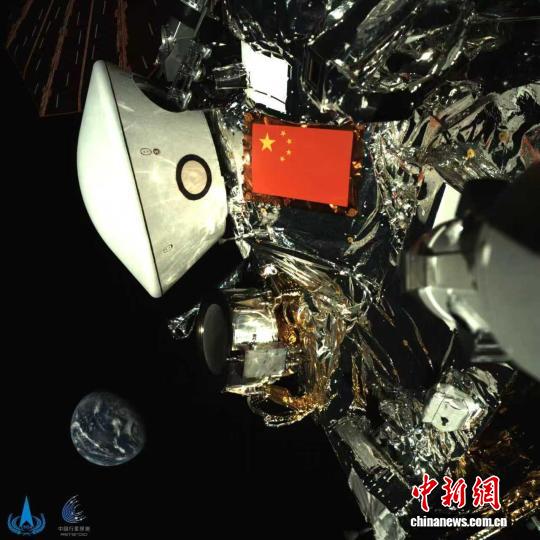
我国新一代载人运载火箭长征十号完成第二次系留点火试验 载人登月“进度条”持续刷新
Ren Min Ri Bao· 2025-10-11 00:50
Core Viewpoint - The successful implementation of the second tethered ignition test for the Long March 10 series of launch vehicles marks a significant milestone in China's manned lunar exploration program, with plans for a manned moon landing by 2030 [1][4]. Group 1: Test Details - The tethered ignition test involved securely fixing the rocket on the test platform while igniting its engines, allowing for a controlled assessment of the rocket's performance [1]. - The test lasted for 320 seconds and focused on evaluating the low operating conditions and secondary ignition capabilities of the rocket's first stage engines [1][2]. - The first tethered ignition test primarily assessed the launch phase performance, while the second test evaluated the rocket's performance during the return and landing phases [4]. Group 2: Future Applications - The Long March 10 series will play a crucial role in China's manned lunar exploration, specifically in launching the crewed spacecraft and lunar lander [1][4]. - The successful completion of both tethered ignition tests signifies a breakthrough in the initial development of the Long March 10 series, paving the way for its application in manned space missions [4].
我国新一代载人运载火箭第二次系留点火试验在文昌取得圆满成功
Hai Nan Ri Bao· 2025-09-13 01:35
Core Points - The successful implementation of the second tethered ignition test for the Long March 10 series rocket marks a significant milestone in China's manned lunar exploration program [2][3] - The test involved the simultaneous ignition of seven engines in the first stage of the rocket, lasting 320 seconds, and focused on assessing the performance of the engine system under low operating conditions [2] - The Long March 10 series rocket is designed for manned lunar missions and includes two configurations: Long March 10 and Long March 10A [2] Summary by Sections - **Test Details** - The tethered ignition test was conducted at the Wenchang Space Launch Site, successfully completing all planned procedures [2] - The test aimed to validate the performance of the first stage's seven-engine power system and the reliability of the recovery segment's operational procedures [2] - **Development Progress** - The completion of the two planned tethered ignition tests signifies a phase breakthrough in the development of the Long March 10 series rocket [2] - The ongoing work on the manned lunar exploration program has seen significant advancements, with multiple tests being conducted simultaneously since mid-June [3] - **Future Plans** - Following the tethered ignition tests, the Long March 10 series rocket will proceed to flight test verification [3]
早盘必读丨美股三大指数涨跌不一,大型科技股涨跌不一,热门中概股多数上涨
Sou Hu Cai Jing· 2025-08-19 07:04
Group 1 - The US stock market showed mixed results with major tech stocks fluctuating, while popular Chinese concept stocks mostly rose, suggesting a strategy of buying on dips [2] - The Shanghai Composite Index reached a ten-year high, with significant trading volume, indicating a bullish market sentiment and opportunities for active participation [2] - The focus on the ChiNext and STAR Market reflects a trend towards high volatility stocks, which are seen as the fastest route to profit in the current bull market [2] Group 2 - A significant breakthrough in star-ground communication technology was achieved by a Chinese research team, doubling the transmission rate to 4200 Mbps using dual-channel X-band [3] - The micro-short drama industry is rapidly expanding, with over 2300 vertical screen micro-short drama crews received in the first seven months of the year, surpassing the total for 2024 [4] - The global DRAM market reached a historical quarterly high of $32.101 billion in Q2 2025, driven by AI demand and rising prices for traditional DDR4/LPDDR4X [5] - China's manned lunar exploration program made a significant milestone with the successful ignition test of the Long March 10 series rocket, following previous successful tests [6] - The launch of multiple models by Zhiyuan Robotics aims to enhance online sales channels and broaden brand coverage, with products set to be available on major e-commerce platforms [8]
突破再+1!不起飞的“点火发射” “系留”如何进行?一文读懂↓
Yang Shi Wang· 2025-08-16 04:47
Core Viewpoint - The successful "tethered ignition test" of the Long March 10 series rocket marks a significant milestone in China's manned lunar exploration program, demonstrating advancements in rocket technology and testing capabilities [1][4]. Group 1: Test Overview - The tethered ignition test is a ground test simulating the rocket's flight state without actual launch, where the rocket is securely fixed to the test platform during ignition [3][4]. - The test utilized a sub-module of the Long March 10 rocket, measuring 5 meters in diameter and 25 meters in height, generating nearly 1,000 tons of thrust, setting a new record for China's rocket engine testing [4][9]. Group 2: Technical Details - The Long March 10 rocket consists of three modules, with the test's thrust being one-third of the total launch thrust, ensuring safety and control during the test [4][6]. - The test was conducted at the launch site due to the lack of a testing platform capable of handling the thrust levels required for the engine tests [4][6]. Group 3: Development Process - The Long March 10 series is designed for manned lunar missions and includes two configurations, with the ignition test validating key technologies such as multi-engine parallel operation and fault diagnosis [8][9]. - The testing process involves a "four-step" approach to validate the rocket's power system, with the tethered ignition test representing the second step following a successful initial test in June 2024 [11][12].

新目标!我国新一代载人登月运载火箭研制再突破
Xin Hua She· 2025-08-15 14:56
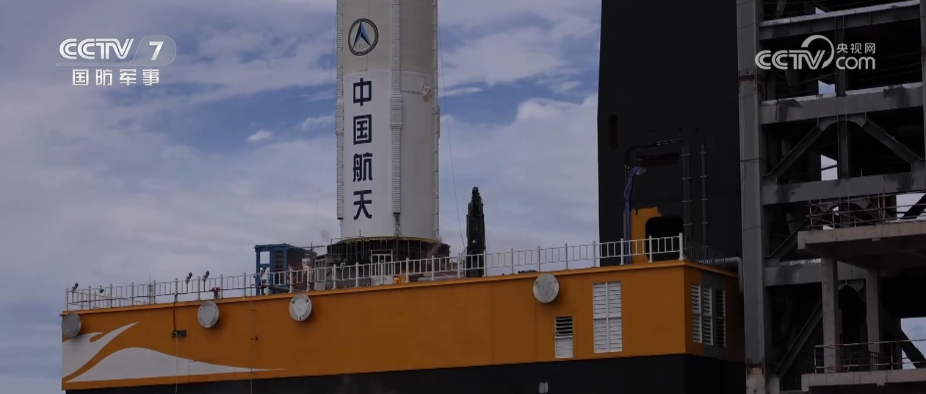
Core Viewpoint - China's new generation manned lunar landing carrier rocket, the Long March 10 series, has achieved significant breakthroughs in its development, marking an important milestone in the country's lunar exploration program [1][6]. Group 1: Development and Technical Requirements - The Long March 10 series is designed to meet the complex technical requirements of manned lunar missions, which exceed those of low Earth orbit tasks [3]. - The engineering plan requires two rockets to accurately deliver the lunar lander and the new generation manned spacecraft into the translunar transfer orbit, necessitating a payload capacity of no less than 27 tons [3][4]. - Current active rockets in China, such as the Long March 2F, Long March 7, and Long March 5, do not meet this 27-ton requirement for translunar transfer [4]. Group 2: Reliability and Precision - The manned lunar exploration program adopts a "two launches, lunar rendezvous" approach, which imposes higher reliability and safety standards on the rocket systems [5]. - The design standards for the new generation carrier rocket include redundancy, escape systems, and intelligent fault diagnosis to ensure astronaut safety and mission success [5]. - High precision in launch and orbit insertion is critical, requiring the rockets to deliver their payloads into the translunar transfer orbit within strict timing sequences [5]. Group 3: Long March 10 Series Overview - The Long March 10 series consists of two configurations: Long March 10 and Long March 10A, specifically developed for manned lunar exploration [6]. - Long March 10 is a three-stage rocket with a diameter of 5 meters and a maximum height of 92.5 meters, designed to launch the manned spacecraft and lunar lander [7]. - Long March 10A is a two-stage rocket with a recoverable first stage, aimed at supporting both lunar missions and space station operations [7].
“长十火箭系留点火试验成功为载人月球探测任务奠定重要技术基础”
Xin Hua She· 2025-08-15 14:01
Core Viewpoint - The successful tethered ignition test of the Long March 10 rocket series marks a significant technological milestone for China's manned lunar exploration program, aiming for a lunar landing by 2030 [1][2]. Group 1: Mission and Design - The Long March 10 rocket series is designed for both manned lunar missions and cargo transport, featuring two versions: the lunar version and the near-Earth version [2]. - The Long March 10 rocket is a three-stage rocket with a core diameter of 5 meters, while the Long March 10A is a two-stage rocket with a reusable first stage [2]. Group 2: Testing and Development - The tethered ignition test is a crucial step in the rocket development process, allowing for the verification of the propulsion system under controlled conditions [2][3]. - This test is the first of its kind conducted at the launch site for the Long March series, providing a vital technical foundation for the lunar exploration mission [2][3]. - The test achieved a thrust scale of nearly 1,000 tons, making it the largest full-system test conducted domestically [3]. Group 3: Future Plans - The Long March 10 rocket's development will proceed in four phases, with the tethered ignition test being the second phase, followed by additional ignition tests and a low-altitude flight test [4]. - Future tests will include a true orbital flight validation, further advancing the capabilities of China's manned space transportation system [4].