
退市制度

Search documents
多措并举抑制*ST股过度投机
Guo Ji Jin Rong Bao· 2025-07-29 03:11
Core Viewpoint - The phenomenon of stocks under delisting risk being heavily speculated in the market raises questions about the effectiveness of the delisting risk warning system, as investors seem to ignore the risks associated with these stocks [1] Group 1: Market Behavior - Multiple stocks under delisting risk warnings, such as *ST Yazhen and *ST Hengjiu, have experienced significant price increases despite ongoing losses and risk warnings [1] - The paradox of "the stricter the risk warning, the stronger the stock price surge" suggests that the current risk warning system is ineffective [1] - Speculative trading is overshadowing value discovery, eroding the foundation of healthy capital market development [1] Group 2: Recommendations for Improvement - It is suggested to optimize the suspension and review system, focusing on the actual trading behaviors rather than just compliance checks by listed companies [1] - Exchanges should enhance the investigation of abnormal price fluctuations by establishing a real-time tracking system for account associations and identifying the true operators behind large accounts [2] - The delisting rules should be improved to prevent excessive speculation on stocks at risk of delisting, potentially introducing a new delisting threshold based on market valuation metrics [2] Group 3: Investor Protection and Education - Increasing the asset threshold for participating in delisting risk stocks from 500,000 to 1,000,000 yuan is recommended to limit speculative participation [3] - Strengthening the regulation of intermediary institutions that serve *ST stocks is crucial, with penalties for non-compliance or negligence [3] - Enhancing investor education and protection mechanisms is essential, including risk awareness campaigns and establishing efficient compensation channels for investors suffering losses due to speculative activities [4]
虚增逾百亿利润 康得退近500件诉讼缠身
Bei Jing Shang Bao· 2025-07-28 03:04
Core Viewpoint - Kangde Tai (002450) is set to delist from the A-share market due to a major financial fraud scandal, marking the end of its trading journey with a market value of only 744 million yuan as of May 27, 2023 [1][2]. Summary by Sections Company Background - Kangde Tai was established in 2001 and listed on the A-share market in 2010, focusing on high polymer composite materials and related technologies [4]. - The company was once regarded as a "billion-dollar white horse stock," reaching a peak market value of nearly 100 billion yuan in November 2017 [2][4]. Financial Fraud and Delisting - The company was found to have fabricated profits exceeding 11.53 billion yuan from 2015 to 2018, leading to significant financial misreporting [5]. - Kangde Tai's annual reports from 2015 to 2018 contained false records, resulting in a continuous negative net profit after restatement [3][5]. - The company faced two consecutive years of audit reports with disclaimers, leading to its suspension from trading on July 10, 2020, and ultimately to its delisting due to major violations [3][5]. Current Status and Legal Issues - As of April 21, 2023, Kangde Tai is entangled in nearly 500 lawsuits, with a total involved amount of 11.737 billion yuan [6][7]. - The company reported a revenue of 341 million yuan in the first quarter of 2023, with a net loss of 279 million yuan, a year-on-year decline of 30.54% [7]. - The ongoing legal disputes include various civil lawsuits related to bond trading and construction contracts, with 59 cases involving amounts over 5 million yuan [7].
30多家A股公司在港交所排队上市,是福还是祸?
Sou Hu Cai Jing· 2025-07-21 15:15
Group 1: Market Overview - As of June 30, the total market capitalization of the Shanghai Stock Exchange is approximately 55 trillion RMB, and the Shenzhen Stock Exchange is about 45 trillion RMB, marking a historic milestone where the total market capitalization of A-share listed companies exceeds 100 trillion RMB with 5,420 companies listed [1] - By June 30, 2025, the total market capitalization of the Hong Kong securities market is projected to reach 42.7 trillion HKD, a significant increase of 33% from 32.1 trillion HKD in the same period last year [1] - The total number of listed companies in China has reached 7,500, surpassing the 7,000 listed companies in the United States, although there remains a notable gap in quality and market performance [1] Group 2: Hong Kong Stock Exchange Challenges - Investors have expressed concerns that the Hong Kong Stock Exchange (HKEX) is allowing companies with lower standards to list, which may negatively impact retail investors [2] - HKEX faces a dilemma as it competes with the A-share market; many mainland companies choose to list in Hong Kong due to less stringent requirements, which could lead to a potential influx of companies if the North Exchange's listing criteria were not so lenient [2] - If HKEX raises its listing standards too high, it risks losing companies to the A-share market or to more lenient markets like the U.S. [2] Group 3: Regulatory Environment - The ease of listing is not inherently problematic; the key is to establish a strict regulatory framework and an efficient delisting system to ensure that companies that fail to meet disclosure and financial integrity standards are removed from the market [3] - A healthy market requires the timely elimination of underperforming companies to maintain investor confidence and market vitality [3] Group 4: Impact of A+H Listings - Over 30 A-share companies are currently queued to list on HKEX, which can be beneficial for companies needing capital for growth and those looking to expand internationally [4] - For investors participating in IPOs, these companies often list at a discount compared to their A-share prices, providing an arbitrage opportunity [4] - However, the influx of A+H listings could lead to a significant capital outflow from the Hong Kong market, potentially harming its overall vitality in the long run [4] Group 5: Short-term Investor Perspective - For investors primarily focused on short-term gains from IPO opportunities, the long-term implications of increased A+H listings may not be a primary concern [5]
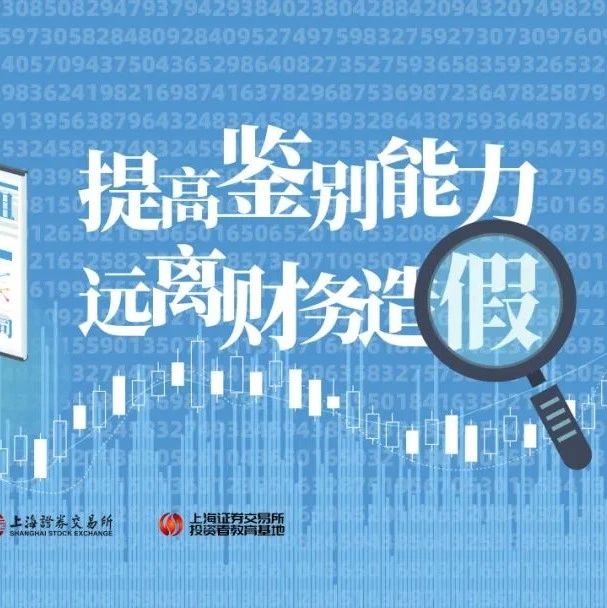
提高鉴别能力 远离财务造假 | 风险警示案例解读(五)
申万宏源证券上海北京西路营业部· 2025-07-16 02:21
Core Viewpoint - The article discusses a typical case of financial fraud in the IPO process, highlighting the risks associated with such fraudulent activities and the subsequent regulatory responses aimed at protecting investors and maintaining market integrity [2][5]. Group 1: Case Background - W Company, initially a small high-tech firm founded by a veteran, successfully went public in 2009 but faced scrutiny from regulators within a year due to significant anomalies in its prepaid accounts [7]. - The company reported a prepaid account balance of 146 million yuan, which raised red flags during routine inspections [7]. Group 2: Fraudulent Activities - W Company engaged in fraudulent practices by falsifying bank receipts to inflate revenue, resulting in a total of approximately 7.4 billion yuan in inflated revenue, 180 million yuan in inflated operating profit, and 1.6 billion yuan in inflated net profit from 2008 to 2011 [9]. - The scale of the fraud was so extensive that it accounted for 465% of cumulative revenue, 898% of cumulative operating profit, and 82.64% of cumulative net profit during the specified period [9]. Group 3: Regulatory Response - The fraud was uncovered through a thorough investigation by regulatory authorities, which involved tracing the financial operations of W Company and its associated entities [14]. - As a result of the findings, W Company was fined 8.5 million yuan, and its chairman received a prison sentence of three years and six months along with a fine of 100,000 yuan [14]. - In response to such fraudulent activities, the China Securities Regulatory Commission implemented stricter delisting rules for companies involved in fraudulent issuance, enhancing the overall regulatory framework [14].

退市前高管被捕!财务造假重罚3860万
2 1 Shi Ji Jing Ji Bao Dao· 2025-07-05 12:59
Core Viewpoint - The article highlights the severe legal consequences faced by Jinzhou Port due to significant violations, including the arrest of two vice presidents and the company's entry into a delisting period due to serious financial misconduct [2][4][12]. Summary by Relevant Sections Legal Consequences - Jinzhou Port's two vice presidents were arrested for violating important information disclosure laws, indicating the seriousness of the company's legal troubles [4]. - The company and its 11 executives were fined a total of 38.6 million yuan, with Jinzhou Port itself facing a fine of 20 million yuan [3][10]. Financial Misconduct - Jinzhou Port has been accused of three major issues: failing to timely disclose the 2024 semi-annual report, committing financial fraud from 2022 to 2024, and not disclosing significant fund occupation and illegal guarantees [6][8][9]. - The company inflated profits through false trades and premature recognition of income, with inflated profits of 36.1 million yuan in 2022, 68.1 million yuan in 2023, and 15.4 million yuan in the first quarter of 2024 [8]. Delisting Process - Jinzhou Port entered a delisting preparation period on June 30, 2025, with the last trading day expected to be July 18, 2025, due to serious violations [12]. - The company is among eight others that have faced delisting due to major violations since 2025, reflecting a stricter regulatory environment [12]. Regulatory Environment - The regulatory authorities are intensifying penalties for financial fraud, particularly for companies with high and continuous levels of misconduct [3][14]. - New measures have been introduced to hold third parties accountable for aiding in financial fraud, indicating a comprehensive approach to preventing such misconduct [14].
杨德龙:A股市场吸引力持续提升 下半年行情值得期待
Xin Lang Ji Jin· 2025-07-03 09:36
Group 1 - The A-share market has shown strong performance in the first half of the year, with over 3,700 stocks achieving positive returns and the total market capitalization surpassing 100 trillion yuan, setting a solid foundation for the second half of the year [1] - The China Securities Regulatory Commission (CSRC) has emphasized the direction of "strengthening the home market" to enhance the attractiveness and competitiveness of the A-share market, indicating that more effective measures will be implemented to promote growth [1][2] - There has been a significant recovery in the profit-making effect of the A-share market compared to the same period last year, particularly in the technology innovation sector, with the North China 50 Index rising nearly 40% [1] Group 2 - A series of deepening reform measures are being gradually implemented to enhance the A-share market's attractiveness, including a shift from a financing-focused market to an investment-focused one, and strict enforcement against illegal activities to protect investors' interests [2] - The influx of foreign capital into the A-share and Hong Kong markets continues, while domestic savings are expected to shift towards the capital market, as the real estate market struggles to attract significant investment [2] - The A-share market is anticipated to enter a structural bull market in the second half of the year, with the Shanghai Composite Index having risen over 800 points, or more than 20%, from last year's low [3] Group 3 - The CSRC's focus on strengthening the home market is expected to significantly boost investor confidence and enhance the investability of the A-share market, contributing to a wealth effect that can stimulate consumption and drive economic growth [4] - A thriving capital market is seen as essential for building a strong financial nation, and the strengthening of the capital market is likely to lead to a slow and steady bull market [4]
基石资本张维:耐心资本和大胆资本形成的关键在于打通上市和减持通道
投中网· 2025-04-19 05:28
将投中网设为"星标⭐",第一时间收获最新推送 大胆资本和耐心资本的本质是社会信用,资本市场是社会信用的更高等级的形式。 整理丨 陶辉东 来源丨 投中网 中国创投的退出有多难? 基石资本董事长张维用他们对全亿健康的控股投资举例,生动展现了这一点。从 2016 年开始,基石资本通过五年整合,让全亿健康成为一家年销售额 达 60 亿元、门店逾 2000 家的连锁药房企业。但一算账发现,如果要想实现 A 股上市并减持退出,至少需要 17 年的时间。最终,基石资本选择把 它卖给了某国际知名私募巨头。"他们的基金周期是 12 年,而我的基金周期是' 5+2 '。" 中国创投面临的是"上市难"与"减持难"的双重难题。这样的现状,对于耐心资本和大胆资本的形成非常不利。张维指出,对上市和减持的严防死守,削 弱了创业的财富效应,因为投资的本质是为了增值,如果不能增值为什么投资?创业者如果不能卖股票又为什么要创业呢? 历史上的股权分置改革,释放了大量的流通股,股市迎来一个牛市。张维认为,核心是实行真正的注册制,同时实行严格的退市制度,进一步打击造假 和违规信批,从而使资本市场实现动态平衡。 更进一步,张维认为大胆资本和耐心资本的本 ...