注册制

Search documents
董秘,金融行业最高危的职位
叫小宋 别叫总· 2026-03-17 03:46
Core Viewpoint - The article discusses the challenges and risks faced by company secretaries (董秘) in listed companies, particularly in relation to information disclosure and media interactions. Group 1: Regulatory Environment - The understanding of the registration system indicates that the review personnel primarily focus on the issuance conditions without making investment judgments on the companies [2] - To protect the rights of small and medium investors, there is a need to strengthen the management of issuers [3] Group 2: Penalties and Violations - One method to strengthen issuer management is through fines, starting at one million for company secretaries and 500,000 for CFOs and securities representatives [4] - A listed company faced a fine of 1 million due to its secretary disclosing financial data prematurely during a media interview [8] - Another company was penalized after a media article suggested it was violating environmental regulations based on villagers' comments, leading to scrutiny from the exchange [12][13] Group 3: Communication Challenges - Company secretaries can be misled by their own staff or external parties, leading to unintentional disclosures [14] - A company’s public account published operational data before the annual report was officially announced, resulting in a violation [18] - Miscommunication with government departments can also lead to premature disclosures, as seen when a company’s performance data was used in a government article before the official announcement [23] Group 4: Media Relations - A newly listed company’s secretary panicked during a media call, leading to negative media coverage about the company's communication practices [27][29] - Continuous failure to respond to media inquiries resulted in further negative press, questioning the company's attitude towards media and investors [31][32] Group 5: Job Risks - The position of company secretary is highlighted as high-risk, with statistics available on the turnover of secretaries in listed companies [33] - Potential candidates for the role are advised to consider the challenges carefully before transitioning into this position [34]

新力量NewForce总第4972期
First Shanghai Securities· 2026-03-03 11:16
Company Research - Applied Optoelectronics (AAOI) is expected to see a significant increase in revenue, with a target price of $159.00, representing an 88.8% upside from the current price of $84.23[6] - Citic Securities (6030) has a target price of HKD 33.80, indicating a 20.5% upside from the current price of HKD 28.06[11] - Huatai Securities (6886) has a target price of HKD 20.33, reflecting a 21.2% upside from the current price of HKD 16.78[25] - CICC (3908) has a target price of HKD 25.81, suggesting a 27.4% upside from the current price of HKD 20.26[30] - Guotai Junan (2611) has a target price of HKD 19.66, indicating a 23.3% upside from the current price of HKD 15.94[37] Industry Commentary - The securities industry is entering a new cycle characterized by a dual boost in ROE and valuation, driven by favorable policies and improving fundamentals[45] - The average daily trading volume in the market increased by 71.1% year-on-year, significantly boosting the performance of listed securities firms[48] - The industry is expected to see a rise in concentration, with the CR5 approaching 50% by 2026, as mergers and acquisitions become a core path for supply-side reform[47]

惠康科技IPO:被暂缓审议的灵魂质问,业绩关联治理信披多重困局
Sou Hu Cai Jing· 2026-02-25 06:45
Core Viewpoint - The IPO application of Ningbo Huikang Industrial Technology Co., Ltd. has been postponed by the Shenzhen Stock Exchange, exposing the company's operational risks, financial doubts, governance flaws, and information disclosure issues, marking it as a negative example in the context of strict registration system reviews [2] Group 1: Company Performance and Market Position - Huikang Technology claims to hold over 30% of the global market share in civilian ice machines, positioning itself as the industry leader [3] - The company experienced explosive growth from 2022 to 2024, with revenue increasing from 1.93 billion yuan to 3.20 billion yuan, representing a compound annual growth rate (CAGR) of 28.84%, and net profit rising from 197 million yuan to 451 million yuan, with a CAGR of 51.26% [3] - However, the company's performance sharply declined during the IPO application period, with a projected revenue drop of 13.40% and a net profit decrease of 8.40% for 2025 [5][6] Group 2: Financial and Operational Challenges - The company's revenue and net profit fell significantly in the first half of 2025, with revenue at 1.39 billion yuan, down 20.98%, and net profit at 205 million yuan, down 18.67% [5] - Huikang Technology's reliance on the U.S. market, which accounts for about 60% of its revenue, exposes it to risks from trade policies and currency fluctuations [7] - The average price of core products, such as ice machines, has decreased from 435.22 yuan to 365.76 yuan, reflecting a cumulative decline of 12.69% [7] Group 3: Governance and Compliance Issues - The company has been criticized for its family-controlled governance structure, with the actual controller holding 38.23% of shares and family members occupying key positions [19] - There are concerns regarding hidden related-party transactions with core suppliers, which were established shortly before becoming major suppliers, raising questions about compliance and transparency [12][14] - The company has faced scrutiny for its sudden cash dividends totaling 209 million yuan before the IPO, benefiting the controlling family significantly [23] Group 4: Investment and Project Viability - Huikang Technology plans to raise 1.797 billion yuan for various projects, but the necessity and transparency of these fundraising efforts have been questioned, especially given the company's substantial cash reserves [26][32] - The company has been accused of inflating project costs and failing to provide consistent information regarding its research and development expenditures [32][34] - The company's status as a "national high-tech enterprise" is under scrutiny due to insufficient R&D investment, which raises doubts about its qualifications [35]

【锋行链盟】科创板IPO中介团队职责及核心要点
Sou Hu Cai Jing· 2026-02-24 16:37
Group 1: Core Team Composition - The core intermediary team for Sci-Tech Innovation Board (STAR Market) IPO includes sponsors (brokerage firms), accounting firms, law firms, and asset appraisal agencies [3][10] Group 2: Responsibilities and Key Points of Each Intermediary (1) Sponsoring Institutions (Brokerage Firms) - Lead coordination and take on the role of "first responsible person" [3] - Conduct due diligence to ensure the company meets STAR Market's "hard technology" attributes and registration system requirements [3] - Submit listing application documents and issue sponsorship letters [3] - Guide companies in improving governance structures and operational norms [3] - Ensure the prospectus highlights "hard technology" features [3] - Respond to inquiries from the exchange regarding technical authenticity and risk disclosures [3] - Responsible for underwriting and co-investing with their own funds [3] (2) Accounting Firms - Responsible for financial auditing and compliance verification [5] - Conduct audits of the company's financial statements for the last three years and one period, issuing unqualified audit reports [8] - Provide special opinions on R&D expenditures and revenue recognition [8] - Ensure independence in auditing to avoid conflicts of interest [8] (3) Law Firms - Responsible for legal compliance and risk assessment [5] - Conduct legal due diligence on the company and its major stakeholders [8] - Issue legal opinions on whether the company meets listing conditions [8] - Guide companies in resolving legal issues [8] (4) Asset Appraisal Agencies - Evaluate the fairness of asset values [7] - Provide assessment reports for asset acquisitions, restructurings, or intangible asset pricing [8] Group 3: Intermediary Team Collaboration - Establish communication mechanisms to ensure consistency in financial data, legal facts, and business information [8] - Jointly develop rectification plans for issues identified in the company [8] - Stay updated on the latest regulatory developments from exchanges and the China Securities Regulatory Commission [9] Group 4: Regulatory Requirements for Intermediaries - Responsibilities of the intermediary team revolve around "position verification, financial authenticity, legal compliance, and information disclosure" [10] - The sponsoring institution plays a leading role, while accounting and law firms manage financial and legal risks [10] - It is crucial for companies to select experienced intermediaries familiar with STAR Market rules to enhance the likelihood of successful listings [10]
【锋行链盟】科创板IPO上市规则及核心要点
Sou Hu Cai Jing· 2026-02-24 16:14
Group 1: Core Positioning and Industry Focus - The Sci-Tech Innovation Board (STAR Market) focuses on "hard technology" and serves technology innovation enterprises that align with national strategies and have high market recognition [3] - Key supported industries include new generation information technology (such as integrated circuits and artificial intelligence), high-end equipment, new materials, new energy, energy conservation and environmental protection, and biomedicine [3] - Prohibited industries include financial and investment enterprises, real estate, and non-hard technology enterprises such as pure e-commerce and O2O models [3] Group 2: Listing Conditions - The STAR Market allows unprofitable companies to list and has established five differentiated standards based on market capitalization and financial/operational indicators [4] - Companies can meet one of the five standards, which focus on a combination of market value and financial/研发/现金流 indicators [4] Group 3: Issuance and Review Mechanism - The STAR Market implements a registration-based review mechanism emphasizing "information disclosure," shifting the focus from profitability to "scientific and technological attributes" and the authenticity of information disclosure [6] - The review process typically takes 3-6 months, excluding feedback response time [7] Group 4: Information Disclosure and Ongoing Supervision - The STAR Market emphasizes "full lifecycle" information disclosure, requiring issuers and intermediaries to disclose key information regarding technological attributes, risks, and operational uncertainties [9] - Intermediaries, such as sponsors and accountants, have specific responsibilities to ensure the authenticity and compliance of financial disclosures [10] Group 5: Delisting System - The delisting standards of the STAR Market are more stringent and market-oriented, emphasizing "delist as necessary" without a suspension or resumption phase [11] - Companies that trigger delisting indicators will directly enter a delisting preparation period of 15 trading days before being delisted [12] Group 6: Investor Suitability Management - Individual investors must meet specific asset and trading experience requirements to participate in the STAR Market [15] - Institutional investors face no asset or trading experience restrictions [15] Summary of Key Features - The STAR Market breaks traditional profit thresholds with its "inclusiveness," enhances financing efficiency through a "registration system," and ensures market quality with "strong regulation," focusing on "hard technology" enterprises [13]
港股IPO投资指南-华泰证券
Sou Hu Cai Jing· 2026-02-18 16:25
Group 1 - The Hong Kong IPO market saw a strong recovery in 2025, with 116 companies raising HKD 286.7 billion, regaining the top position globally, and an average first-day gain of nearly 40% [1][16][21] - The historical low of 28% for the IPO failure rate indicates a favorable environment for investors, driven by the dual forces of improved regulations and increased market liquidity [1][3][21] - The Hong Kong Stock Exchange (HKEX) has implemented reforms such as the "A+H" listing mechanism and a dedicated line for technology companies, which have lowered the barriers and costs for companies to go public [1][21][60] Group 2 - The IPO process in Hong Kong typically takes about six months to a year, with a success rate of approximately 38%, and involves critical stages such as material review and marketing [1][36][37] - The IPO system includes special mechanisms like the green shoe and red shoe mechanisms, which help stabilize the market and protect small investors' chances of winning shares [1][54][52] - The listing standards are designed to be multi-channel, accommodating various types of companies, including traditional industries and new economy sectors, with flexible requirements [1][54][59] Group 3 - There are three main ways to participate in Hong Kong IPOs: cornerstone investment, anchor investment, and public offering, each with different funding thresholds and flexibility [2][8][66] - Cornerstone investors have guaranteed allocations but face a six-month lock-up period, while anchor investors have no lock-up but uncertain allocations, making them suitable for flexible institutional and high-net-worth individuals [2][8] - Retail investors primarily participate through public offerings, which have lower thresholds and are supported by the red shoe mechanism to enhance their chances of winning shares [2][8][66] Group 4 - The report provides ten investment recommendations, emphasizing the importance of long-term cornerstone participation, diversified retail investment, and the use of scoring models for short-term investments [3][10] - It highlights that the quality of IPO projects and industry characteristics are more critical to secondary market performance than the quantity of IPOs [3][10] - The report also notes that technology and pharmaceutical sector IPOs have a positive catalytic effect on their respective sectors [3][10]


【锋行链盟】科创板IPO全流程解析
Sou Hu Cai Jing· 2026-02-16 16:10
Core Viewpoint - The article outlines the comprehensive process of the IPO on the Sci-Tech Innovation Board (科创板), detailing the strict adherence to regulations set by the China Securities Regulatory Commission (CSRC) and the Shanghai Stock Exchange (SSE) throughout the entire IPO cycle [1]. Pre-IPO Preparation Phase - Companies must conduct self-assessments and strategic decisions, requiring collaboration with four core intermediaries [3] - Initial due diligence and issue rectification are essential steps before moving forward [3]. Counseling and Filing Phase - After signing a counseling agreement with the sponsor, companies must submit counseling materials to the local CSRC, initiating a counseling period typically lasting at least three months [3]. - The counseling process includes training on listing rules, corporate governance, and information disclosure requirements [5]. Application and Acceptance Phase - Companies must prepare application materials in accordance with the Sci-Tech Board's focus on "hard technology" across six key sectors [4]. - The selection of intermediary institutions is crucial, including sponsors, accounting firms, law firms, and asset appraisal agencies [4]. SSE Review Phase - The SSE employs an "inquiry-based review" process, involving multiple rounds of inquiries to uncover risks, requiring truthful responses from companies and intermediaries [6]. CSRC Registration Phase - Following SSE approval, application materials are submitted to the CSRC for registration review [9]. - The CSRC focuses on compliance with legal requirements and the accuracy of information disclosure during its review [12]. Issuance and Listing Phase - After receiving registration approval, companies conduct pre-roadshows and determine the issuance price range through market-based inquiries [15]. - The distribution of shares includes a minimum of 70% allocated to qualified institutional investors and a maximum of 30% to public investors [15]. Post-Listing Continuous Supervision Phase - Companies must adhere to ongoing regulatory requirements, including regular disclosures and maintaining corporate governance standards [14]. - The Sci-Tech Board has a stricter delisting system, with conditions triggering delisting procedures [15].
太平洋证券近期股价波动 三季度业绩大幅增长
Jing Ji Guan Cha Wang· 2026-02-11 15:48
Group 1: Company Performance - The latest financial report indicates that Pacific Securities achieved a net profit of 125 million yuan in Q3 2025, representing a year-on-year increase of 83.89% [2] - For the first three quarters of 2025, the net profit reached 246 million yuan, showing a year-on-year growth of 80.26%, primarily driven by the growth in brokerage and securities investment income [2] - There have been no disclosures regarding financial reports or performance forecasts for 2026 so far [2] Group 2: Stock Performance - On January 5, 2026, the main capital inflow for Pacific Securities was 34.51 million yuan, with the stock price increasing by 1.46%, likely due to a recovery in the A-share market and a strong performance in the non-bank financial sector [1] - On January 8, 2026, the main capital turned to a net outflow of 71.86 million yuan, resulting in a stock price decline of 1.18%, reflecting intensified short-term capital competition [1] - As of February 11, 2026, no significant announcements or stock price fluctuations were observed for the company [1] Group 3: Industry Environment - The securities industry is significantly influenced by capital market reform policies, but Pacific Securities has not recently indicated specific business progress [3] - Analysts suggest that the promotion of the registration system may present long-term opportunities for the brokerage sector, but individual performance must be assessed in conjunction with the company's operational situation [3]

2026年A股上市公司退市潮开启,第一批名单抢先看
Xin Lang Cai Jing· 2026-01-31 12:17
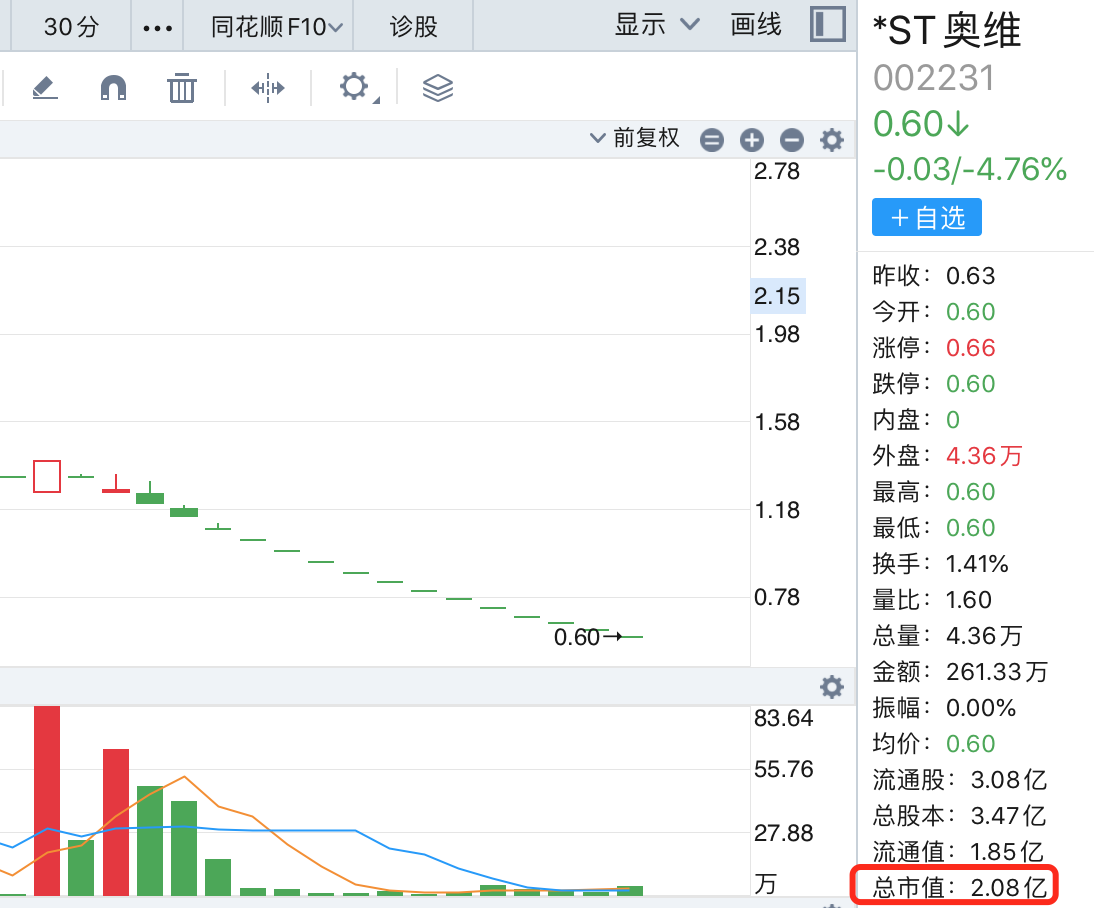
Core Viewpoint - The A-share market is entering a new phase of "clearing" as the first batch of companies facing delisting emerges, with *ST Changyao being the first to receive a notice of termination of listing, indicating an acceleration of the market-oriented delisting process [1][2]. Group 1: *ST Changyao - *ST Changyao has been penalized for financial fraud, with its 2021-2023 annual reports containing false records, leading to a fine and a notice of termination of listing from the Shenzhen Stock Exchange [2][3]. - The company's financial performance has been deteriorating, with losses reported from 2022 to the first three quarters of 2025 amounting to -23.27 million, -606 million, -628 million, and -210 million respectively, and owner equity dropping to -668 million by September 2025 [2]. - The stock price has been below the "1 yuan red line" since December 30, 2025, triggering potential delisting under the Shenzhen Stock Exchange rules [3]. Group 2: *ST Aowei - *ST Aowei is the first company to face delisting due to market value, having recorded a total market value below 500 million yuan for 20 consecutive trading days, alongside a stock price below 1 yuan for 11 consecutive days [6][8]. - The company has reported losses from 2022 to the first three quarters of 2025, with figures of -53.18 million, -34.20 million, -46.11 million, and -188 million respectively, while its revenue has also been declining [6][8]. Group 3: Guandao Digital - Guandao Digital is noted as the first company to be forcibly delisted from the Beijing Stock Exchange due to major violations, with false records in multiple annual reports leading to its delisting in January 2026 [8][9]. Group 4: Debang Shares - Debang Shares has opted for voluntary delisting, with plans to integrate into JD Logistics, while maintaining its independent brand and operations [10][11]. - The company has set a cash option price of 19 yuan per share for shareholders, which is above the current market price [11]. Group 5: Other Companies at Risk - Several companies are at risk of delisting due to poor financial performance, including *ST Jinglun, *ST Lifan, and *ST Xiongmao, which have reported negative net profits and may face delisting warnings following their annual reports [13][14][15]. - The ongoing registration system reform is normalizing the "should delist" mechanism in the A-share market, with a focus on companies with poor financial indicators [15].


2025年业绩快报 | 净利增逾四成控股华富基金,华安证券不涨反跌
Sou Hu Cai Jing· 2026-01-30 06:41
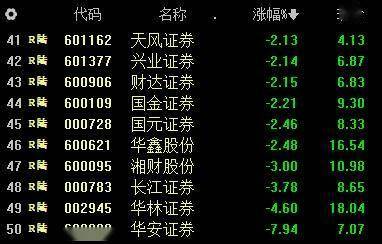
Core Viewpoint - Huazhong Securities reported strong financial performance for 2024, with total revenue of 5.064 billion yuan, a year-on-year increase of 30.94%, and net profit of 2.104 billion yuan, up 41.64% from the previous year [1] Group 1: Financial Performance - The company achieved a total revenue of 5.064 billion yuan in 2024, reflecting a growth of 30.94% year-on-year [1] - Net profit attributable to shareholders reached 2.104 billion yuan, a significant increase of 41.64% compared to 1.486 billion yuan in 2024 [1] - The company's total equity attributable to shareholders was 23.811 billion yuan, marking a 6.06% increase [1] - Basic earnings per share were reported at 0.45 yuan, with a weighted average return on equity of 9.10%, up 2.29 percentage points from the previous year [1] Group 2: Strategic Focus - The company is focusing on wealth management, securities investment, and investment banking to enhance revenue structure and improve profitability [1] - The deepening of the registration system is expected to release dividends from investment banking project reserves, becoming a significant growth driver [1] Group 3: Market Performance - Despite strong financial results, Huazhong Securities' stock fell by 7.94% on January 30, closing at 7.07 yuan, ranking last among 50 stocks in the brokerage sector [1][2] - The stock had a trading volume of 1.056 billion yuan and a turnover rate of 3.14%, with a total market capitalization of 33.08 billion yuan and a dynamic price-to-earnings ratio of 15.72 times [1] Group 4: Investment in Subsidiaries - The company announced plans to increase its stake in Huafu Fund Management Co., Ltd. from 49% to 51% for 26.416 million yuan, gaining control of the fund [3] - As of the end of 2025, Huazhong Securities' total assets reached 106.22 billion yuan, a slight increase of 3.11% from the previous year [3] Group 5: Fund Management Performance - Huafu Fund reported a revenue of 314 million yuan and a net profit of 31.34 million yuan for 2024, with a combined revenue of 254 million yuan and net profit of 19.2781 million yuan for the first three quarters of 2025 [5] - Controlling Huafu Fund allows Huazhong Securities to integrate its extensive client base and nationwide network with the fund's product creation capabilities, enhancing asset allocation flexibility and profitability [5]