
量子计算机

Search documents
新型钛酸锶薄膜低温电光性能创新高
Ke Ji Ri Bao· 2025-11-07 00:04
Core Insights - A new type of strontium titanate (SrTiO3) thin film has been developed by Belgian scientists, demonstrating record electro-optic performance at extremely low temperatures, which could enhance optical control components for quantum modules [1][2] Group 1: Material Performance - The new strontium titanate thin film exhibits low optical loss and exceptional electro-optic performance at temperatures close to absolute zero, specifically at -269.15°C [1] - The material achieved a Pockels coefficient of 350 pm/V at -269.15°C, marking the highest record for any thin-film electro-optic material at this temperature [1] Group 2: Applications and Implications - The high response and low loss characteristics of the material facilitate the development of smaller devices with reduced photon loss, advancing the next generation of quantum interconnects, modulators, and sensors [2] - Another study indicates that by precisely controlling the structure of strontium titanate, its response to electric fields becomes significantly strong and tunable at temperatures between 4-5 Kelvin, highlighting the controllable potential of this material [2]
AI周报|中国大模型实力圈粉火到硅谷;鸿蒙披露AI最新进展
Di Yi Cai Jing· 2025-10-26 01:18
Group 1: Quantum Computing - Google has successfully demonstrated a quantum computer running a verifiable algorithm for the first time in history [1] Group 2: AI Models and Applications - Airbnb's CEO Brian Chesky praised Alibaba's Qwen model for its speed, quality, and cost-effectiveness, indicating a shift towards practicality in AI model selection [2] - Anthropic has partnered with Google to deploy up to 1 million TPU chips for training its AI model Claude, with the deal valued at several billion dollars [3] - Meta announced a layoff of approximately 600 employees in its AI department to streamline operations and reduce hierarchy [4] - DeepSeek's new OCR model has gained significant attention in Silicon Valley for its ability to compress text into visual modalities, achieving nearly 10 times lossless context compression [5] - OpenAI has acquired Software Applications, which developed the AI interface Sky for Mac, aiming to integrate its capabilities into ChatGPT [7] - OpenAI launched a new AI browser, ChatGPT Atlas, allowing users to interact with web content in real-time, with over 800 million weekly active users [8] - Gartner's research predicts that by 2030, all IT jobs will involve AI, with 75% of tasks being AI-assisted and 25% completed independently by AI [9] Group 3: AI Chip and Hardware Developments - MuXi's IPO application has been approved, positioning it closer to becoming the first domestic GPU stock, although it faces competition and financial challenges [10] Group 4: AI Applications in Consumer Technology - Huawei's HarmonyOS 6 has launched with over 80 AI applications, enhancing user experience across various sectors [11] - LiblibAI completed a $130 million Series B funding round, marking the largest single financing in the domestic AI application sector this year [13] - Alibaba's Quark has launched a dialogue assistant using the latest Qwen model, integrating AI capabilities into its platform [14]
印媒:量子力学正处于关键转折点
Huan Qiu Shi Bao· 2025-10-09 23:06
Core Insights - The 2025 Nobel Prize in Physics highlights a significant transformation in the field, bridging the gap between quantum mechanics and practical engineering applications [1][2] - The award recognizes the work of John Clarke, Michel H. Devoret, and John M. Martinis for their discoveries related to macroscopic quantum tunneling and energy quantization in circuits, emphasizing the potential for next-generation quantum technologies [1][2] Group 1: Quantum Technology Development - The Nobel Committee stated that this year's award opens opportunities for the development of next-generation quantum technologies, including quantum cryptography, quantum computers, and quantum sensors [2] - The work of the laureates establishes a conceptual and practical foundation for a technological revolution, as quantum computers, although still experimental, increasingly rely on the principles set forth by Clarke, Devoret, and Martinis [2][4] Group 2: Evolution of the Nobel Prize - The 2025 award reflects an evolution in the Nobel Prize in Physics, which has increasingly recognized work at the intersection of fundamental physics and transformative technology [3] - Recent awards have shifted focus from purely theoretical discoveries to those demonstrating how known quantum principles can be applied in future engineering systems [3] Group 3: Broader Implications for Physics - The developments recognized by the Nobel Prize indicate a broader transformation in physics, where the boundaries between pure and applied physics have become blurred [3][4] - The 21st century has seen fundamental research driven by technological possibilities, with breakthroughs often stemming from deep theoretical insights [3] Group 4: Future of Quantum Mechanics - The advancements in quantum mechanics, as highlighted by the Nobel Prize, are expected to lead to significant changes in various fields, including drug discovery, financial modeling, and materials science [4] - The ongoing rapid development of quantum technology may mark a pivotal point in recognizing quantum mechanics as a technological revolution, with much exploration still ahead [4]
2025年诺贝尔物理学奖授予三名量子力学科学家
Jing Ji Guan Cha Wang· 2025-10-08 06:22
Core Points - The 2025 Nobel Prize in Physics has been awarded to John Clarke, Michel H. Devoret, and John M. Martinis for their work on "macroscopic quantum tunneling and energy quantization in circuits" [2] - The award recognizes the ability to demonstrate quantum mechanical effects in sufficiently large systems, addressing a major question in physics [2] - This recognition opens opportunities for the development of next-generation quantum technologies, including quantum cryptography, quantum computers, and quantum sensors [2] Summary by Categories Nobel Prize Announcement - The Nobel Prize in Physics for 2025 has been awarded to three scientists for their contributions to quantum mechanics in electrical circuits [2] - The award highlights significant advancements in understanding quantum effects in larger systems [2] Implications for Quantum Technology - The research conducted by the laureates is expected to pave the way for advancements in various quantum technologies [2] - Potential applications include quantum cryptography, quantum computing, and quantum sensing technologies [2]

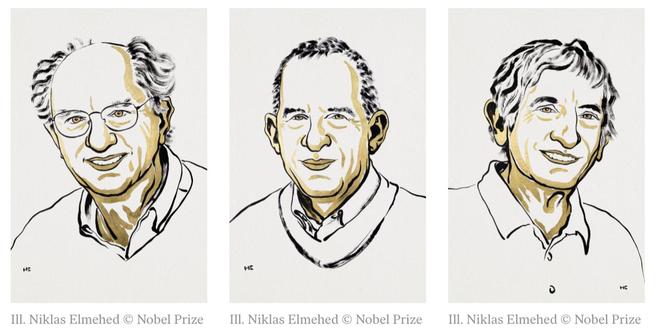
科普|让量子现象“肉眼可见”——2025年诺贝尔物理学奖成果解读
Xin Hua She· 2025-10-07 16:12
Core Insights - The 2025 Nobel Prize in Physics was awarded to John Clarke, Michel H. Devoret, and John M. Martinis for their groundbreaking discoveries that allow visibility of quantum phenomena previously confined to the microscopic realm, laying a solid foundation for the next generation of quantum technologies [1][2] Group 1: Experimental Achievements - The awarded scientists conducted pioneering experiments at the University of California, Berkeley, demonstrating a phenomenon where all charged particles in superconductors exhibit coordinated behavior, akin to a single particle [2] - Their experiments showcased macroscopic quantum tunneling, where a system initially trapped in a zero-voltage state successfully escaped to produce a measurable voltage, confirming the quantum nature of the system [2][3] Group 2: Historical Context - Quantum mechanics, established in 1925, has evolved over a century, becoming a cornerstone of modern physics, with the recent Nobel Prize achievements building on a century of scientific exploration [3] - The concept of quantum tunneling was first theorized by George Gamow in 1928, which laid the groundwork for its application in nuclear physics, leading to further studies in superconductivity [3] Group 3: Future Implications - The Nobel Prize committee highlighted that the recent achievements open doors to the development of next-generation quantum technologies, including quantum cryptography, quantum computers, and quantum sensors [4] - International collaboration is emphasized as crucial for advancing research in quantum mechanics, with many significant breakthroughs resulting from global partnerships [4][5]
三名量子物理学家获2025年诺贝尔物理学奖
Xin Hua She· 2025-10-07 13:06
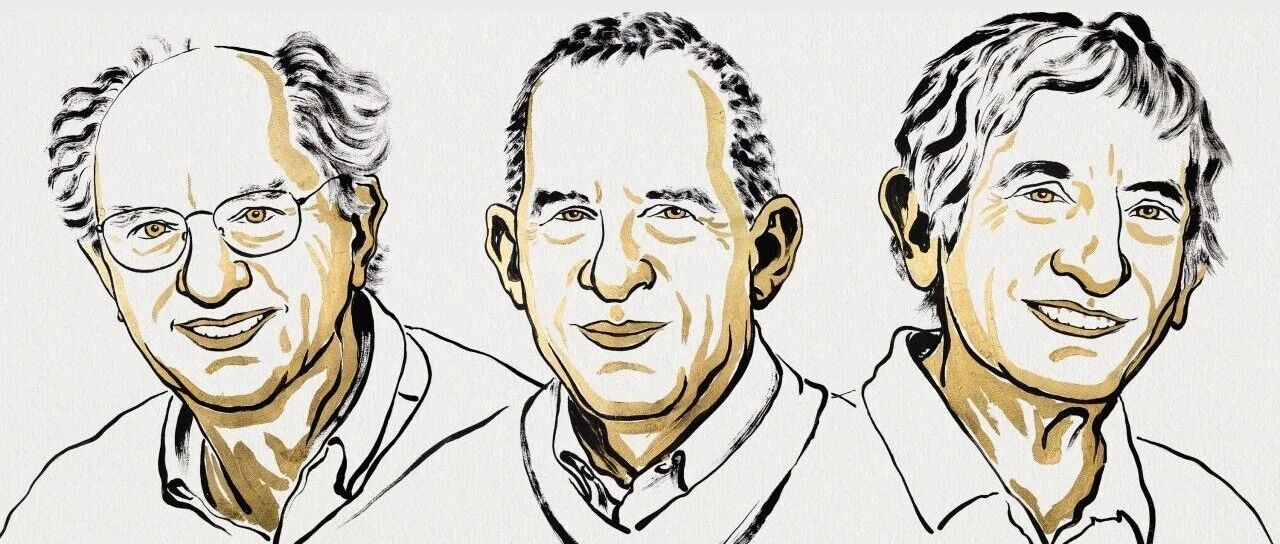
Core Points - The 2025 Nobel Prize in Physics will be awarded to John Clarke, Michel H. Devoret, and John M. Martinis for their contributions to the realization of macroscopic quantum tunneling effects and energy quantization in circuits [1][2] - The Nobel Prize committee highlighted that this year's achievements pave the way for the development of next-generation quantum technologies such as quantum cryptography, quantum computers, and quantum sensors [1] - The announcement coincides with the centenary of quantum mechanics, which has continuously provided new insights and serves as a foundation for digital technology [1] Summary by Categories Award Recipients - John Clarke, born in 1942 in the UK, is a professor at the University of California, Berkeley [2] - Michel H. Devoret, born in 1953 in France, is a professor at Yale University and the University of California, Santa Barbara [2] - John M. Martinis, born in 1958, is also a professor at the University of California, Santa Barbara [2] Prize Details - The three laureates will share a prize of 11 million Swedish Krona, approximately 1.17 million USD [3]
2025诺贝尔物理学奖花落宏观量子隧穿:他们在实验中「造出」了薛定谔的猫
机器之心· 2025-10-07 10:53
Core Viewpoint - The 2023 Nobel Prize in Physics was awarded to John Clarke, Michel H. Devoret, and John M. Martinis for their groundbreaking work demonstrating macroscopic quantum tunneling and energy quantization in superconducting circuits, paving the way for next-generation quantum technologies [2][5][11]. Group 1: Experimental Achievements - The laureates conducted a series of experiments in the 1980s that showcased how quantum tunneling effects can be observed at a macroscopic scale, specifically in superconducting circuits [11][12]. - They created a circuit with two superconductors separated by an insulating layer, demonstrating that charged particles in superconductors behave collectively as if they were a single particle [11][12]. - Their experiments confirmed that the superconducting system could escape a zero-voltage state through tunneling, producing measurable voltage and demonstrating quantized energy levels [12][28]. Group 2: Theoretical Implications - The experiments provide significant insights into quantum mechanics, illustrating how macroscopic phenomena can arise from the collective behavior of many microscopic particles [31][33]. - The work draws parallels to Schrödinger's cat thought experiment, suggesting that macroscopic quantum states can exist and be measured, challenging traditional views of quantum mechanics [31][33]. - The findings have implications for the development of quantum technologies, including quantum computing, by utilizing the principles of energy quantization demonstrated in their research [35][37]. Group 3: Future Applications - The research opens new avenues for experimental exploration of quantum phenomena, potentially leading to the creation of artificial atoms that can be used in quantum technology applications [35]. - John Martinis's subsequent work on quantum computers leverages the principles established by the Nobel laureates, indicating a direct application of their findings in advancing quantum computing technology [35].
首套全国产化硅光芯片“工具箱”发布;宁德时代骐骥重卡换电站落地福清丨智能制造日报
创业邦· 2025-09-29 04:13
Group 1 - The first electric vehicle battery swap station for heavy trucks, a collaboration between China Petroleum and Ningde Times, has officially opened in Fuzhou, enhancing the efficiency of electric heavy truck logistics along the coastal corridor [2] - A breakthrough in quantum computing has been achieved with the production of silicon-based quantum chips exceeding 99% fidelity in semiconductor factories, marking a significant step towards practical quantum computers [2] - The first fully domesticated silicon photonic chip toolkit has been released, enabling companies to shorten R&D cycles and reduce manufacturing costs, with performance meeting mass production requirements [2] Group 2 - A new high-capacity mobile energy storage system, capable of charging six vehicles simultaneously, has been launched in Chongqing, demonstrating versatility for various applications including emergency rescue and temporary power supply [2]



直击2025Inclusion·外滩大会见解论坛丨知名金融投资人拉斯·特维德:展望2040年 AI将达到人类智力水平的十万倍
Mei Ri Jing Ji Xin Wen· 2025-09-12 14:42
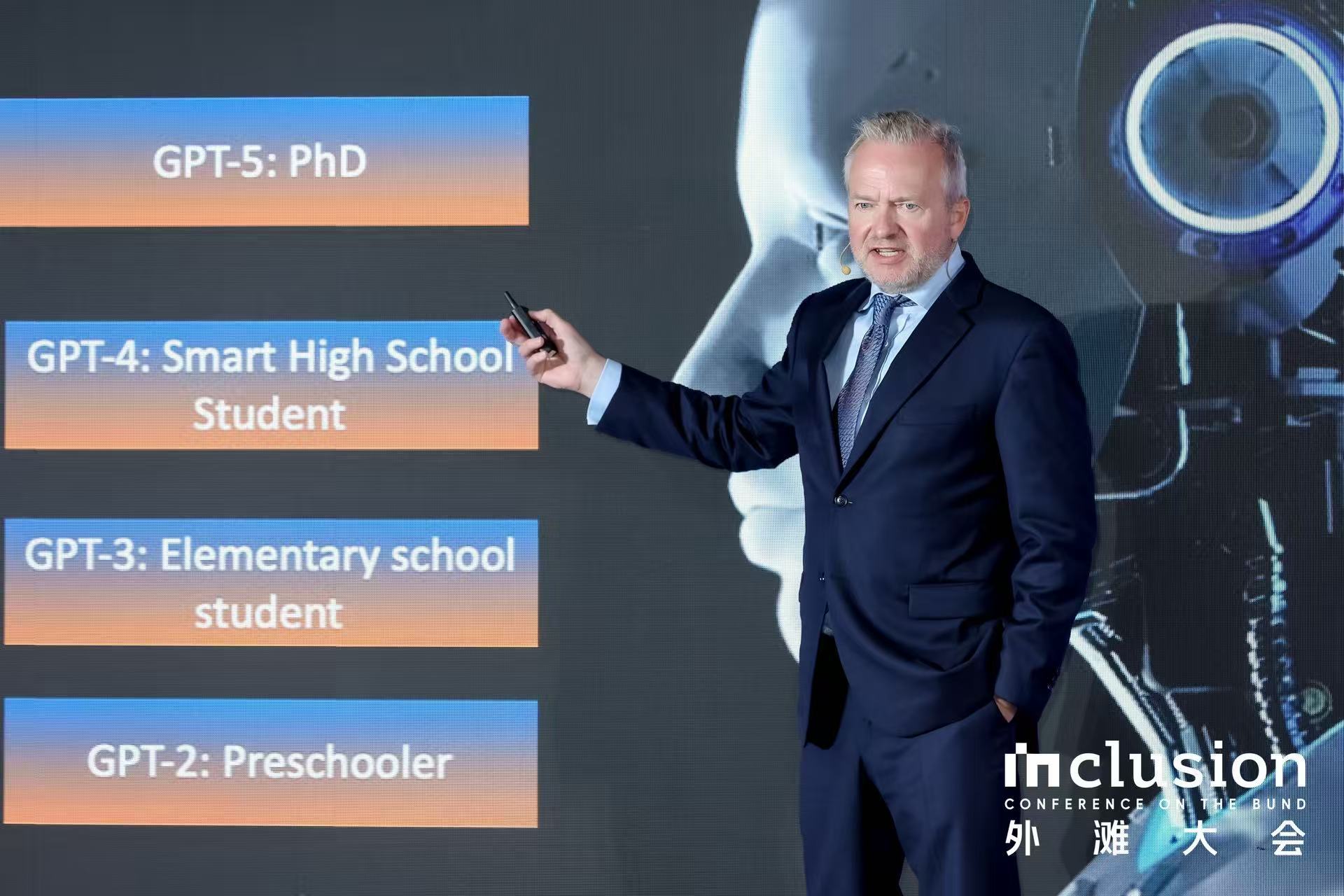
Group 1 - The forum titled "Let New Technologies No Longer 'Wait for the Wind': Financial Technology Supporting the New Triangle Cycle" was held in Shanghai, co-hosted by Daily Economic News and Shanghai Jiao Tong University [1] - Renowned financial investor and entrepreneur Lars Tvede delivered a keynote speech on "Foreseeing the Next Leap Era Led by AI" [1] Group 2 - Lars Tvede predicts that by 2050, there will be 4 billion AI-driven machines globally, contributing approximately 80% of measurable global GDP, significantly outpacing human contributions [2] - The cost of manufacturing a robot is projected to be around $10,000, which is one-fiftieth of the cost of training a human resource, which ranges from $100,000 to $400,000 [2] - Robots are expected to work at least ten times longer than humans annually, fundamentally altering the global economy [2] Group 3 - Tvede believes that AI will reach intelligence levels 100,000 times that of humans, and quantum computers will handle 10% of global computing tasks [3] - He cites Helion, a company working on nuclear fusion technology, which aims to provide power to Microsoft by 2028, indicating significant advancements in energy solutions [3] - The widespread implementation of nuclear fusion technology could take about 15 years, but it is expected to eventually resolve global energy issues [3]
科学家展示GKP量子比特通用逻辑门集
Ke Ji Ri Bao· 2025-08-24 23:33
Core Insights - The team from the University of Sydney's Nano Institute has successfully demonstrated a universal logic gate set for GKP quantum bits, significantly reducing the number of physical qubits required for computations, laying the groundwork for efficient quantum hardware information processing [1][2] Group 1: Quantum Computing Development - To build a usable large-scale quantum computer, it is essential to overcome errors that spontaneously occur in qubits during computations. Scientists typically use "logical qubits" to suppress these errors, but this approach requires a disproportionately high number of physical qubits, leading to exponential growth in hardware demands as scale increases, presenting an engineering challenge [1] - The GKP code translates continuous quantum oscillations into clean discrete states, making errors easier to identify and correct, thus encoding logical qubits in a more compact manner. For years, the GKP code remained theoretical due to its complexity, but this new research has successfully turned the theory into reality [1] Group 2: Quantum Logic Gates - Logic gates serve as information switches, enabling both classical and quantum computers to execute logical operations. Quantum logic gates operate using the entanglement between qubits, forming the foundation of quantum computing's immense potential. The recent achievement is attributed to newly developed quantum control software, which is designed based on physical models to minimize disturbances to the GKP code while maintaining its intricate structure during information processing [2] - The GKP error correction code has long been considered a solution to alleviate the resource constraints of quantum computers. The research results validate this concept's physical feasibility, suggesting that future quantum computers may find a new balance between hardware scale and operational efficiency, accelerating their transition from laboratory settings to practical applications [2]