
黑土地保护

Search documents
守好“耕地中的大熊猫” 黑龙江:创新农业技术手段 把中国饭碗端得更牢
Jing Ji Guan Cha Wang· 2025-10-19 03:40
Core Insights - The article highlights the ongoing agricultural activities in Heilongjiang, particularly the harvesting of crops and the scientific efforts to assess and improve soil quality in the region [2][3]. Group 1: Agricultural Practices and Crop Yield - As of October 10, Heilongjiang has harvested 111.08 million acres of crops, accounting for over 50% of the total area [2]. - The province's grain output is projected to exceed 160 billion jin in 2024, marking a 6.11% increase from 2020 and achieving 21 consecutive years of growth [3]. Group 2: Soil Quality and Research - The average organic matter content in Heilongjiang's soil is 40.3 grams per kilogram, an increase of 4.1 grams per kilogram since 2016 [3]. - The average thickness of the plow layer in waterlogged and dry fields has increased by 3.5 cm and 1.5 cm, respectively, since 2016 [3]. Group 3: Technological Advancements in Agriculture - Heilongjiang has established a standardized technical system for black soil protection, covering all soil types related to black land [4]. - The North China Agricultural Group has implemented three main types of technology for black soil protection, including integrated demonstration engineering, modern agronomic techniques, and biological measures [4]. Group 4: Innovative Farming Techniques - Water-fertilizer integration technology is being tested in various demonstration bases, which allows for precise and uniform delivery of fertilizers while reducing chemical fertilizer usage [6][7]. - The use of sensors in fields helps farmers monitor soil conditions and optimize fertilization based on real-time data [7]. Group 5: Challenges and Future Outlook - The promotion of agricultural technology faces challenges, particularly for small-scale farmers who may lack the necessary machinery [7]. - There is an increasing involvement of younger individuals in agricultural technology promotion, which is expected to enhance the effectiveness of black soil protection efforts in the future [8].

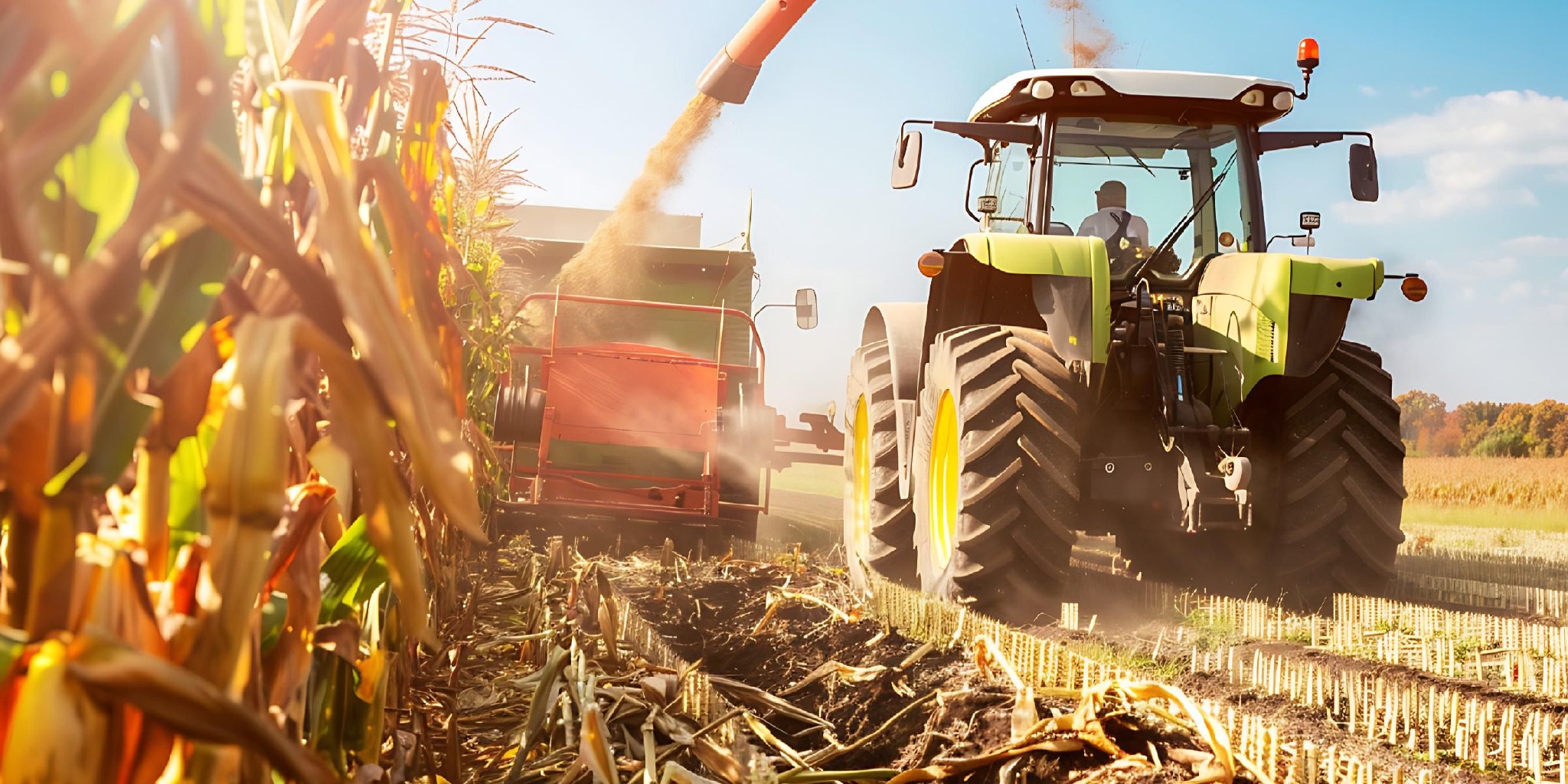
黑龙江累计建成高标准农田近1.2亿亩
Zhong Guo Xin Wen Wang· 2025-10-14 18:16
Core Points - Heilongjiang Province has built nearly 1.2 million acres of high-standard farmland, the largest scale in the country during the 14th Five-Year Plan period [1] - The province ranks first in the nation for cultivated land area, permanent basic farmland area, grain production, commodity volume, outflow volume, and reserve volume, contributing one out of every nine bowls of rice in China [1] - A collaborative food security guarantee system has been established in Heilongjiang, integrating production, purchase, storage, processing, sales, and management [1] - The province has implemented black soil protection projects covering 1 million acres to protect its fertile land [1] - The agricultural modernization level has significantly improved, with 100% coverage of high-quality seeds for major crops, a 70% contribution rate from agricultural technology progress, and over 99% comprehensive mechanization rate for crop farming [1] - The average yield of grain crops in Heilongjiang has exceeded 720 pounds per acre, an increase of 26.7 pounds per acre compared to the end of the 13th Five-Year Plan [1]
我国黑土地“变薄、变瘦、变硬”趋势得到初步遏制
Xin Hua Wang· 2025-10-06 05:11
Core Insights - The trend of "thinning, shrinking, and hardening" of black soil in China has been initially curbed during the 14th Five-Year Plan period [1] Group 1: Black Soil Protection Measures - The Ministry of Agriculture and Rural Affairs has implemented various measures including infrastructure construction, protective tillage, soil erosion prevention, and fertile layer cultivation [1] - Over 400 million acres of black soil have been protected cumulatively during this period [1] - A total of 33,000 erosion gullies have been treated as part of the black soil protection efforts [1]
农业现代化取得重要进展!“十四五”期间耕地面积和质量实现双提升
Sou Hu Cai Jing· 2025-09-16 15:23
Core Insights - During the "14th Five-Year Plan" period, China has achieved significant progress in agricultural modernization, with improvements in both the quantity and quality of arable land [1][3]. Group 1: Agricultural Land and Quality - The national arable land area reached 1.94 billion acres by the end of last year, an increase of 28 million acres compared to 2020 [3]. - Over 100 million acres of high-standard farmland have been established, which has effectively enhanced agricultural production capacity [5]. Group 2: Financial Investment - The central government has invested over 700 billion yuan during the "14th Five-Year Plan" period, with the average financial input per acre exceeding 2,000 yuan in 2024 [5]. Group 3: Soil and Land Management - The governance of degraded farmland is actively being promoted, with measures such as infrastructure construction for black soil, protective farming, and soil erosion prevention [7]. - More than 400 million acres of black soil have been protected, and 33,000 erosion gullies have been treated, effectively curbing the degradation of black soil [9]. Group 4: Agricultural Technology and Services - The contribution rate of agricultural technology progress reached 63.2%, with the comprehensive mechanization rate of crop planting, sowing, and harvesting exceeding 75% [11]. - Over 2 million farmer cooperatives and more than 4 million family farms have been cultivated, with over 1.1 million operational service entities providing services over 2.29 billion acres last year [13].
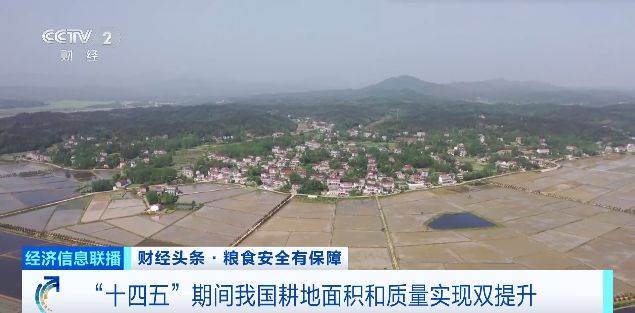
农业农村部强调耕地“红线”与专项整治“回头看”
Bei Jing Ri Bao Ke Hu Duan· 2025-09-16 04:03
Core Points - The Ministry of Agriculture and Rural Affairs emphasizes the importance of arable land and seeds for food production, stating that arable land is the lifeline of food production [2] - During the 14th Five-Year Plan period, the government aims to protect and improve the quality of arable land, ensuring food security through a three-pronged approach focusing on quantity, quality, and ecology [2] Group 1 - The government is committed to maintaining the red line of 1.8 billion acres of arable land, with a strict assessment and accountability system in place. As of the end of last year, the total arable land area reached 1.94 billion acres, an increase of 28 million acres since 2020 [2] - High-standard farmland construction is being actively promoted, with over 1 billion acres completed to date. The central government has invested over 700 billion yuan during the 14th Five-Year Plan, with an average investment of over 2,000 yuan per acre since 2020 [2][3] Group 2 - A thorough review and special rectification of the quality of high-standard farmland construction projects are being conducted, ensuring that any issues are addressed promptly without leaving problems for the future [3] - The government is actively promoting the restoration of degraded arable land, particularly focusing on black soil protection, with over 400 million acres of black soil protected and 33,000 erosion gullies treated [3] - A comprehensive soil survey was initiated in 2022, marking the third national soil survey since the 1980s, covering approximately 11 billion acres of farmland and some unused land, providing essential data for understanding soil quality and optimizing agricultural production [3]

吉林:“金色粮仓”扎根黑土地
Zhong Guo Zi Ran Zi Yuan Bao· 2025-08-27 01:04
Core Insights - The article emphasizes the importance of protecting and utilizing black soil, referred to as the "panda of arable land," to benefit the people sustainably [1][7] - The "Pear Tree Model" has been widely adopted in Jilin Province, leading to improved black soil protection and increased agricultural productivity [1][3] Group 1: Black Soil Protection and Agricultural Practices - Jilin Province, located in the core area of black soil, contributes over 80% of the province's grain output, particularly high-quality corn [1][2] - The adoption of the "Pear Tree Model" has resulted in a significant recovery of soil quality, with corn yields exceeding 2,000 pounds per acre and net income per acre over 1,200 yuan [2][3] - The implementation of corn straw coverage and no-till planting has led to a gradual restoration of soil fertility and stable grain production [3][4] Group 2: Regulatory Framework and Monitoring - Jilin has established a comprehensive regulatory framework for black soil protection, including the delineation of protected farmland areas [4][5] - The province has designated 10,944 million acres of arable land for protection, with 8,201 million acres classified as permanent basic farmland [4][5] - A grid-based monitoring system has been implemented, involving over 43,000 personnel to ensure compliance with land protection regulations [6] Group 3: Community Engagement and Economic Impact - Local farmers have recognized the benefits of the "Pear Tree Model," leading to increased community involvement in black soil protection [4][6] - The number of cooperative members has grown from 6 to approximately 180, with an average annual income of 70,000 to 80,000 yuan per household [2][3] - The article highlights the positive economic impact of improved soil quality and agricultural practices on local communities [2][3][6]
8月24日晚间央视新闻联播要闻集锦
Yang Shi Xin Wen Ke Hu Duan· 2025-08-24 13:00
Group 1 - The protection of black soil is emphasized as a major task to ensure national food security, with significant improvements in soil quality in Northeast China over the past decade [2] - The "Northeast Black Soil Protection and Utilization Pilot" project has been implemented since 2015, leading to notable achievements in black soil conservation [2] Group 2 - Tianjin is actively promoting the deep integration of technological and industrial innovation to provide new momentum for building a modern industrial system [3] Group 3 - In the first half of the year, traditional villages across the country attracted nearly 300 million tourists, highlighting the effectiveness of cultural empowerment in promoting unique development [4] Group 4 - The mechanical industry in China has maintained a growth trend in the first seven months of the year, with significant increases in various sectors, including general equipment manufacturing (up 8.3%), automotive manufacturing (up 10.9%), and electrical machinery (up 11.9%) [9]

500万亩黑土地将获“精准呵护”
Ren Min Ri Bao· 2025-08-19 22:46
Core Viewpoint - The implementation plan for the "Liaoning Province 2025 Provincial Black Land Protection Project" has been officially released, aiming to protect 5 million acres of black land in typical black soil areas and establish demonstration zones with fertile soil and stable production capacity [1] Group 1: Project Objectives - The project focuses on implementing straw returning, compost returning, cultivating thick arable layers, monitoring and evaluation, and data integration [1] - Specific measures for straw returning will vary based on water-heat conditions, terrain, farming practices, and agricultural mechanization levels [1] Group 2: Technical Measures - For dry land, techniques such as crushing and turning straw back, mixing straw, shallow tillage, and covering will be adopted [1] - For paddy fields, methods like autumn wet plowing, autumn burying, and spring stubble turning will be promoted [1] Group 3: Capacity Building - Liaoning will enhance technical integration and guidance, increasing training for grassroots agricultural technicians and new agricultural operators [1] - The plan includes interpreting black land protection regulations and policies, cultivating local "soil experts," and improving comprehensive technical models for black land protection [1]
辽宁启动省级黑土地保护项目 500万亩黑土地将获“精准呵护”
Ren Min Ri Bao· 2025-08-19 22:14
Core Points - The Liaoning Provincial Agricultural and Rural Affairs Department has officially released the "Implementation Plan for the Provincial Black Soil Protection Project by 2025" [1] - The plan aims to implement black soil protection over 5 million acres in typical black soil areas and establish demonstration zones with fertile soil, good ecology, and stable production capacity [1] Summary by Relevant Sections - **Project Scope and Goals** - The project will focus on black soil protection across 5 million acres, creating concentrated and well-equipped demonstration areas [1] - **Key Implementation Strategies** - The project includes measures such as straw returning, compost returning, cultivating thick fertile layers, monitoring and evaluation, and data integration [1] - Specific techniques for straw returning will vary based on local conditions, including dry land and paddy field practices [1] - **Technical Support and Training** - Liaoning will enhance technical integration and guidance, providing training for grassroots agricultural technicians and new agricultural operators [1] - The initiative aims to interpret black soil protection regulations and cultivate local "soil experts" to apply integrated technical models effectively [1]
今年我省“精耕细作”500万亩黑土地
Liao Ning Ri Bao· 2025-08-17 01:59
Core Insights - The article discusses the implementation of the "Liaoning Province 2025 Provincial Black Land Protection Project," which aims to enhance soil quality and agricultural productivity through specific measures [1][2] Group 1: Project Overview - The project will focus on implementing black land protection measures across 5 million acres in typical black soil areas, establishing demonstration zones with fertile soil and stable production capacity [1] - Key counties selected for the project include 10 areas such as Xinmin City and Liaozhong District, with a total of 1 million acres designated for "straw returning + compost returning" practices [1] Group 2: Implementation Strategies - The project emphasizes various techniques for straw returning based on local conditions, including methods for dry and wet fields to optimize soil health [2] - Financial support will be provided, with a maximum subsidy of 25 yuan per acre for straw returning and 100 yuan per acre for combined practices [2] Group 3: Technical Support and Training - The project will enhance technical guidance and training for agricultural technicians and new agricultural operators, focusing on integrating technology and improving black land protection practices [2]