
多边主义

Search documents
中国和加拿大领导人会晤联合声明
国家能源局· 2026-01-16 11:40
Core Viewpoint - The meeting between Chinese and Canadian leaders emphasizes strengthening bilateral cooperation in various sectors, particularly in energy, trade, and public safety, while reaffirming mutual respect and commitment to a new strategic partnership [4][5]. Group 1: Energy Cooperation - Both countries agree to support exchanges and cooperation in the clean energy sector and enhance collaboration in traditional energy resources such as oil and natural gas. They will initiate a ministerial-level energy dialogue to identify key areas for mutual investment and trade in both clean and traditional energy [5][11]. Group 2: Economic and Trade Relations - The leaders have decided to restart high-level economic and financial strategic dialogues to discuss a wide range of topics and strengthen bilateral economic ties. They aim to expand bilateral trade and enhance two-way investment, emphasizing the importance of a fair and open business environment for enterprises [5][6]. Group 3: Multilateralism and Global Governance - Both parties reaffirm their commitment to multilateralism and support the United Nations' central role in international affairs. They agree to collaborate on global governance issues, including the implementation of the UN 2030 Sustainable Development Agenda and reforms in the international financial system [7]. Group 4: Cultural and Human Exchange - The leaders recognize that personnel exchanges are fundamental to bilateral relations and agree to enhance cultural exchanges to foster mutual understanding and cooperation. They will restart the China-Canada Cultural Joint Committee and facilitate media operations in each other's countries [6][8]. Group 5: Signed Cooperation Documents - During the visit, several cooperation documents were signed, including agreements on crime fighting, modern wood structure construction, and food safety, which reflect the broad scope of collaboration between the two nations [8][11].


近700亿美元、40个成员、361个项目……“数”览亚投行正式运营十周年成效
Yang Shi Wang· 2026-01-16 10:07
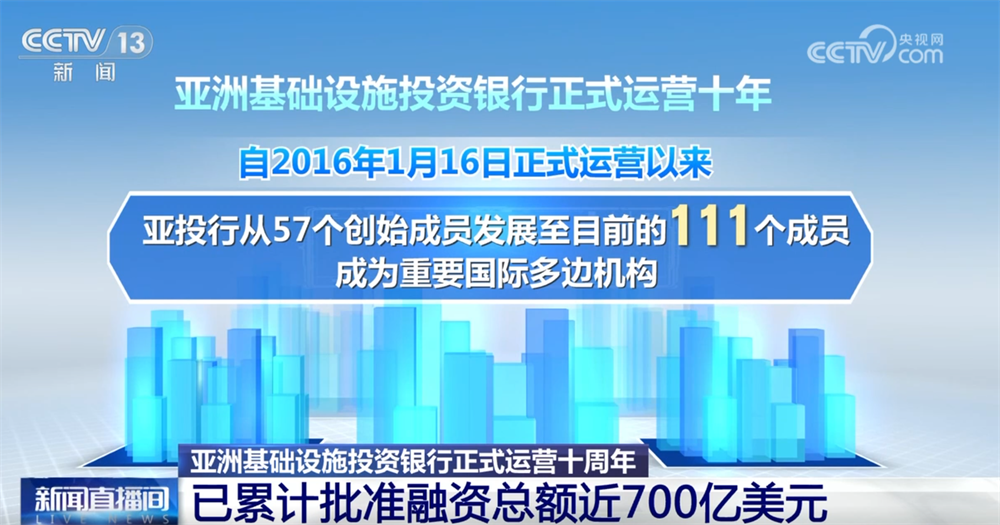
Core Insights - The Asian Infrastructure Investment Bank (AIIB) has officially operated for ten years as of January 16, 2026, approving nearly $70 billion in financing [1][3] - AIIB has expanded from 57 founding members to 111 members, becoming a significant international multilateral institution [3] - The bank has approved 361 projects across various sectors, including energy, transportation, digital economy, and urban renewal [3] Group 1 - AIIB's new president, Zhao Jia Yi, emphasized the commitment to multilateralism and regional cooperation, focusing on high-quality, sustainable infrastructure development [5] - The bank aims to promote economic growth, digital development, environmental protection, and connectivity among its members [5] - AIIB seeks to collaborate closely with members and partners to implement more projects, enhance development effectiveness, and strengthen regional resilience [5]
何立峰将出席世界经济论坛2026年年会并访问瑞士,外交部介绍有关安排
Xin Lang Cai Jing· 2026-01-16 09:52
Group 1 - The Chinese Vice Premier He Lifeng will attend the World Economic Forum Annual Meeting in Davos, Switzerland, from January 19 to 22, 2026, at the invitation of the World Economic Forum and the Swiss Federal Government [1][3] - The theme of this year's forum is "Spirit of Dialogue," addressing the current global economic uncertainties and the need for cooperation to enhance global economic stability and development [1][3] - The meeting will serve as a platform for discussing global economic trends and promoting collaborative development, with an emphasis on multilateralism and an open world economy [1][3] Group 2 - During his visit, He Lifeng will meet with Swiss Federal President and Minister of Economic Affairs, Education and Research, Parmelan, to discuss enhancing Sino-Swiss relations and practical cooperation [3] - The year 2026 marks the 10th anniversary of the Sino-Swiss Innovation Strategic Partnership and the beginning of China's 14th Five-Year Plan, presenting new opportunities for cooperation [3] - The visit aims to expand cooperation areas and achieve more mutually beneficial outcomes in the Sino-Swiss Innovation Strategic Partnership [3]
中加领导人会晤联合声明
财联社· 2026-01-16 08:48
Core Viewpoint - The meeting between Chinese and Canadian leaders emphasizes the commitment to strengthen bilateral relations and cooperation across various sectors, including economy, trade, energy, and cultural exchanges [2][3][5]. Group 1: Bilateral Relations - The leaders reaffirmed the guiding principles of China-Canada relations, with Canada reiterating its commitment to the One China policy [2]. - Both sides agreed to enhance dialogue and cooperation at all levels to advance the new strategic partnership for mutual benefit [2]. Group 2: Economic and Trade Cooperation - The leaders decided to restart high-level economic and financial strategic dialogues to discuss a wide range of topics and strengthen bilateral economic ties [3]. - They welcomed progress in trade negotiations and committed to expanding bilateral trade and investment, emphasizing the importance of a fair and open business environment [3]. - The signing of the "China-Canada Economic and Trade Cooperation Roadmap" was highlighted as a significant step towards addressing bilateral trade issues [3][10]. Group 3: Energy Collaboration - Both countries agreed to support cooperation in clean energy and traditional energy resource development, initiating a ministerial-level energy dialogue [3]. - They committed to responsible management of bilateral civil nuclear energy cooperation and enhancing trade in natural uranium [3]. Group 4: Financial Cooperation - The establishment of a China-Canada financial working group was welcomed to enhance communication on financial issues [4]. - The leaders endorsed the signing of the third extension and revision agreement for the bilateral currency swap agreement between the People's Bank of China and the Bank of Canada [4]. Group 5: Public Safety and Law Enforcement - Both sides agreed to strengthen law enforcement cooperation to combat corruption and transnational crimes, including drug trafficking [4]. - The continuation of the annual meetings of the China-Canada law enforcement cooperation working group was confirmed [4]. Group 6: Cultural and Human Exchange - The leaders recognized the importance of people-to-people exchanges and agreed to enhance cultural cooperation to foster mutual understanding [4]. - The resumption of the China-Canada Cultural Joint Committee was decided, along with support for media operations in each other's countries [4]. Group 7: Multilateral Cooperation - Both countries reaffirmed their commitment to multilateralism and the role of the United Nations in international affairs [5]. - They agreed to collaborate on global governance initiatives and support Canada's bid to host the APEC meeting in 2029 [5]. Group 8: Signed Cooperation Documents - Several cooperation documents were signed during the visit, including memorandums on crime fighting, modern wood construction, and food safety [7][10].

中国和加拿大领导人会晤联合声明
中国能源报· 2026-01-16 08:44
中国和加拿大领导人会晤联合声明 一、应中华人民共和国国务院总理李强邀请,加拿大总理马克·卡尼于2026年1月14日至 1 7日对中国进行正式访问。访问期间,中华人民共和国主席习近平会见卡尼总理,国务院 总理李强同卡尼总理举行会谈,全国人民代表大会常务委员会委员长赵乐际同卡尼总理会 见。两国领导人就中加关系及共同关心的国际和地区问题深入、务实、建设性交换意见。 二、两国领导人重申中加关系指导原则和政策。加方重申其长期坚持一个中国政策的承 诺。双方致力于本着相互尊重、平等互利的精神推进中加新型战略伙伴关系,更好造福两 国人民。 三、两国领导人欢迎近期两国对话取得的进展,同意加强各层级交往,推动在以下领域取 得成果: ——宏观经济。双方决定重启高级别的中加经济财金战略对话,讨论广泛议题,加强双边 经济关系。 ——经贸。两国领导人同意加强中加经贸伙伴关系,欢迎在磋商解决贸易问题上取得的进 展。双方致力于扩大双边贸易,加强双向投资,并在具有共同利益的诸多领域深化合作。 双方重申为两国企业提供公平和开放营商环境的重要性,致力于通过建设性磋商推动解决 彼此经贸关切,包括通过强化的中加经贸联合委员会。两国领导人欢迎签署《中国 ...

中国和加拿大领导人会晤联合声明:为清洁和传统能源双向投资和贸易提供支持
Xin Hua She· 2026-01-16 08:33
Group 1: Core Points - The meeting between Chinese and Canadian leaders resulted in a joint statement emphasizing the commitment to mutual respect and benefit in advancing the new strategic partnership between the two countries [3][4] - Both countries agreed to enhance cooperation in various sectors, including macroeconomics, trade, energy, finance, public safety, cultural exchange, and multilateralism [4][5][6] Group 2: Energy Cooperation - China and Canada agreed to support exchanges and cooperation in the clean energy sector and to strengthen collaboration in the development of traditional energy resources such as oil and natural gas [4] - A ministerial energy dialogue will be initiated to identify key areas for bilateral investment and trade in both clean and traditional energy [4] Group 3: Trade and Economic Relations - The leaders agreed to restart high-level economic and financial strategic dialogues to discuss a wide range of topics and strengthen bilateral economic relations [4] - Both parties expressed commitment to expanding bilateral trade and enhancing two-way investment, while also emphasizing the importance of a fair and open business environment for enterprises [4] Group 4: Signed Cooperation Documents - Several cooperation documents were signed during the visit, including agreements on crime fighting, modern wood structure construction, economic cooperation roadmap, cultural exchange, food safety, and energy cooperation [7]
亚投行正式运营十年 累计批准融资近700亿美元
Yang Shi Xin Wen· 2026-01-16 07:22
(文章来源:央视新闻) 数据显示,自2016年1月16日正式运营以来,亚投行从57个创始成员发展至目前的111个成员,成为重要 国际多边机构。十年间批准361个项目,覆盖能源、交通、数字经济、城市更新等多个领域,累计批准 融资近700亿美元,惠及40个亚洲域内与域外成员。 亚投行新任行长兼董事会主席邹加怡表示,亚投行将坚持多边主义,深化区域合作,持续支持高质量、 可持续基础设施建设,推动经济增长,促进数字化发展,保护自然环境,拓展互联互通,为成员创造更 多发展机遇。亚投行期待与各成员、合作伙伴紧密协作,通过务实行动推动更多项目落地,提升发展成 效,增强地区韧性,推动亚洲及更广泛地区可持续发展。 今天(16日)是亚洲基础设施投资银行正式运营十周年,自2016年正式运营以来,亚投行在推动区域互 联互通与可持续基础设施发展建设等领域,发挥了重要作用。 ...
邹加怡出任亚洲基础设施投资银行行长
Xin Lang Cai Jing· 2026-01-16 07:08
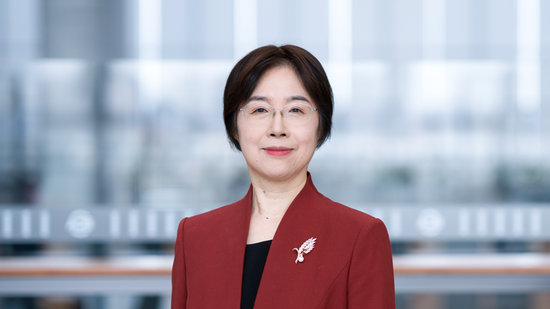
2025年6月,亚投行理事会选举邹加怡为新任行长。亚投行首任行长金立群于2026年1月15日届满卸任。 1月16日金融一线消息,据"亚洲基础设施投资银行"微信公众号,今日,邹加怡正式就任亚洲基础设施 投资银行(亚投行)行长兼董事会主席。 邹加怡在就任致辞中表示,踏上新的发展征程,亚投行肩负更加重要的使命。面对全球共同挑战,唯有 加强合作,方能有效应对。她指出,通过推动国际合作和基础设施发展,可以为建设更加美好的世界作 出积极贡献,而亚投行在实现这一愿景方面具有独特优势。 邹加怡表示,亚投行将坚持多边主义,深化区域合作,持续支持高质量、可持续基础设施建设,推动经 济增长,促进数字化发展,保护自然环境,拓展互联互通,为成员创造更多发展机遇。 邹加怡在就任致辞中表示,踏上新的发展征程,亚投行肩负更加重要的使命。面对全球共同挑战,唯有 加强合作,方能有效应对。她指出,通过推动国际合作和基础设施发展,可以为建设更加美好的世界作 出积极贡献,而亚投行在实现这一愿景方面具有独特优势。 邹加怡表示,亚投行将坚持多边主义,深化区域合作,持续支持高质量、可持续基础设施建设,推动经 济增长,促进数字化发展,保护自然环境,拓展互联互 ...
习近平会见加拿大总理卡尼
中国基金报· 2026-01-16 06:21
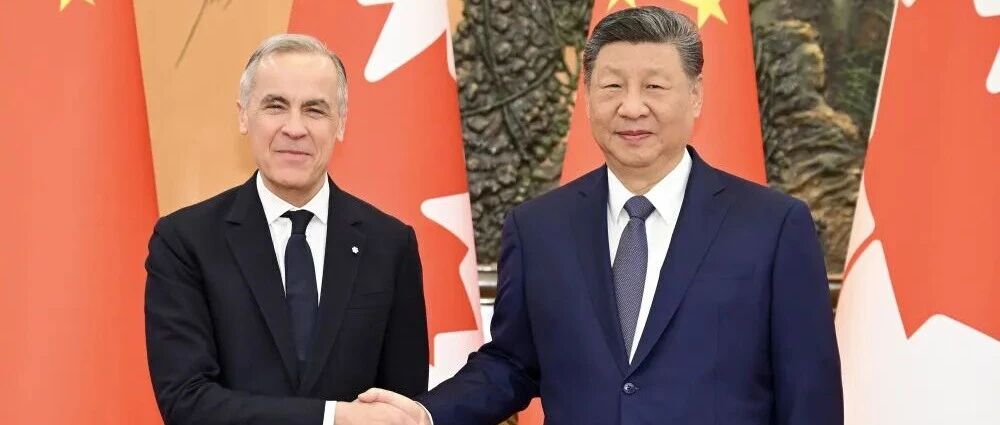
Core Viewpoint - The meeting between Chinese President Xi Jinping and Canadian Prime Minister Carney emphasizes the importance of a new type of strategic partnership between China and Canada, focusing on mutual respect, common development, trust, and cooperation to benefit both nations and contribute to global stability [2][3][5]. Group 1: Key Points from Xi Jinping's Remarks - Xi highlighted the need for mutual respect as partners, acknowledging the historical ups and downs in China-Canada relations over the past 55 years, and the importance of respecting each other's sovereignty and political systems [3]. - He stressed the essence of mutual development, indicating that the economic relationship is mutually beneficial, and China's high-quality development will continue to provide new opportunities for cooperation [3]. - Xi called for building mutual trust, emphasizing the importance of people-to-people connections through education, culture, tourism, and sports to strengthen the foundation of public opinion [3]. - He advocated for mutual cooperation, stating that a divided world cannot address common challenges, and emphasized the need for true multilateralism and a shared human destiny [3]. Group 2: Key Points from Canadian Prime Minister Carney's Remarks - Carney acknowledged the long-standing friendly relations between Canada and China, highlighting the economic complementarity and shared interests that present numerous opportunities for collaboration [5]. - He reiterated Canada's commitment to the One China policy and expressed a desire to work together with China in various fields, including trade, energy, agriculture, finance, education, and climate change [5]. - Carney emphasized that multilateralism is the cornerstone of global security and stability, and he recognized the significance of Xi's global governance initiatives in the current complex international landscape [5].
金立群时代的亚投行:聚焦基础设施、坚持多边主义
Xin Lang Cai Jing· 2026-01-16 04:29
Core Insights - The Asian Infrastructure Investment Bank (AIIB) has made significant strides in infrastructure financing under the leadership of its first president, Jin Liqun, who has completed a decade in office [1][9][15] - AIIB aims to be a specialized, efficient institution focused on infrastructure, differentiating itself from other multilateral development banks like the World Bank and ADB [1][9] - The bank has received the highest credit ratings from major international rating agencies, indicating strong financial stability and governance [2][10][14] Group 1: Achievements and Impact - Since its inception, AIIB has approved 360 projects with nearly $70 billion in financing, leveraging over $200 billion in infrastructure investments across Asia, Africa, and beyond [3][11] - Notable projects include the upgrade of Bangladesh's power distribution system, urban improvements in Indonesia, rural road projects in Côte d'Ivoire, and landslide risk reduction initiatives in Sri Lanka [3][11] - AIIB's projects are designed not only to be completed on time but also to significantly improve the lives of local communities and promote sustainable development [3][11] Group 2: Governance and Structure - AIIB's governance structure emphasizes a balance between developing and developed countries, with approximately 70% of shares held by regional members and 30% by non-regional members [5][13] - The bank has established a strong capital base and governance framework, which has helped it gain recognition as a key player in global development [2][10][14] - Jin Liqun has emphasized that AIIB is a "global public good" aimed at complementing the existing international financial system rather than serving the interests of any single country [6][14] Group 3: Future Goals and Strategies - AIIB plans to expand its annual financing to $17 billion by 2030, with a focus on increasing private capital involvement and ensuring that climate financing constitutes 50% of its approved financing [6][14] - The bank has built a broad global cooperation network, with over half of its projects co-financed with other multilateral development institutions [15] - The new president, Zhao Jia Yi, is expected to continue AIIB's positive trajectory and enhance its role in promoting regional connectivity and economic integration [15]