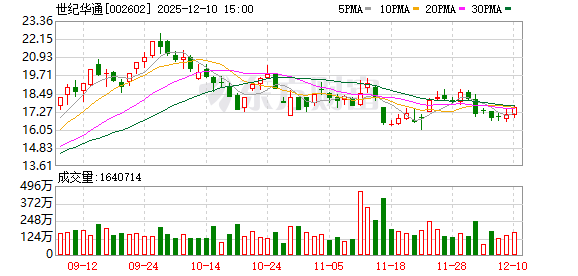
元宇宙

Search documents
PLM系统推荐十大国产电商平台对接功能
Sou Hu Cai Jing· 2025-12-11 04:12
Core Insights - The integration between PLM (Product Lifecycle Management) systems and e-commerce platforms is crucial for modern enterprises, enabling seamless data flow from product design to market launch, thereby enhancing operational efficiency and market responsiveness [2][3]. Importance of Integration - In a fast-paced e-commerce environment, the traditional manual processes for transferring product information are inefficient and error-prone, leading to potential customer complaints and returns [3]. - Deep integration between PLM systems and e-commerce platforms addresses these pain points by automating data transfer, significantly reducing time to market and ensuring consistency across channels [3][6]. Evaluation of Integration Capabilities - Assessing the quality of integration requires a multi-dimensional approach, focusing on the depth and breadth of data synchronization [4][5]. - Effective integration should cover not only basic product attributes but also complex data such as BOM (Bill of Materials) and technical documents, enhancing customer trust [5]. Automation and Efficiency - The ultimate goal of integration is to achieve automation, allowing for real-time updates of product data across platforms without manual intervention, thus minimizing errors [6]. - For instance, a case study showed that a well-integrated PLM solution reduced the time to launch new products from an average of 2 days to just 2 hours, achieving a data accuracy rate of over 99.9% [6]. System Compatibility and Scalability - PLM systems must be compatible with existing IT ecosystems, including ERP, SCM, and CRM systems, and should offer standard API interfaces for easy integration [7]. - As businesses grow, the ability to handle cross-border e-commerce with multi-language and multi-currency support becomes essential for the sustainability of digital strategies [9]. Ranking of E-commerce Platforms - A ranking of domestic e-commerce platforms based on their integration capabilities highlights the strengths of various platforms, such as CAXA, Alibaba, and JD, in terms of maturity, depth, and versatility of integration [10][12]. Implementation Success Factors - Successful integration requires accurate, complete, and structured data within the PLM system, as well as a clear understanding of business processes and reliable service providers [14]. - Future trends indicate a shift towards intelligent integration, leveraging AI to enhance the synergy between PLM and e-commerce [13]. Conclusion - The integration of PLM systems with e-commerce platforms is essential for maintaining competitiveness in the digital age, serving as a core component for data-driven business operations [15].

参投摩尔线程,世纪华通浮盈超6亿元
Zheng Quan Shi Bao· 2025-12-11 01:32
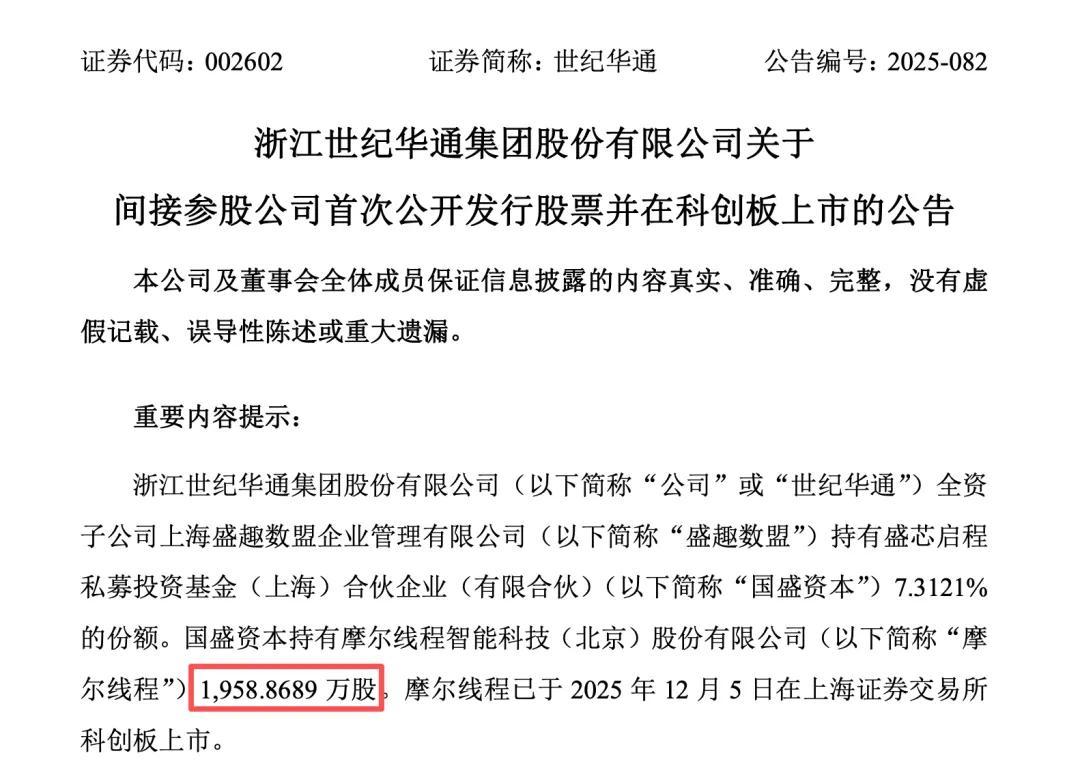
Core Insights - Moore Threads (688795) has successfully gone public, with its stock price experiencing significant increases, benefiting several A-share companies [1][3] Group 1: Century Huatong's Investment in Moore Threads - Century Huatong (002602) disclosed its specific holdings in Moore Threads, indicating that its wholly-owned subsidiary holds a 7.31% stake in Guosheng Capital, which owns 19.5887 million shares of Moore Threads, representing 4.90% of the pre-IPO total shares and 4.17% post-IPO [2] - The estimated impact of Century Huatong's stake in Moore Threads on its net profit for Q4 2025 is approximately 640 million yuan, accounting for 53% of the audited net profit for 2024 [2] - Century Huatong's investment in Moore Threads aligns with its strategy in the metaverse hardware ecosystem, having previously invested in leading companies in the AR display and GPU sectors [3] Group 2: Market Performance and Valuation - Moore Threads' stock surged by 425.46% on its first trading day and reached 735 yuan per share on December 10, resulting in a market capitalization of 345.5 billion yuan [3] - Century Huatong's stock has increased by over 240% this year, with a current market value of 130.5 billion yuan [4] - Other A-share companies, such as Heertai, have also invested in Moore Threads, holding 4.1051 million shares valued at approximately 3 billion yuan based on the December 10 closing price [4]

参投摩尔线程 A股游戏龙头世纪华通浮盈超6亿元
Cai Jing Wang· 2025-12-11 01:24
Core Viewpoint - Moore Threads has successfully gone public, leading to significant stock price increases, which may benefit several A-share companies, particularly Century Huatong [1][2]. Group 1: Century Huatong's Investment in Moore Threads - Century Huatong's wholly-owned subsidiary, Shanghai Shengqu Shuming Enterprise Management Co., holds a 7.31% stake in Guosheng Capital, which owns 19.5887 million shares of Moore Threads, representing 4.90% of the pre-IPO total shares and 4.17% post-IPO [1]. - The fair value of Century Huatong's stake in Guosheng Capital is classified as "financial instruments measured at fair value with changes recognized in profit or loss," reported under "other non-current financial assets" [1]. - Based on Moore Threads' closing price on December 10, 2025, the estimated impact on Century Huatong's net profit for Q4 2025 is approximately 640 million yuan, accounting for 53% of the audited net profit attributable to shareholders for 2024 [1]. Group 2: Market Performance and Future Outlook - After its IPO on December 5, Moore Threads' stock surged by 425.46%, reaching 735 yuan per share on December 10, with a market capitalization of 345.5 billion yuan [2]. - Century Huatong has invested in Moore Threads for several years, focusing on the metaverse hardware ecosystem, including investments in leading companies like Guangzhou Semiconductor and Moore Threads [2]. - Century Huatong reported a significant revenue increase of 75.3% year-on-year, with total revenue of 27.2 billion yuan and a net profit of 4.36 billion yuan, up 141.7% year-on-year for the first three quarters of the year [2]. Group 3: Other A-share Companies Involved - Other A-share companies, such as Heertai, have also invested in Moore Threads, with Heertai holding approximately 4.1051 million shares, valued at around 3 billion yuan based on Moore Threads' closing price on December 10 [3].
合肥新站高新区专项赛圆满举行
Jing Ji Ri Bao· 2025-12-10 22:17
Group 1 - The 2025 National General Artificial Intelligence Innovation Application Competition's Hefei New Station High-tech Zone Special Competition focuses on the "AI + Metaverse" track, held on December 10 at the Shaoquan Lake Science and Technology Innovation Center [1] - The competition is organized by the China Computer Federation and the Anhui Provincial Department of Science and Technology, with support from various local institutions [1] - The event targets innovative teams without established companies and high-growth technology startups with independent intellectual property, focusing on wearable devices, digital twins, digital humans, data labeling, components, and basic software in the metaverse and AI sectors [1] Group 2 - Prizes for the special competition include a maximum of 500,000 yuan for first place, 300,000 yuan for second place, and 200,000 yuan for third place, with additional funding from the Hefei New Station High-tech Zone [1] - The total prize for the finals can reach up to 1 million yuan at the provincial level and 500,000 yuan at the district level [1] - Winning projects that register in Anhui will benefit from local policies promoting high-quality development in the AI industry and support for the metaverse industry [1] Group 3 - A project landing negotiation meeting, scenario release conference, and business environment promotion meeting will be held on the same day as the competition, with over 200 participants from government, academia, enterprises, investment, media, and other sectors [2] - The aim is to explore the innovative value of AI + Metaverse and assist Hefei in becoming a national hub for artificial intelligence and metaverse innovation [2]
参投摩尔线程 世纪华通浮盈超6亿元
Zheng Quan Shi Bao· 2025-12-10 19:57
Core Viewpoint - Moore Threads has successfully gone public, leading to a significant increase in its stock price, which is expected to benefit several A-share companies, particularly Century Huatong [1] Group 1: Century Huatong's Investment in Moore Threads - Century Huatong's wholly-owned subsidiary, Shanghai Shengqu Shuming Enterprise Management Co., holds a 7.31% stake in Guosheng Capital, which owns 19.5887 million shares of Moore Threads, representing 4.90% of the total shares before the IPO and 4.17% after [2] - The fair value of Century Huatong's stake in Guosheng Capital is classified as a financial instrument measured at fair value with changes recognized in profit or loss, reported under "other non-current financial assets" [2] - Based on Moore Threads' closing price on December 10, 2025, the estimated impact on Century Huatong's net profit for Q4 2025 is approximately 640 million yuan, accounting for 53% of the audited net profit attributable to shareholders for the fiscal year 2024 [2] Group 2: Performance of Moore Threads - Moore Threads experienced a remarkable first-day increase of 425.46% after its listing on December 5, and on December 10, its stock price rose to 735 yuan per share, with a market capitalization reaching 345.5 billion yuan [3] - Century Huatong has invested in Moore Threads for several years, focusing on the metaverse hardware ecosystem, including investments in leading companies like Guangzhou Semiconductor and Moore Threads [3] - Moore Threads aims to develop a new generation of GPUs for metacomputing applications, creating a comprehensive computing platform that integrates visual computing, 3D graphics, scientific computing, and AI computing [3] Group 3: Century Huatong's Financial Performance - Century Huatong reported a significant revenue increase of 75.3% year-on-year, reaching 27.2 billion yuan in the first three quarters of this year, with a net profit of 4.36 billion yuan, reflecting a year-on-year growth of 141.7% [3] - The company's stock has risen over 240% this year, with a current market capitalization of 130.5 billion yuan [4] Group 4: Other A-share Companies' Involvement - Other A-share companies, such as Heertai, have also invested in Moore Threads, with Heertai holding 4.1051 million shares, valued at approximately 3 billion yuan based on Moore Threads' closing price on December 10 [4]
参投摩尔线程,A股游戏龙头或赚超6亿元
证券时报· 2025-12-10 19:42
Core Viewpoint - The article discusses the successful listing of the domestic GPU leader, Moer Thread (688795), and the potential benefits for several A-share companies, particularly Century Huatong (002602), which has invested in Moer Thread [1][3]. Group 1: Investment Details - Century Huatong's wholly-owned subsidiary, Shanghai Shengqu Shuming Enterprise Management Co., Ltd., holds a 7.3121% stake in Guosheng Capital, which owns 19.588689 million shares of Moer Thread, accounting for 4.8968% of the total shares before the IPO and 4.1676% after the IPO [3]. - The fair value of Century Huatong's stake in Moer Thread is expected to impact its net profit by approximately 640 million yuan for Q4 2025, representing about 53% of the audited net profit attributable to shareholders for 2024 [3][5]. Group 2: Market Performance - Moer Thread's stock surged by 425.46% on its first trading day and reached 735 yuan per share on December 10, with a market capitalization of 345.5 billion yuan [3][6]. - Century Huatong's stock has increased by over 240% this year, with a current market value of 130.5 billion yuan [6]. Group 3: Broader Industry Context - Other A-share companies, such as Heertai, have also invested in Moer Thread, with Heertai holding 4.105109 million shares valued at approximately 3 billion yuan based on Moer Thread's closing price on December 10 [6]. - Century Huatong has been investing in Moer Thread for several years, focusing on the metaverse hardware ecosystem, which includes investments in leading companies in the AR display and GPU sectors [5].

参投摩尔线程,A股游戏龙头或赚超6亿元
Zheng Quan Shi Bao· 2025-12-10 14:55
Core Viewpoint - The successful listing of domestic GPU leader Moore Threads (688795) has led to a significant increase in its stock price, benefiting several A-share companies, particularly Century Huatong (002602) [1][4]. Group 1: Century Huatong's Investment in Moore Threads - Century Huatong's wholly-owned subsidiary, Shanghai Shengqu Shuming Enterprise Management Co., holds a 7.3121% stake in Guosheng Capital, which owns 19,588,689 shares of Moore Threads, representing 4.8968% of the total shares before the IPO and 4.1676% after [4]. - The fair value of Century Huatong's stake in Guosheng Capital is classified as a financial instrument measured at fair value with changes recognized in profit or loss, reported under "other non-current financial assets" [4]. - Based on Moore Threads' closing price on December 10, 2025, the estimated impact on Century Huatong's net profit for Q4 2025 is approximately 640 million yuan, accounting for 53% of the audited net profit attributable to shareholders for 2024 [4]. Group 2: Performance of Moore Threads - Moore Threads' stock surged by 425.46% on its first trading day and reached 735 yuan per share on December 10, with a market capitalization of 345.5 billion yuan [4]. - The significant price fluctuations in the secondary market may affect the fair value of Century Huatong's indirect holdings in Moore Threads, leading to uncertainties in the company's performance for 2025 and beyond [4]. Group 3: Century Huatong's Financial Performance - Century Huatong reported a substantial revenue increase of 75.3% year-on-year, reaching 27.2 billion yuan, and a net profit of 4.36 billion yuan, up 141.7% year-on-year for the first three quarters of the year [6]. - The company's stock has increased by over 240% this year, with a current market capitalization of 130.5 billion yuan [6]. Group 4: Other A-share Companies' Involvement - Other A-share companies, such as Heheta, have also invested in Moore Threads, with Heheta holding 4,105,109 shares, valued at approximately 3 billion yuan based on Moore Threads' closing price on December 10 [7].
瓦普思瑞元宇宙:魏晓红获委任为独立非执行董事
Zhi Tong Cai Jing· 2025-12-10 14:48
Group 1 - The core point of the announcement is the appointment of Ms. Wei Xiaohong as an independent non-executive director of the company, effective from December 10, 2025 [1]
瓦普思瑞元宇宙(08093):魏晓红获委任为独立非执行董事
智通财经网· 2025-12-10 14:43
Group 1 - The core announcement is that Wei Xiaohong has been appointed as an independent non-executive director of Wapushri Metaverse (08093), effective from December 10, 2025 [1]
参投摩尔线程 A股游戏龙头或赚超6亿元!
Zheng Quan Shi Bao Wang· 2025-12-10 14:40
"国产GPU第一股"摩尔线程(688795)近日成功上市,其股价持续大涨,多家A股公司有望从中受益。 12月10日晚,A股游戏龙头世纪华通(002602)披露了对摩尔线程的具体持股情况。 A股游戏龙头间接参投摩尔线程。 巨大的涨幅,不仅让打新中签的投资者收获颇丰,摩尔线程上市前的投资方也获得丰厚浮盈。 世纪华通已投资摩尔线程多年。世纪华通2022年9月发布的公告中提到,在元宇宙硬件生态上,公司及旗下的产业基金少数股权投资了光舟半导体和摩尔 线程。 其中,光舟半导体设计及量产业界领先的AR显示光芯片及模组,在衍射光波导行业具有领先的技术;而摩尔线程致力于面向元计算应用的新一代GPU, 构建融合视觉计算、3D图形计算、科学计算及人工智能计算的综合计算平台,建立基于云原生GPU计算的生态系统,助力VR产业发展。 公告显示,世纪华通全资子公司上海盛趣数盟企业管理有限公司(以下简称"盛趣数盟")持有盛芯启程私募投资基金(上海)合伙企业(有限合伙)(以 下简称"国盛资本")7.3121%的份额。 截至公告披露日,国盛资本持有摩尔线程1958.8689万股,国盛资本所持股份占摩尔线程首次公开发行前总股本的4.8968%,占 ...