
人工智能产业

Search documents
宏观周报:聚焦两会“十五五”蓝图,美以伊冲突持续升级-20260315
KAIYUAN SECURITIES· 2026-03-15 11:15
Domestic Macro Policy - The growth target for 2026 is set at 4.5%-5%, with an aim to create over 12 million new urban jobs and maintain a CPI increase of around 2%[9] - The "14th Five-Year Plan" outlines 109 major projects across six key areas, including 28 projects focused on advanced technology and productivity, and 25 projects aimed at improving people's livelihoods[10] - Infrastructure investment is estimated to exceed 7 trillion yuan in 2026, focusing on the "six networks" and key sectors[13] Monetary and Fiscal Policy - The monetary policy will remain moderately loose, utilizing various tools such as reserve requirement ratio cuts and interest rate reductions to support domestic demand and innovation[18] - The fiscal policy aims for a deficit rate of around 4%, with a deficit scale of 5.89 trillion yuan, including the issuance of 1.3 trillion yuan in special bonds and 4.4 trillion yuan in local government bonds[20] Real Estate and Financial Regulation - Real estate policies will focus on supporting housing needs for newly married families and multi-child families, while controlling inventory and optimizing supply through various channels[22] - Financial regulation will deepen reforms in the ChiNext board, introducing more inclusive listing standards to support innovative enterprises[26] International Relations and Risks - The ongoing U.S.-Iran conflict has led to significant volatility in global energy markets, with domestic fuel prices experiencing the largest increase in four years[29] - There is a risk of continued divergence in domestic and international monetary policies, with domestic policy execution potentially falling short of expectations[34]
政策高频 | “两会”期间,多部门阐述重点工作安排 (申万宏观·赵伟团队)
申万宏源宏观· 2026-03-12 16:04
Group 1 - The core viewpoint of the article emphasizes the strategic direction of China's "14th Five-Year Plan" focusing on technological innovation, industrial modernization, and state-owned enterprise reform [3][5][8] - The Ministry of Science and Technology aims to enhance original technological breakthroughs and strengthen the national strategic technology force [3][4] - The Ministry of Industry and Information Technology is set to promote the integration of artificial intelligence and manufacturing, targeting the construction of a modern industrial system [3][4] Group 2 - The National Development and Reform Commission projects a GDP increase of over 6 trillion yuan for the year, with the service sector expected to exceed 100 trillion yuan by the end of the "14th Five-Year Plan" [5][7] - The fiscal policy will include a central government allocation of 100 billion yuan to support financial collaboration to boost domestic demand, with total fiscal spending exceeding 12.4 trillion yuan [5][7] - The People's Bank of China anticipates that by the end of 2025, foreign entities will hold over 10 trillion yuan in domestic RMB financial assets, reflecting high-level openness [6][7] Group 3 - The "14th Five-Year Plan" outlines 18 chapters and 20 key indicators, focusing on high-quality development and practical implementation [8][9] - The plan includes 16 major strategic tasks and 109 significant projects, emphasizing technological innovation, industrial upgrading, and green transformation [8][9] - The plan aims to enhance public services in education, healthcare, and social security, addressing urgent issues faced by the populace [8][9] Group 4 - The Ministry of Education plans to improve the quality and fairness of basic education, increasing the supply of public kindergarten places and enhancing educational resources in underdeveloped areas [10][11] - The Ministry of Human Resources and Social Security will implement an employment-first strategy, focusing on skill training and labor rights protection [10][11] - The Ministry of Culture and Tourism aims to promote the integration of culture and tourism, enhancing service quality and facilitating inbound tourism [10][11] Group 5 - The Ministry of Transport is focused on building a modern, high-quality comprehensive transportation network, aiming to increase the completion rate of the national network from 90% to over 95% [12][13] - The Ministry of Agriculture emphasizes food security and diverse supply, with grain production stabilizing at 1.4 trillion jin [12][13] - The National Sports Administration is committed to enhancing sports governance and expanding access to sports facilities for the public [12][13] Group 6 - The Supreme People's Court and the Supreme People's Procuratorate are prioritizing judicial work that supports high-quality economic development and protects civil rights [14][15] - The reports highlight the importance of anti-monopoly and fair competition laws to ensure a unified national market [14][15] - There is a focus on protecting intellectual property rights and addressing issues related to artificial intelligence in judicial proceedings [14][15]

2026年政府工作报告解读
Ping An Securities· 2026-03-06 08:28
Economic Growth Targets - The GDP growth target for 2026 is set at 4.5-5%, which aligns with the long-term goal of achieving an average annual growth rate of over 4.17% to reach a per capita GDP of over $20,000 by 2035[5][6]. - The urban unemployment rate target is approximately 5.5%, with a goal of creating over 12 million new urban jobs, reflecting a focus on employment stability[6]. Macroeconomic Policies - The fiscal deficit is projected at 5.89 trillion yuan, with a deficit rate of around 4%, marking an increase of 230 billion yuan from the previous year[9][10]. - The total new government debt is expected to reach 11.89 trillion yuan, a historical high, with an increase of 300 billion yuan compared to last year[14][15]. Consumer Price Index (CPI) and Inflation - The CPI growth target is set at around 2%, aiming for a moderate recovery in consumer prices through improved supply-demand relationships[6][9]. - The report emphasizes the need to stabilize prices amid rising international commodity prices due to geopolitical tensions[6]. Investment and Consumption Policies - The report highlights a significant focus on stimulating domestic consumption, with 33 mentions of "consumption," the highest in a decade, and a commitment to enhance residents' income and consumption capacity[21][23]. - Investment policies are more proactive, with 41 mentions of "investment," indicating a strong emphasis on effective investment potential and project reserves for 2026[25][26]. Green Transition and Innovation - The report sets a target to reduce carbon emissions per unit of GDP by 17% over five years, with a specific goal of a 3.8% reduction in 2026[43][44]. - There is a strong emphasis on technological self-reliance and innovation, with a focus on artificial intelligence and new energy sectors as key growth areas[35][36].
2026年政府工作报告点评:稳中应变,开新局、留空间
Southwest Securities· 2026-03-05 09:07
Economic Goals - The GDP growth target for 2026 is set at 4.5%-5%, a decrease from the 5% target in 2025[3] - The weighted average GDP growth target for local governments in 2026 is approximately 5.10%, down from 5.37% in 2025[3] - The urban surveyed unemployment rate target for 2026 is around 5.5%[3] Fiscal Policy - The fiscal deficit rate for 2026 is planned at around 4%, consistent with 2025, amounting to approximately 5.89 trillion yuan, an increase of 230 billion yuan from 2025[3] - General public budget expenditure is expected to reach 30 trillion yuan for the first time, an increase of about 1.27 trillion yuan from the previous year[3] Monetary Policy - The monetary policy remains "moderately loose," with expectations for potential interest rate cuts in the second half of 2026, estimated at 25 basis points for reserve requirement ratio and 10 basis points for interest rates[5] - The issuance of new policy financial instruments is set at 800 billion yuan to stimulate investment[5] Consumption and Investment - A special fund of 1 trillion yuan will be established to promote domestic demand, alongside 2.5 trillion yuan in special bonds for consumer goods replacement[6] - Central budget investment for 2026 is planned at 755 billion yuan, an increase of 20 billion yuan from 2025[6] Green Energy and Innovation - The report emphasizes the development of future industries such as future energy and brain-computer interfaces, with hydrogen production capacity expected to exceed 5 million tons per year by the end of 2024[7] - A national low-carbon transition fund will be established to support green transformation efforts[9]
全国政协委员唐冬生:构建中国具身智能开放协同的应用生态
Zhong Guo Xin Wen Wang· 2026-02-27 06:19
Group 1 - The ultimate form of general artificial intelligence is embodied intelligence that can understand, adapt, and transform the physical world [1] - The Chinese embodied intelligence industry needs to build an open and collaborative application ecosystem to cultivate and expand intelligent industry clusters [1] - In 2025, embodied intelligence will be included in the government work report for the first time, highlighting its significance in China's technological landscape [1] Group 2 - Embodied intelligence is deeply integrated into industrial manufacturing, smart driving, and smart home scenarios, showcasing stronger adaptability [2] - Traditional robots are unable to adapt to dynamic environments, while embodied intelligence can achieve a closed loop of "perception-decision-execution" through multi-sensor fusion [2] - To enhance global competitiveness, the Chinese embodied intelligence industry should focus on building a "technology-scenario-industry" ecosystem and support the development of core components and key technology enterprises [2] Group 3 - Recommendations will be made at the National Committee of the Chinese People's Political Consultative Conference regarding the multi-scenario openness of Chinese embodied intelligence and the development of companion and health care intelligent products [3]
多地“新春第一会”释放强烈信号,“实体经济为本”为纺织服装业赋能
Xin Hua She· 2026-02-26 02:06
Group 1 - The core message emphasizes the importance of the real economy as the foundation for a country's development strategy, with various provinces signaling a commitment to building a modern industrial system [1][2] - Guangdong province focuses on the coordinated development of manufacturing and service industries, aiming to transition from traditional manufacturing to a "manufacturing + service" model, enhancing the value chain [2][3] - Shandong province aims for significant industrial growth, targeting an industrial revenue of 12.2 trillion yuan by 2025, with a focus on integrating artificial intelligence into manufacturing processes [3][4] Group 2 - The emphasis on nurturing leading enterprises and creating industry alliances is crucial for enhancing the overall vitality of the industrial ecosystem, with a focus on providing comprehensive solutions [4][5] - Hunan province's "Enterprise Service Year" initiative aims to improve the business environment and support private sector growth, with legal frameworks being established to protect enterprise rights [4][5] - The policies from various provinces indicate new development opportunities for the textile and apparel industry, highlighting a focus on growth and development in the early stages of the 14th Five-Year Plan [5]
“向上攀高”的潜力从何而来(评论员观察)
Ren Min Ri Bao· 2026-02-23 23:42
Group 1 - The core idea emphasizes that areas with developmental weaknesses hold significant growth potential, and by identifying the "shortest board" and concentrating efforts, these "depressions" can transform into "highlands" [1][2] - The "Modern Capital Metropolitan Area Spatial Coordination Plan (2023-2035)" aims to create a spatial pattern of "one core, two wings, dual cities, multiple points, dual corridors, and multiple circles," leveraging Beijing's core functional advantages to radiate and drive surrounding regions [1] - Guangdong's Bo Luo County has become the first "trillion county" in the province, showcasing the success of the "Hundred Counties, Thousand Towns, and Ten Thousand Villages High-Quality Development Project" [2] Group 2 - The transformation of Bo Luo County is attributed to addressing its previous shortcomings, particularly in industrial development, by strategically focusing on industries like electronic information and new energy, leading to the establishment of a trillion-level intelligent equipment industrial park [2] - The "Hundred Counties, Thousand Towns, and Ten Thousand Villages High-Quality Development Project" has resulted in 57 counties (cities) achieving an average annual GDP growth rate exceeding the provincial average over the past three years [2] - The Long Triangle region benefits from a tightly integrated supply chain for new energy vehicles, enhancing its competitive advantage in the global market [3] Group 3 - The concept of "nurturing new boards" highlights the importance of new technologies, industries, business models, and new patterns as sources of incremental growth for regional development [3][4] - Shandong's Cao County has transformed from a traditional agricultural county to a new industrial city by developing a complete industrial chain for Hanfu, with projected sales exceeding 13 billion yuan by 2025 [3] - Anhui Wuhu has developed a general aviation industry over the past decade, attracting over 200 upstream and downstream enterprises, while the Guangdong-Hong Kong-Macao Greater Bay Area has seen the rise of super clusters in AI and biomedicine [4] Group 4 - The strategies of addressing weaknesses, enhancing strengths, and nurturing new opportunities must be tailored to local conditions, avoiding blind imitation and instead focusing on identifying and leveraging regional advantages [4] - The approach of solidifying the foundation through addressing weaknesses, amplifying advantages, and exploring new markets will lead to a more coordinated and vibrant regional economic layout [4]
坚持稳中求进、提质增效 努力实现“十五五”良好开局
Xin Lang Cai Jing· 2026-02-16 07:46
Core Insights - The Central Economic Work Conference held in December 2025 is a significant meeting following the Fourth Plenary Session of the 20th Party Congress, where President Xi Jinping delivered an important speech summarizing economic achievements and outlining the work for 2026 [1] Group 1: International and Domestic Situations - In 2025, the national economy showed resilience and vitality, with major economic indicators performing better than expected, and progress in modern industrial system construction and risk resolution in key areas like real estate [2] - Internationally, geopolitical tensions and economic instability are increasing, with predictions of a decline in global trade growth from 2.4% in 2025 to 0.5% in 2026, and a slowdown in global economic growth from 2.7% in 2025 to 2.6% in 2026 [3][4] - Domestically, there are challenges such as insufficient consumer and investment growth, difficulties faced by enterprises, and risks in key sectors, which are seen as issues that can be resolved through effort [4][6] Group 2: Economic Work Guidelines - The conference emphasized five essential principles for economic work, including fully tapping economic potential, combining policy support with reform innovation, and balancing market freedom with effective regulation [8][9][10] - Investment strategies should focus on both physical assets and human resources, with an emphasis on improving quality and efficiency in economic development [11] - The need for internal strengthening to face external challenges was highlighted, with a focus on high-quality development to navigate uncertainties in the international environment [12] Group 3: Key Economic Tasks for 2026 - The economic work for 2026 will focus on expanding domestic demand, with consumption contributing over 52% to economic growth, and a shift towards a balanced approach between goods and service consumption [14] - Promoting technological and industrial innovation is crucial, with plans to enhance innovation capabilities and integrate new production forces [15] - Ensuring the stability of the real estate market and managing local government debt risks are critical tasks, with strategies to promote high-quality development in the real estate sector [19]

欧盟同意推进“购买欧洲货”政策,保护欧洲工业,重拾经济竞争力
Sou Hu Cai Jing· 2026-02-13 05:56
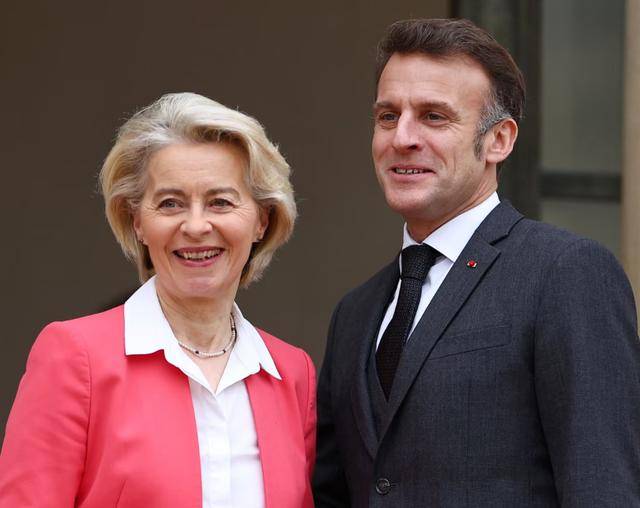
Core Viewpoint - The EU leaders have agreed to advance a "Buy European" policy to protect strategic sectors of European industry amid global economic challenges [1][4] Group 1: Economic Context - EU leaders gathered to discuss how to regain economic competitiveness against the US and China during a time of economic threats and political turmoil [1] - Belgium, France, Germany, and the Netherlands are facing a "survival crisis" due to high energy costs, regulations, and unfairly subsidized goods flooding the market [3] - The urgency of addressing Europe's declining competitiveness has been heightened by events such as the sudden halt of Russian gas supplies in 2022 and trade wars [3] Group 2: Strategic Areas of Focus - A broad consensus was reached on protecting and strengthening specific strategic areas, including defense, space, clean technology, quantum, artificial intelligence, and payment systems [3] - The upcoming "Industrial Accelerator Bill" is expected to set targets for local content in strategic products like solar panels and electric vehicles [4] Group 3: Diverging Perspectives - French President Macron emphasizes that "European priority" should focus on specific strategic sectors, viewing it as a defensive measure against unfair competition [4][5] - German Chancellor Merz advocates for a more open approach to trade, preferring "co-manufacturing with European partners" over strict "European manufacturing" rules [5] - The differing views between France and Germany raise questions about the health of the Franco-German relationship, traditionally a driving force in European projects [5] Group 4: Regulatory Considerations - EU Commission President von der Leyen acknowledges the need for caution regarding the "Buy European" policy, emphasizing that proposals must be supported by solid economic analysis and comply with international obligations [6]
策略周报:每周海内外重要政策跟踪-20260211
Guoxin Securities· 2026-02-11 14:27
Domestic Macro Policies - On February 2, the Central Committee of the Communist Party of China and the State Council released the "Modern Capital Metropolitan Area Spatial Coordination Plan (2023-2035)" [1] - On the same day, the Ministry of Commerce and nine other departments launched the 2026 "Happy New Year Shopping" special event to promote holiday consumption [1] - On February 3, the State-owned Assets Supervision and Administration Commission held a special meeting emphasizing the development of strategic emerging industries and future industries [1] - On February 4, the People's Bank of China held a meeting to strengthen financial services for major strategies and key areas [1] - On February 5, the Ministry of Finance and three other departments announced a "zero tariff" policy for imported goods consumed by residents in Hainan Free Trade Port [1] - On February 7, several departments jointly issued opinions on cultivating data circulation service institutions, marking the establishment of three types of data circulation service institutions [1] - On February 8, the central bank reported that China's gold reserves reached 7.419 million ounces at the end of January, marking the 15th consecutive month of increase [1] Industrial Policies - On February 2, the State Administration for Market Regulation and other departments released the "Low-altitude Economy Standard System Construction Guide (2025 Edition)" [2] - On February 3, the Ministry of Industry and Information Technology and eight other departments published the "Automobile Data Export Security Guidelines (2026 Edition)" [2] - On February 5, the Ministry of Industry and Information Technology and eight departments issued the "Implementation Plan for the High-Quality Development of Traditional Chinese Medicine Industry (2026-2030)" [2] - On February 6, the Ministry of Commerce held a meeting with automobile enterprises, emphasizing the pillar status of the automobile industry [2] - On February 7, the Ministry of Water Resources and the National Development and Reform Commission issued opinions on improving the management system for major water conservancy projects [2] - On February 8, the Ministry of Industry and Information Technology announced the organization of the construction of national computing power interconnection nodes [2] Local Policies - On February 2, Shanghai initiated the acquisition of second-hand housing for guaranteed rental housing projects, with pilot areas including Pudong New District, Jing'an District, and Xuhui District [2] - On February 3, Fujian Province released opinions to further promote the stable development of the real estate market [2] - On February 6, Hainan Province held a press conference to introduce the "zero tariff" policy for imported goods consumed by residents in Hainan Free Trade Port [2] Overseas Dynamics - On February 3, former President Trump signed a bill to end part of the U.S. government shutdown [3] - On the same day, the Reserve Bank of Australia raised interest rates [3] - On February 4, President Xi Jinping held phone calls with Trump and a video meeting with Putin [3] - On February 4, the Federal Reserve announced it would maintain capital requirements for large banks until 2027 [3] - On February 6, indirect nuclear negotiations between Iran and the U.S. took place in Oman [3] - On February 7, Trump announced tariffs on countries trading with Iran [3]