空间智能

Search documents
宸境科技完成数千万美金战略投资,空间智能技术进入具身智能价值链
3 6 Ke· 2025-06-26 02:24
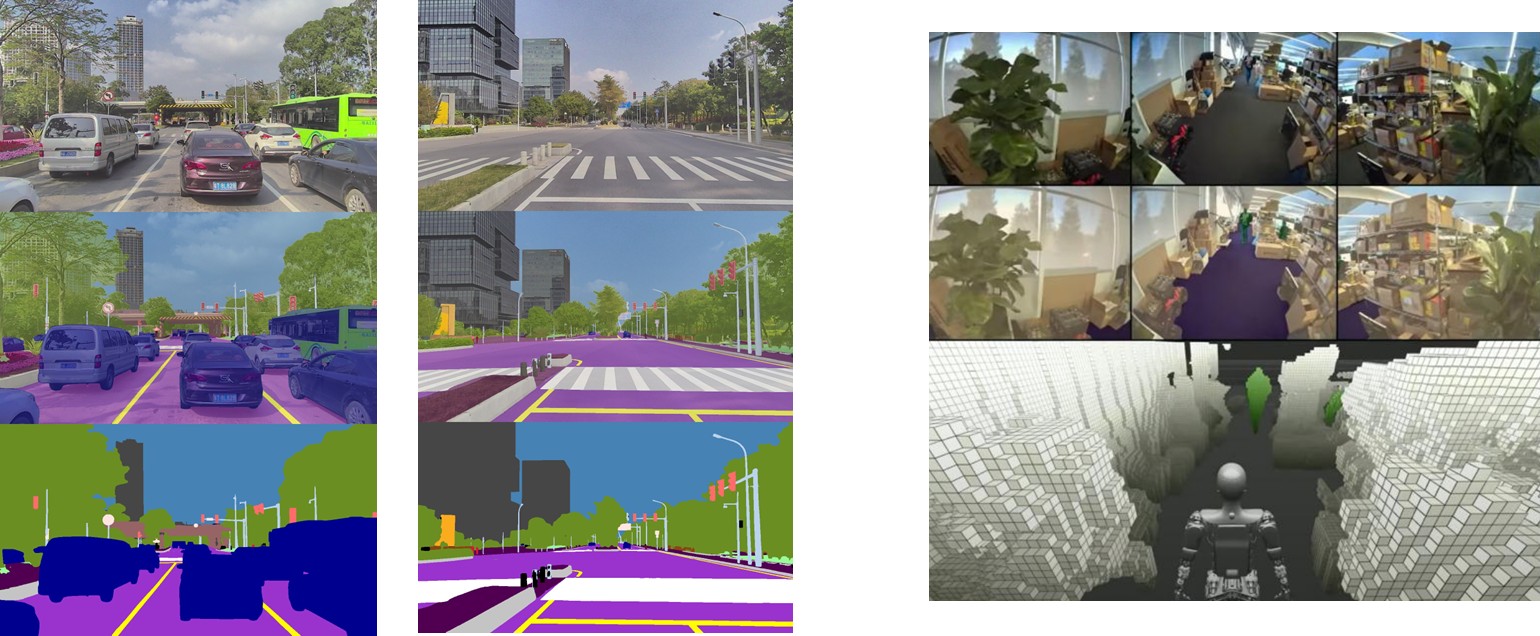
作为国内空间智能技术的先行者,宸境科技凭借视觉大模型、多传感器融合、三维导航、动态三维建图等核心技术,构建了覆盖室内外全场景的感知与交互 平台。随着AI技术向"具身化"演进,宸境将空间智能与人工智能深度融合,推出Physical AI通用型感知模组,为机器人赋予超越人类的"眼与脑"—— 技术突破:从3D导航到非结构化环境适配 1. 全场景感知能力:宸境自研的独有的纯视觉空间感知方案,可实现动态环境下的六自由度高精度定位、三维语义理解及自主路径规划,适应弱纹理、高动 态等复杂场景。让具身智能拥有更强的适配和场景落地能力并进一步降低成本和使用门槛。 2. 自主进化系统:基于长期记忆与动态更新的算法架构,机器人能够持续学习环境变化,实现跨场景任务迁移与多机协同; 3. 低成本高效部署:模块化硬件设计搭配轻量化算法,大幅降低机器人厂商的研发门槛与制造成本。 • 自学习视觉大模型:通过整合物理世界数据与仿真训练,实现环境理解的泛化能力,无需依赖预先标注的地图或人工干预,即可适应多种高挑战性场景; 00:00 / 00:00 倍速 • 异构传感器标定技术:纳秒级硬件同步与像素级校准,确保多源数据的高度一致性,提升感知精度 ...

冰柏科技:用空间智能让AI理解三维世界
Mei Ri Shang Bao· 2025-06-25 23:10
Core Viewpoint - The article highlights the advancements and innovations of Bingbai Technology in the field of spatial intelligence, emphasizing its dual technology approach of 3D spatial digital reconstruction and AI semantic understanding, which enables AI to perceive and interact with the physical world effectively [5][7]. Group 1: Company Innovations - Bingbai Technology has developed a series of innovative products based on its core technologies, holding 14 invention patents and 23 software copyrights, with several products surpassing international competitors in key metrics [5][6]. - The Mirauge3D, a distributed computing engine for imaging, boasts the highest success rate in the industry for aerial triangulation and has served nearly 10,000 clients across various sectors [6]. - The Rusa rapid 3D scene restoration system allows for quick data collection and modeling using mobile devices, significantly reducing the time for traffic accident scene processing from 40 minutes to 10 minutes [6][11]. Group 2: Applications of Spatial Intelligence - The TrackSight system enhances the precision of tracking and analyzing dynamic objects, achieving sub-pixel recognition accuracy and filling a gap in high-precision dynamic spatial analysis in the domestic market [8]. - The DroneSwarm system enables real-time 2D and 3D reconstruction and autonomous operation of drone swarms, achieving a mapping speed 10 times faster than traditional methods and at a cost only 10% of laser modeling [9]. - DroneSwarm has demonstrated significant value in military reconnaissance, emergency rescue, and precision agriculture, marking a shift from passive execution to proactive intelligent perception and decision-making in drone technology [9]. Group 3: Industry Insights - The concept of spatial intelligence, introduced by Stanford professor Fei-Fei Li, is seen as a key milestone in AI development, transitioning from mere visual recognition to a comprehensive understanding and operation of the physical world [7]. - Bingbai Technology's approach to addressing industry needs, such as improving traffic accident handling efficiency, showcases its ability to respond quickly to market demands through technological innovation [11].
专家:从“回答问题”到“自主行动” AI重塑空间智能
Zhong Guo Xin Wen Wang· 2025-06-25 02:41
郭仁忠院士还特别强调,随着社会的全面数字化转型,地理信息软件技术将成为常识性的知识,掌握一 定的地理信息软件技术成为读书写字一样的基本生活和工作技能,因此,地理信息软件技术将走进日常 生活,甚至有可能走进小学课本。 (记者 刘超) 责任编辑:【于晓】 6月24日,以"空间智能 AI重塑"为主题的2025空间智能软件技术大会在北京开幕。大会吸引了来自IT与 地理信息领域政、产、学、研、用单位的众多学者和技术人员,以及来自海外20个国家的地理信息从业 者参会,共同探讨在AI浪潮下,空间智能软件的新技术、新产品以及新实践。 超图软件董事长宋关福介绍,智能体是AI Agent,直译的话就是AI代理。以往的大语言模型仅能提供解 答和建议,而空间智能体则更进一步,能够自主思考、主动行动并完成任务。宋关福判断,这将成为未 来的重要趋势,在未来3到5年内,有望改变人们使用软件的方式,为用户带来更加智能、高效的体验。 中国工程院院士、深圳大学智慧城市研究院院长郭仁忠认为,人工智能对测绘地理信息技术及其应用的 赋能可谓"水银泻地,无孔不入"。比如在国土空间治理方面,借助人工智能技术处理卫星影像数据,可 自动识别土地利用情况、变化 ...

空间智能创新联合体及联合创新中心启动 聚焦AI GIS关键技术研发与应用推广
Zheng Quan Shi Bao Wang· 2025-06-24 13:27
Group 1 - The 2025 Spatial Intelligence Software Technology Conference opened in Beijing, focusing on "AI Reshaping Spatial Intelligence" [1] - The president of the China Geographic Information Industry Association highlighted that AI technology has significantly advanced spatial intelligence software in areas such as geospatial perception, visualization, design, and decision-making, enhancing service capabilities and intelligence levels [1] - The industry faces multiple challenges in key technology innovation, application breakthroughs, and sustainable development, necessitating a focus on innovation engines, application breakthroughs, and a robust support system [1] Group 2 - The "Spatial Intelligence Innovation Consortium and Joint Innovation Center" was officially launched at the conference, focusing on the development and application of AI GIS key technologies [2] - The consortium includes ten founding members from various sectors, including government, academia, and industry, aimed at providing innovative solutions for critical sectors such as natural resources and emergency management [2] - SuperMap Software released its SuperMap GIS 2025 product system and introduced two new products: the SuperMap Spatial Intelligence Service Platform and cross-platform spatial data conversion software [2]
当空间开始“思考”:厘米级定位如何重构智能空间连接范式
3 6 Ke· 2025-06-23 06:11
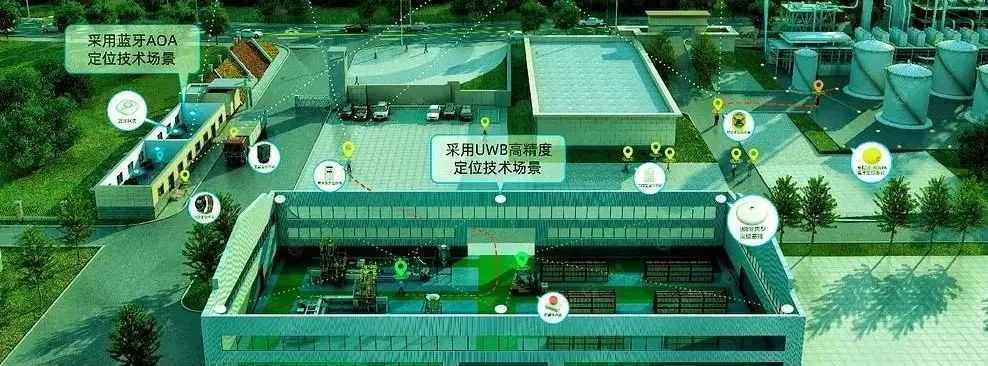
Core Viewpoint - The article discusses the evolution and significance of high-precision positioning technology, particularly UWB (Ultra-Wideband) systems, which are transforming from mere tools into essential infrastructure for digital transformation and smart cities [2][3]. Group 1: Industry Background and Strategic Importance - High-precision positioning technology addresses the "last mile" challenge in complex indoor and outdoor environments, where traditional GPS fails, making it a critical need for industry and national security [2][4]. - The core value of high-precision positioning lies in its ability to provide accurate location data in complex environments, transitioning from area perception to point-level perception [2][4]. Group 2: Technical Evolution and Challenges - Traditional GPS technology has limitations in indoor environments, leading to a surge in demand for high-precision positioning solutions that can achieve centimeter-level accuracy [4][5]. - High-precision positioning must overcome challenges such as signal degradation, multipath effects, and dynamic environmental changes to maintain accuracy [5][6]. Group 3: Mainstream Technologies and Their Boundaries - UWB technology is highlighted as a leading solution, achieving positioning accuracy of 10-30 cm even in challenging environments, while facing high deployment costs and power consumption issues [16][17]. - Bluetooth high-precision positioning offers a cost-effective alternative but is limited by environmental factors affecting signal strength [18][19]. - 5G technology shows potential for high-precision positioning but is currently constrained by base station density and requires specialized terminals [20][22]. Group 4: Market Space and Application Scenarios - The global high-precision positioning market is expected to grow significantly, with projections indicating a market size reaching hundreds of billions by 2025, driven by applications in autonomous driving, smart logistics, and smart cities [46][47]. - In China, the market is anticipated to grow at a compound annual growth rate of 35%, reaching approximately 126.34 billion yuan by 2028 [46][47]. Group 5: Investment Opportunities and Trends - The industry is witnessing increased investment activity, with significant funding rounds for leading companies, indicating strong investor interest in high-precision positioning technologies [56][57]. - Investment focus is shifting towards companies with strong scene penetration and ecosystem integration capabilities, as well as those demonstrating scalable application potential [60][61]. Group 6: Future Outlook and Recommendations - The high-precision positioning industry is on the brink of widespread application, with a diverse range of technologies coexisting to meet various market demands [68]. - Companies that can effectively integrate technologies and demonstrate strong ecosystem capabilities are likely to gain competitive advantages in the evolving market landscape [68].
特斯联邵岭:以多模态统一空间模型打造空间智能
Zhong Guo Ji Jin Bao· 2025-06-20 08:05
Core Insights - The article discusses the transformative potential of spatial intelligence in AI, emphasizing its ability to interact with the three-dimensional world through perception, navigation, operation, reasoning, and environment generation [4][6][8] - The integration of various algorithms and technologies, such as computer vision, deep learning, and multimodal learning, is crucial for the development of spatial intelligence [6][7] Group 1: Spatial Intelligence Development - Spatial intelligence is defined as the capability of AI to interact with the three-dimensional world, relying on multiple forms of algorithms and technologies [4][6] - The development of spatial intelligence involves challenges such as integrating diverse data types and executing complex tasks [2][4] - The company is focusing on creating a multimodal fusion spatial intelligence model that aligns with user scenarios, utilizing pre-trained large models and reinforcement learning techniques [6][7] Group 2: Technological Foundations - Key technologies for spatial intelligence include computer vision, deep learning, 3D representation learning, and visual-language models [6][7] - The company has extensive experience in various technical fields, which has been applied to multiple projects and solutions [6][7] - The ability to process and analyze diverse data types, including text, images, sounds, and environmental data, enhances the robustness and generalization of spatial intelligence models [7][8] Group 3: Future Plans and Market Strategy - The company aims to develop specialized AI agents for mobile terminals and smart environments, enhancing the value and competitiveness of Chinese products in overseas markets [7][8] - Short-term goals include creating AI agents with human-like thinking and long-term memory capabilities for wearable devices and robots [8] - Long-term objectives involve evolving from specialized AI agents to general intelligence agents, exploring advanced spatial intelligence and autonomous learning technologies [8]

特斯联邵岭:以多模态统一空间模型打造空间智能
中国基金报· 2025-06-20 07:55
Core Viewpoint - The article discusses the transformation of spatial intelligence through architectural innovation and multimodal integration, moving from laboratory research to industrial applications, emphasizing the need for advanced algorithms and technologies to handle complex spatial reasoning in the physical world [2][4][5]. Group 1: Spatial Intelligence Definition and Technologies - Spatial intelligence is defined as the ability of artificial intelligence to interact with the three-dimensional world through various forms such as perception, navigation, operation, reasoning, and environment generation, relying on technologies like computer vision, deep learning, 3D representation learning, and multimodal learning [4][5]. - The implementation of spatial intelligence depends on multiple algorithms and technologies, including computer vision for perception, 3D representation learning for understanding geometric and topological structures, and visual-language models for semantic understanding and spatial reasoning [4][5][7]. Group 2: Development and Application - The company is developing a multimodal spatial intelligence model in the AIoT field, integrating heterogeneous data from various edge devices to enhance spatial perception, environmental understanding, and causal reasoning capabilities [7][8]. - The deployment of AIoT edge devices enables the collection of vast, diverse, and fine-grained spatiotemporal data, addressing data insufficiency issues in spatial intelligence development [8]. Group 3: Future Plans and Market Strategy - The next development phase aims to meet the demands of the Middle East and overseas markets by creating specialized AI agents based on accumulated data and experience, enhancing the competitiveness of Chinese products and solutions abroad [9]. - Short-term goals include developing AI agents for mobile terminals, such as smart wearable devices and robots, to improve interaction capabilities and intelligence levels [9]. Long-term objectives focus on evolving from specialized to general AI agents, exploring advanced spatial intelligence and autonomous learning technologies [9].

友达数位总经理赵丽娜:“空间智能”将重构制造未来
Zhong Guo Jing Ying Bao· 2025-06-19 16:55
Core Viewpoint - AUO's digital transformation services aim to empower various industries by leveraging its extensive experience in smart manufacturing and digitalization [1][2]. Group 1: Company Overview - AUO has established AUO Digital Technology Services (Suzhou) Co., Ltd. to provide integrated solutions combining AI with manufacturing elements [1]. - The company has served over 1,000 manufacturing enterprises across more than 10 countries, covering 34 industries including electronics, healthcare, and automotive [1]. Group 2: Digital Transformation Strategy - The concept of "minimum element digitalization" allows users to select digital components tailored to their needs, minimizing transformation costs [1][3]. - AUO aims to share its manufacturing expertise to help other companies achieve digital transformation, creating a reciprocal growth model [2][3]. Group 3: Future Factory Concept - AUO defines the future factory as one that integrates large-scale AI capabilities, evolving from advanced factories that focus on lean, automated, and digital processes [5][6]. - The future factory will feature three core elements: autonomous intelligence, embodied intelligence, and spatial intelligence, supported by knowledge, digital, and embedded models [6][7]. Group 4: Client Segmentation and Services - Clients are categorized based on revenue, with tailored services ranging from enterprise hosting for smaller firms to co-creation with top-tier global clients [5]. - The company emphasizes the importance of large-scale factories for maximizing efficiency and value through system reuse [6].
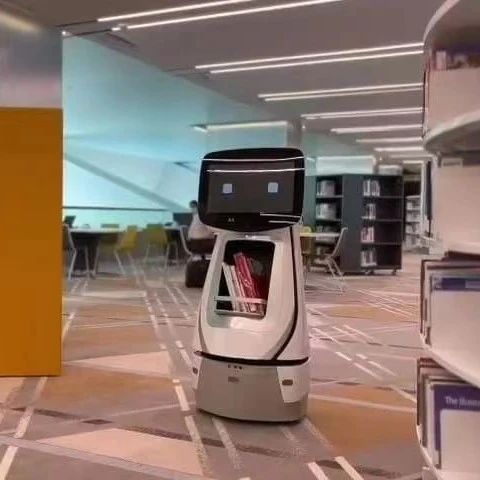
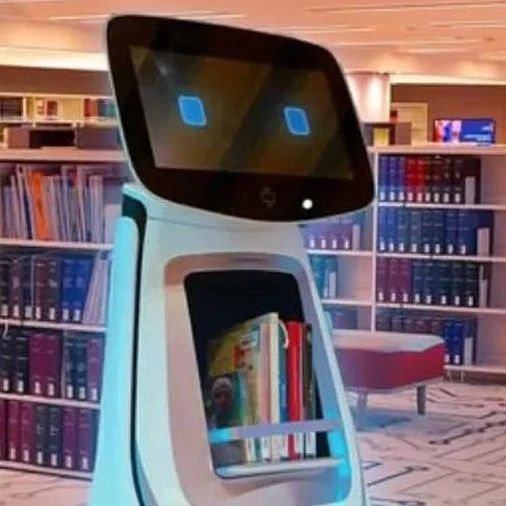
特斯联空间智能赋能阿联酋图书馆:具身智能全场景服务
IPO早知道· 2025-06-18 01:26
Core Viewpoint - The collaboration between Teslian and the Mohammed bin Rashid Library in the UAE exemplifies the trend of Chinese technology companies expanding internationally, focusing on integrating intelligent robotics into library operations [2][5]. Group 1: Collaboration and Technology Implementation - The partnership began in 2022, aiming to deploy intelligent robots in daily library operations, utilizing computer vision algorithms and multi-modal interaction to provide automated services such as storage, book retrieval, delivery, and surveillance [2][5]. - Teslian's self-developed computer vision algorithms enable precise book location, fast response times, and efficient execution of tasks like guiding, retrieving, and delivering books [5]. Group 2: Technological Advancements and Capabilities - The intelligent robots connect over 40 types of devices, including elevators and bookshelves, to offer diverse services to library users through a multi-modal interaction system [5]. - The advancement of large language models is enhancing the capabilities of intelligent agents, allowing them to evolve from mere knowledge providers to autonomous actors, thereby improving spatial intelligence [5][6]. Group 3: Previous Achievements and Impact - Previously, Teslian served as the official chief partner for the 2020 Dubai Expo, providing over 150 intelligent robots that enhanced the experience for approximately 12.5 million visitors, with over 650,000 interactions and a travel distance exceeding 322,000 kilometers [5]. Group 4: Industry Trends - The case illustrates how the development of large model technology is reshaping the paradigm of spatial intelligence, transitioning from single perception to multi-dimensional intelligent decision-making [6]. - Chinese technology companies are leveraging their advantages in application scenarios to accelerate technology export, build international collaboration platforms, and establish a unique Chinese approach to spatial intelligence [6].
“空间即服务”,特斯联空间智能商业落地再加速
和讯· 2025-06-16 09:28
Core Viewpoint - The article discusses the launch of a comprehensive spatial intelligence strategy by Teslian, centered around the Space-Aware Large Model, aimed at realizing practical applications of spatial intelligence and enhancing user experiences in the era of large models [1][2]. Summary by Relevant Sections Spatial Intelligence Definition - Spatial intelligence refers to the unified ability to understand, reason, generate, and act within a dynamic three-dimensional world, achieved through three core elements: spatial elements, spatial models, and spatial agents [2][3]. Spatial Agent Capabilities - The Space-Aware Agent serves as the primary executor in a digital-physical integrated world, capable of understanding and processing various spatial tasks, providing spatial services to other agents, and enhancing user experiences in spatial contexts. It exhibits five core capabilities: spatial generation, spatial perception, spatial interaction, spatial execution, and intelligent evolution [4]. Spatial Intelligence Service System - Teslian has developed an "N+1+1+5" spatial intelligence service system, which includes N multidimensional spatial elements (such as spatial information, images, videos, personnel behavior, language, actions, and IoT states), supports one spatial large model for reasoning and decision-making, and utilizes one spatial agent to coordinate a wide range of spatial services across five types of service spaces [5]. Space as a Service Model - The concept of "Space as a Service" emerges, allowing space to become the main service provider. This new business model enables unique scene value creation, where users can make vague natural language requests, and the spatial large model provides decision-making suggestions and execution plans that surpass human experience, significantly improving execution and management efficiency [6].