
地理信息

Search documents
中科星图:公司在2025年7月正式发布了“一体两翼”战略新规划
Zheng Quan Ri Bao· 2026-02-12 10:13
Core Viewpoint - The company has officially launched a new strategic plan called "One Body, Two Wings" as of July 2025, focusing on enhancing its core advantages in the geographic information industry while expanding into commercial aerospace and low-altitude economy sectors [2] Group 1: Strategic Focus - "One Body" refers to the company's commitment to solidifying and deepening its core advantages in the geographic information industry, with an emphasis on building a digital earth core capability platform [2] - The company aims to actively integrate artificial intelligence technology to evolve its platform from a data processing tool to an intelligent decision-making platform [2] Group 2: New Market Areas - "Two Wings" focuses on the emerging fields of commercial aerospace and low-altitude economy, with the goal of establishing comprehensive service capabilities across the entire value chain [2]


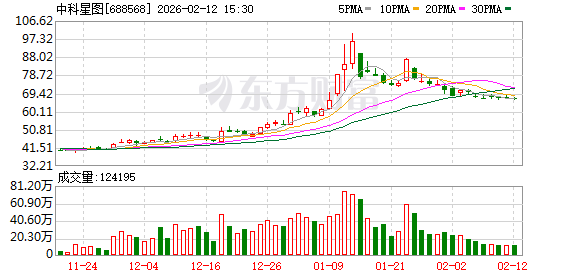
中科星图2025年预计实现营收25亿元至27.5亿元 持续加码“两翼”业务
Zheng Quan Ri Bao Wang· 2026-01-23 13:45
Core Viewpoint - Zhongke Xingtou Co., Ltd. anticipates a revenue of 2.5 billion to 2.75 billion yuan and a net profit of 30 million to 45 million yuan for 2025, influenced by strategic transformation and increased R&D investment [1] Group 1: Business Performance and Strategy - The company is undergoing a strategic transformation, with traditional business growth slowing due to market demand and technological evolution [1] - The geographic information sector remains the main revenue contributor, while new business segments, commercial aerospace and low-altitude economy, are expected to show significant growth in 2025 [2] - The company aims to establish a comprehensive low-altitude economy infrastructure, enhancing flight management services and expanding application scenarios [2][5] Group 2: New Business Developments - In 2025, Zhongke Xingtou achieved a breakthrough in its low-altitude economy segment, marking a transition from "point exploration" to "system construction" [3] - The company has secured multiple benchmark projects, including a 295 million yuan low-altitude project, which addresses industry challenges and promotes commercial operation [3] - The commercial aerospace sector is expanding its full industry chain, with a focus on satellite operation and core component manufacturing [4] Group 3: Business Model Transformation - Zhongke Xingtou is transitioning its business model from traditional project-based operations to subscription services and standardized product sales [7] - The company is leveraging its core geographic information business while developing commercial aerospace and low-altitude economy as new growth engines [5][8] - The strategic focus on "one body and two wings" aims to stabilize the core business while investing in emerging sectors to capture future market opportunities [6][8]
自动驾驶地图标准体系加快构建
Jing Ji Ri Bao· 2026-01-04 21:47
Group 1 - The Ministry of Natural Resources has initiated pilot projects in six cities to test high-precision maps for intelligent connected vehicles, aiming to establish a standard system for autonomous driving maps [1] - Currently, L3-level and below autonomous driving map products are widely used in major cities, with some pilot cities supporting L3-level and above products, indicating a deepening application of maps in autonomous driving scenarios [1] - A comprehensive geographic base map has been created, integrating 24 types of natural resource information, marking a transition from a traditional geographic information service platform to a comprehensive natural resource service platform [1] Group 2 - The geographic information industry in China is experiencing robust growth, with an expected total output value exceeding 900 billion yuan by the end of the 14th Five-Year Plan, representing over 30% growth compared to the 13th Five-Year Plan [2] - A preliminary establishment of a three-dimensional real-world model supports the construction of a digital China, integrating technology and data from design to application [2] - The three-dimensional real-world model serves as a fundamental element for digital economy and smart cities, with nationwide coverage of terrain-level mapping and urban three-dimensional digital mapping [3] Group 3 - A national satellite navigation positioning reference station network has been established to enhance BeiDou navigation services, with a new management regulation set to take effect from January 1, 2026 [3] - The regulation aims to standardize the management of reference stations, ensuring reasonable layout and avoiding redundancy in construction [3] - The BeiDou application and reference service centers will provide high-precision positioning services for various sectors, with daily professional services exceeding ten million times [3]
我国地理信息产业总产值预计超九千亿元
Xin Lang Cai Jing· 2026-01-02 23:42
Core Insights - The core viewpoint of the article highlights the continuous enhancement of geographic information public services in China, with the geographic information industry expected to exceed 900 billion yuan in total output value by the end of the 14th Five-Year Plan period [1] Group 1: Geographic Information Services - During the 14th Five-Year Plan period, China has strengthened the supply of geographic information services, with a total of 8.09 million resource directories published nationwide [1] - The total number of standard maps published across the country has reached 13,000 [1] - A three-tier service structure has been established at the national, provincial, and municipal levels [1] Group 2: Emergency Mapping and Technological Advancements - The emergency mapping support system has been improved, enabling the acquisition of high-resolution remote sensing images within 6 hours of an emergency and the provision of initial emergency mapping results within 12 hours [1] - The "Tian Map" has undergone a complete revision, integrating 24 thematic information types such as planning and geological surveys onto a single geographic base map [1] - Breakthroughs in surveying equipment development have been achieved, with products like drone photogrammetry systems and high-precision total stations reaching international standards [1] Group 3: Industry Development and Applications - The geographic information industry is thriving, with the establishment of an automatic driving map standard system that covers L3-level and below autonomous driving map products in major cities [1] - Innovative applications in areas such as smart logistics, smart cities, and digital rural construction are continuously deepening [1]
与新业态加速融合 我国地理信息产业总产值将超9000亿元
Yang Shi Wang· 2025-12-31 03:52
Core Insights - The geographic information industry in China is expected to exceed 900 billion yuan in total output value during the 14th Five-Year Plan period, with over 4 million employees in the sector [1][3] - A national integrated surveying and mapping benchmark system has been established, with the number of Beidou-based national satellite navigation positioning benchmark stations expanded to 7,000, providing high-precision positioning services across various industries [1] - The demand for mapping and positioning services has surged due to the development of emerging industries, with the national geographic information public service platform, Tianmap, experiencing over 1 billion daily visits to its map service interface [3] Industry Developments - The next steps involve enriching three-dimensional data resources and constructing a smart surveying and mapping technology system, as well as building new spatial-temporal information infrastructure to leverage the value of new production factors [3] - The application of surveying and geographic information in low-altitude economy, autonomous driving, and platform economy is deepening [3] - L3-level and below autonomous driving map products are widely used in major cities across the country, with some pilot cities developing map products that support L3-level and above autonomous driving [3]
梅雁吉祥:12月15日召开董事会会议
Mei Ri Jing Ji Xin Wen· 2025-12-15 11:32
Group 1 - The core viewpoint of the article is that Meiyan Jixiang (SH 600868) held its 25th meeting of the 11th Board of Directors on December 15, 2025, to discuss the proposal for the board's re-election [1] - For the year 2024, the revenue composition of Meiyan Jixiang is as follows: hydropower accounts for 62.74%, geographic information industry for 23.39%, biogas business for 9.16%, other businesses for 2.88%, and titanium coating for 1.84% [1] - As of the report date, the market capitalization of Meiyan Jixiang is 7.3 billion yuan [1]

梅雁吉祥:11月19日召开董事会会议
Mei Ri Jing Ji Xin Wen· 2025-11-19 11:53
Group 1 - The company Meiyanji Xiang (SH 600868) announced that its 11th Board of Directors' 24th meeting was held via telecommunication on November 19, 2025 [1] - For the year 2024, the revenue composition of Meiyanji Xiang is as follows: hydropower accounts for 62.74%, geographic information industry for 23.39%, biogas business for 9.16%, other businesses for 2.88%, and titanium coating for 1.84% [1] - As of the report date, the market capitalization of Meiyanji Xiang is 5.9 billion yuan [1]
工程项目“云上共建”,地下管线“透明可溯” “数字底图”悄然改变城市运转方式
Zhen Jiang Ri Bao· 2025-11-17 23:37
Core Insights - The construction of a "three-dimensional Zhenjiang" is accelerating as the city approaches the completion of a 404.42 square kilometer realistic 3D project by 2025, marking a significant step in its digital transformation [1][6] Group 1: Urban Planning Transformation - The shift from 2D blueprints to 3D models is revolutionizing urban planning, utilizing high-precision oblique photography and laser scanning to create measurable and analyzable urban spaces [2] - In the Zhenjiang Honor Hotel project, a 0.03-meter resolution oblique photography model was used to accurately replicate a 1 square kilometer area, enhancing planning efficiency and scientific accuracy through tools like BIM integration and sunlight simulation [2] Group 2: Project Management and Approval Process - The implementation of a "multi-measurement integration" information platform has transformed project approvals from traditional 2D methods to 3D visual management, significantly improving accuracy and transparency [3][4] - Potential investors can now view land conditions in a 360-degree format and access planning conditions in real-time, streamlining the approval process and fostering a better business environment [3][4] Group 3: Urban Safety and Infrastructure Management - The integration of 3D modeling with IoT and AI technologies enhances urban safety management, particularly in addressing challenges like aging infrastructure and flood risks [5] - A 3D underground pipeline system has been developed to accurately locate 18 kilometers of old pipelines, reducing excavation areas by 60% and minimizing traffic disruptions [5] - During the rainy season, a flood prevention system utilizing real-time water level data and 3D models improved response times, reducing water accumulation duration from hours to 40 minutes, thus enhancing emergency response efficiency by 50% [5] Group 4: Future Prospects - The ongoing development of realistic 3D models in Zhenjiang is not only a response to the digital China strategy but also a profound practice of urban digital transformation, with plans for further integration into smart city management and community governance [6]
“北斗+”融合创新正加快赋能千行百业
Xin Hua She· 2025-11-06 14:43
Core Insights - The Beidou system is becoming a crucial driver for economic and social development in China, with its integration into various industries accelerating through "Beidou+" innovations [1][2] - The geospatial information industry in China is projected to exceed a total output value of 850 billion yuan in 2024, with a compound annual growth rate of 5.6% over the past five years [2] Group 1 - The Beidou system is deeply integrated with the geospatial information industry, providing high-precision temporal and spatial benchmarks while also promoting the widespread application and industrialization of Beidou technology [2] - The cumulative shipment of domestic Beidou-compatible chips and modules has surpassed 500 million units, with over 1.5 billion terminal products (including smartphones) equipped with Beidou positioning capabilities [5] - In 2024, the domestic smartphone shipment is expected to reach 286 million units, with over 98% supporting Beidou positioning, establishing Beidou as a standard configuration in consumer products [5] Group 2 - The Beidou system is expanding its international presence, having signed multiple cooperation agreements with countries such as Russia, Pakistan, and Saudi Arabia, and exporting products to over 140 countries and regions [5] - Beidou has entered the standard systems of 13 international organizations, including civil aviation and maritime sectors, showcasing its role in promoting a community with a shared future for mankind [5]

山东省地矿局鲁南院获批山东省数字经济产业创新中心
Zhong Guo Fa Zhan Wang· 2025-11-06 08:23
Core Insights - Shandong Province's Industrial and Information Technology Department has officially recognized the "Shandong Digital Economy Industry Innovation Center," with the Lunan Institute of the Shandong Provincial Bureau of Geology and Mineral Resources being awarded this status [1] Group 1: Digital Economy Development - The Lunan Institute has seized opportunities in digital economy development, establishing high-end research platforms such as the Geographic Information Digital Twin Innovation Laboratory and the Shandong Data Open Innovation Application Laboratory [1] - The institute has formed a professional R&D team with "Double Soft" certification and qualifications for classified information system integration, achieving breakthroughs in areas like 3D construction, remote sensing dynamic monitoring, and digital platform development [1] Group 2: Achievements and Recognition - The institute's achievements have garnered several provincial honors, including recognition as one of the top ten innovative application scenarios in 3D construction in Shandong, creating a significant demonstration effect [1] Group 3: Future Plans - The Lunan Institute plans to leverage the establishment of the digital economy industry innovation center to enhance R&D in digital technologies and data resource integration, promoting the deep integration of new-generation information technologies such as geographic information, digital twins, and artificial intelligence with the real economy [1]