
大数据

Search documents
两部门:推进应急管理装备与人工智能、5G、大数据等新技术融合创新
Zhi Tong Cai Jing· 2026-01-27 03:01
Core Viewpoint - The Ministry of Emergency Management and the Ministry of Industry and Information Technology have issued guidelines to accelerate the innovation and development of emergency management equipment, emphasizing the importance of integrating advanced technologies and enhancing the capabilities of emergency management systems [1][2]. Group 1: Overall Requirements - The guidelines are guided by Xi Jinping's thoughts and aim to enhance the modernization of emergency management equipment, focusing on reform and innovation to strengthen core technology development [2]. - The approach emphasizes a demand-driven and practical orientation, targeting urgent needs in emergency management and ensuring a systematic and comprehensive planning process [2]. Group 2: Key Equipment Research and Innovation - By the end of 2027, the goal is to overcome more than 20 key core technologies, develop over 20 innovative equipment types, and promote more than 30 advanced technology applications [3]. - A mechanism for continuous collection of equipment research needs will be established to ensure timely and precise responses to frontline demands [4]. Group 3: Promotion and Application of Advanced Equipment - There will be an increased focus on equipping emergency rescue teams with advanced and applicable technologies, enhancing their capabilities in extreme scenarios [6]. - The guidelines call for the establishment of a standardized equipment system to improve interoperability and efficiency among various emergency management tools [5]. Group 4: Strengthening Support Structures - The establishment of technology innovation platforms and support for key laboratories will be prioritized to enhance research and development capabilities in emergency management equipment [8]. - Talent development initiatives will be encouraged, including partnerships with educational institutions to cultivate professionals in emergency management and equipment technology [8]. Group 5: Standardization and Normative Support - A comprehensive standardization system for emergency management equipment will be developed to improve the relevance and performance of the equipment [10]. - The guidelines advocate for the creation of a classification system for emergency management equipment to enhance its practical application [10]. Group 6: Promoting Equipment Industry Development - A platform for professional exchange and supply-demand matching will be established to foster collaboration between various stakeholders in the emergency management equipment sector [11]. - The guidelines aim to cultivate a robust ecosystem for the emergency management industry, encouraging innovation and the development of high-tech enterprises [11]. Group 7: Implementation and Coordination - Mechanisms for research, validation, promotion, and standardization of emergency management equipment will be improved to ensure coordinated efforts across different levels of government and industry [12]. - The guidelines emphasize the need for diversified funding mechanisms to support the development of emergency management equipment and industry [12].
华数传媒控股股份有限公司 2025年度业绩预告
Zheng Quan Ri Bao· 2026-01-26 22:34
Group 1 - The company has issued a voluntary performance forecast for the year 2025, covering the period from January 1, 2025, to December 31, 2025 [1] - The company has communicated with its auditing firm regarding the performance forecast, and there are no discrepancies between the two parties [1][2] - The expected decline in net profit is primarily due to a decrease in audiovisual business revenue and a reduction in investment income compared to the previous year [2] Group 2 - The company is focusing on strategic deployment according to the "grassroots foundation year" work requirements, implementing a three-year development action plan [2] - The company aims to enhance management efficiency and solidify its development foundation while embracing new technologies such as 5G, artificial intelligence, and big data [2] - The company has approximately 3 million users in its broadcasting 5G mobile communication segment and has issued over 500,000 cultural tourism cards [2]

单项冠军炼成记
Xin Lang Cai Jing· 2026-01-26 22:08
(来源:辽宁日报) 转自:辽宁日报 日前,2025年辽宁省制造业单项冠军企业名单公布,营口新增4户,分别是营口巨成教学科技开发有限 公司、营口风光新材料股份有限公司、营口昌成新材料科技有限公司和辽宁希泰科技有限公司。营口省 级制造业单项冠军企业累计16户,总数居全省第三。 辽宁省制造业单项冠军企业是指长期专注于制造业特定细分领域,生产技术或工艺水平达到国际先进或 国内领先水平,单项产品(生产性服务)市场占有率位居全球或国内前列的企业,是制造业领域的一项 冠军认证。 营口市工信局局长韩德帅介绍,为了培育更多的单项冠军,营口构建"储备——培育——提升"梯度培育 机制,建立"创新型中小企业——专精特新企业——'小巨人'企业——单项冠军企业"的全链条培育库, 在技术创新、品牌建设、市场开拓、融资服务等方面精准施策,补短板、锻长板,全力助推企业做精做 强。 要在强手如林的制造业领域脱颖而出并非易事。以营口巨成教学科技开发有限公司为例,24年间始终专 注于高端医疗教育装备研发制造。从最初简单的教学模型,到如今集人工智能、生物仿真、大数据于一 体的智能教学系统,走出一条从"跟跑"到"并跑"再到"领跑"的蝶变之路。 记者在生 ...


深圳市晟光锐芯科技有限公司成立,注册资本500万人民币
Sou Hu Cai Jing· 2026-01-26 19:46
Group 1 - Shenzhen Shengguang Ruixin Technology Co., Ltd. has been established with a registered capital of 5 million RMB [1] - The legal representative of the company is Sun Yanan [1] - The shareholders include Hainan Chilechuan Cold Chain Logistics Co., Ltd. holding 66% and Zhuhai Ruijian Dongfang Import and Export Trade Co., Ltd. holding 34% [1] Group 2 - The company's business scope includes sales of optoelectronic devices, wholesale and retail of electronic components, and integrated circuit design [1] - Additional services offered include technology services, technical consulting, cloud computing equipment sales, and artificial intelligence application system integration [1] - The company is classified under the scientific research and technical service industry, specifically in technology promotion and application services [1]
“六个更加”筑牢安全防线
Xin Lang Cai Jing· 2026-01-26 19:00
Core Viewpoint - The revised "General Emergency Response Plan for Sudden Incidents in Sichuan Province" aims to enhance the emergency response framework, providing comprehensive guidance for the province's emergency management system [1][2]. Group 1: Revision Process - The revision process began at the end of 2024 and lasted nearly a year, involving thorough research, systematic drafting, multiple rounds of feedback, expert validation, legal review, and approval from provincial authorities [1]. - The revision adhered to four guiding principles: political orientation, practical orientation, systematic orientation, and legal orientation [1]. Group 2: Key Highlights of the Revised Plan - The command system is now more unified and efficient, with strengthened leadership from the provincial government for major incidents, establishing a clear responsibility and collaborative command structure [2]. - The response mechanism is more precise and flexible, introducing a four-tier emergency response system at the provincial level, with clear activation conditions and decision-making processes [2]. - Risk prevention is more proactive, integrating risk management into grassroots governance and establishing a comprehensive monitoring and early warning network [2]. - The rescue forces are more diversified and collaborative, creating a modern emergency rescue system that includes various professional teams and social emergency forces [2]. - Technological support is more advanced, emphasizing the use of big data, cloud computing, and artificial intelligence to enhance emergency command capabilities [2]. - Management systems are more standardized and complete, ensuring a closed-loop management approach covering all aspects of emergency planning and execution [3].
两部门印发《网络货运承运平台经营管理办法》
Xin Lang Cai Jing· 2026-01-26 14:54
Core Viewpoint - The "Management Measures for Network Freight Carriage Platforms" aims to promote the integration of road freight transport with the internet, regulate the operations of network freight platforms, maintain market order, and protect the legal rights of all parties involved [2]. Group 1: General Principles - The management of network freight platforms should adhere to principles of voluntariness, equality, fairness, and integrity, complying with laws and business ethics [2][3]. - The Ministry of Transport is responsible for the national management of network freight platforms [4]. Group 2: Operational Management - Platforms must apply for a road transport operating license from local transport authorities, which will issue licenses to qualified applicants [6]. - Network freight platforms must comply with internet service management regulations and possess adequate online service capabilities [7]. - Platforms are required to establish safety management systems and provide safety education for personnel [8]. Group 3: Compliance and Responsibilities - Platforms must verify the qualifications of actual carriers and ensure that vehicles and drivers meet legal requirements [8]. - Platforms are prohibited from transporting goods that are legally restricted and must not fabricate transportation transactions [10]. - Platforms should maintain accurate records of user information and transaction data for a minimum of three years [13]. Group 4: Supervision and Evaluation - Provincial transport authorities are tasked with establishing monitoring systems to ensure platforms upload documentation accurately and timely [15]. - Platforms engaging in tax violations will be subject to penalties as per tax laws [24]. - A credit evaluation mechanism for network freight platforms will be established to promote compliance and accountability [27].
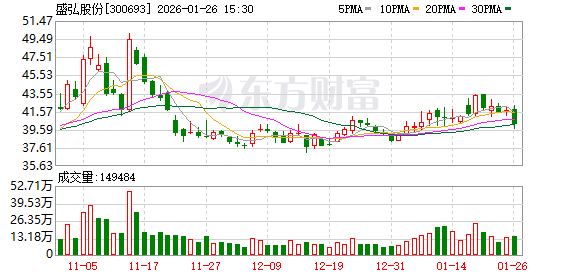
盛弘股份:公司部分电能质量产品如APF、SVG可用于数据中心和智算中心
Zheng Quan Ri Bao· 2026-01-26 13:52
Group 1 - The company identifies AIDC as an intelligent computing center that provides computing power, storage, and related services for artificial intelligence and big data applications [2] - The company has products like APF and SVG that can be utilized in data centers and intelligent computing centers, with plans to introduce more products tailored for AIDC applications in the future [2] - The company's energy storage business has experienced a short-term decline due to strategic and product strategy adjustments, but it aims to quickly recover growth [2] Group 2 - The company's gross margin decline is attributed to intensified market competition and adjustments in customer structure, prompting efforts to strengthen internal management and optimize supply chain strategies [2] - The company is focused on adjusting its downstream structure to stabilize gross margins [2]
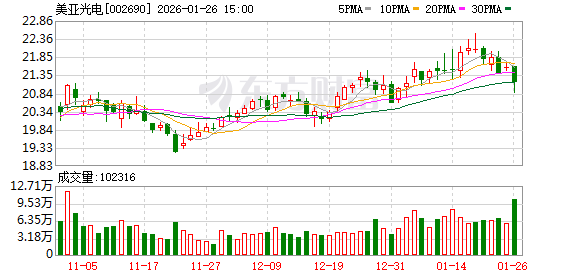
美亚光电:公司不断推进和深化“智能识别”技术的创新与应用
Zheng Quan Ri Bao· 2026-01-26 13:45
Core Viewpoint - The company emphasizes the importance of technological innovation and has increased its R&D investment to advance "intelligent recognition" technology [2] Group 1: Technological Innovation - The company integrates AI, big data, IoT, and cloud computing into its products, such as color sorters and dental CBCT [2] - Recent product releases include intelligent sorting solutions for recycling, dental care, grain sorting, and tea sorting, enhancing operational efficiency for clients [2] Group 2: Market Expansion and Competitiveness - The company aims to expand its market size while improving industry competitiveness and brand influence through its innovative solutions [2]

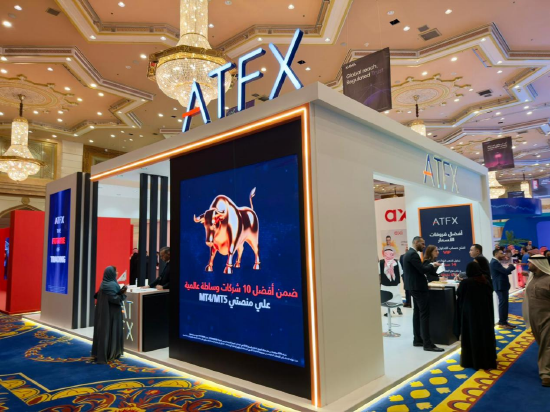
中东金融科技盛宴启幕:ATFX携前沿技术亮相 深化全球市场影响力
Xin Lang Cai Jing· 2026-01-26 11:33
Core Insights - The Jeddah Fintech Week, a major event in the Middle East fintech sector, was held in Jeddah, Saudi Arabia, sponsored by Crown Prince Saif Al Islam Bin Saud Bin Abdulaziz Al Saud, attracting significant industry attention [1][12] - ATFX participated as a strategic partner, showcasing its commitment to the Middle East and North Africa market and emphasizing its innovative approach to providing high-quality financial products and services [1][12] Group 1: Event Participation - ATFX's Middle East and North Africa team made a strong impression at the event, highlighting the brand's leading position in the global fintech sector [1][12] - The company engaged in a roundtable forum titled "Fintech Innovation and the Future of Financial Markets: Opportunities, Challenges, and Strategic Pathways," where CEO Khaldoun Sharaiha shared insights on the transformative impact of technologies like AI, big data, and blockchain on the fintech industry [4][15] Group 2: Brand Engagement - ATFX utilized an interactive booth to introduce its brand, financial products, and services, allowing attendees to experience the company's fintech capabilities firsthand through demonstrations and case studies [6][18] - Attendees praised ATFX's performance at the event, expressing interest in future collaborations and recognizing the brand's innovative concepts and quality services [9][20] Group 3: Global Strategy - Since its inception, ATFX has strategically expanded its global presence, participating as a gold sponsor at the Dubai Contracts for Difference Expo in 2024 and 2025, and as a platinum sponsor at the iFX Dubai Financial Expo [10][20] - The company has also formed a media partnership with CNBC Arabia, sponsoring a new financial program and providing expert insights to enhance investor knowledge and engagement in the Middle East [21][11]
华数传媒(000156.SZ):预计2025年归母净利润4.3亿元-4.8亿元,同比下降10.11%-19.48%
Ge Long Hui A P P· 2026-01-26 10:20
Core Viewpoint - The company, Huashu Media, expects a decline in net profit for the year 2025, with projections indicating a decrease of 10.11% to 19.48% compared to the previous year [1] Financial Performance - The estimated net profit attributable to shareholders for 2025 is projected to be between 430 million to 480 million yuan [1] - The net profit after deducting non-recurring gains and losses is expected to be between 303 million to 353 million yuan, reflecting a decline of 5.31% to 18.72% year-on-year [1] Business Strategy and Development - The company is aligning with Huashu Group's strategic deployment, focusing on the "Grassroots Foundation Year" and implementing a three-year development action plan [1] - The development approach emphasizes "new layout, stable benefits, optimized structure, and improved efficiency," while maintaining a focus on party building and core responsibilities [1] - The company is integrating new technologies such as 5G, artificial intelligence, and big data to explore new business models and scenarios [1] Operational Highlights - Huashu Media has approximately 3 million users in its broadcasting 5G mobile communication segment [1] - The issuance of the "Poetic Zhejiang" cultural tourism card has exceeded 500,000 [1] - The company has launched over 30 AI intelligent entities covering five major categories: new audio-visual, new cultural tourism, new governance, new operations, and new lifestyles [1] Revenue Challenges - The anticipated decline in net profit is primarily attributed to a decrease in revenue from audio-visual services and a reduction in investment income compared to the previous year [1]