口腔CBCT

Search documents
美亚光电20230331
2026-04-01 09:59
Summary of the Conference Call for Meiya Optoelectronics Company Overview - **Company**: Meiya Optoelectronics - **Industry**: Medical Equipment and Sorting Machines Key Points Financial Performance and Business Segments - In 2025, the medical segment's revenue declined by nearly 10%, but the decline was narrowed through active reduction of low-margin product sales, stabilizing the gross margin and achieving excellent profit performance [2][3] - The sorting machine business accounted for over 70% of total revenue, with the recycling resource sorting business exceeding 300 million yuan in revenue and maintaining double-digit growth, becoming a core growth engine [2][3] - The export business of CBCT (Cone Beam Computed Tomography) entered a period of rapid growth, with export volume doubling to over 200 units in 2025, although it currently accounts for less than 10% of total revenue [2][3] - Contract liabilities increased by over 40% year-on-year by the end of 2025, indicating good growth in orders on hand; the delivery cycle for sorting machines is 1-2 weeks, and for CBCT, it is 2-4 weeks, reflecting high turnover efficiency [2][3] Digital Transformation and New Products - Digital transformation is showing initial results, with revenue from the sorting machine "Meiya Smart Link" exceeding 20 million yuan, achieving nearly double growth; the oral "Smart Cloud" platform has over 10,000 users and has initiated differentiated charging [2][3] - New products in the large medical sector, such as mobile CT and surgical navigation, achieved a breakthrough from 0 to 1 in 2025, with plans for steady market advancement in 2026 aimed at promoting the localization of high-end imaging equipment [2][3] Dividend Policy and Future Outlook - The company maintains a high dividend policy, with cumulative dividends of nearly 5 billion yuan over 13 years, which is six times the IPO fundraising amount; the performance target for 2026 is expected to grow by 17%-18%, with strong expectations for dividend stability [2][3][11] Market Conditions and Industry Trends - The domestic oral industry is currently in a low point, but signs of gradual recovery are emerging, with terminal customers shifting from cautious pessimism to cautious optimism [4] - The company is committed to investing in oral technology research and digitalization despite the industry's challenges, anticipating gradual recovery in 2026 [4] - The update cycle for CBCT devices installed before the pandemic (2018-2019) is expected to begin in 2026, with some old customers already starting to purchase or update equipment [4] Product Development and Competitive Position - The newly launched oral microscope product complements the company's oral imaging equipment product line, with good development potential, although specific pricing and market expectations are still uncertain [5] - The "Smart Cloud" platform is currently in a loss-making state, with a long-term goal of achieving breakeven or reduced losses, depending on the recovery of the oral industry [6] - The sorting machine business has shown unexpected performance, driven by improved engineering design capabilities, the popularity of intelligent production, and optimized sales policies [7][8] Export Strategy and Market Expansion - The company has begun to focus on overseas medical markets, with CBCT exports reaching over 200 units in 2025, and plans to increase investment in overseas markets for both sorting machines and medical devices [10][12][13] - The gross margin for overseas business is typically about 10 percentage points higher than domestic, attributed to pricing strategies rather than specific product structures [12][13] - The company is building a dealer network for CBCT products in overseas markets, which requires a gradual process of engagement and collaboration with local agents [15] Conclusion - The company is optimistic about the future, focusing on enhancing product competitiveness and optimizing marketing strategies to achieve stable growth despite global uncertainties [3][4][10]

美亚光电:公司不断推进和深化“智能识别”技术的创新与应用
Zheng Quan Ri Bao· 2026-01-26 13:45
Core Viewpoint - The company emphasizes the importance of technological innovation and has increased its R&D investment to advance "intelligent recognition" technology [2] Group 1: Technological Innovation - The company integrates AI, big data, IoT, and cloud computing into its products, such as color sorters and dental CBCT [2] - Recent product releases include intelligent sorting solutions for recycling, dental care, grain sorting, and tea sorting, enhancing operational efficiency for clients [2] Group 2: Market Expansion and Competitiveness - The company aims to expand its market size while improving industry competitiveness and brand influence through its innovative solutions [2]

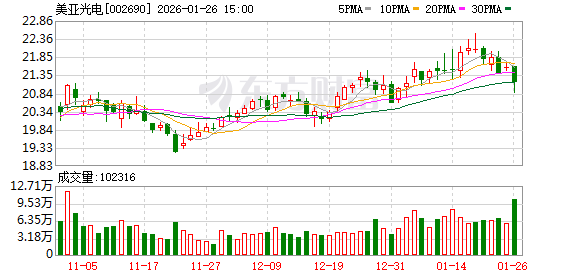
美亚光电:公司深耕食品安全、医疗影像、再生资源三大板块
Zheng Quan Ri Bao Wang· 2025-12-25 10:43
Core Viewpoint - Meiya Optoelectronics (002690) has been focusing on three main sectors: food safety, medical imaging, and renewable resources, while continuously enhancing R&D investment and integrating advanced technologies such as AI, big data, IoT, and cloud computing into its core products [1] Group 1 - The company has developed intelligent product matrices including sorting machines for renewable resources, dental CBCT, grain sorting, and tea sorting, which effectively improve customer operational efficiency and benefits [1] - The integration of advanced technologies into main products is aimed at promoting digital and intelligent development within the industry [1]
从100万跌至10多万,口腔CBCT狂打价格战,拖累上下游
3 6 Ke· 2025-11-14 01:04
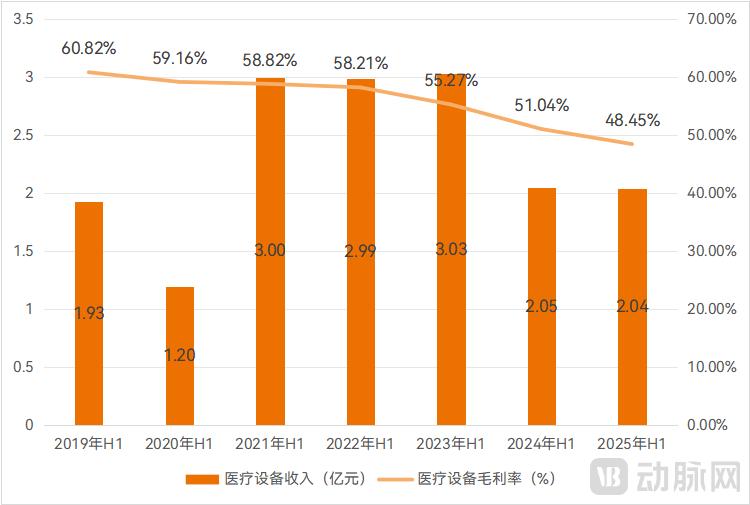
Core Insights - The domestic dental CBCT market has experienced explosive growth, particularly with the rapid increase in localization rates and the entry of competitively priced products, leading to a significant rise in penetration rates among small and medium-sized private dental institutions [1][2] - However, a crisis centered around price wars is emerging, causing operational difficulties for CBCT companies, impacting the daily operations of dental institutions, and exposing upstream core component suppliers to bad debt risks [1][2] Market Dynamics - As of now, there are 85 valid CBCT registration certificates in China, with 60% being domestic products [2] - Initially, imported CBCT devices dominated the market due to high prices, primarily purchased by well-funded dental specialty hospitals and large general hospitals, while private dental clinics relied on traditional imaging equipment [2] - The rise of domestic CBCT has broken the price monopoly of imported brands, leading to increased adoption among private dental clinics and a growing recognition of domestic equipment by dental specialty hospitals and general hospitals [2] Price Competition - From 2019 to mid-2024, the average price of domestic CBCT devices dropped from 1.02 million to 572,300, a decline of over 43%, with some products experiencing annual price drops exceeding 20% [3] - Major companies, including Meiya Optoelectronics, have reported significant fluctuations in performance, with their medical equipment segment's gross margin dropping from 60.82% to 48.45% between 2019 and 2025 [4][6] - Smaller CBCT companies are adopting aggressive pricing strategies, with some products priced as low as 100,000, and promotional tactics such as "zero down payment" and "buy one get one free" [6] Impact of Price Wars - The price war has led to profit shrinkage for equipment manufacturers, resulting in operational difficulties and potential supply disruptions [7] - While larger companies can absorb temporary revenue and margin declines, smaller startups are particularly vulnerable, facing challenges such as factory shutdowns and service interruptions [7] - The focus on market promotion over technological upgrades due to price pressures may lead to a long-term decline in industry competitiveness [7][8] Supply Chain Challenges - The domestic supply chain for core CBCT components has made significant progress, achieving full localization in key areas such as X-ray generators and detectors [10] - However, the ongoing price war is affecting upstream suppliers, with cases of bad debts emerging, such as a lawsuit from a core component supplier against a CBCT manufacturer for overdue payments [10][11] Future Strategies - The industry recognizes the unsustainability of low-price strategies and is beginning to seek ways to break this negative cycle [12] - Companies are encouraged to establish a reasonable pricing system and focus on creating irreplaceable product and service value [12] - Innovations such as multi-functional CBCT devices and applications in other medical fields are being explored to enhance competitiveness and meet market demands [13][14] - Emphasizing quality, service, and technological advancements will be crucial for long-term success in the CBCT market [15]
美亚光电拟1.85亿投建基地扩产 上市以来分红49亿为融资额5.8倍
Chang Jiang Shang Bao· 2025-06-05 23:31
Core Viewpoint - Meiya Optoelectronics is enhancing its competitiveness by investing in a new intelligent coating and sheet metal production base, with a total investment of 185 million yuan, aimed at increasing production capacity and transitioning towards high-end, intelligent, and green manufacturing [2][4]. Investment and Expansion - The new project will add a production capacity of 10,000 sets per year in coating, sheet metal, and machining [4]. - The project is expected to start construction in June 2025 and be completed by December 2026, with production gradually commencing in the first half of 2027 [4]. Business Focus and Product Lines - Meiya Optoelectronics specializes in optical identification equipment, focusing on three main sectors: food safety, healthcare, and renewable resources, with key products including color sorters, X-ray foreign object detectors, and dental CBCT [3][6]. - The company has established high-level innovation platforms and has undertaken over 30 national and provincial major scientific projects [5]. Financial Performance - In 2024, Meiya Optoelectronics reported a revenue of 2.311 billion yuan, a decrease of 4.73% year-on-year, and a net profit of 649 million yuan, down 12.84% [6][7]. - The revenue from color sorters, X-ray industrial detectors, and medical devices was 1.622 billion yuan, 149 million yuan, and 503 million yuan respectively, with significant declines in the latter two categories [7]. Research and Development - The R&D expense rates for 2022 to Q1 2025 were 5.79%, 6.13%, 6.90%, and 7.40%, respectively, indicating a consistent increase in investment in innovation [5]. - The company holds 158 valid invention patents, 205 utility model patents, and 47 design patents as of the end of 2024 [5]. Financial Health - As of Q1 2025, Meiya Optoelectronics had cash and cash equivalents of 1.474 billion yuan and trading financial assets of 452 million yuan, totaling 1.926 billion yuan, with no short-term or long-term debt [8]. - The company's asset-liability ratio has decreased for three consecutive years, reaching 14.09% by the end of Q1 2025 [8].

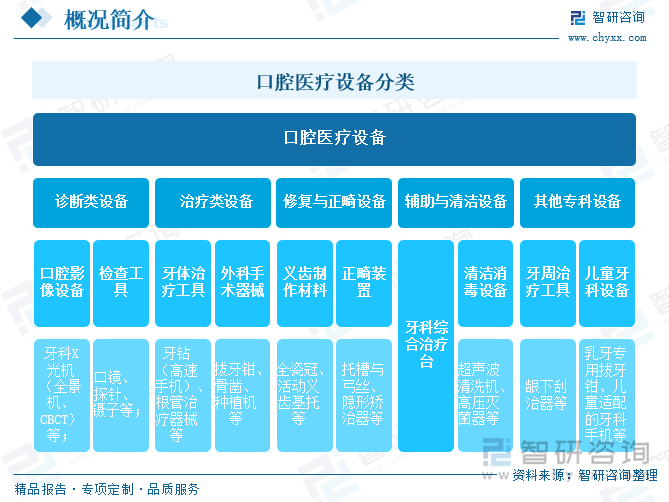
趋势研判!2025年中国口腔医疗设备行业产业链图谱、市场规模、重点企业及未来前景分析:群众口腔保健意识日益增强,不断驱动口腔医疗设备市场规模扩容[图]
Chan Ye Xin Xi Wang· 2025-05-29 01:14
Industry Overview - The dental medical equipment industry is experiencing rapid growth in China, driven by an aging population and increasing disposable income, leading to heightened awareness of oral health [1][8] - The market size for dental medical equipment in China is projected to grow from 22.3 billion yuan in 2020 to 41.2 billion yuan in 2024, with a compound annual growth rate (CAGR) of 16.59% [1][8] - The global dental medical equipment market is also expanding, expected to increase from 14.6 billion USD in 2020 to 20.7 billion USD in 2024, with a CAGR of 9.12% [6] Market Dynamics - The demand for dental medical services is rising, leading to a robust growth phase for the dental equipment market in China [1][8] - The domestic market for dental medical equipment is forecasted to reach 47.9 billion yuan by 2025 [1][8] - The domestic CBCT (Cone Beam Computed Tomography) market is becoming a focal point, with the localization rate expected to rise from 16.3% in 2020 to 56.44% in 2024 [10][18] Competitive Landscape - Major players in the Chinese dental medical equipment market include Xinhua Medical, Meiya Optoelectronics, Times Angel, and Kangzhong Medical [2][12] - The industry is currently reliant on imports for 90% of its dental equipment, particularly in the mid-to-high-end segments, but there is a significant opportunity for domestic companies to replace imports [12][18] - Key products from leading companies include CBCT systems, dental sterilization equipment, and implant devices [14][16] Development Trends - There is a notable acceleration in domestic replacement and technological breakthroughs, particularly in CBCT, with expectations for further advancements in high-end sectors [18] - The integration of digital and intelligent technologies is transforming the dental medical equipment industry, enhancing diagnostic efficiency and patient experience [19] - The market is witnessing a segmentation in demand, with older populations driving the need for dental implants and younger consumers pushing for aesthetic treatments like invisible orthodontics [20]