全球安全倡议

Search documents
中华人民共和国政府和巴基斯坦伊斯兰共和国政府关于构建新时代更加紧密的中巴命运共同体行动计划(2025-2029年)
Xin Hua She· 2025-09-04 11:32
Core Viewpoint - The action plan for building a closer China-Pakistan community of shared future from 2025 to 2029 emphasizes deepening political trust, economic ties, security cooperation, and cultural exchanges between the two nations, highlighting the strategic significance of their partnership in a changing global landscape [1][2]. Political Cooperation - The plan aims to enhance strategic communication and mutual support in international and regional affairs, with a focus on maintaining high-level exchanges and commemorating the 75th anniversary of diplomatic relations in 2026 [3]. - Both countries reaffirm their commitment to supporting each other's core interests, including China's stance on Taiwan and Pakistan's sovereignty issues [4]. Economic Cooperation - The China-Pakistan Economic Corridor (CPEC) is highlighted as a key pillar for economic cooperation, with plans to enhance the five corridors of growth, livelihood, innovation, green development, and openness [5][6]. - The action plan includes initiatives to improve trade relations, such as advancing the second phase of the China-Pakistan Free Trade Agreement and enhancing the export potential of Pakistan to China [10][12]. Technological and Educational Collaboration - The plan emphasizes joint research in various scientific fields and the establishment of cooperative frameworks for technology transfer and education, including training programs for Pakistani professionals in China [14][16]. - There is a focus on enhancing agricultural cooperation, including technology sharing and capacity building in agricultural practices [6][8]. Security and Defense Cooperation - The action plan underscores the importance of defense cooperation in maintaining regional stability and combating terrorism, with commitments to enhance military exchanges and joint training [18][19]. - Both nations agree to strengthen legal and judicial cooperation to support their bilateral relations [19]. Cultural and Human Exchange - The plan promotes cultural exchanges through educational programs, youth initiatives, and media cooperation, aiming to foster mutual understanding and friendship between the peoples of both countries [20][21]. - There is a commitment to enhance cooperation in environmental protection and climate change initiatives [22]. Multilateral Coordination - The action plan emphasizes the importance of multilateralism and cooperation in addressing regional issues, including the situation in Afghanistan and the Middle East, advocating for peaceful resolutions and stability [24][26].
阅兵彰显中国和平发展决心 中国为维护世界和平所作努力惠及全世界
Yang Shi Wang· 2025-09-04 10:20
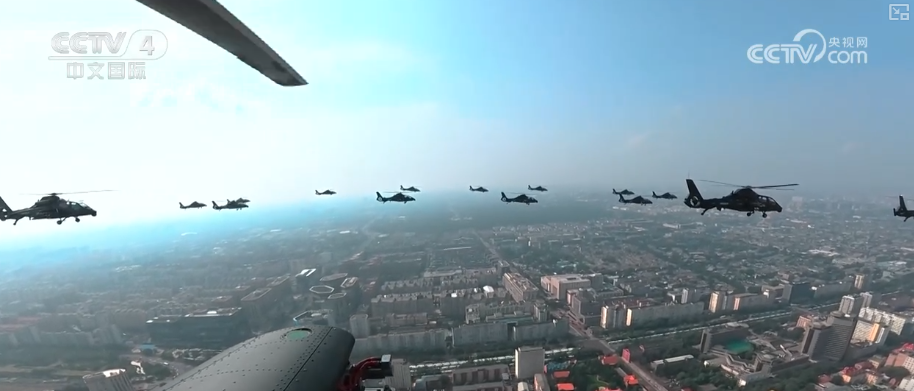
Group 1 - The core viewpoint emphasizes China's advanced technology showcased during the military parade, highlighting its role in global security and peace [1][5][6] - The military parade featured cutting-edge military technology, including hypersonic missiles and unmanned equipment, reflecting China's military advancements [3][10] - The event served as a reminder of China's historical sacrifices during World War II, reinforcing its commitment to peace and development [21] Group 2 - The parade demonstrated China's military strength and international status, aiming to inspire patriotism and convey a message against hegemonism [10][13] - Various military branches, including the newly introduced space and cyber forces, were showcased, indicating a strategic shift in China's military structure [16][18] - The display included a range of advanced weapon systems, underscoring China's enhanced long-range projection and strategic deterrence capabilities [18][19]

中古联合声明
第一财经· 2025-09-04 10:13
Core Viewpoint - The article discusses the strengthening of the relationship between the People's Republic of China and the Republic of Cuba, emphasizing the establishment of a "community of shared destiny" and the commitment to deepen cooperation across various sectors, reflecting a historical friendship and mutual support between the two nations [4][9]. Summary by Sections Historical Context and Relationship Development - The article highlights the traditional friendship between China and Cuba, established by leaders Mao Zedong and Fidel Castro, and notes that the relationship has become a model for cooperation among socialist countries and developing nations over the past 65 years [4][5]. Political Cooperation - Both leaders reaffirmed their commitment to accelerate the construction of a bilateral community of shared destiny and enhance political cooperation, including strategic communication and high-level exchanges [4][7]. Economic and Trade Relations - The two countries agreed to expand cooperation in economic, trade, financial, and investment sectors, leveraging China's high-quality development and Cuba's 2030 national economic and social development plan [8][10]. Scientific and Technological Collaboration - There is a focus on enhancing cooperation in various scientific fields, including cybersecurity, nanotechnology, life sciences, and climate change, under the framework of the Belt and Road Initiative [8][10]. Educational and Cultural Exchange - The article emphasizes the importance of educational cooperation, encouraging Cuban youth to study in China and facilitating Chinese students to learn in Cuba, alongside promoting cultural exchanges [8][10]. Multilateral Cooperation and Global Governance - Both nations expressed a desire to strengthen coordination in international multilateral forums, supporting multilateralism and opposing unilateralism, while also endorsing various global governance initiatives proposed by China [9][10]. Future Engagements - The article concludes with a commitment to continue enhancing the relationship, with Cuba expressing gratitude for China's support and hospitality, and an invitation for future visits by Chinese leaders [12].

中华人民共和国和古巴共和国关于加快构建中古命运共同体的联合声明
Xin Hua She· 2025-09-04 09:17
Core Points - The joint statement emphasizes the deep-rooted friendship and cooperation between China and Cuba, highlighting the historical context of their relationship established by leaders Mao Zedong and Fidel Castro [2][3] - Both nations reaffirm their commitment to building a "community of shared destiny" and enhancing bilateral relations to a higher level [2][3] - The statement includes mutual support for each other's political stances, particularly regarding sovereignty and territorial integrity [3][4] Group 1: Bilateral Relations - The two leaders expressed satisfaction with the development of China-Cuba relations over the past 65 years, marking it as a model for cooperation among socialist countries and developing nations [2] - There is a strong political will to accelerate the construction of a bilateral community of shared destiny, with an emphasis on strategic communication and high-level exchanges [2][4] - Both sides agreed to strengthen the special relationship between the Communist Party of China and the Communist Party of Cuba, enhancing cooperation in various fields [4][5] Group 2: Economic and Technological Cooperation - The statement outlines plans to expand cooperation in economic, trade, financial, and technological sectors, leveraging China's high-quality development and Cuba's 2030 national development plan [5][6] - There is a commitment to deepen collaboration in areas such as cybersecurity, nanotechnology, life sciences, and climate change, under the framework of the Belt and Road Initiative [6][8] - Both countries aim to enhance educational exchanges, encouraging Cuban youth to study in China and providing scholarships for outstanding students [6][7] Group 3: International Cooperation - The two nations reaffirm their commitment to multilateralism and the importance of the United Nations in maintaining international order [6][7] - Cuba supports China's global governance initiatives, including the Belt and Road Initiative and various global security and development proposals [7][8] - Both countries recognize the significance of building a China-Latin America community of shared destiny, emphasizing mutual respect and win-win cooperation [8][9]
习近平会见古巴共产党中央委员会第一书记、古巴国家主席迪亚斯-卡内尔
证监会发布· 2025-09-04 08:28
习近平强调,中古双方要坚持命运与共,深化高水平政治互信,进一步密切高层交往,加强 治党治国经验交流,坚定相互支持,持续加深肝胆相照的特殊情谊;要坚持真诚互助,系统推进 发展合作,中方愿继续在力所能及范围内为古方提供帮助和支持;要坚持勠力同心,加强全方位 战略协作,继续在七十七国集团、金砖国家等框架内协调和配合,落实好全球发展倡议、全球安 全倡议、全球文明倡议、全球治理倡议,共同建设好国际调解院,为促进世界和平与发展作出更 大贡献。中方将继续坚定支持古方反对干涉和封锁的正义斗争。 9月4日上午,中共中央总书记、国家主席习近平在北京人民大会堂会见来华出席纪念中国人 民抗日战争暨世界反法西斯战争胜利80周年活动的古巴共产党中央委员会第一书记、古巴国家主 席迪亚斯-卡内尔。新华社记者 黄敬文 摄 迪亚斯-卡内尔表示,纪念中国人民抗日战争胜利80周年活动隆重热烈,具有重大历史意 义。中国为世界反法西斯战争胜利作出的重要贡献将被永远铭记。古巴是拉美第一个和中国构建 双边命运共同体的国家,两党两国关系密切,友谊牢不可破。古方坚定奉行一个中国原则,感谢 中方对古巴经济社会发展给予的无私支持和帮助,期待继续加强全方位合作,高质 ...
【央视快评】正义的信念不可动摇 和平的期盼不可阻遏 人民的力量不可战胜
Yang Shi Wang· 2025-09-04 01:15
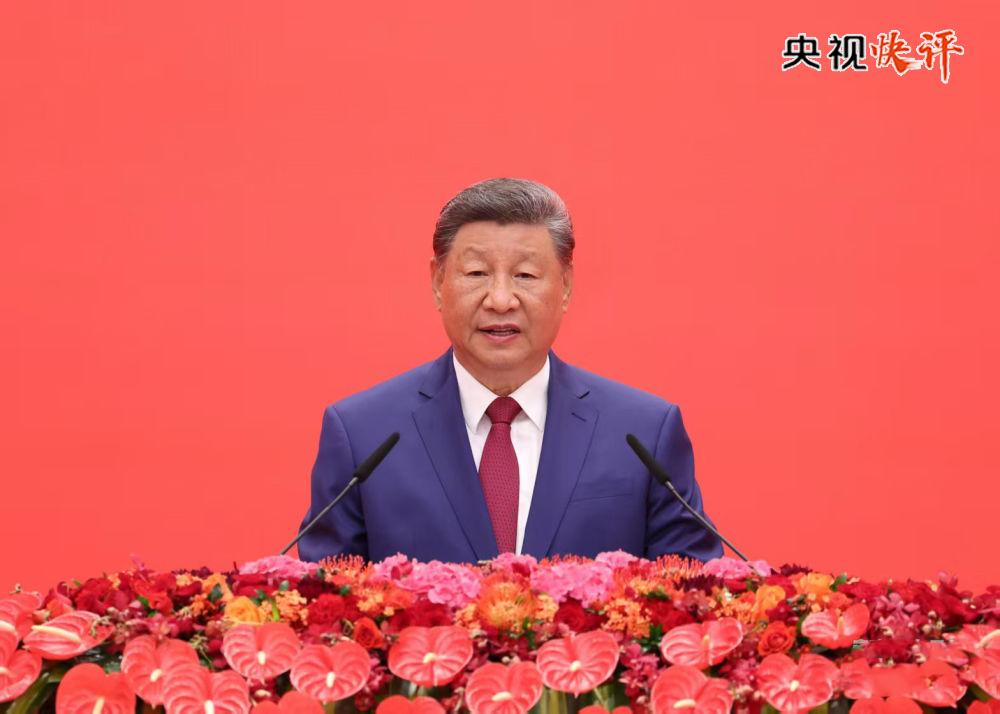
Group 1 - The core message emphasizes the unwavering belief in justice, the unyielding hope for peace, and the invincible power of the people, as articulated by President Xi Jinping during the 80th anniversary commemoration of the victory in the Chinese People's Anti-Japanese War and the World Anti-Fascist War [1][3][4] - Xi Jinping's speech reflects on the significant implications of the victory for global patterns, international order, and human development, highlighting the deep friendship forged between the Chinese people and the global community during wartime [3][4] - The speech underscores the importance of learning from history to guide the international community towards a better future, emphasizing the themes of justice, peace, and the strength of the people [3][4][5] Group 2 - The introduction of the Global Governance Initiative by Xi Jinping marks another significant global initiative aimed at reforming the global governance system, providing direction and support for a more just and equitable global governance framework [5][6] - Xi Jinping's declaration addresses historical, contemporary, and global questions, offering clear value coordinates and action guidelines for a world filled with uncertainties, urging nations to uphold fairness and justice [5][6] - The commitment to international fairness and justice, world peace, and global development is reiterated, with a call for collaborative efforts to achieve lasting peace and shared prosperity [6]
国纪平:从伟大抗战精神到构建人类命运共同体
Ren Min Ri Bao· 2025-09-04 00:48
Core Viewpoint - The commemoration of the 80th anniversary of the victory in the Chinese People's Anti-Japanese War and the World Anti-Fascist War emphasizes the importance of remembering history, honoring sacrifices, and promoting peace for a shared future [1][2]. Group 1: Historical Significance - The Chinese People's Anti-Japanese War was a crucial part of the global anti-fascist struggle, with significant sacrifices made by the Chinese people to protect human civilization and world peace [2][3]. - The war resulted in immense suffering, with over 35 million casualties and significant territorial losses, highlighting the high cost of achieving peace [3]. Group 2: International Cooperation - The victory was achieved through international alliances, with contributions from various nations, including the Soviet Union and the United States, showcasing the power of collective action against tyranny [4]. - Historical figures from different countries played vital roles in protecting Chinese civilians during the war, illustrating the global nature of the struggle for peace and justice [4]. Group 3: Legacy of the Anti-War Spirit - The spirit of resistance and unity during the war has transformed into a commitment to uphold peace and justice in the present day, guiding China's approach to international relations [5][12]. - The anti-war spirit reflects humanity's enduring desire for peace and justice, serving as a beacon for future generations [5]. Group 4: Modern Implications - The current global landscape, marked by unilateralism and protectionism, necessitates a renewed commitment to multilateralism and cooperation among nations to address shared challenges [10][16]. - China's development path, characterized by peaceful cooperation and mutual benefit, contrasts with historical Western expansionism, emphasizing a collaborative approach to global governance [11][14]. Group 5: Call to Action - The commemoration serves as a reminder of the need for collective action to maintain peace and security, urging nations to learn from history and work together for a better future [9][18]. - The ongoing challenges in the international order call for a reaffirmation of the principles established by the United Nations, which remain vital for global stability [18].
从伟大抗战精神到构建人类命运共同体
Ren Min Ri Bao· 2025-09-03 23:32
Core Viewpoint - The commemoration of the 80th anniversary of the victory in the Anti-Japanese War emphasizes the importance of remembering history, honoring sacrifices, and promoting peace, while also advocating for the construction of a community with a shared future for mankind [1][2][4]. Group 1: Historical Significance - The Anti-Japanese War was a crucial part of the global anti-fascist struggle, with China suffering over 35 million casualties and significant territorial losses [2][3]. - The victory in this war is seen as a monumental achievement that not only secured peace for China but also contributed to the preservation of human civilization [5][6]. Group 2: Great Anti-War Spirit - The spirit of resistance during the war is characterized by patriotism, unity, and an unwavering belief in victory, which continues to inspire the Chinese people in their pursuit of national rejuvenation [3][4]. - This spirit is viewed as a vital force that has shaped China's identity and its role in the world, emphasizing the importance of peace and justice [4][11]. Group 3: International Cooperation - The commemoration highlights the collaborative efforts of various nations during the war, showcasing the importance of solidarity against oppression and violence [3][17]. - China's historical contributions to the establishment of a new international order post-World War II are acknowledged, including its role in founding the United Nations and advocating for principles of equality and peaceful dispute resolution [5][18]. Group 4: Current Global Context - The current international landscape is marked by challenges such as unilateralism and protectionism, necessitating a renewed commitment to multilateralism and global cooperation [8][16]. - The call for a community with a shared future reflects a desire to move beyond zero-sum thinking and towards mutual benefit and coexistence among nations [9][19].
坚定不移朝着强国建设、民族复兴的宏伟目标奋勇前进
Ren Min Ri Bao· 2025-09-03 23:32
Core Points - The speech by General Secretary Xi Jinping at the 80th anniversary of the victory in the Chinese People's Anti-Japanese War and the World Anti-Fascist War has resonated strongly among central and state agencies, emphasizing the importance of remembering history and promoting world peace and development [1][2][3] Group 1: Historical Significance - The victory in the Anti-Japanese War is viewed as a pivotal moment that established China's sovereignty and territorial integrity, enhancing its status as a major global power [2][3] - The speech highlights the importance of remembering the sacrifices made during the war and the need to uphold peace and security in the world [4][5] Group 2: National Unity and Development - There is a strong call for unity and collective effort among the Chinese people to achieve national rejuvenation and modernize the country under the leadership of the Communist Party [3][6] - The emphasis is placed on high-quality development and openness to counter global challenges such as unilateralism and protectionism, aiming to create new opportunities for global economic growth [5][7] Group 3: Peaceful Development - The commitment to a peaceful development path is reiterated, with a focus on mutual respect and cooperation among nations to prevent the recurrence of historical tragedies [4][5] - The importance of maintaining a people-centered development approach is stressed, ensuring that the benefits of development are equitably shared among all citizens [7]
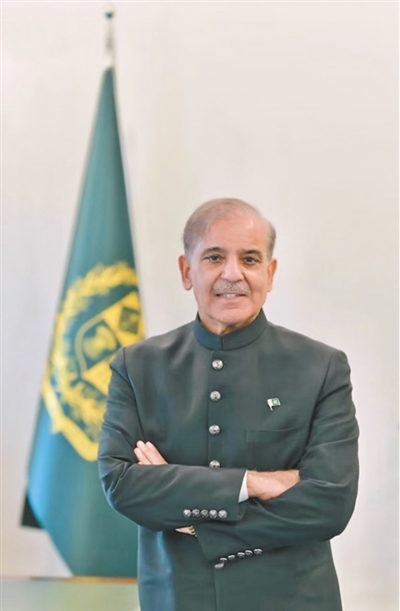
风雨同舟 命运与共
Ren Min Ri Bao· 2025-09-03 23:32
Group 1 - The core viewpoint emphasizes the deep-rooted friendship and cooperation between Pakistan and China, which has evolved beyond mere political and defense collaboration to encompass economic, technological, and cultural exchanges [2][4]. - The China-Pakistan Economic Corridor (CPEC) is highlighted as a flagship project of the Belt and Road Initiative, significantly contributing to infrastructure development and economic connectivity in Pakistan [3][4]. - Recent high-level visits and business meetings have facilitated extensive economic cooperation, with over 1,000 business matches and more than 30 memorandums of understanding signed during a recent event [4][5]. Group 2 - The ongoing projects, such as the multifunctional communication satellite and training programs for agricultural experts, exemplify the spirit of a shared destiny between the two nations [4]. - Pakistan is implementing various facilitation measures to attract Chinese businesses, including streamlined visa processes and the establishment of dedicated business centers [4][5]. - The upcoming 75th anniversary of diplomatic relations is seen as an opportunity to further institutionalize cooperation and explore new areas of collaboration, ensuring mutual benefits and shared prosperity [5][6].