中欧关系

Search documents
李强会见欧洲理事会主席科斯塔
Xin Hua She· 2025-10-27 06:15
Core Points - The meeting between Chinese Premier Li Qiang and European Council President Costa highlights both opportunities and challenges in China-EU relations [1] - Li emphasized the importance of political mutual trust and the need to implement shared consensus to enhance cooperation [1] - The Chinese side is committed to expanding trade and cooperation in areas such as green technology, digital innovation, and supply chain management [1] Group 1 - Li Qiang expressed China's willingness to work with the EU to optimize and balance trade, aiming for high-level mutual benefits [1] - The Chinese government seeks a fair and non-discriminatory business environment for Chinese enterprises in Europe [1] - Costa indicated the EU's readiness to maintain high-level exchanges and enhance dialogue to address mutual concerns [1] Group 2 - Both parties aim to strengthen cooperation in addressing global challenges such as climate change [1] - The emphasis on dialogue and mutual respect is crucial for resolving existing issues in China-EU economic and trade cooperation [1] - The meeting underscores the importance of multilateralism and collaborative efforts in various sectors [1]
第十一届中国—中东欧国家高级别智库研讨会在克罗地亚首都萨格勒布成功举办
人民网-国际频道 原创稿· 2025-10-25 02:19
Group 1: Event Overview - The 11th China-Central and Eastern European Countries (CEEC) High-Level Think Tank Seminar was successfully held in Zagreb, Croatia, focusing on "A World at a Crossroads: Cooperation between China and CEEC" [1] - The seminar attracted over 100 participants, including government officials, think tank leaders, experts, industry representatives, and media from China and various CEEC countries [1] Group 2: Key Insights from Speakers - Zhao Zhimin highlighted the resilience of China-CEEC relations over the past 50 years, emphasizing the significant contributions of CEEC to the development of China-Europe relations since the establishment of the cooperation mechanism in 2012 [2] - Ivo Josipović noted that the cooperation mechanism has led to substantial connectivity and investment collaborations, enhancing the "Belt and Road" initiative, with projects like the Pelješac Bridge showcasing China's engineering capabilities [2] - Emil Constantinescu emphasized the historical ties and mutual benefits between China and Romania, advocating for deeper cultural exchanges and the establishment of a "Civilizational Silk Road" [3] - Qi Qianjin pointed out the current global uncertainties and the importance of China-CEEC cooperation in providing stability and vitality to regional and global development [3] Group 3: Future Cooperation Directions - Chen Guoyou mentioned the steady development of the China-CEEC cooperation mechanism over the past 13 years, achieving fruitful results in connectivity, trade, cultural exchanges, and local cooperation [3] - Feng Zhongping stated that both China and Europe advocate for multilateralism and aim to enhance cooperation, which benefits not only their relations but also global stability [4] - Mato Niyafro emphasized the need for international collaboration to address issues like climate change and AI governance, with a focus on promoting higher education exchanges between China and Croatia [4] Group 4: Forum Discussions - The sub-forum discussions involved in-depth exchanges on practical cooperation between China and CEEC, think tank collaboration, and the current situation in CEEC countries [5] - Participants summarized the development experiences of China-CEEC cooperation and analyzed new characteristics in various fields, providing valuable insights for innovative cooperation mechanisms [5]
中国驻欧盟使团:欧方根本没有资格对中俄正常经贸合作说三道四
Zhong Guo Xin Wen Wang· 2025-10-24 05:14
Core Viewpoint - The Chinese Mission to the EU asserts that the EU has no right to criticize normal economic and trade cooperation between China and Russia, urging the EU to focus on fostering healthy and stable relations with China and the EU [1] Group 1: Response to EU Sanctions - The Chinese Mission expressed strong dissatisfaction with the EU's unilateral sanctions against Chinese companies under the pretext of the Russia-Ukraine conflict, emphasizing that China is not a party to the crisis and has not provided lethal weapons to any side [1] - The spokesperson highlighted that many countries, including those in Europe and America, continue to trade with Russia, questioning the EU's authority to comment on China-Russia trade relations [1] Group 2: Call for Constructive Engagement - The Chinese Mission urged the EU to stop using China as a scapegoat and to avoid actions that harm China's interests, advocating for measures that would contribute positively to the health and stability of China-EU relations [1] - The statement concluded with a commitment from China to take all necessary measures to firmly protect its legitimate rights and interests [1]
欧洲部分国家将制裁中企,外交部回应→
Zheng Quan Shi Bao· 2025-10-23 14:52
Core Viewpoint - The Chinese government strongly opposes the unilateral sanctions imposed by some European countries on Chinese companies under the pretext of the Russia-Ukraine conflict, emphasizing that China is not a party to the crisis and has not provided lethal weapons to any side [1] Group 1: China's Position on Sanctions - The Chinese government has expressed strong dissatisfaction and firm opposition to the illegal unilateral sanctions imposed by European countries on Chinese enterprises [1] - China has reiterated that it is not the creator of the Ukraine crisis and has been committed to promoting dialogue and negotiations [1] - The Chinese government has called on European countries to stop interfering in normal exchanges and cooperation between Chinese and Russian enterprises, stating that such actions are detrimental to the healthy and stable development of China-Europe relations [1] Group 2: Dialogue and Negotiation - The Chinese government maintains that dialogue and negotiation are the only viable solutions to the Ukraine crisis, asserting that coercion and pressure will not resolve the issue [1]
中法举行战略对话
Xin Hua Wang· 2025-10-15 21:42
Group 1 - The core viewpoint of the article highlights the progress in China-France relations under the leadership of both countries' heads of state, emphasizing the importance of strategic stability and cooperation for mutual long-term benefits [1] - Wang Yi expressed China's willingness to enhance high-level exchanges and deepen strategic trust with France, indicating that the upcoming 20th Central Committee's Fourth Plenary Session will provide more opportunities for cooperation [1] - Both parties aim to strengthen cooperation in traditional fields while exploring emerging areas and maximizing local cooperation potential, with a focus on multilateral coordination within the United Nations framework [1] Group 2 - The French side, represented by Bonnard, reaffirmed its commitment to an independent foreign policy and the One China principle, expressing a desire to enhance practical cooperation in trade, civil nuclear energy, technology, and new energy sectors [1] - Both sides discussed the importance of cooperation in the context of the Ukraine crisis, Middle East situation, and the reform of the global governance system, indicating a shared interest in addressing these global issues [2]
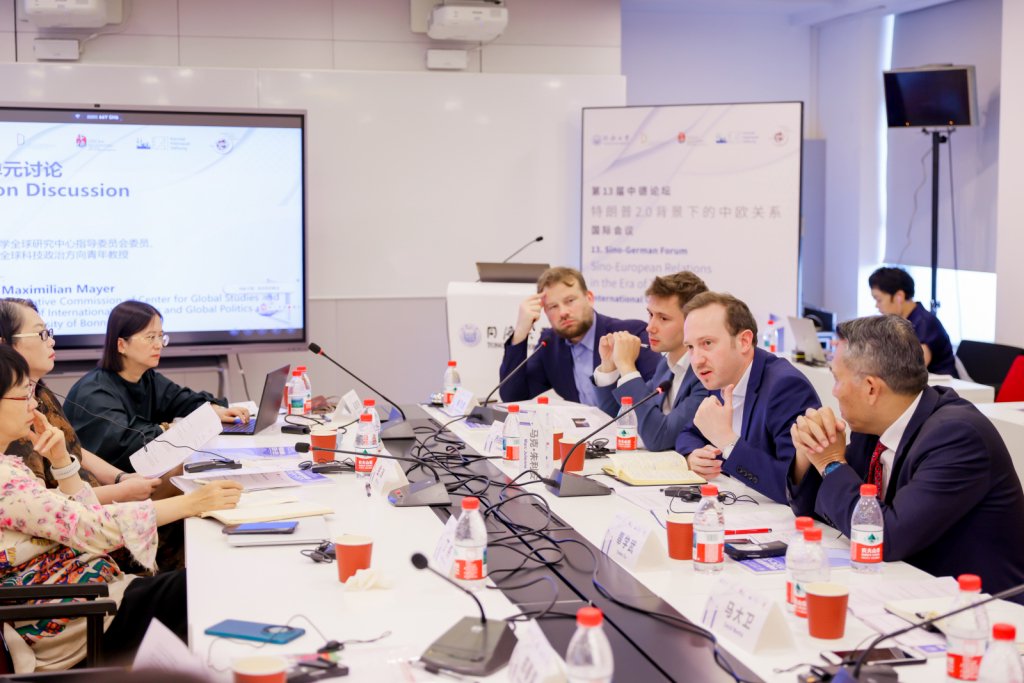
中欧如何应对地缘政治变局?学者:乌克兰问题不应依赖不确定性强的美国
Xin Lang Cai Jing· 2025-09-29 01:41
Group 1 - The core issue of the China-Europe relationship is the asymmetry in expectations, especially in the context of the 50th anniversary of diplomatic relations and the 80th anniversary of the United Nations [1] - The significance of China-Europe economic cooperation has increased amidst geopolitical tensions, with both sides having mutual concerns but still room for collaboration [2][3] - The EU's changing security perspective post-Russia-Ukraine conflict has impacted its policy towards China, shifting from engagement to a more defensive realism stance [4][5] Group 2 - There is a need for dialogue and understanding between China and Europe regarding the Ukraine issue, with suggestions for China to facilitate peace talks [5][7] - The younger generation is seen as a key player in exploring future cooperation opportunities, particularly in emerging technologies and climate change [9][10] - Climate change is identified as a critical area for collaboration, with both sides expressing strong willingness to work together, especially in light of the U.S. withdrawal from the Paris Agreement [10]

李强会见欧盟委员会主席
Yang Guang Wang· 2025-09-25 05:11
Core Points - The meeting between Chinese Premier Li Qiang and European Commission President Ursula von der Leyen took place in New York on September 24, emphasizing the importance of deepening China-Europe relations [1] - Li Qiang highlighted the consensus reached during the July meeting between President Xi Jinping and European leaders, urging the EU to take practical actions to enhance mutual trust and avoid politicizing economic and trade issues [1] - Von der Leyen expressed the EU's willingness to implement the agreements made during the recent China-Europe leadership meeting, focusing on trade, investment, and climate change cooperation [1] Group 1 - Li Qiang called for strategic autonomy and fairness in the relationship between China and the EU, positioning both as significant global players [1] - The emphasis was placed on the need for the EU to fulfill its commitments and to avoid over-politicizing economic matters [1] - The discussions aimed at fostering sustainable global development through enhanced cooperation in various sectors [1]
李强会见欧盟委员会主席冯德莱恩
Xin Hua She· 2025-09-24 16:32
Core Points - The meeting between Chinese Premier Li Qiang and European Commission President Ursula von der Leyen emphasizes the 50th anniversary of China-EU diplomatic relations and the commitment to strengthen cooperation and communication [1][2] - Both parties aim to deepen mutual trust and seek common ground while managing differences, particularly in trade and investment, amidst a changing international landscape [2] Group 1 - The past 50 years of China-EU relations have remained generally healthy and stable due to effective communication and trust-building efforts [2] - China expresses willingness to work with the EU to implement the consensus reached during the recent China-EU leaders' meeting, focusing on cooperation and mutual benefits [1][2] - The EU is open to enhancing dialogue and cooperation in areas such as trade, investment, environmental protection, and development assistance [2] Group 2 - Both leaders acknowledge the importance of maintaining open trade and investment markets, adhering to fair competition, and avoiding politicization of economic issues [2] - The current international situation is characterized by increasing instability and uncertainty, highlighting the need for China and the EU to act responsibly and constructively in global affairs [2] - The EU appreciates China's role in climate change initiatives and is keen to collaborate on green transformation and sustainable development [2]
中方驳欧盟有关官员涉华言论:对二战历史不尊重也损害欧方利益
Zhong Guo Xin Wen Wang· 2025-09-04 08:15
Core Viewpoint - The Chinese government strongly opposes and condemns the recent comments made by EU officials regarding China's relationships with Russia, Iran, and North Korea, labeling them as ideologically biased and historically ignorant [1]. Group 1: Historical Context - The Chinese People's War of Resistance against Japan is highlighted as a significant part of the global anti-fascist struggle, with China making substantial sacrifices to protect human civilization and world peace [2]. - The commemoration of the 80th anniversary of this war serves to remember history, honor the fallen, and promote peace, with participation from over 100 foreign diplomats, including representatives from 19 European countries, indicating broad international recognition of China's contributions [2]. Group 2: Current International Relations - The current international landscape is described as chaotic, emphasizing the need for unity and cooperation, particularly from Europe, which should reflect on its historical lessons [3]. - Some EU leaders are criticized for clinging to Cold War mentalities and fostering division, which is seen as detrimental to the EU's own interests and international standing [3]. - The Chinese government calls for a correction of erroneous statements and encourages actions that promote global peace and stability, as well as positive Sino-European relations [3].
再遇见|上海欧洲学会会长丁纯谈中欧行稳致远之道:经贸压舱,求同破浪
Xin Lang Cai Jing· 2025-08-14 11:30
Core Viewpoint - The article emphasizes the importance of economic and trade relations as a stabilizing anchor in the evolving China-Europe relationship, especially in the context of the 50th anniversary of diplomatic ties between China and Europe [3][4]. Group 1: Historical Context and Development Stages - The China-Europe relationship has evolved through three main stages: the "honeymoon period" (1995-2005), a period of reflection and repositioning (2006-2019), and the current phase emphasizing competition and strategic rivalry (2019-present) [11][12][13]. - The "honeymoon period" was marked by the establishment of a comprehensive strategic partnership in 2003, coinciding with China's economic reforms and European integration [11][12]. - The second stage saw the EU recognizing China as a competitor, with a focus on trade imbalances and market access issues, culminating in a dual role of cooperation and competition [12][13]. Group 2: Current Challenges and Dynamics - Current challenges in the China-Europe relationship include geopolitical tensions, trade frictions, and differing ideological perspectives, particularly regarding the Russia-Ukraine conflict [17][15]. - The EU's "de-risking" strategy reflects a shift towards reducing dependency on China while maintaining economic cooperation, highlighting a complex interplay between competition and collaboration [15][16]. - The rise of extreme right-wing politics in Europe complicates the political landscape, making it harder to form a unified stance on China [22][23]. Group 3: Future Prospects and Cooperation - Future cooperation opportunities exist in areas such as green technology, digital collaboration, and public health, driven by mutual economic interests and global governance needs [27][28]. - The article suggests that maintaining a pragmatic approach, focusing on mutual respect and shared interests, is crucial for advancing the bilateral relationship [25][26]. - The economic interdependence between China and Europe remains strong, with both parties needing to navigate their differences while seeking common ground for cooperation [26][28].