地缘政治变局

Search documents
策略周度思考 20260201:中盘蓝筹系列:大宗涨价的两条主线
Orient Securities· 2026-02-01 07:45
Group 1: Price Trends and Historical Context - Historical price trends for commodities follow a sequence: precious metals, industrial metals, petrochemicals, and agricultural products, with significant bull markets occurring five times since the 1970s when prices increased by over 50%[9] - The typical price increase sequence is less than one quarter for precious metals, about two quarters for petrochemicals, and approximately one quarter for agricultural products[12] - In the current cycle, precious metals have surged ahead, while industrial metals, petrochemicals, and agricultural products have lagged behind[9] Group 2: Current Market Dynamics - The current market is influenced by two main factors: domestic industrial transformation and global political changes, leading to a divergence in commodity performance[28] - Commodities closely tied to traditional industries, such as real estate, are expected to show weak performance despite policy support, as seen in the contrasting performance of tungsten-iron and iron[30] - Emerging economies are expected to drive future demand growth, with a decoupling from developed economies, particularly in Asia, Africa, and Latin America[30] Group 3: Future Price Pathways - The current price increase is characterized by external factors rather than internal ones, focusing on two main lines: price increases driven by industrialization in emerging economies and geopolitical tensions affecting import prices[43] - The industrialization of emerging economies is anticipated to sustain demand for industrial products, supported by China's technology and capital[43] - Geopolitical risks, including issues in Japan, the Middle East, and Latin America, are expected to impact commodity prices, particularly for imports like agricultural products and crude oil[44] Group 4: Investment Outlook and Risks - The report favors investment in the chemical and agricultural sectors due to their potential for price increases, while being conservative on commodities closely linked to the real estate sector[44] - Risks include market performance falling short of expectations, insufficient pricing of geopolitical risks, and potential underperformance in industry developments[45][46][47]
爆料:沙特计划购买“枭龙”战斗机
Xin Lang Cai Jing· 2026-01-08 16:57
Core Viewpoint - Pakistan and Saudi Arabia are negotiating a military sales agreement to convert approximately $2 billion of Saudi loans into the purchase of JF-17 "Thunder" fighter jets, indicating a significant acceleration in military cooperation following the signing of a mutual defense agreement in 2025 [1][3]. Group 1: Military Cooperation - The negotiations highlight a strategic adjustment for both countries amid changing geopolitical dynamics, with Pakistan facing severe fiscal pressures and Saudi Arabia reassessing its security partnerships in response to uncertainties regarding U.S. commitments in the Middle East [1]. - The mutual defense agreement signed in September 2025 stipulates that any attack on either country will be considered a common threat, significantly enhancing their long-standing security cooperation [1]. Group 2: JF-17 Fighter Jet - The discussions currently focus on providing the JF-17 fighter jets, which are co-developed and produced in Pakistan with China, with the JF-17 being the preferred option among several alternatives [1]. - The total value of the transaction is estimated at $4 billion, with $2 billion coming from the loan conversion and an additional $2 billion for related equipment purchases [1]. Group 3: Market Dynamics - Pakistan is reportedly in talks or has finalized military sales agreements with six countries, including Saudi Arabia, for JF-17 jets, electronic systems, and associated weapons [3]. - The market competitiveness of the JF-17 has significantly increased due to its operational use in real combat situations, particularly during the conflict with India in May of the previous year [3].
爆料:沙特计划购买
Xin Lang Cai Jing· 2026-01-08 16:57
Group 1 - Pakistan and Saudi Arabia are negotiating a military sales agreement to convert approximately $2 billion of Saudi loans into the purchase of JF-17 "Thunder" fighter jets, indicating a significant acceleration in military cooperation following the signing of a mutual defense agreement in 2025 [2] - The defense agreement stipulates that any attack on either party will be considered a common threat, enhancing the security cooperation that has existed for decades between the two nations [2] - The total value of the transaction is estimated at $4 billion, with Saudi Arabia expected to spend an additional $2 billion on related equipment alongside the loan conversion [2] Group 2 - Pakistan is currently in discussions or has finalized military sales agreements with six countries, including Saudi Arabia, for the JF-17 fighter jets and associated systems, highlighting the aircraft's increased market competitiveness due to its combat-tested performance [4] - The JF-17 fighter jet has been utilized in conflicts, notably during the skirmish with India in May of the previous year, which has contributed to its appeal in the international market [4] - The Pakistani military has not commented on the negotiations, and there has been no response from the Saudi government media office regarding the matter [3][4]


委内瑞拉石油控制权生变,美企雪佛龙或成最大赢家?
Hua Er Jie Jian Wen· 2026-01-05 07:06
Core Viewpoint - The recent military action by the U.S. leading to the capture of Venezuelan President Maduro has prompted a reevaluation of control over Venezuela's oil industry, presenting both opportunities and risks for foreign investors, particularly in the context of a potential pro-U.S. government [1][3]. Group 1: Market Dynamics - The geopolitical shift in Venezuela may allow for a reconstruction of its energy sector, which has been in decline for years, potentially benefiting companies like Chevron if a supportive government emerges [1][3]. - Venezuela's oil production has plummeted from a peak of approximately 3.5 million barrels per day in 1997 to about 950,000 barrels per day currently, with exports around 550,000 barrels per day, indicating a significant market opportunity for international firms capable of investment and technological upgrades [3][6]. Group 2: Short-term Supply Risks - Concerns about short-term supply disruptions are primarily linked to uncertainties in the commercial payment chain, as buyers may halt transactions due to unclear authority in Venezuela [4]. - Despite these concerns, Chevron is expected to maintain an export volume of 150,000 barrels per day, which is crucial for alleviating supply pressures in the market [4]. Group 3: Long-term Recovery Challenges - The recovery of Venezuela's oil industry faces severe challenges due to decades of underinvestment and deteriorating infrastructure, requiring annual capital injections of at least $10 billion and a stable security environment for any meaningful turnaround [2][6]. - Experts warn that even with a change in government, significant investment and time will be necessary to restore the oil sector, making immediate increases in production unlikely [6].

中欧如何应对地缘政治变局?学者:乌克兰问题不应依赖不确定性强的美国
Xin Lang Cai Jing· 2025-09-29 01:41
Group 1 - The core issue of the China-Europe relationship is the asymmetry in expectations, especially in the context of the 50th anniversary of diplomatic relations and the 80th anniversary of the United Nations [1] - The significance of China-Europe economic cooperation has increased amidst geopolitical tensions, with both sides having mutual concerns but still room for collaboration [2][3] - The EU's changing security perspective post-Russia-Ukraine conflict has impacted its policy towards China, shifting from engagement to a more defensive realism stance [4][5] Group 2 - There is a need for dialogue and understanding between China and Europe regarding the Ukraine issue, with suggestions for China to facilitate peace talks [5][7] - The younger generation is seen as a key player in exploring future cooperation opportunities, particularly in emerging technologies and climate change [9][10] - Climate change is identified as a critical area for collaboration, with both sides expressing strong willingness to work together, especially in light of the U.S. withdrawal from the Paris Agreement [10]

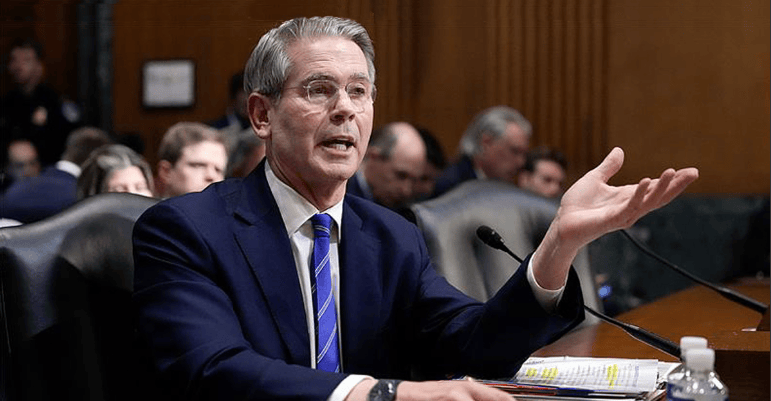
美国财政部长:英伟达不需要政府的财政支持,不考虑入股!
Sou Hu Cai Jing· 2025-08-28 05:29
Group 1 - The U.S. government is unlikely to invest in Nvidia, as stated by Treasury Secretary Scott Bessent, who emphasized that Nvidia does not require financial support from the government at this time [2][3] - Bessent indicated that the government may consider equity interventions in industries that need restructuring, such as the shipbuilding industry, reflecting a shift in government policy towards direct equity participation to strengthen critical supply chains [3][4] - The recent acquisition of nearly 10% of Intel by the Trump administration highlights the government's focus on maintaining domestic control and competitiveness in the semiconductor industry [3][4] Group 2 - The U.S. government's exploration of diverse tools for industry support is driven by geopolitical changes and global supply chain challenges, indicating a deeper and broader intervention in the economy [4] - Although Nvidia is not currently on the government's investment list, the emphasis on restructuring specific industries suggests future interventions may be more selective and flexible [4]