
企业会计准则

Search documents
必易微: 上海兴感半导体有限公司审计报告
Zheng Quan Zhi Xing· 2025-08-26 11:21
Audit Opinion - The audit report concludes that the financial statements of Shanghai Xinggan Semiconductor Co., Ltd. fairly reflect the company's financial position as of May 31, 2025, December 31, 2024, and December 31, 2023, as well as its operational results and cash flows for the periods from January to May 2025, the year 2024, and the year 2023 [2][3]. Management and Governance Responsibilities - The management of the company is responsible for preparing the financial statements in accordance with accounting standards and ensuring that the statements are free from material misstatements due to fraud or error [3][4]. - The governance layer is tasked with overseeing the financial reporting process of the company [3]. Auditor's Responsibilities - The auditor's goal is to obtain reasonable assurance that the financial statements are free from material misstatement, whether due to fraud or error [3][4]. - The auditor identifies and assesses risks of material misstatement and designs audit procedures to address these risks [3][4]. - The auditor evaluates the appropriateness of accounting policies selected by management and assesses the reasonableness of accounting estimates and disclosures [3][4]. Company Overview - Shanghai Xinggan Semiconductor Co., Ltd. is headquartered in Shanghai, with a registered capital of RMB 8.022352 million as of May 31, 2025 [5][6]. - The company primarily engages in technology development in the semiconductor, electronics, and integrated circuit sectors [5][6]. Financial Reporting Basis - The financial statements are prepared on a going concern basis, and the company has assessed its ability to continue as a going concern for the next 12 months without any significant issues [5][6]. Important Accounting Policies - The company follows specific accounting policies and estimates in accordance with accounting standards, ensuring that the financial statements accurately reflect its financial status and operational results [5][6]. - The accounting year runs from January 1 to December 31, and the functional currency is RMB [5][6]. Consolidation and Mergers - The company consolidates financial statements based on control, including subsidiaries and structured entities [7][8]. - The accounting treatment for mergers and acquisitions is specified, including the recognition of identifiable assets and liabilities at fair value on the acquisition date [6][7][8].

上声电子: 信永中和会计师事务所(特殊普通合伙)关于苏州上声电子股份有限公司向不特定对象发行可转换公司债券的财务报告及审计报告
Zheng Quan Zhi Xing· 2025-08-25 16:34
Company Overview - Suzhou Shangsheng Electronics Co., Ltd. is primarily engaged in the research, development, production, and sales of automotive speakers, audio systems, new electronic components, digital audio and video coding and decoding devices, high-end audio equipment, and related products [1][2]. Financial Information - The registered capital of the company is RMB 160 million, with significant contributions from various stakeholders, including Suzhou Shangsheng Investment Management Co., Ltd. and others [1]. - The financial statements were approved by the company's board of directors on April 27, 2023 [1]. Accounting Policies - The company prepares its financial statements based on the going concern principle, indicating a history of profitable operations and financial resources to support ongoing activities [1][3]. - The financial statements comply with the requirements of the enterprise accounting standards, reflecting the company's financial position and performance accurately [1][3]. Consolidation Scope - The company includes all controlled subsidiaries in its consolidated financial statements, ensuring that all significant internal transactions and balances are eliminated during consolidation [3][4]. - The consolidation scope is determined based on control, and any changes in the consolidation scope for the year 2022 are detailed in the notes [3][4]. Financial Instruments - Financial instruments are recognized when the company becomes a party to the contractual provisions of the financial asset or financial liability [5][6]. - The classification and measurement of financial assets depend on the company's business model for managing financial assets and the contractual cash flow characteristics of the financial assets [6][7]. Inventory Management - The company employs a perpetual inventory system, valuing inventory at actual cost, which includes procurement, processing, and other costs [14]. - Inventory is measured at the lower of cost and net realizable value, with provisions for inventory write-downs when necessary [14]. Long-term Investments - Long-term equity investments are initially measured at cost, with adjustments made for any differences between the initial investment cost and the fair value of identifiable net assets acquired [15][16]. - The company uses the equity method for investments in entities over which it has significant influence or joint control, recognizing its share of the investee's profits or losses [17][18]. Real Estate and Fixed Assets - Investment properties are measured at cost and depreciated over their useful lives, with specific depreciation rates outlined for different asset categories [19][20]. - Fixed assets are also measured at cost, with depreciation calculated using the straight-line method based on the estimated useful life of the assets [19][20].

华立科技: 广州华立科技股份有限公司最近一年的财务报告及其审计报告以及最近一期的财务报告
Zheng Quan Zhi Xing· 2025-08-25 16:23
Company Overview - Guangzhou Huali Technology Co., Ltd. was approved for public issuance of RMB ordinary shares (A shares) on May 10, 2021, becoming a listed company on the Growth Enterprise Market [1] - The company is a comprehensive service provider for the distribution and operation of commercial gaming and amusement equipment in China, covering design, research and development, production, sales, and operation [1] - As of December 31, 2024, the registered capital of the company is RMB 146,692,000 [1] Financial Reporting Basis - The financial statements are prepared based on the going concern assumption and in accordance with the relevant accounting standards and guidelines [2] - The accounting year runs from January 1 to December 31, and the company uses RMB as the functional currency for its domestic subsidiaries [2] Accounting Policies and Estimates - The financial statements reflect the company's financial position, operating results, changes in owners' equity, and cash flows accurately and completely [2] - The company has established significance criteria for various financial items, such as accounts receivable and payable, which exceed 1% of total assets or RMB 10 million [3] Business Combinations - The company follows specific accounting treatments for business combinations, distinguishing between combinations under common control and those not under common control [5][6] - Costs directly related to business combinations, such as audit and legal fees, are recognized in the current period's profit and loss [4][7] Financial Instruments - Financial assets are classified into three categories: measured at amortized cost, measured at fair value with changes recognized in other comprehensive income, and measured at fair value with changes recognized in profit or loss [15][16] - Financial liabilities are classified similarly, with initial recognition at fair value and subsequent measurement based on their classification [18][19] Credit Risk and Impairment - The company assesses credit risk and expected credit losses for financial assets, applying a three-stage model based on changes in credit risk since initial recognition [24][25] - Impairment losses are recognized in profit or loss, and the company evaluates financial assets for significant increases in credit risk at each reporting date [27][28]

汇得科技: 立信会计师事务所(特殊普通合伙)关于上海汇得科技股份有限公司向特定对象发行股票的财务报告及审计报告
Zheng Quan Zhi Xing· 2025-08-25 16:13
Company Overview - Shanghai Huide Technology Co., Ltd. was established on March 1, 2016, and listed on the Shanghai Stock Exchange in August 2018. The company operates in the chemical raw materials and chemical products manufacturing industry [1][2]. - As of December 31, 2024, the company has issued a total of 14.11537 million shares, with a registered capital of RMB 180 million [1]. Financial Reporting Basis - The financial statements are prepared in accordance with the accounting standards issued by the Ministry of Finance and are based on the assumption of going concern [2][3]. - The company's accounting period is 12 months, and the functional currency is Renminbi, with a subsidiary using Hong Kong dollars [2][3]. Accounting Policies and Estimates - The company follows specific accounting policies and estimates tailored to its operational characteristics, including the treatment of financial instruments and fixed assets [1][2]. - The company recognizes financial assets and liabilities upon entering into financial instrument contracts, classifying them based on the business model and cash flow characteristics [9][10]. Consolidation and Control - The company consolidates financial statements based on control, including all subsidiaries. Control is defined as having power over the investee and the ability to affect returns [4][5]. - The company treats the entire corporate group as a single accounting entity, applying uniform accounting policies for consolidated financial statements [5][6]. Revenue Recognition and Financial Instruments - Revenue is recognized based on the completion of performance obligations, and financial instruments are classified at initial recognition based on their characteristics [9][10]. - The company assesses expected credit losses for financial instruments, considering past events, current conditions, and forecasts of future economic conditions [15][16]. Inventory and Cost Measurement - Inventory is classified into raw materials, finished goods, and work in progress, measured at cost, and subject to lower of cost or net realizable value [21][22]. - The company uses a perpetual inventory system and applies a weighted average method for cost calculation [21]. Long-term Investments - Long-term equity investments are accounted for using the cost method or equity method, depending on the level of control or influence over the investee [22][24]. - The initial investment cost for equity investments is determined based on the fair value of identifiable net assets at the acquisition date [24][25]. Fixed Assets and Depreciation - Fixed assets are recognized when they are expected to generate economic benefits and are measured at cost, including any necessary subsequent expenditures [27][28]. - Depreciation is calculated using the straight-line method over the estimated useful life of the assets [28]. Borrowing Costs - Borrowing costs directly attributable to the acquisition or production of qualifying assets are capitalized, while other borrowing costs are recognized as expenses in the period incurred [29][30]. Intangible Assets - Intangible assets are initially measured at cost, including purchase price and related expenses necessary to prepare the asset for its intended use [30]. - Intangible assets with finite useful lives are amortized over their useful lives, while those with indefinite lives are not amortized [30].

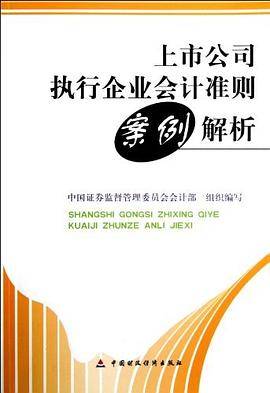
上市公司执行企业会计准则案例解析 PDF电子版
Sou Hu Cai Jing· 2025-08-22 17:59
Core Insights - The publication aims to provide analytical opinions on accounting treatments based on China's accounting standards and international financial reporting standards, referencing other capital market practices when necessary [3] - The book is intended to help market participants better understand the relevant regulations of China's accounting standards and international financial reporting standards, facilitating effective professional judgment [3] - The initiative encourages all participants in the capital market to enhance research on accounting issues faced by listed companies, promoting the improvement of financial information disclosure quality [3]

万里石: 2025年半年度财务报告
Zheng Quan Zhi Xing· 2025-08-22 14:17
Financial Overview - The company reported a total revenue of CNY 603,711,243.07 for the first half of 2025, a decrease from CNY 653,029,548.92 in the same period of 2024, representing a decline of approximately 7.5% [3][4] - Total operating costs for the first half of 2025 were CNY 603,890,285.62, down from CNY 647,538,364.36 in 2024, indicating a reduction of about 6.7% [4][5] - The net profit for the first half of 2025 was reported at CNY -139,840.44, compared to a net loss of CNY -4,828,953.85 in the same period of 2024, showing an improvement in financial performance [4][5] Assets and Liabilities - Total assets at the end of the reporting period were CNY 1,651,073,008.17, slightly up from CNY 1,636,887,160.60 at the beginning of the year [2][3] - Current assets totaled CNY 1,121,487,936.51, compared to CNY 1,108,048,528.90 at the start of the period, reflecting a modest increase [2][3] - Total liabilities increased to CNY 712,257,269.62 from CNY 696,600,044.40, indicating a rise in financial obligations [2][3] Cash Flow - The net cash flow from operating activities was CNY 7,345,307.96, a significant recovery from a negative cash flow of CNY -34,977,181.56 in the previous year [5][6] - Cash flow from investing activities showed a net inflow of CNY 18,961,154.88, compared to a net outflow of CNY -24,996,161.07 in the same period of 2024 [5][6] - Cash flow from financing activities resulted in a net inflow of CNY 22,497,034.25, up from CNY 1,749,415.00 in the previous year [5][6] Equity - Total equity at the end of the reporting period was CNY 938,815,738.55, slightly down from CNY 940,287,116.20 at the beginning of the year [2][3] - The company's retained earnings increased to CNY 104,476,324.14 from CNY 99,250,859.03, indicating a positive trend in profit retention [2][3] Key Ratios - Basic earnings per share for the first half of 2025 were CNY 0.0231, compared to CNY 0.0187 in the same period of 2024, reflecting an improvement in profitability per share [4][5] - The company's operating profit was CNY 4,789,559.66, a significant recovery from a loss of CNY -1,614,323.93 in the previous year [4][5]

宏和科技: 毕马威华振会计师事务所(特殊普通合伙)关于宏和电子材料科技股份有限公司向特定对象发行股票的财务报告及审计报告
Zheng Quan Zhi Xing· 2025-08-22 10:18
Core Viewpoint - KPMG Huazhen LLP issued an audit report for Honghe Electronic Materials Technology Co., Ltd., confirming that the financial statements for the year ending December 31, 2024, fairly reflect the company's financial position and performance in accordance with Chinese accounting standards [1][2]. Financial Performance - The consolidated revenue for Honghe Technology in 2024 was RMB 35,834,632,875.20, a significant increase from RMB 661,154,817.93 in 2023 [8]. - The net profit for 2024 was RMB 22,800,933.92, compared to a net loss of RMB 63,094,466.24 in 2023, indicating a turnaround in profitability [8]. - The total assets as of December 31, 2024, amounted to RMB 2,508,717,827.39, slightly down from RMB 2,532,171,730.10 in 2023 [6][7]. Key Audit Matters - Revenue recognition was identified as a key audit matter, with the company primarily using a direct sales model for its electronic-grade glass fiber cloth, recognizing revenue upon transfer of control to the buyer [1][2]. - Inventory impairment provisions were also highlighted as a key audit matter, with the company assessing the net realizable value of inventory based on future selling prices and sales expense ratios [2]. Financial Position - Current assets totaled RMB 942,347,651.95 in 2024, up from RMB 870,209,234.14 in 2023, while non-current assets decreased to RMB 1,566,370,175.44 from RMB 1,661,962,495.96 [6][7]. - Current liabilities increased to RMB 620,784,788.31 in 2024 from RMB 563,098,588.12 in 2023, while non-current liabilities decreased to RMB 437,893,617.07 from RMB 542,116,273.85 [6][7]. Cash Flow Analysis - The net cash flow from operating activities for 2024 was RMB 179,479,646.23, compared to a cash outflow of RMB 97,749,484.06 in 2023, indicating improved cash generation [9]. - Cash and cash equivalents at the end of 2024 were RMB 285,433,648.94, up from RMB 175,193,236.33 in 2023, reflecting a positive cash position [9].

东睦股份: 上海富驰高科技股份有限公司《审计报告》
Zheng Quan Zhi Xing· 2025-08-21 17:00
Audit Opinion - The audit report states that the financial statements of Shanghai Fuchi High-Tech Co., Ltd. fairly reflect its financial position and performance as of December 31, 2023, December 31, 2024, and June 30, 2025 [2]. Financial Performance - In 2023, Shanghai Fuchi's operating revenue was approximately RMB 1,035.73 million, with MIM, liquid metal, and plastic products contributing about RMB 959.32 million, accounting for 92.62% of total revenue [3]. - For 2024, the operating revenue increased to approximately RMB 1,977.44 million, with the same product categories contributing RMB 1,889.06 million, representing 95.53% of total revenue [3]. - In the first half of 2025, the company reported operating revenue of RMB 1,035.73 million [3]. Key Audit Matters - Revenue recognition is identified as a key audit matter due to the inherent risk of management potentially using inappropriate revenue recognition practices to meet specific targets [3][4]. - Accounts receivable impairment is also a key audit matter, with accounts receivable balances of RMB 672.13 million and RMB 666.34 million as of December 31, 2023, and June 30, 2025, respectively, and provisions for bad debts of RMB 33.73 million and RMB 33.47 million [5]. Management Responsibilities - Management is responsible for preparing financial statements in accordance with accounting standards and ensuring that internal controls are designed and maintained to prevent material misstatements due to fraud or error [6]. - The governance layer is tasked with overseeing the financial reporting process of Shanghai Fuchi [6]. Accounting Policies - The financial statements are prepared based on the going concern assumption, with no significant doubts regarding the company's ability to continue operations in the next 12 months [10]. - The company follows specific accounting policies for financial instruments, inventory, fixed assets depreciation, and revenue recognition, ensuring compliance with accounting standards [10][27].

风华高科: 2025年半年度财务报告
Zheng Quan Zhi Xing· 2025-08-21 16:59
Financial Overview - The total assets of the company at the end of the reporting period amounted to CNY 16,693,786,032.90, an increase from CNY 16,252,206,820.15 at the beginning of the period, reflecting a growth of approximately 2.7% [1][2][3] - Total liabilities increased to CNY 4,224,649,584.99 from CNY 3,884,865,059.91, representing an increase of about 8.7% [2][3] - The total equity of the company rose to CNY 12,469,136,447.91 from CNY 12,367,341,760.24, indicating a growth of approximately 0.8% [2][3] Revenue and Profitability - The total operating revenue for the first half of 2025 was CNY 2,771,527,694.20, compared to CNY 2,390,876,742.46 in the same period of 2024, marking an increase of about 15.9% [3][4] - Total operating costs increased to CNY 2,576,466,342.50 from CNY 2,166,460,771.62, which is an increase of approximately 19% [3][4] - The net profit for the first half of 2025 was CNY 274,802,294.69, compared to CNY 170,663,039.76 in the previous year, reflecting a significant increase of about 60.9% [4][5] Cash Flow - The net cash flow from operating activities was CNY 363,152,629.67, a substantial increase from CNY 165,064,059.88 in the previous year [6][7] - Cash and cash equivalents at the end of the period were CNY 4,572,434,524.06, up from CNY 4,271,856,729.60 at the beginning of the period, indicating a growth of approximately 7.1% [6][7] Expenses - Research and development expenses increased to CNY 124,015,210.25 from CNY 100,179,289.18, representing a growth of about 23.7% [4][5] - Management expenses decreased to CNY 130,479,895.59 from CNY 146,995,107.33, showing a reduction of approximately 11.3% [4][5] Shareholder Equity - The company's retained earnings at the end of the reporting period were CNY 3,161,844,756.57, slightly down from CNY 3,167,139,322.68 at the beginning of the period [2][3] - The total comprehensive income attributable to the parent company's shareholders was CNY 273,293,856.52, compared to CNY 178,661,685.40 in the previous year, indicating a significant increase [5][6]

艾芬达: 容诚会计师事务所(特殊普通合伙)关于公司首次公开发行股票并在创业板上市的财务报表及审计报告
Zheng Quan Zhi Xing· 2025-08-21 16:35
Company Overview - Jiangxi Aifenda HVAC Technology Co., Ltd. was established as Shangrao Aifenda Sanitary Ware Co., Ltd. with a registered capital of RMB 4.8 million [1] - The company underwent several capital increases, with the registered capital increasing to RMB 25.8 million after multiple rounds of funding [1] - The current registered capital of the company is RMB 65 million, following various stock distributions and capital increases [2] Shareholding Structure - The initial shareholding structure included four shareholders, with Wu Jianbin, Wu Jianjun, and Wu Jianmin holding 35%, 35%, and 30% respectively [1] - After several transfers and capital increases, the current major shareholders include Shangrao Aifenda Investment Co., Ltd. and Shangrao Woda Trading Co., Ltd. [1][2] - As of 2024, the shareholding structure reflects a significant ownership by Shangrao Woda Trading Co., Ltd. [2] Business Activities - The company primarily engages in the research, design, production, and sales of HVAC home products and components, including bathroom towel racks and temperature control valves [3] - The company’s operations are based in Jiangxi Province, specifically in Shangrao Economic and Technological Development Zone [2] Financial Reporting - The financial statements are prepared based on the going concern principle and comply with the relevant accounting standards [3] - The financial year runs from January 1 to December 31, with the reporting currency being RMB [4] - The company assesses its ability to continue as a going concern and has not identified any factors that would impact this ability [3] Accounting Policies - The company follows important accounting policies and estimates as per the enterprise accounting standards [3] - Significant projects and cash flows related to investment activities are recognized based on specific thresholds [4] - The company has established criteria for determining control and the scope of consolidation for financial reporting [6][7] Mergers and Acquisitions - The company applies specific accounting treatments for mergers and acquisitions, distinguishing between transactions under common control and those not under common control [5][9] - The treatment of transaction costs related to mergers is recognized in the period incurred [5] Financial Instruments - Financial instruments are classified based on the company's business model and cash flow characteristics, with specific measurement bases for each category [20][21] - The company recognizes financial assets and liabilities upon entering into contracts and applies relevant accounting treatments for their subsequent measurement [20][23]
