传统产业升级

Search documents
价值引领 上市公司金牛奖闪耀“江海明珠”南通
Zhong Guo Zheng Quan Bao· 2025-10-29 21:09
Core Viewpoint - The forum held in Nantong focuses on high-quality development and explores new directions and paths for the advancement of new productive forces in the context of a new round of technological revolution and industrial transformation [1][4]. Awards and Recognition - The "Golden Bull Awards" recognize outstanding listed companies in China, with 117 companies receiving the 2024 Most Investment Value Award, collectively valued at over 11 trillion yuan [2]. - Notable companies among the awardees include China National Offshore Oil Corporation, China Shenhua Energy, and Midea Group, which are recognized for their profitability, debt repayment ability, and innovation [2]. - The Golden Bull Awards also include categories for outstanding entrepreneurs, with six leaders from various companies receiving accolades for their contributions [2][4]. Dividend and Financial Management - The establishment of the Golden Bull Dividend Return Award aligns with the increasing focus on predictable dividends from listed companies, which are becoming more appealing to institutional investors [3]. - A total of 57 companies were awarded the Golden Bull Dividend Return Award, selected from a pool of 4,438 A-share listed companies [3]. - The Golden Bull Financial Director Award was given to 57 financial directors based on quantitative analysis and expert recommendations, highlighting their performance in profit cash ratios and cost control [3]. New Productive Forces - The concept of new productive forces has gained traction, with a focus on strategic emerging industries such as AI, biotechnology, and high-end manufacturing [4][5]. - Companies are encouraged to innovate and enhance their capabilities to seize opportunities presented by the technological revolution [4]. - The new productive forces are categorized into four areas: strategic emerging industries, future industries, digital economy, and upgrading traditional industries through intelligent transformation [5].

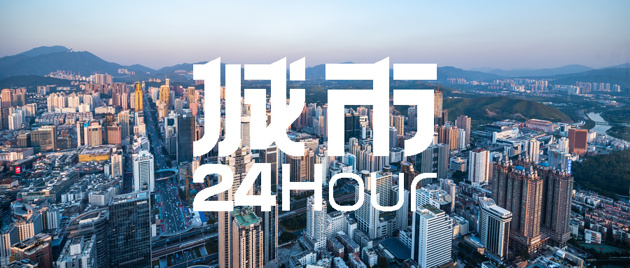
城市24小时 | “工业第一城”,继续“拥抱”传统产业
Mei Ri Jing Ji Xin Wen· 2025-09-30 15:52
Core Insights - Shenzhen aims to leverage its rich innovation resources and diverse industrial categories to upgrade traditional industries, targeting a total scale of over 700 billion yuan in three years [1][2] - The city plans to implement 12 policy measures, including the establishment of various investment funds to support mergers and acquisitions in traditional industries [1][2] - Shenzhen's advanced manufacturing and high-tech manufacturing account for 68.2% and 58.2% of the city's industrial added value, respectively [1] Group 1: Traditional Industry Development - Shenzhen has a strong presence in traditional industries such as high-end women's clothing, jewelry, and eyewear, with the jewelry industry leading the nation in annual industrial output [2] - The city will implement an action plan to integrate artificial intelligence into various traditional sectors, aiming to digitize over 100 traditional enterprises within three years [2][3] - The government encourages the fusion of traditional manufacturing with new technologies and high-performance materials, targeting the creation of over 100 cross-industry fashionable products by 2027 [3] Group 2: Investment and Policy Measures - Shenzhen will utilize strategic emerging industry funds to support state-owned enterprises and traditional industry leaders in establishing acquisition funds [1] - The investment model will combine government guidance, listed company capital, and professional investment institutions to nurture high-potential enterprises [1] - The city has previously recognized the importance of both traditional and emerging industries as components of a modern industrial system, indicating a balanced approach to industrial development [5]

大唐发电绩后涨超6% 上半年归母净利同比增超五成 传统产业升级取得积极成效
Zhi Tong Cai Jing· 2025-08-29 01:46
Core Viewpoint - Datang Power's stock rose over 6% following the release of its interim results, indicating positive market sentiment towards the company's performance and future prospects [1] Financial Performance - For the six months ending June 30, 2025, Datang Power reported operating revenue of RMB 57.193 billion, a decrease of 1.9% year-on-year [1] - The net profit attributable to equity holders increased by 50.3% to approximately RMB 4.874 billion [1] - Earnings per share were reported at RMB 0.2215, with an interim dividend proposed at RMB 0.055 per share [1] - The total pre-tax profit reached approximately RMB 7.671 billion, reflecting a year-on-year growth of about 37.92%, marking a historical high for the company during the same period [1] Strategic Development - The company is actively implementing a new development philosophy, focusing on the accelerated growth of strategic emerging industries centered around renewable energy [1] - Traditional industries are undergoing positive upgrades, contributing to overall performance improvements [1] Capacity and Projects - In the first half of 2025, the company received approvals for 66 projects with a total capacity of 4,562.823 megawatts [1] - The current construction capacity stands at 9,195 megawatts, with an additional installed capacity of 1,777.45 megawatts [1] - Among the new installations, clean energy accounts for 1,117.45 megawatts, increasing the proportion of low-carbon clean energy installations to 40.87%, up by 0.5 percentage points from the end of 2024 [1]
耐心资本增长需要居民金融人格的优化
Jin Rong Shi Bao· 2025-08-25 01:13
Group 1 - The core concept of resident financial personality is the stable tendency of individuals as micro-financial entities in their financial behaviors, influenced by factors such as age, income level, and education [1] - Optimizing resident financial personality is crucial for enhancing adaptability in financial activities and promoting the internal formation of patient capital, which is characterized by a long-term investment return focus and resilience to investment risks and short-term market fluctuations [1] - Patient capital is essential for fostering technological innovation, supporting strategic emerging industries, upgrading traditional industries, and improving infrastructure investment, thereby enhancing national competitiveness [2][3][4] Group 2 - Patient capital plays a significant role in improving financial structure and competitiveness by providing long-term investment that traditional banking systems may not adequately support [5] - Investment in education and healthcare by patient capital can enhance human capital competitiveness, which is foundational for national competitiveness [6][7] - The support of patient capital in national defense technology research and equipment upgrades is vital for strengthening national defense competitiveness [8] Group 3 - Optimizing resident financial personality aids investors in pursuing long-term value returns and reduces the influence of market noise on investment decisions [9] - It also helps investors endure the risks associated with innovation and make independent investment decisions based on their financial knowledge and experience [10] - Furthermore, an optimized financial personality allows investors to better tolerate short-term market value fluctuations, fostering a long-term investment mindset [11] Group 4 - There are challenges in optimizing resident financial personality, including mismatches in time preference and risk perception among investors [12][13] - Deficiencies in financial literacy among investors can lead to poor investment decisions and increased susceptibility to market volatility [14] - Existing incentive distortions in financial markets can reinforce short-term profit-seeking behaviors, complicating the cultivation of patient capital [15] Group 5 - Strategies for optimizing resident financial personality include enhancing financial literacy through education and community training programs [15][16] - Financial institutions should innovate financial products and services tailored to different age groups and educational backgrounds to better serve clients [16] - Technological advancements can facilitate the optimization of financial personality by providing tools for risk assessment and investment management [17][18] - Institutional adjustments, such as improving the design of financial support systems and extending performance evaluation periods for fund managers, can further promote the growth of patient capital [19]
新兴铸管:升级传统产业、优化“一带一路”布局等多维战略 推进高质量、可持续发展
Quan Jing Wang· 2025-08-13 05:51
Core Viewpoint - The company aims to enhance its core functions and competitiveness while pursuing high-quality and sustainable development in the coming years [1] Group 1 - The chairman of the company, He Qishu, discussed the progress towards the goal of reinventing the company during the performance briefing [1] - The company plans to upgrade traditional industries and stabilize existing operations [1] - The company intends to optimize its industrial layout in alignment with the "Belt and Road" initiative to enhance international capabilities and expand its market [1] Group 2 - The company is focused on creating new productive forces to drive development [1] - There is an emphasis on continuously enhancing core functions and competitiveness [1] - The overall strategy is aimed at promoting high-quality and sustainable development for the company [1]

政策解读】金融支持新型工业化,七部门联合发文!划重点→
Sou Hu Cai Jing· 2025-08-06 03:05
Core Viewpoint - The recent joint issuance of the "Guiding Opinions on Financial Support for New-Type Industrialization" by seven Chinese government departments aims to enhance financial support for key industries, promote technological innovation, and facilitate the transformation and upgrading of traditional industries. Group 1: Key Technology Breakthroughs - Financial institutions are encouraged to provide medium- and long-term financing for key industries such as integrated circuits, industrial mother machines, and basic software [1] - Companies that achieve breakthroughs in core technologies can access "green channels" for listing, bond issuance, and mergers and acquisitions [1] - More financial support will be available for the promotion of first sets of equipment and first batches of materials [1] Group 2: Transformation of Technological Achievements - Initiatives like "monthly chain" investment roadshows and "thousand sails and hundred boats" listing cultivation will be implemented to optimize the evaluation system for hard technology attributes [2] - Social capital is encouraged to invest early, small, and long-term in hard technology [2] - High-level talent entrepreneurship will receive comprehensive services including credit and financial advisory [2] Group 3: Upgrading Traditional Industries - Banks will increase credit support for the high-end, intelligent, and green transformation of the manufacturing sector [3] - Companies can update intelligent and environmental protection equipment through financing leasing, and related debts can be securitized [3] - Listed companies can achieve industry consolidation and upgrading through overall listings and targeted placements [3] Group 4: Emerging Future Industries - New industries such as information technology, new energy, and biomedicine can access financing in multi-tiered capital markets [4] - Long-term funds from government investment funds and insurance funds will focus on future manufacturing and energy industries under controllable risks [4] - Financing will be made easier for technology companies through mechanisms like "innovation points system" and "intellectual property pledge loans" [4] Group 5: Financing for Small and Medium Enterprises - Financial institutions can provide accounts receivable, order, and warehouse receipt financing based on "data credit" and "object credit" [5] - Exploration of supply chain "de-nuclearization" models will allow loans without relying on core enterprise credit [5] - A national credit information platform for small and micro enterprises will be accelerated to facilitate credit for first-time borrowers [5] Group 6: Green Transformation - Financial institutions are encouraged to support projects in high-carbon industries that comply with green and low-carbon technological transformations [6] - Green credit and green bonds will be directed towards environmental protection, energy saving, and low-carbon fields [6] - A dedicated financial standard system will be established to enhance support for transformation funding [6] Group 7: Digital Integration - Digital infrastructure such as 5G and industrial internet can receive medium- and long-term loans, and financing leasing and asset securitization can be utilized [7] - Banks will build digital industrial platforms to provide "one-stop" services for financing and settlement [7] - Big data and AI technologies will simplify procedures and improve service efficiency for small and medium enterprises [7] Group 8: Risk Prevention - Financial institutions are required to monitor the use of funds to prevent misappropriation and "involution" competition [8] - Joint assessment of industrial and financial risks will be conducted, with timely sharing of high-risk information [8] - Non-performing loans in the manufacturing sector can be legally disposed of through restructuring and write-offs [8]

金融支持新型工业化 划重点来了!
Yang Shi Xin Wen Ke Hu Duan· 2025-08-05 08:23
Key Points - The People's Bank of China and other departments issued guidelines to support new industrialization through financial means [1] - Emphasis on long-term financing for key industries such as integrated circuits and industrial mother machines [1] - Financial support for companies breaking through core technologies, including expedited processes for IPOs and mergers [1] Group 1: Financial Support for Key Technologies - Banks are encouraged to provide medium to long-term financing for critical technology sectors [1] - Companies achieving breakthroughs in core technologies can access a "green channel" for IPOs, bond issuance, and mergers [1] - Enhanced financial support for the promotion of first sets of equipment and first batches of materials [1] Group 2: Capital Patience for Technology Transformation - Initiatives like monthly investment roadshows and nurturing for hard technology companies are introduced [2] - A focus on guiding social capital to invest early, small, and long-term in hard technology [2] - Comprehensive services including credit and financial advisory for high-level talent entrepreneurship [2] Group 3: Financing Channels for Traditional Industry Upgrades - Increased credit support for the transformation of manufacturing towards high-end, intelligent, and green practices [3] - Companies can utilize financing leases to update smart equipment and environmental protection devices [3] - Public companies can achieve industry consolidation and upgrades through overall listings and targeted placements [3] Group 4: Funding for Emerging Future Industries - New generation information technology, new energy, and biomedicine can access multi-tiered capital markets [4] - Long-term funds from government investment funds and insurance are encouraged to focus on future manufacturing and energy sectors [4] - Innovative financing methods like "innovation points system" and "intellectual property pledge loans" are introduced [4] Group 5: Breaking Guarantee Dependency for SMEs - Financial institutions can provide financing services based on "data credit" and "object credit" [5] - Exploration of supply chain "de-nuclearization" to enable loans without relying on core enterprise credit [5] - Accelerated construction of a national credit information platform for small and micro enterprises [5] Group 6: Appropriate Use of Green Transition Financial Tools - Support for high-carbon industries undergoing green low-carbon technological transformations [6] - Green credit and bonds are directed towards environmental protection, energy saving, and low-carbon fields [6] - Establishment of a dedicated financial standard system to enhance support for transformation funding [6] Group 7: Intelligent Digital Integration Services - Digital infrastructure like 5G and industrial internet can access medium to long-term loans [7] - Banks are encouraged to build digital industry platforms for one-stop financing and settlement services [7] - Utilization of big data and AI technologies to simplify procedures and improve service efficiency for SMEs [7] Group 8: Risk Prevention and Control - Financial institutions are required to monitor the use of funds to prevent misappropriation [8] - Joint assessment of industrial and financial risks with timely sharing of high-risk information [8] - Non-performing loans in manufacturing can be managed through restructuring and legal write-offs [8]
“中国绒都”以全链条优势持续引领全球市场
Nei Meng Gu Ri Bao· 2025-07-18 14:39
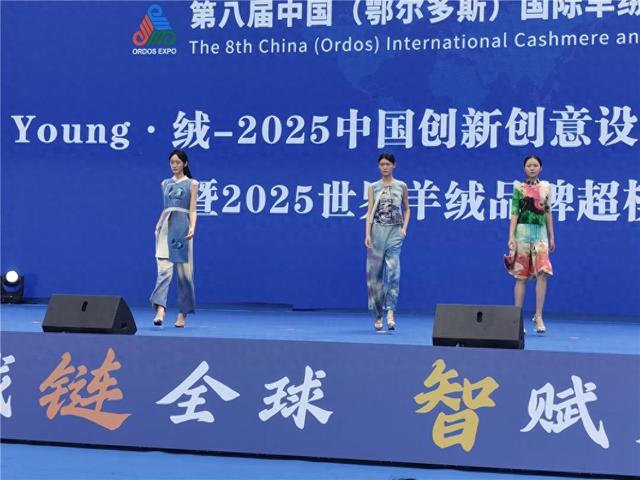
Core Viewpoint - The 8th China (Ordos) International Cashmere and Wool Exhibition serves as a significant platform for showcasing the transformation of China's traditional cashmere industry towards intelligence, sustainability, and internationalization, featuring over 30 international enterprises from 10 countries [1][3]. Industry Overview - The exhibition highlights Ordos as a core area for the global cashmere industry, with a complete industrial chain from raw material production to high-end brand marketing [5]. - Ordos produces 3,552 tons of raw cashmere annually, accounting for 58% of Inner Mongolia's output, 24% of China's, and 14% globally; the annual production capacity of cashmere products reaches 6.5 million pieces, representing 50% of the national output and 40% globally [5]. Exhibition Highlights - The exhibition features six major areas including international trade, equipment and technology, fabrics and yarns, and finished garments, attracting nearly 200 exhibitors and over 220 buyers [3][5]. - Various activities were organized during the exhibition, including a world-class cashmere industry investment promotion conference and a high-quality development conference for the cashmere industry [7]. Technological Innovations - The Ordos Agricultural Science Research Institute introduced several technological achievements, including the first specialized breeding chip for the Albas cashmere goat, which enhances breeding and quality improvement capabilities [10]. - Ordos is establishing a cashmere technology support system, including a research institute and innovation centers, to advance the industry through technological upgrades [12]. Cultural and Economic Impact - The cashmere industry is a pillar industry for Ordos, contributing to local economic development and cultural heritage through initiatives like the "Yarn Embroidery Talent Studio" [9]. - The region is recognized for its high-quality Albas cashmere, which is celebrated in international markets for its fineness and quality [9]. Future Prospects - Ordos aims to strengthen its global pricing power and influence through international exhibitions, innovation parks, and digital trading centers, positioning itself as a benchmark for the upgrade of traditional industries in China [12].

广州荔湾搭建银企合作平台,赋能专业批发市场发展
Sou Hu Cai Jing· 2025-06-12 19:53
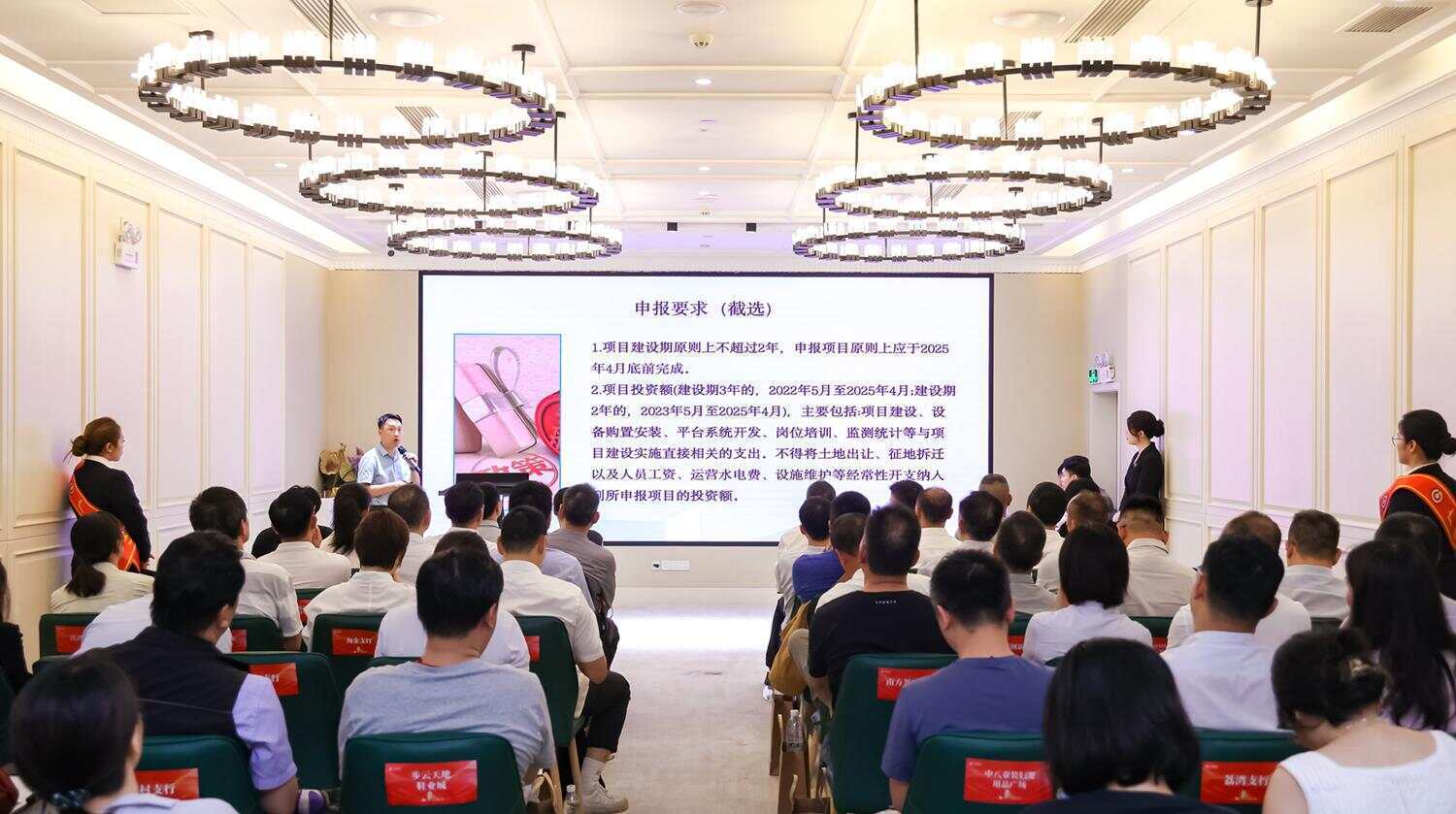
Group 1 - The event held on June 12 in Guangzhou aimed to address the financing difficulties faced by merchants in traditional wholesale markets and to establish a cooperative platform between financial institutions and these markets [1] - The Liwan District Development and Reform Bureau introduced policies related to the "Small and Micro Enterprise Financing Coordination Work Mechanism" and the "Win-Win Plan for Enterprises," providing clear policy guidance and financing pathways for market participants [1] - The Liwan District Business Promotion Bureau presented policies on commercial network construction, service industry transformation, e-commerce development, and support for the renovation of professional wholesale markets, emphasizing the importance of upgrading traditional industries [1] Group 2 - The Liwan District Market Supervision Bureau initiated the "Spark Plan," integrating the "Spark" spirit with the actual needs of various markets and merchants, and collaborating with industry associations, financial institutions, and other stakeholders to promote resource connections [4] - Guangzhou Bank showcased a comprehensive financial service plan tailored for merchants in the Liwan District's professional wholesale markets, including payment services and financing options, providing diverse and convenient financial service choices [4] - The event concluded with a partnership award ceremony where Guangzhou Bank awarded "Friendly Cooperation Partner" plaques to 20 professional markets in Liwan District, symbolizing a collaborative effort to promote market development [6]
2025全国新一线城市排名出炉:成都第2,重庆第6,东莞入围
Sou Hu Cai Jing· 2025-05-29 15:08
Core Insights - The 2025 China Urban Comprehensive Strength Ranking released by GYbrand evaluates cities based on economic vitality, innovation index, talent attraction, infrastructure, and consumption potential [1] New First-Tier Cities - Hangzhou ranks 5th, followed by Chengdu at 6th, with Nanjing, Wuhan, and Suzhou taking 7th to 9th places, and Chongqing at 10th [3] - Chengdu maintains its 6th position due to balanced development, excelling in consumption potential and talent attraction [3] - Dongguan enters the new first-tier city list for the first time at 20th, transitioning from a manufacturing hub to a smart manufacturing base [7] Economic Development in Chengdu and Chongqing - Chengdu's transportation hub status is strengthened by the Chengdu-Chongqing Economic Circle, with annual passenger throughput exceeding 100 million at its airports [5] - Chongqing, as the only municipality in central and western China, has a strong industrial base and a comprehensive transportation system, with significant contributions from its automotive and electronic information industries [5] Dongguan's Transformation - Dongguan's electronic information industry has surpassed 1 trillion in output value, supported by major projects from Huawei and OPPO [7] - The city benefits from talent policies attracting over 100,000 graduates annually, although it faces challenges in educational resources and urban infrastructure [7] Competitive Landscape in the Yangtze River Delta - Hangzhou and Nanjing lead the Yangtze River Delta new first-tier cities, with Hangzhou's e-commerce ecosystem driving growth in live commerce and cross-border trade [8] - Nanjing leverages its educational resources and historical background to support its chip industry and financial sector [8] Emerging Trends in Central and Western Cities - Cities like Wuhan, Xi'an, and Hefei are rising due to precise industrial positioning, focusing on sectors like semiconductors and quantum information [10] - Northern cities such as Qingdao and Shenyang face growth challenges, while cities in the Guangdong-Hong Kong-Macau Greater Bay Area are rapidly rising due to policy support and industrial collaboration [10] New Urban Development Logic - The ranking reveals a shift from single-pole advancement to multi-center collaboration, emphasizing the importance of industrial depth over mere scale expansion [12] - Future competition among new first-tier cities will focus on innovation capacity, ecological livability, and global resource allocation [12]