基金业绩

Search documents
9月11日港股科技ETF(513020)份额增加1400.00万份,最新份额28.05亿份,最新规模35.09亿元
Xin Lang Cai Jing· 2025-09-12 03:06
Group 1 - The Hong Kong Technology ETF (513020) increased by 0.24% on September 11, with a trading volume of 295 million yuan [1] - The fund's shares rose by 14 million, bringing the total shares to 2.805 billion, with an increase of 728 million shares over the past 20 trading days [1] - The latest net asset value of the fund is 3.509 billion yuan [1] Group 2 - The performance benchmark for the Hong Kong Technology ETF is the CSI Hong Kong Stock Connect Technology Index, adjusted for valuation exchange rates [1] - The fund is managed by Guotai Fund Management Co., Ltd., with Liang Xing as the fund manager [1] - Since its establishment on January 19, 2022, the fund has returned 25.08%, with a one-month return of 5.87% [1]
9月5日港股央企红利ETF(513910)份额减少800.00万份,最新份额22.55亿份,最新规模35.36亿元
Xin Lang Cai Jing· 2025-09-08 01:11
Group 1 - The Hong Kong Central State-Owned Enterprises Dividend ETF (513910) increased by 1.16% on September 5, with a trading volume of 119 million yuan [1] - The fund's shares decreased by 8 million, bringing the total shares to 2.255 billion, with an increase of 87 million shares over the past 20 trading days [1] - The latest net asset value of the fund is 3.536 billion yuan [1] Group 2 - The performance benchmark for the Hong Kong Central State-Owned Enterprises Dividend ETF is the adjusted yield of the CSI Hong Kong Stock Connect Central State-Owned Enterprises Dividend Index [1] - The fund is managed by Huaxia Fund Management Co., Ltd., with Liu Yayun as the fund manager [1] - Since its establishment on February 7, 2024, the fund has returned 56.77%, while the return over the past month is -0.06% [1]
9月5日港股医药ETF(159718)份额减少400.00万份,最新份额2.35亿份,最新规模2.62亿元
Xin Lang Cai Jing· 2025-09-08 01:05
Core Insights - The Hong Kong pharmaceutical ETF (159718) increased by 4.09% on September 5, with a trading volume of 105 million yuan [1] - The ETF's shares decreased by 4 million, bringing the total to 235 million shares, with a reduction of 26 million shares over the last 20 trading days [1] - The latest net asset value of the ETF is 262 million yuan [1] - The ETF's performance benchmark is the CSI Hong Kong Stock Connect Pharmaceutical and Health Comprehensive Index (adjusted for exchange rates) [1] - Managed by Ping An Fund Management Co., Ltd., the ETF has achieved a return of 11.70% since its inception on December 16, 2021, and a return of 7.66% over the past month [1]
兴全全球视野股票:2025年上半年利润4977.86万元 净值增长率4.09%
Sou Hu Cai Jing· 2025-09-07 13:56
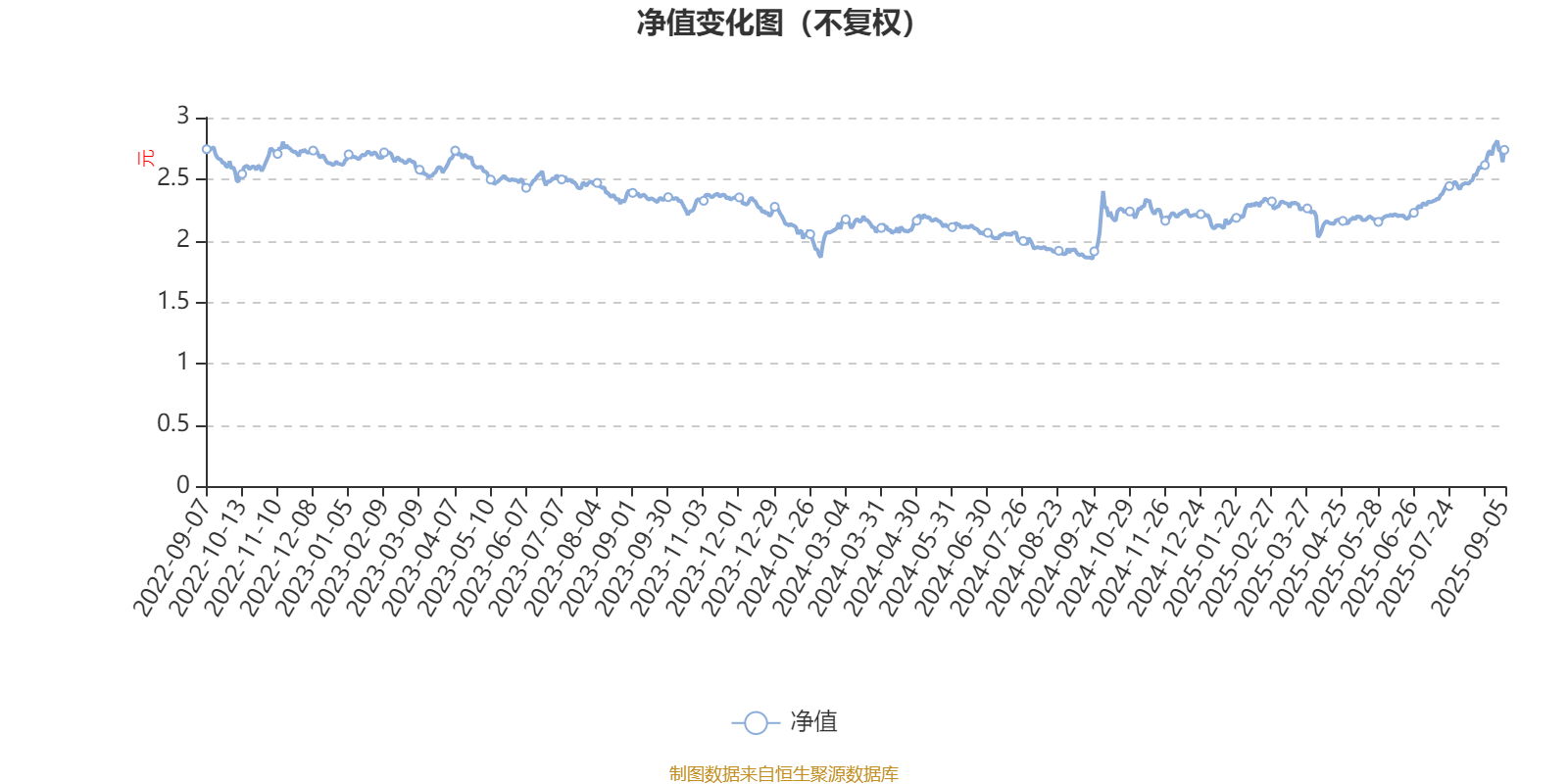
Group 1 - The core viewpoint of the article highlights the performance and outlook of the AI Fund Xingquan Global Vision Stock (340006), which reported a profit of 49.78 million yuan for the first half of 2025, with a weighted average profit per fund share of 0.0914 yuan and a net value growth rate of 4.09% [3] - As of September 5, the fund's unit net value was 2.738 yuan, and its scale reached 1.177 billion yuan by the end of the first half of 2025 [3][33] - The fund manager expressed optimism about China's economy while acknowledging ongoing challenges, including the need to stabilize the real estate market and address local government debt issues [3] Group 2 - The fund's recent performance metrics indicate a three-month net value growth rate of 24.38%, a six-month growth rate of 19.96%, and a one-year growth rate of 41.85%, ranking it 15th, 20th, and 29th respectively among comparable funds [6] - The fund's weighted price-to-earnings ratio (TTM) is approximately 30.54 times, compared to the industry average of 20.85 times, while the weighted price-to-book ratio (LF) is about 2.38 times, slightly above the average of 2.12 times [11] - The fund's weighted revenue growth rate (TTM) for the first half of 2025 was 0.04%, and the weighted net profit growth rate (TTM) was 0.07% [19] Group 3 - As of June 30, 2025, the fund had a three-year Sharpe ratio of -0.1241, ranking 45th among comparable funds, and a maximum drawdown of 33.95%, ranking 28th among 59 comparable funds [27][29] - The fund's average stock position over the past three years was 86.67%, slightly below the industry average of 88.81% [32] - The fund's top ten holdings include companies such as CATL, Luxshare Precision, and Sany Heavy Industry, indicating a focus on key players in the technology and industrial sectors [42]

公募基金费率改革顺利收官!9家基金公司被采取措施!
Zhong Guo Ji Jin Bao· 2025-09-06 14:39
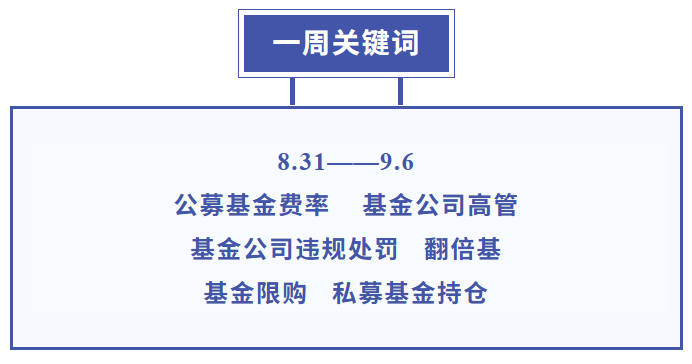
Group 1: Fund Fee Reform - The China Securities Regulatory Commission (CSRC) has successfully completed the public fund fee reform, marking a significant milestone in the industry [1][2] - The revised regulations include reductions in sales fees for public funds, full allocation of redemption fees to fund assets, and the establishment of differentiated caps on trailing commission payments [1][2] Group 2: Personnel Changes in Fund Companies - A significant personnel change occurred as Zhu Yongqiang, the general manager of Xinda Australia Fund, retired due to reaching the retirement age, with Deputy General Manager Fang Jing temporarily taking over [2] Group 3: Regulatory Actions Against Fund Companies - Nine fund companies received warnings or corrective orders from regulators in the first half of the year, with some facing fines for various violations [3][4] - Reasons for penalties included inappropriate candidates for leadership positions, violations of foreign exchange registration regulations, and inadequate internal control management [4] Group 4: Fund Performance and Financial Results - The public fund industry reported a total revenue of 113.156 billion yuan in management fees, trading commissions, custody fees, and sales service fees, reflecting a 20.52% increase year-on-year [7] - Major fund companies such as E Fund, ICBC Credit Suisse, and Southern Fund reported net profits exceeding 1 billion yuan in the first half of the year, with some companies experiencing significant profit growth [6][7] Group 5: Market Trends and Fund Issuance - The A-share market has shown strong performance, with public equity funds experiencing a resurgence in profitability, leading to a significant increase in fund issuance [8][10] - A new fund, the招商均衡优选混合基金, exceeded its fundraising cap of 5 billion yuan on its first day, raising over 7 billion yuan [10] Group 6: Fund Purchase Restrictions - The "champion fund" 永赢科技智选 implemented purchase limits, initially capping single accounts at 1 million yuan, later reducing it to 10,000 yuan to guide rational investment decisions [9]
基金大事件|公募基金费率改革顺利收官!9家基金公司被采取措施!
中国基金报· 2025-09-06 14:13
Core Viewpoint - The public fund fee reform in China has reached a significant milestone with the release of the revised regulations by the China Securities Regulatory Commission (CSRC), marking the conclusion of a three-phase fee reform process in the public fund industry [3][4]. Fund Fee Reform - The recent reform includes a reduction in sales fees for public funds, full inclusion of redemption fees into fund assets, and the establishment of differentiated caps on trailing commission payments [4]. - This reform is seen as a critical step in enhancing the transparency and efficiency of the public fund market, aiming to benefit investors [3]. Fund Company Management Changes - A significant personnel change occurred in the public fund industry as Zhu Yongqiang, the general manager of Xinda Australia Fund, retired due to age, with Deputy General Manager Fang Jing temporarily taking over the role [5]. Regulatory Actions - In the first half of the year, nine fund companies received warnings or corrective orders from regulators, with some facing fines due to various compliance issues [6][7]. - Reasons for penalties included inappropriate candidates for leadership positions, violations of foreign exchange regulations, and inadequate internal controls [8]. Fund Performance - The public fund industry reported a total revenue of 113.156 billion yuan in management fees, trading commissions, custody fees, and sales service fees, reflecting a 20.52% increase year-on-year [11]. - Notable fund companies such as E Fund, ICBC Credit Suisse, and Southern Fund reported net profits exceeding 1 billion yuan in the first half of the year, with some companies experiencing significant profit growth [10]. Market Trends - The A-share market has shown strong performance, with public equity funds experiencing a resurgence in profitability, leading to a substantial increase in fund issuance and investment activity [12][15]. - The "champion funds" have implemented purchase limits to manage inflows and maintain investment strategy stability, reflecting a cautious approach to rapid market changes [14]. Fund Manager Activities - Prominent private equity manager Ge Weidong has been actively adjusting his portfolio, with significant investments in several companies, indicating a strategic shift in his investment approach [17].
2025基金公司上半年经营揭晓:广发兴证进阶,东吴净利狂增378%领跑
Sou Hu Cai Jing· 2025-09-06 02:11
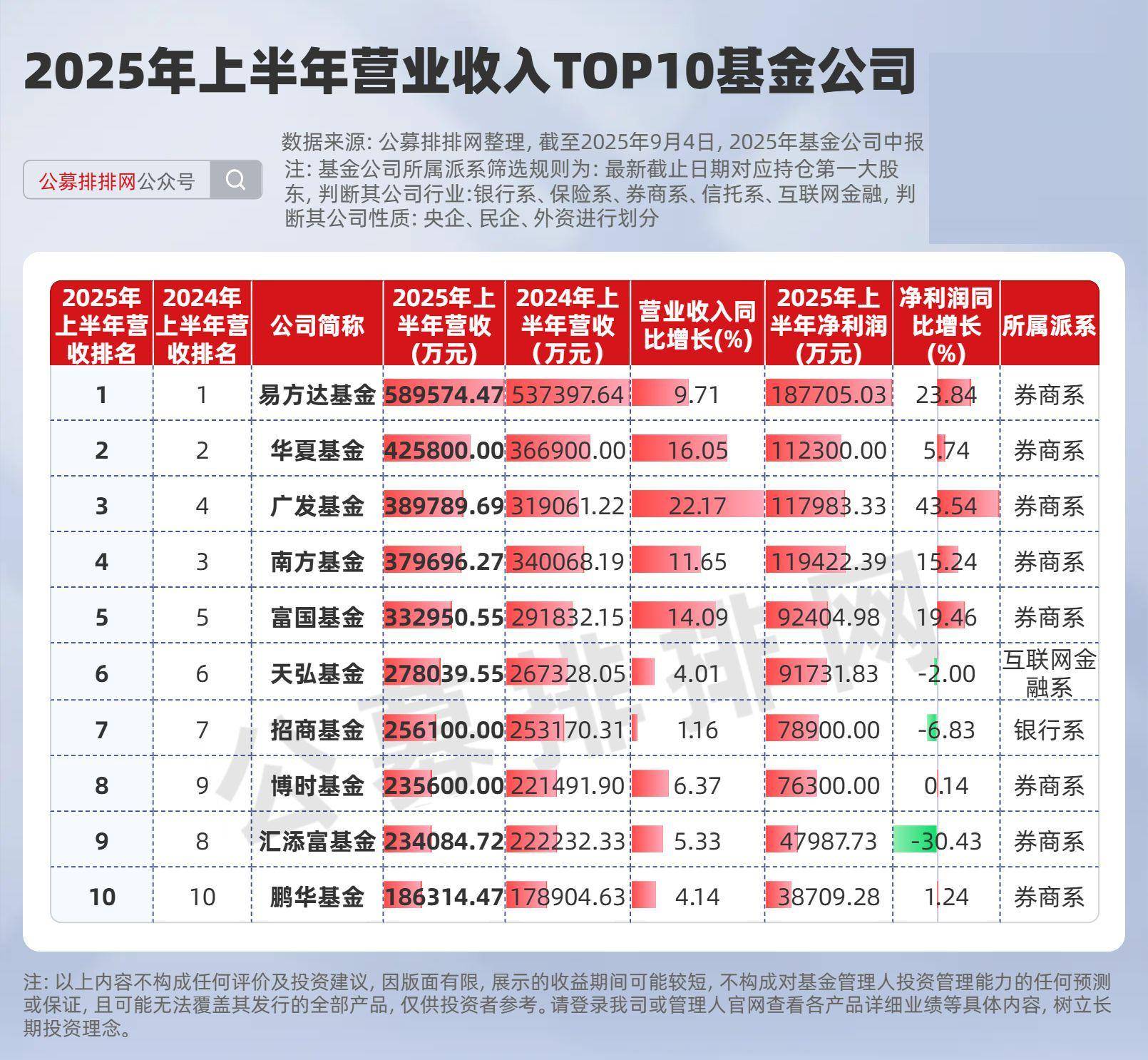
Core Insights - The public fund industry in 2025 shows a clearer operational landscape with 64 fund management institutions disclosing their mid-year financial data, achieving a total profit exceeding 17.6 billion yuan and total revenue surpassing 52 billion yuan [1][4] Revenue Performance - 23 companies reported revenue exceeding 500 million yuan, with 15 surpassing 1 billion yuan, contributing approximately 33.1 billion yuan, accounting for 60% of the industry's total revenue [4] - The top ten institutions all experienced revenue growth compared to the same period in 2024, with seven companies also seeing net profit increases [4] - The leading company, E Fund, reported a revenue of 589.57 million yuan, a 9.71% increase year-on-year [3][7] Profitability Analysis - 38 companies reported net profit growth, with 30 companies earning over 100 million yuan and 12 exceeding 500 million yuan [4][9] - The standout performer, GF Fund, achieved a net profit of 1.18 billion yuan, a year-on-year increase of 43.54%, with revenue of 389.79 million yuan, growing by 22.17% [4][5] - 18 companies had a net profit growth rate exceeding 20%, with Dongwu Fund leading at a 378.01% increase [8] Institutional Distribution - Among the top ten revenue-generating institutions, brokerage firms occupied eight positions, while banking and internet finance sectors each held one [4] - The distribution of revenue growth shows that 24 companies belong to the brokerage sector, with four from the banking sector [9]
弘毅远方国企转型升级混合A:2025年上半年利润302万元 净值增长率9.19%
Sou Hu Cai Jing· 2025-09-05 11:28
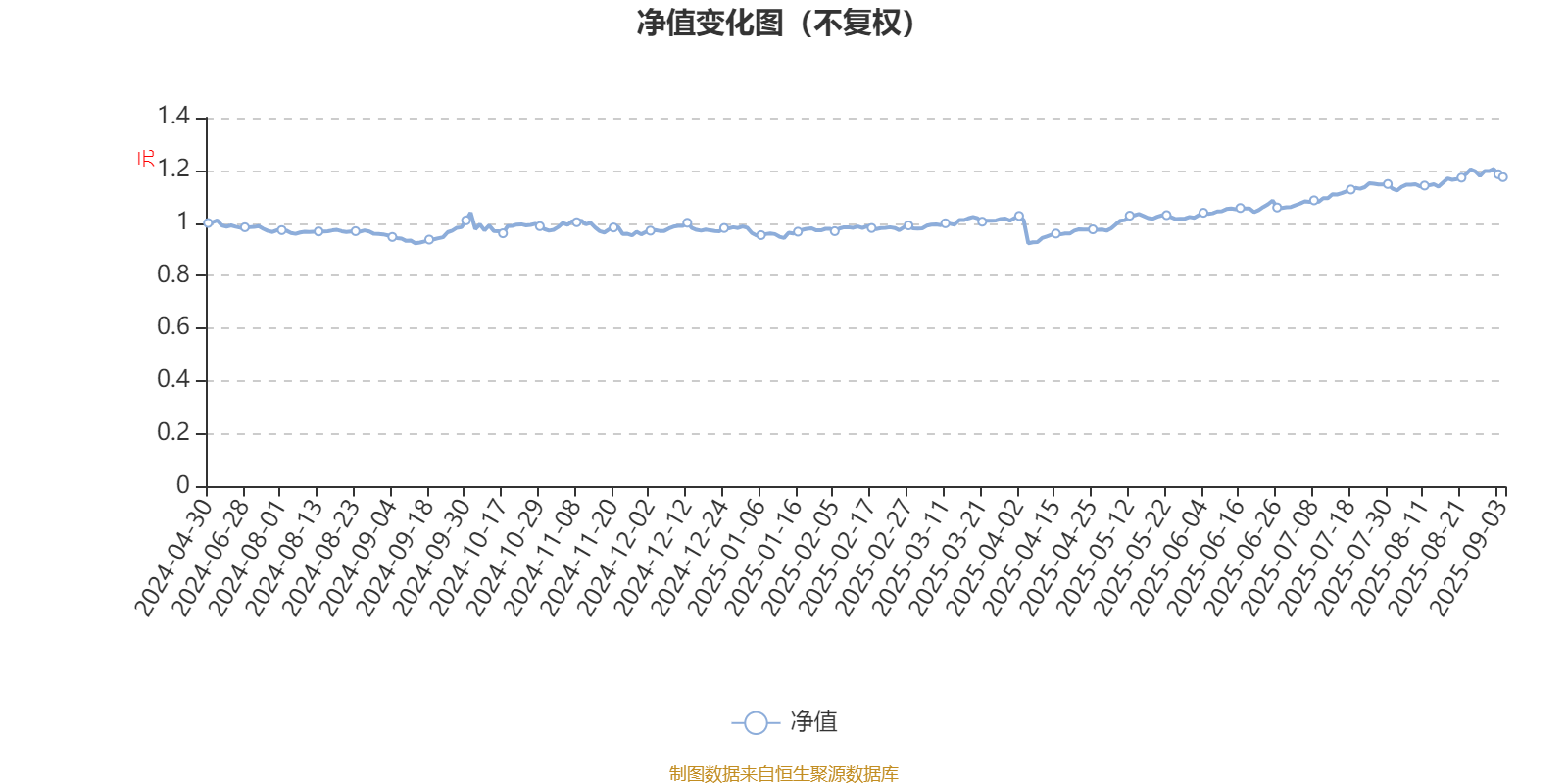
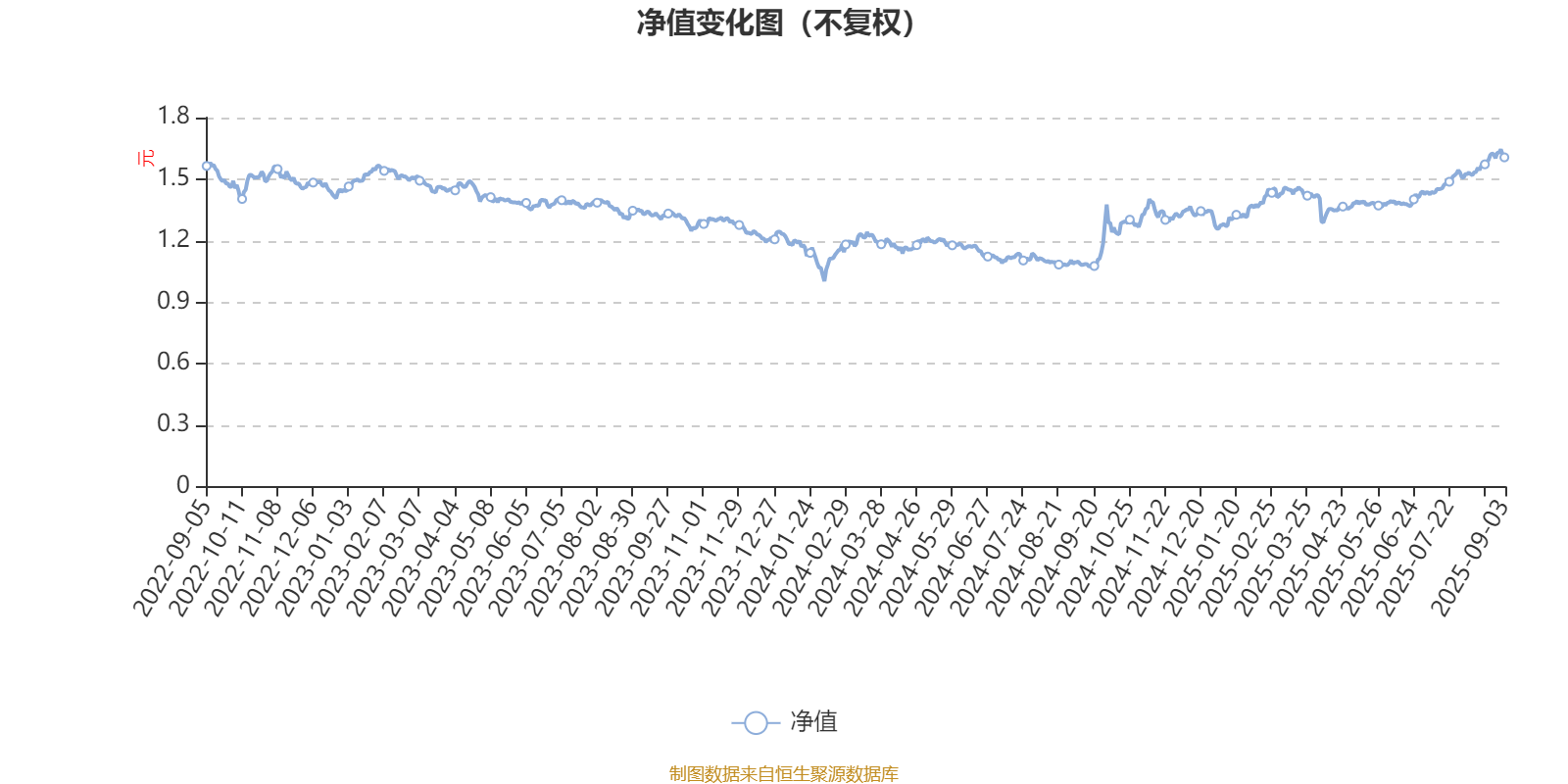
Core Viewpoint - The AI Fund Hongyi Yuanfang State-Owned Enterprise Transformation Upgrade Mixed A (006369) reported a profit of 3.02 million yuan for the first half of 2025, with a net asset value growth rate of 9.19% [2] Fund Performance - As of September 3, the fund's unit net value was 1.606 yuan, with a one-year cumulative net value growth rate of 46.77%, ranking 251 out of 600 comparable funds [2][5] - The fund's three-month and six-month net value growth rates were 16.11% and 13.29%, ranking 383 out of 615 and 428 out of 615 respectively [5] - The fund's three-year net value growth rate was 1.96%, ranking 170 out of 340 [5] Valuation Metrics - As of June 30, 2025, the fund's weighted average price-to-earnings (P/E) ratio was approximately 26.4 times, higher than the industry average of 25.34 times [10] - The weighted average price-to-book (P/B) ratio was about 2.42 times, compared to the industry average of 2.34 times [10] - The weighted average price-to-sales (P/S) ratio was around 2.87 times, exceeding the industry average of 2.09 times [10] Growth Metrics - For the first half of 2025, the fund's weighted average revenue growth rate was 0.1%, and the weighted average net profit growth rate was 0.22% [18] - The weighted annualized return on equity was 0.09% [18] Risk and Return Metrics - The fund's three-year Sharpe ratio was -0.1215, ranking 209 out of 319 comparable funds [27] - The maximum drawdown over the past three years was 36.54%, with the highest quarterly drawdown occurring in Q1 2022 at 22.6% [29] Fund Composition - As of June 30, 2025, the fund had a total scale of 31.9877 million yuan and held 678 investors, with individual investors accounting for 82.06% of the total holdings [33][36] - The top ten holdings included companies such as Beifang Huachuang, Guotai Haitong, and WuXi AppTec [42]
大成红利汇聚混合A:2025年上半年末换手率为27.25%
Sou Hu Cai Jing· 2025-09-05 09:59
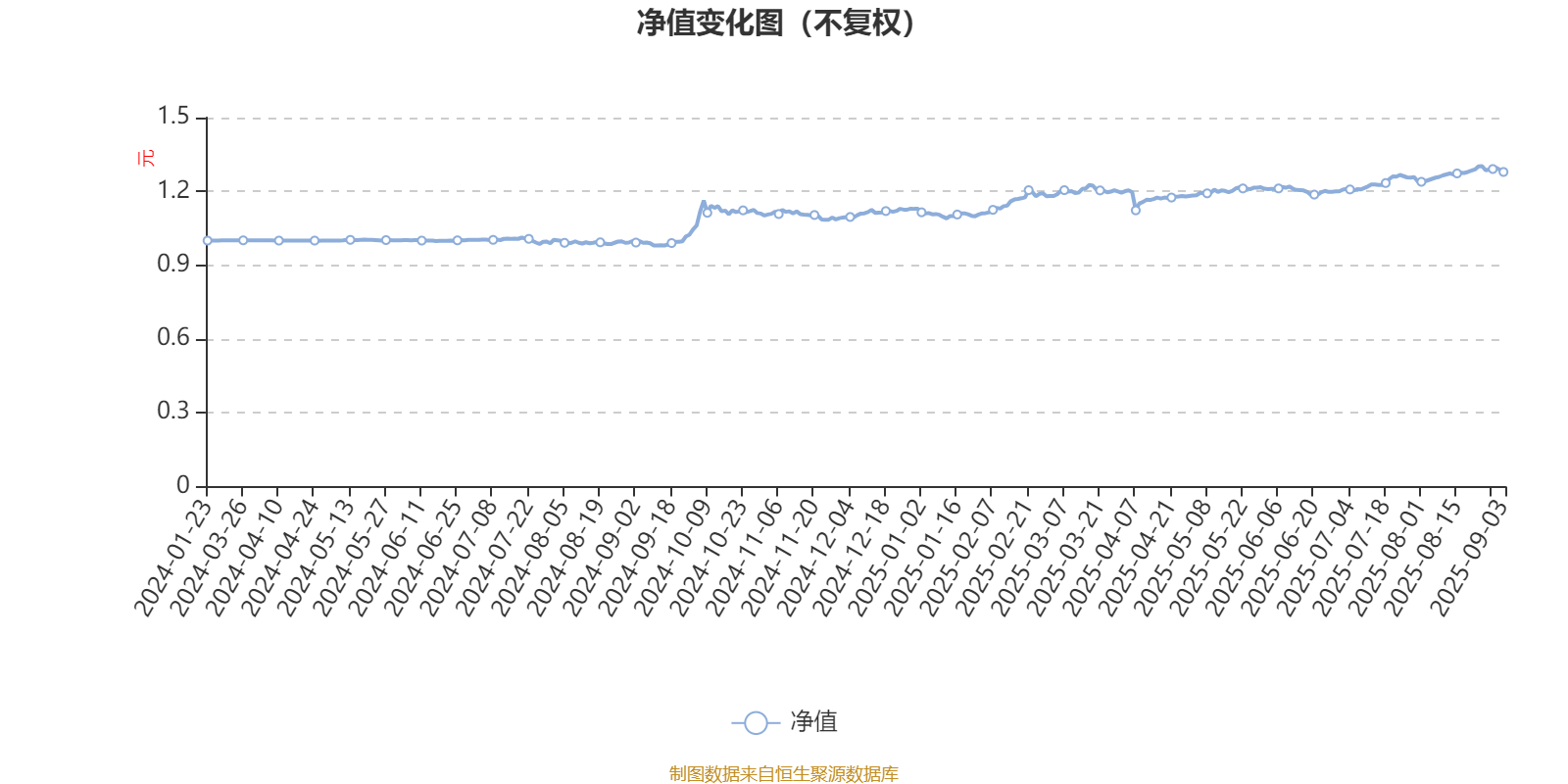
Core Viewpoint - The AI Fund Dachen Hongli Huiju Mixed A (019334) reported a profit of 652,500 yuan for the first half of 2025, with a weighted average profit per fund share of 0.0667 yuan, and a net value growth rate of 6.29% during the reporting period [3][5]. Fund Performance - As of September 3, the fund's unit net value was 1.279 yuan, with a near-term performance of 5.80% over the last three months, 8.33% over the last six months, and 28.20% over the last year, ranking 560/615, 516/615, and 451/601 among comparable funds respectively [5]. - The fund's maximum drawdown since inception is 8.43%, with the largest quarterly drawdown occurring in Q2 2025 at 6.71% [27]. Fund Management and Strategy - The fund manager, Hou Chunyan, emphasizes a strategy focused on identifying companies with safety margins that can provide long-term stable returns for minority shareholders [3]. - The fund's average stock position since inception is 57.47%, with a peak of 75.05% at the end of the first half of 2025 [31]. Valuation Metrics - As of June 30, 2025, the fund's weighted average price-to-earnings (P/E) ratio is approximately 9.1 times, significantly lower than the industry average of 25.34 times. The weighted average price-to-book (P/B) ratio is about 0.83 times, compared to the industry average of 2.34 times, and the weighted average price-to-sales (P/S) ratio is around 0.81 times, against an industry average of 2.09 times [10]. Growth Metrics - For the first half of 2025, the weighted average revenue growth rate of the stocks held by the fund is -0.02%, while the weighted average net profit growth rate is 0.08%, and the weighted annualized return on equity is 0.09% [16]. Fund Composition - As of June 30, 2025, the fund has 172 holders, with a total of 10.2862 million shares held. Management personnel hold 132.79 million shares (12.91%), institutions hold 70.32%, and individual investors hold 29.68% [34]. - The fund's top ten holdings include China Mobile, China Unicom, Midea Group, Angel Yeast, Zhejiang Longsheng, Beidahuang, Conch Cement, Sun Paper, Tapai Group, and Wens Foodstuffs [39].
富达悦享红利优选混合A:2025年上半年利润755.47万元 净值增长率10.19%
Sou Hu Cai Jing· 2025-09-05 09:33
Core Viewpoint - The AI Fund Fidelity Enjoy Dividend Preferred Mixed A (020493) reported a profit of 7.5547 million yuan for the first half of 2025, with a weighted average profit per fund share of 0.0873 yuan, and a net asset value growth rate of 10.19% during the same period [2]. Fund Performance - As of September 3, the fund's net asset value growth rate over the past three months was 16.30%, ranking 384 out of 607 comparable funds; over the past six months, it was 22.44%, ranking 237 out of 607; and over the past year, it was 25.69%, ranking 500 out of 604 [4]. Valuation Metrics - As of June 30, 2025, the fund's weighted average price-to-earnings (P/E) ratio was approximately 7.05 times, compared to the industry average of 33.74 times; the weighted average price-to-book (P/B) ratio was about 0.5 times, against an industry average of 2.47 times; and the weighted average price-to-sales (P/S) ratio was around 0.98 times, while the industry average was 2.07 times, indicating that all three valuation metrics are below the industry average [9]. Growth Metrics - For the first half of 2025, the weighted average year-on-year revenue growth rate (TTM) of the stocks held by the fund was 0.05%, and the weighted average net profit growth rate (TTM) was 0.03%, with a weighted annualized return on equity of 0.07% [15]. Fund Size and Shareholder Composition - As of June 30, 2025, the fund's total size was 49.2887 million yuan, with 839 holders collectively owning 46.5021 million shares. Management employees held 531,100 shares, accounting for 1.14%, while individual investors held 100% of the shares [31][34]. Trading Activity - The fund's turnover rate over the last six months was approximately 140.96%, which is consistently lower than the industry average [37].