增强现实

Search documents
凌云光跌2.04%,成交额2.08亿元,主力资金净流出479.64万元
Xin Lang Cai Jing· 2025-12-31 02:05
Group 1 - The core viewpoint of the news is that Lingyun Optical has experienced fluctuations in its stock price and trading volume, with a notable increase in stock price year-to-date, but recent declines in the short term [1] - As of December 31, Lingyun Optical's stock price was 42.31 yuan per share, with a total market capitalization of 19.504 billion yuan [1] - The company has seen a year-to-date stock price increase of 93.24%, with a slight decline of 0.07% over the last five trading days [1] Group 2 - Lingyun Optical Technology Co., Ltd. was established on August 13, 2002, and went public on July 6, 2022, focusing on machine vision and optical communication businesses [2] - The company's revenue composition includes intelligent visual equipment (34.69%), configurable visual systems (30.97%), optical communication products (27.44%), visual devices (5.31%), and service revenue (1.59%) [2] - As of December 10, the number of shareholders for Lingyun Optical was 32,600, an increase of 2.36% from the previous period [2] Group 3 - For the period from January to September 2025, Lingyun Optical achieved operating revenue of 2.127 billion yuan, representing a year-on-year growth of 34.30%, and a net profit attributable to shareholders of 133 million yuan, up 18.46% [2] - The company has distributed a total of 92.2845 million yuan in dividends since its A-share listing [3] - As of September 30, 2025, the top ten circulating shareholders included a new shareholder, E Fund National Robot Industry ETF, holding 4.2567 million shares [3]

东港股份涨2.27%,成交额2.74亿元,主力资金净流入129.85万元
Xin Lang Cai Jing· 2025-12-30 05:57
Group 1 - The core viewpoint of the news is that Donggang Co., Ltd. has shown significant stock performance with a year-to-date increase of 25.89% and a recent surge of 11.85% over the last five trading days [1] - As of December 30, Donggang's stock price reached 14.44 yuan per share, with a total market capitalization of 7.563 billion yuan [1] - The company has seen a net inflow of main funds amounting to 1.2985 million yuan, with large orders contributing significantly to both buying and selling activities [1] Group 2 - Donggang Co., Ltd. operates in the light industry manufacturing sector, specifically in packaging and printing, with its main business revenue composition being 51.38% from printing products, 27.90% from composite products, and 18.99% from technical services [2] - As of December 19, the number of shareholders decreased by 11.17% to 30,600, while the average circulating shares per person increased by 12.57% to 17,083 shares [2] - For the period from January to September 2025, Donggang achieved an operating income of 867 million yuan, representing a year-on-year growth of 11.78%, and a net profit attributable to shareholders of 123 million yuan, reflecting a growth of 53.48% [2] Group 3 - Donggang Co., Ltd. has distributed a total of 2.03 billion yuan in dividends since its A-share listing, with 393 million yuan distributed over the past three years [3]

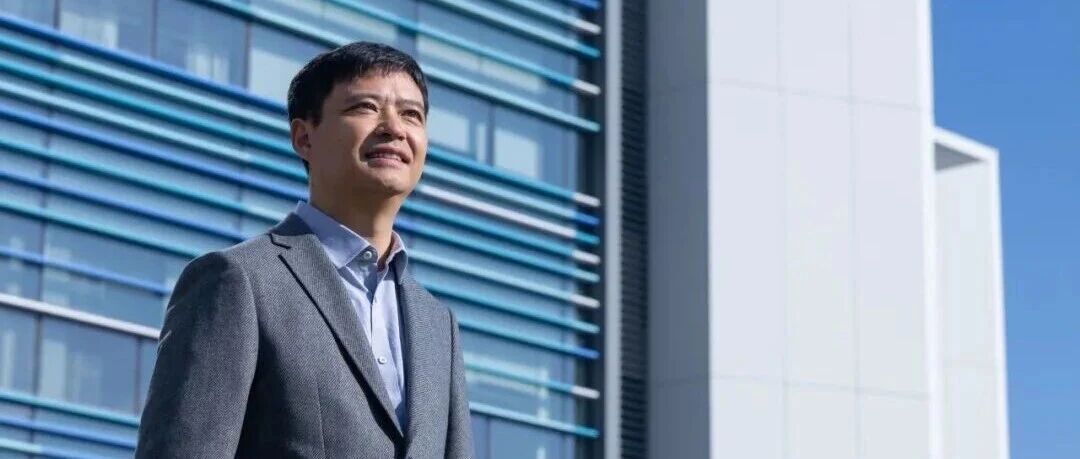
人工智能专家凌海滨全职加入西湖大学,创立智能计算与应用实验室
生物世界· 2025-12-30 00:18
Core Viewpoint - Westlake University has announced the full-time appointment of Haibin Ling, an Empire Innovation Professor from Stony Brook University, to lead the establishment of the Intelligent Computing and Applications Laboratory, focusing on artificial intelligence and interdisciplinary research [2]. Group 1: Appointment and Research Focus - Haibin Ling will serve as a chair professor at Westlake University, leading research in areas such as computer vision, multimodal AI, augmented reality, AI for Science, and quantum information [2]. - The newly established laboratory aims to advance research and applications in artificial intelligence [2]. Group 2: Academic Background and Career - Haibin Ling, born in 1974 in Anshun, Guizhou, holds a Bachelor's and Master's degree from Peking University and a Ph.D. from the University of Maryland [4][5]. - His career includes positions at Microsoft Research Asia, UCLA, Siemens Research, and Temple University, before joining Stony Brook University in 2019 [5]. - Ling's research has significantly impacted the field of computer vision, particularly in dynamic object tracking, which is crucial for various applications including security monitoring and medical imaging [5]. Group 3: Achievements and Contributions - Ling has received multiple awards, including the ACM UIST Best Student Paper Award (2003), the NSF CAREER Award (2014), and the IEEE VR Best Journal Paper Award (2021) [6]. - He has served on editorial boards for several prestigious journals and has been involved in leading roles at top AI conferences [6].

智立方跌2.01%,成交额6975.56万元,主力资金净流出1382.85万元
Xin Lang Zheng Quan· 2025-12-26 03:19
Group 1 - The core viewpoint of the news is that Zhilifang's stock has experienced fluctuations, with a current price of 50.67 yuan per share and a market capitalization of 6.14 billion yuan, while the company has shown significant growth in revenue and profit year-to-date [1][2]. - Zhilifang's stock price has increased by 47.17% this year, with a recent 5-day increase of 8.55% and a 20-day increase of 3.01%, although it has decreased by 4.83% over the past 60 days [1]. - The company has made seven appearances on the "Dragon and Tiger List" this year, with the most recent being on July 4, where it recorded a net buy of -40.08 million yuan [1]. Group 2 - Zhilifang's main business involves the research, development, production, and sales of industrial automation equipment, with revenue composition being 68.67% from industrial automation equipment, 21.63% from technical services, and 9.70% from automation equipment accessories [1]. - As of December 19, the number of shareholders in Zhilifang is 14,200, a decrease of 4.39% from the previous period, while the average circulating shares per person increased by 4.59% to 4,250 shares [2]. - For the period from January to September 2025, Zhilifang achieved operating revenue of 505 million yuan, representing a year-on-year growth of 21.69%, and a net profit attributable to shareholders of 69.95 million yuan, up 57.59% year-on-year [2].
虹软科技涨2.02%,成交额1.37亿元,主力资金净流入220.72万元
Xin Lang Cai Jing· 2025-12-25 05:42
Core Viewpoint - Hongsoft Technology's stock has shown a significant increase in price and trading activity, reflecting positive market sentiment and growth in revenue and profit for the year [1][2]. Financial Performance - As of September 30, 2025, Hongsoft Technology reported a revenue of 628 million yuan, representing a year-on-year growth of 9.39% [2]. - The net profit attributable to shareholders for the same period was 142 million yuan, marking a substantial increase of 60.51% year-on-year [2]. Stock Performance - The stock price of Hongsoft Technology increased by 27.17% year-to-date, with a recent 5-day increase of 2.93% and a 20-day increase of 3.00%, although it has decreased by 18.31% over the past 60 days [1]. - The stock was trading at 48.44 yuan per share with a market capitalization of 19.433 billion yuan as of December 25 [1]. Shareholder Information - The number of shareholders increased by 13.85% to 22,900 as of September 30, 2025, while the average number of circulating shares per person decreased by 12.16% to 17,513 shares [2]. - Hong Kong Central Clearing Limited is a new entrant among the top ten circulating shareholders, holding 3.2452 million shares [3]. Dividend Distribution - Since its A-share listing, Hongsoft Technology has distributed a total of 613 million yuan in dividends, with 387 million yuan distributed over the past three years [3]. Business Overview - Hongsoft Technology specializes in the research and application of visual artificial intelligence technology, providing comprehensive solutions for smart devices including smartphones, smart cars, and IoT [1]. - The revenue composition includes 82.69% from mobile intelligent terminal visual solutions, 15.76% from smart cars and other AIoT devices, and 1.55% from other sources [1].

从“看见声音”到“连接世界”:亮亮视野Leion Hey2 以AI+AR诠释新质生产力
Huan Qiu Wang Zi Xun· 2025-12-25 04:35
Core Viewpoint - The Leion Hey2 AR translation glasses by Beijing Liangliang Vision Technology Co., Ltd. integrate AI large models and AR waveguide technology to break communication barriers, showcasing a commitment to technology for good and enhancing global connectivity [1][2]. Group 1: Product Innovation - The Leion Hey2 AR glasses are designed to address the challenges faced by hearing-impaired individuals and facilitate cross-language communication, acting as a personal translator [2][3]. - The glasses utilize advanced diffractive waveguide technology, allowing for high transparency and clear virtual subtitles while maintaining a lightweight design of only 49 grams, comparable to a regular pair of sunglasses [3][4]. - The integration of AI algorithms enables the glasses to perform real-time voice recognition and context-aware translation, significantly improving communication efficiency [4][6]. Group 2: Social Impact - The development of Leion Hey2 responds to the needs of the 430 million people worldwide with hearing impairments, providing them with a tool that enhances their ability to engage in conversations [8]. - Users report a 40% increase in communication efficiency when using Leion Hey2, highlighting its role in fostering equality and ease in interactions with hearing individuals [8]. - The product exemplifies the social value of technological innovation, aligning with ESG principles by bridging gaps caused by physiological limitations [8]. Group 3: Market Positioning - The success of Leion Hey2 marks a significant milestone for the Chinese AR industry, reflecting a shift from model innovation to hard technology innovation [11]. - Liangliang Vision has established a strong competitive advantage through breakthroughs in optical technology and AI applications, enabling the company to set product standards in the AR field [11]. - The Leion Hey2 and its series are not only well-received in the domestic market but also gaining international attention, demonstrating China's capability in defining solutions in cutting-edge technology [11].
智立方涨2.02%,成交额6776.33万元,主力资金净流出308.09万元
Xin Lang Cai Jing· 2025-12-24 05:56
Group 1 - The core viewpoint of the news is that Zhili Fang has shown significant stock performance with a year-to-date increase of 45.52% and a recent rise of 2.02% on December 24, reaching a stock price of 50.10 yuan per share [1] - As of December 10, Zhili Fang's shareholder count decreased by 4.89% to 14,900, while the average number of circulating shares per person increased by 5.14% to 4,063 shares [2] - The company reported a revenue of 505 million yuan for the period from January to September 2025, reflecting a year-on-year growth of 21.69%, and a net profit attributable to shareholders of 69.95 million yuan, up 57.59% year-on-year [2] Group 2 - Zhili Fang's main business segments include industrial automation equipment (68.67% of revenue), technical services (21.63%), and automation equipment parts (9.70%) [1] - The company has made cumulative cash distributions of 108 million yuan since its A-share listing [3] - As of September 30, 2025, Southern Big Data 100 Index A (001113) has exited the list of the top ten circulating shareholders of Zhili Fang [3]
大疆回应美国FCC将所有非美国制造的无人机列入“受管制清单”;众泰汽车回应段永平牵头Ov重组;沃尔沃中国回应换帅丨邦早报
创业邦· 2025-12-24 00:03
Group 1 - DJI expresses regret over the FCC's decision to include all non-U.S. manufactured drones in the "Covered List," stating it limits consumer choice and undermines fair competition [1] - DJI emphasizes its commitment to providing innovative tools for image creators and highlights the safety and reliability of its products, validated by independent third parties [1] - The company plans to evaluate all possible paths to protect its and its global users' legal rights [1] Group 2 - Zontai Auto denies rumors of collaboration with OPPO and Vivo for restructuring, stating there is currently no partnership [2] - Speculation arises regarding the involvement of OPPO and Vivo in Zontai's restructuring due to the new board composition, which includes members with ties to Chery Auto [2] Group 3 - Beijing issues the first L3 level autonomous driving vehicle license plates, marking a significant step towards mass production of autonomous vehicles in China [2] - The L3 autonomous driving feature is currently limited to specific highway segments in Beijing, with restrictions on other areas [2] Group 4 - Volvo Cars in China undergoes a leadership change with HUYANHANG replacing Yuan Xiaolin as chairman, but the company clarifies that this is a routine administrative change and does not affect daily operations [3] - Yuan Xiaolin remains a senior vice president at Volvo Group and president of Volvo Cars Asia Pacific [3] Group 5 - Kuaishou reports that its live streaming function was restored after a network attack on December 22, 2025, and other services were not affected [5] - The company has initiated legal actions against the perpetrators of the attack to protect its interests [5] Group 6 - Apple faces a fine of €98.635 million (approximately ¥817 million) from Italy for abusing market dominance through its App Tracking Transparency policy [11] - Cumulatively, Apple has incurred over ¥20.7 billion in fines across multiple European countries this year for similar reasons [11] Group 7 - JD.com confirms that its Paris warehouse has resumed normal operations following a theft incident involving over 50,000 electronic devices valued at approximately €37 million (around ¥306 million) [12] - The company disputes reports of significant losses, stating that the actual situation differs from what has been reported [12] Group 8 - Geely's management restructuring is complete following the merger with Zeekr, with key executives assigned to new roles [8] - Li Donghui is now the vice chairman of Geely Holding Group, while An Conghui serves as CEO, overseeing overall operations [8] Group 9 - ByteDance plans to invest significantly in AI, with a projected capital expenditure of ¥160 billion (approximately $23 billion) in 2026, including ¥85 billion reserved for semiconductor procurement [11] - The company aims to enhance its AI infrastructure and capabilities through this investment [11]



宏景科技涨2.02%,成交额2.03亿元,主力资金净流出293.43万元
Xin Lang Zheng Quan· 2025-12-22 03:25
Group 1 - The core viewpoint of the news is that Hongjing Technology has shown significant stock price performance this year, with a year-to-date increase of 214.21%, despite recent declines in the last five, twenty, and sixty trading days [1] - As of December 22, Hongjing Technology's stock price is 62.75 yuan per share, with a total market capitalization of 9.633 billion yuan [1] - The company has been active in the stock market, appearing on the leaderboard 26 times this year, with the most recent net purchase of 166 million yuan on December 9 [1] Group 2 - Hongjing Technology, established on March 7, 1997, and listed on November 11, 2022, primarily provides smart city solutions in areas such as smart healthcare, education, and community management [2] - The company's revenue composition shows that 91.28% comes from computing services, while 8.72% is from smart city business [2] - As of December 10, the number of shareholders has increased by 13.35% to 32,100, with an average of 2,368 circulating shares per person, a decrease of 11.78% [2] Group 3 - Since its A-share listing, Hongjing Technology has distributed a total of 57.02 million yuan in dividends [3] - As of September 30, 2025, Hongjing Technology's fourth-largest circulating shareholder is Hong Kong Central Clearing Limited, which holds 1.3893 million shares as a new shareholder [3] - Notably, two funds, Yongying Digital Economy Mixed Fund and GF Technology Innovation Mixed Fund, have exited the list of the top ten circulating shareholders [3]
日本一女子与AI“男友”结婚引发担忧
Xin Lang Cai Jing· 2025-12-21 21:43
Core Viewpoint - The article discusses the growing trend of individuals forming emotional connections with artificial intelligence (AI), exemplified by a Japanese woman, Yuki Noguchi, who married her AI "boyfriend" Klaus, raising concerns about the potential risks of such relationships [3][4]. Group 1: Emotional Connections with AI - Yuki Noguchi, a 32-year-old call center operator, developed a romantic relationship with an AI character named Klaus, created through ChatGPT, after seeking advice on her personal issues [3]. - The wedding ceremony, held in Okayama, Japan, involved Noguchi wearing augmented reality (AR) glasses to interact with Klaus, who was represented on a smartphone screen [3]. - Although such weddings lack legal validity in Japan, the trend is becoming more common, with wedding planners frequently receiving requests for ceremonies involving virtual characters [4]. Group 2: Societal Trends and Concerns - Official statistics indicate that the number of newlyweds in Japan has dropped to about half of what it was during the post-war baby boom in 1947 [5]. - A survey by Dentsu, a major advertising firm, revealed that chatbots are preferred by respondents aged 12 to 69 for confiding personal matters, surpassing friends and family [4]. - Experts express concerns about the potential dangers of vulnerable individuals forming attachments to AI companions, which may lead to dependency and impaired judgment [6]. Group 3: Personal Management and Ethical Considerations - Noguchi acknowledges the risks associated with her relationship with Klaus and has established guidelines to manage her interactions, limiting her use of ChatGPT to two hours daily [6]. - She has implemented rules to ensure Klaus does not simply indulge her complaints, promoting a healthier interaction dynamic [6]. - An AI ethics expert notes that while such relationships may provide temporary happiness for those in vulnerable states, there is a need for caution regarding over-reliance on AI [6].