媒体融合

Search documents
广西媒体融合三级贯通技术平台喜摘“王选新闻科学技术奖”一等奖
Guang Xi Ri Bao· 2025-11-02 03:00
Core Insights - The "Wang Xuan News Science and Technology Award" was awarded to the "Provincial, Municipal, and County Technical Platform Integration Project" by Guangxi Daily, highlighting its technological innovation and application value [1] - This award marks the second time Guangxi Daily has received the first prize, demonstrating its commitment to media integration through technology [1] - Experts in the industry have praised Guangxi's leadership in media integration practices, noting its replicable and promotable experiences [1] Group 1 - The 2025 "Wang Xuan News Science and Technology Award" recognized 181 projects, with 48 receiving first prizes, indicating a competitive landscape in media technology [2] - Notable trends in this year's awards include the full-chain empowerment of artificial intelligence, a shift from platform construction to deep application in media integration, and the emergence of ultra-high-definition and three-dimensional sound technology as mainstream [2] - The conference also released the "2024-2025 China Media Technology Innovation Report," which aims to define value coordinates and clarify development paths for technological innovation in the media industry [2]
2025第三届广播电视传媒广告产业发展大会传媒趋势论坛在北京举行
Sou Hu Cai Jing· 2025-10-23 22:04
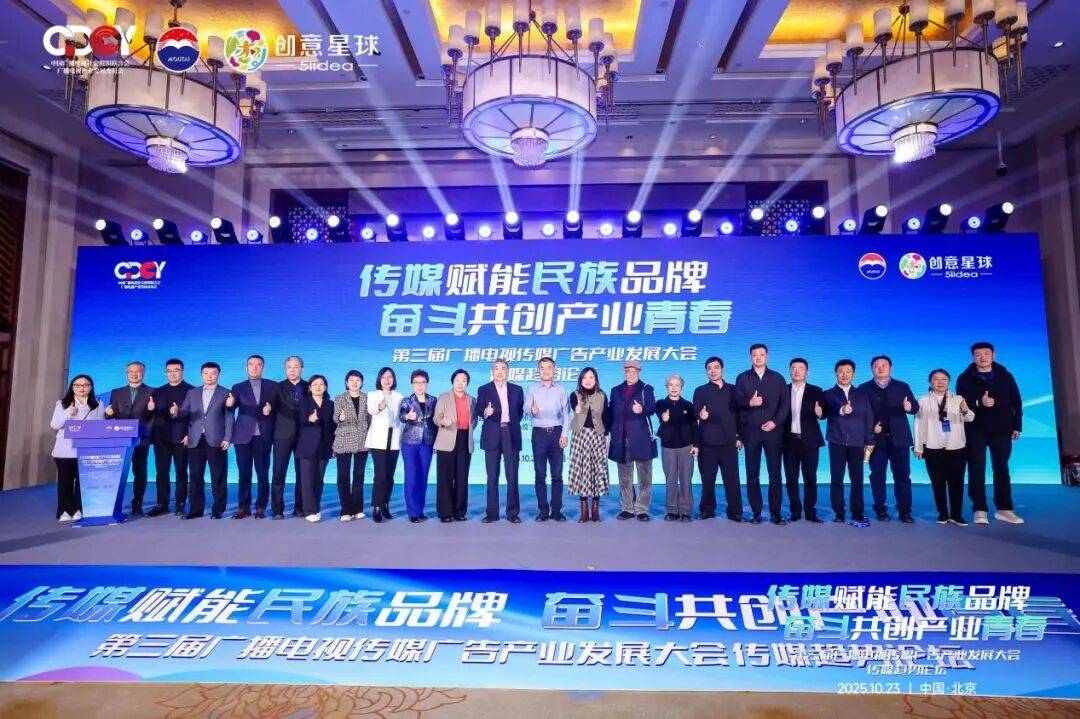
Core Insights - The 2025 Third Broadcasting and Television Media Advertising Industry Development Conference was successfully held in Beijing, focusing on the theme "Media Empowering National Brands, Creating Youth in Industry Together" [1] - The forum gathered representatives from the broadcasting industry, renowned universities, and media organizations to discuss the integration of media industry trends and national brand development [1] Group 1: Industry Trends - The forum was hosted by Party Haiyan, Secretary-General of the Broadcasting and Television Industry Development Working Committee, emphasizing the need for the broadcasting industry to keep pace with the times and drive innovation for industry upgrades [3] - Lu Di, a professor at Peking University, analyzed opportunities and challenges in the context of media integration under the topic "Major Trends in the Development of the Media Industry in the New Era" [3] - Zhao Lili, General Manager of CTR Media Intelligence, shared insights on hot topics and marketing trends in the Chinese advertising market from a data perspective [3] - Zhou Wei, a researcher at CTR Media Research Institute, proposed transitional strategies for revenue transformation in broadcasting, providing new ideas for industry practice [3] Group 2: Case Studies and Innovations - Ma Hong, Deputy Editor-in-Chief of Beijing Radio and Television Station, shared practical achievements in the health and wellness sector under the theme "Solid Foundation and Innovative Development" [4] - Mu Hong, President of Advertising Culture Group, showcased the innovative exploration of media groups in their transformation through the presentation "Industrial Transformation of a Traditional Media" [4] - Zhou Fuzeng, Deputy Director of Zhejiang Satellite TV, introduced innovations and breakthroughs in content and business formats with the topic "Dare to Lead the World, Seek Development from New Business Formats" [4] - Zhou Jing, Deputy Director of the Marketing Center of Jiangsu Broadcasting and Television Station, demonstrated the vitality of broadcasting media in cross-industry collaboration through the case "Live Streaming Across Large and Small Screens" [4] Group 3: Collaborative Actions - The forum concluded with a media action ceremony initiated by directors from various broadcasting organizations, marking a new phase of collaboration between broadcasting media and national brands [6] - The event was witnessed by special guests, including Shi Huafen, Deputy Secretary of the Party Committee of the China Broadcasting and Television Social Organization, symbolizing the advancement of cooperation [6] Group 4: Future Outlook - The forum deepened the consensus on the collaborative development of media and national brands through trend interpretation, case sharing, and cross-industry dialogue [8] - The broadcasting industry is expected to continue using innovation as a driving force to help national brands like Moutai shine on the global stage, contributing to the narrative of youthful industry endeavors [8]


拓尔思与中航文化签署框架性合作协议 助推低空经济产业智能化升级
Xin Lang Cai Jing· 2025-10-17 09:28
Core Viewpoint - The signing event for the Aviation Industry Brain and Intelligent Media Technology Innovation Series took place at the 7th Tianjin Airshow, highlighting the collaboration between various entities to address challenges and opportunities in the media's intelligent era [1] Group 1: Event Overview - The event was held on the morning of October 17, featuring a signing ceremony at the Aviation Industry Group's exhibition area [1] - The chairman of Tuolsi, Shi Shuicai, delivered a speech representing the company during the event [1] Group 2: Collaboration and Alliance - Tuolsi signed a framework cooperation agreement with AVIC Culture to jointly establish the Aviation Intelligent Media Alliance [1] - The alliance is initiated by multiple organizations, including China Aviation News Agency, AVIC Golden Network, and Tuolsi, aiming to promote resource sharing and technological innovation [1] - The goal of the alliance is to advance the integration of media within the aviation industry [1]

倪虹:构建“暖新闻”全媒体传播体系推进系统性变革
Zhong Guo Jin Rong Xin Xi Wang· 2025-10-15 08:12
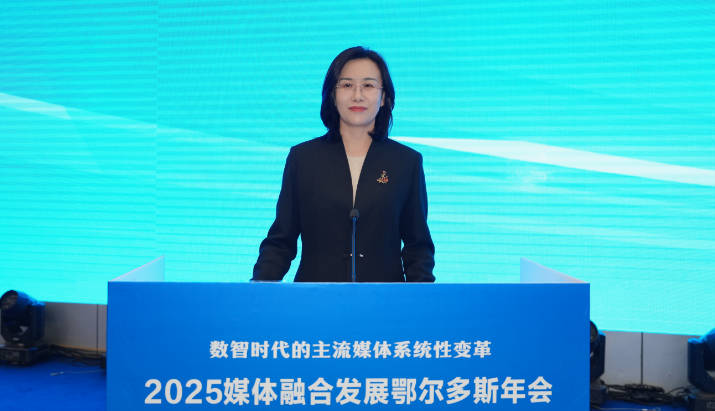
Core Insights - The 2025 Media Integration Development Ordos Annual Conference was held in Dongsheng District, focusing on the systemic transformation of mainstream media through the establishment of a "warm news" all-media communication system [1] Group 1: Organizational Structure and Governance - The Ordos Media Center has adopted a "center + company" dual governance model, which has led to a 100% preservation and appreciation rate of state-owned assets over the past two years [3] - The company achieved a revenue of 140 million in 2024, representing an 18.5% year-on-year growth, supported by a financial safety net and resource activation mechanisms [3] Group 2: Operational Efficiency and Content Production - The organization has streamlined its internal structure, reducing the number of internal departments by 28% and middle management positions by 30%, with over 90% of personnel now focused on content production and dissemination [3] - The number of content production and dissemination units has been consolidated from 94 to 25, achieving a 73% reduction, thereby enhancing the efficiency of the "warm news" client platform [3] Group 3: Content Quality and Recognition - The content supply of the Ordos Media Center has significantly improved, with over 210 works receiving national industry news awards, and three reports shortlisted for the China News Award [4] - The "Warm City Focus" initiative has been recognized as one of the top ten excellent cases in the "Media+" category by the China Journalists Association for 2024 [4] Group 4: International Communication - The establishment of the Ordos International Communication Center marks the first city-level international communication center in Inner Mongolia, with its international communication cases recognized as exemplary [4]
打造情感“树洞” 敲开青年心门
Zhong Guo Qing Nian Bao· 2025-10-14 22:49
Core Viewpoint - The "Bao you脱单" live streaming program by China Youth Daily serves as a new emotional communication platform for young people, addressing their intimate relationship issues in a relatable manner [2][6]. Group 1: Program Concept and Execution - The program was created to meet the genuine emotional needs of young people, moving away from traditional media's authoritative stance to a more service-oriented approach [2][4]. - The content design focuses on contemporary emotional pain points, using relatable topics and a peer perspective to engage the audience [2][3]. - The integration of music and interactive discussions during live sessions enhances the emotional connection and provides a unique immersive experience for viewers [2][3]. Group 2: Team Development and Innovation - The project originated from the administrative department, showcasing a "reverse involution" approach that allowed team members to rapidly develop new skills in content creation and user engagement [3][5]. - The shift from a management mindset to a user-centric approach was crucial for the program's resonance with the audience, emphasizing the importance of understanding young people's needs [4][5]. Group 3: Future Directions and Goals - The team is exploring ways to connect online live streaming with offline services, aiming to create a comprehensive interaction model that includes live broadcasts, user participation, and professional consultation [5][6]. - The ultimate goal of the program is to accompany young people in their emotional growth, fostering a sense of community rather than merely facilitating romantic connections [5][6].
新华社全方位报道2025媒体融合发展鄂尔多斯年会 解码媒体“智”变之路
Shang Hai Zheng Quan Bao· 2025-10-14 10:49
Group 1 - The 2025 Media Integration Development Conference was held in Ordos, Inner Mongolia from October 12 to 14, showcasing the achievements and future directions of media integration towards intelligence [1] - Major media outlets including Xinhua Daily Telegraph and Economic Information Daily provided in-depth reports and multi-dimensional promotion of the conference [1] - The conference focused on the practical outcomes of media integration and the role of artificial intelligence in enhancing media capabilities [3][7] Group 2 - The conference highlighted technological advancements such as AI neural interfaces for sensory data collection and real-time AI central systems for early warning [3] - Examples of successful media integration practices were presented, including the "Smart Hub" in Tianjin and the "Live+" model in Guizhou, demonstrating AI's application in user profiling and immersive communication [3][16] - The integration of blockchain for news authenticity and edge cloud rendering technology for cost reduction in production were also discussed [3]

主流媒体客户端在整花活:看短剧、玩游戏
Xin Jing Bao· 2025-10-14 09:47
Core Insights - The article discusses the transformation of mainstream media apps from simple news distribution platforms to multi-dimensional content providers, incorporating short dramas and games to engage users [1][3][10] Group 1: Diverse Exploration - Since 2014, media integration has become a national strategy, leading to a surge in the development of media apps, which were previously limited to basic news dissemination [3][4] - The rise of micro-dramas has become a key tool for attracting and retaining users, with many media outlets now embracing this format for promotional purposes [4][5] - Major media apps are launching interactive features, such as daily check-in activities, to enhance user engagement and loyalty [5] Group 2: Platform Transformation - Media outlets are shifting from merely transferring traditional content online to redesigning their platforms with an internet mindset, indicating a deeper transformation in their operational models [6] - The integration of resources is essential, as seen in the consolidation of various news apps into a single platform to enhance user resource centralization [7] Group 3: Ecosystem Construction - Mainstream media is increasingly recognizing the need for open platforms that allow user-generated content, leading to significant user engagement and a large follower base [8] - User-centric operations are becoming a focus, with media apps evolving into lifestyle assistants that provide various local services, thereby increasing user stickiness [9] Group 4: Deep Integration - The integration of micro-dramas and games reflects a broader multi-dimensional transformation in mainstream media apps, encompassing content, technology, and channel integration [10][11] - The implementation of new technologies like AI in content production is helping to optimize resource allocation and reduce production costs significantly [11]
智融·创变·未来——媒体融合技术展探访见闻
Zhong Guo Jin Rong Xin Xi Wang· 2025-10-13 11:53
Core Insights - The 2025 Media Integration Development Conference in Ordos showcased the latest breakthroughs and applications in media integration technology, emphasizing its role as a platform for innovation and industry foresight [1] Group 1: Media Integration Technology - The "Media Integration Technology Exhibition" highlighted cutting-edge technologies and their applications, featuring top institutions and companies such as China Unicom, Huawei, and Baidu, which collectively illustrate the profound transformation in the media landscape [1] - The exhibition demonstrated that media integration technology has expanded beyond information dissemination to core aspects of social management and services, showcasing its potential to enhance community governance [2] Group 2: Innovative Solutions - China Unicom's "Grassroots Smart Governance Platform" exemplifies how technology can empower community governance, integrating services, publicity, and education into a digital platform for grassroots party-building efforts [2] - The Xinhua Finance Professional Terminal, developed by China Economic Information Service and China Electronic Cloud, represents a new paradigm in financial information services, utilizing a comprehensive AI architecture to address practical challenges in business scenarios [2] Group 3: Advanced Technologies in Media Production - The National Key Laboratory for Media Integration Production Technology showcased advanced technologies such as big data and AI, with tools like "Xinhua Miaobi" providing intelligent writing support for public officials [3] - Huawei's OceanStor Pacific 9928 storage solution and Atlas 900 A3 SuperPoD computing power are designed to enhance the entire media production process, facilitating the integration of hardware and intelligent applications [4] Group 4: Industry Ecosystem - The exhibition revealed a collaborative media integration ecosystem, with companies like Yonyou and Zhongke Wenge providing robust information support and decision-making services, respectively, indicating a shift towards a more integrated and synergistic media industry [5] - The event underscored that media integration is a crucial path for the high-quality development of the media industry, reflecting how technology is reshaping media forms and expanding their functions [5]



数智时代的主流媒体系统性变革——2025媒体融合发展鄂尔多斯年会展望
Shang Hai Zheng Quan Bao· 2025-10-13 11:36
Core Insights - The conference in Ordos focused on the systematic transformation of mainstream media in the context of the digital and intelligent era, emphasizing the need for deep changes in media practices and technologies [1][2] Group 1: Media Integration and Transformation - Media integration has evolved from "addition" to "integration" and now to "digital intelligence," reflecting profound changes in technology and public opinion ecology [2] - The conference highlighted that media integration is no longer just a technical overlay but involves a comprehensive reshaping of production relationships, communication paradigms, and value chains [2][3] Group 2: Technological Empowerment and Content Value - The conference showcased that technology is the primary driving force behind media integration, with examples such as AI applications and successful media platforms demonstrating significant engagement [3] - Content value reconstruction remains crucial, with discussions on how popular accounts blend mainstream values with youthful expressions to achieve both positive influence and high traffic [3] Group 3: Role of Media in Social Governance - The role of media is shifting from being mere communicators to becoming service providers, as evidenced by local media initiatives that address community needs and enhance social governance [3] Group 4: International Communication and Local Media - The "Local International Communication System Resilience" was effectively practiced, with initiatives like "Global Focus Warm City" enhancing the international communication capabilities of local media [4] Group 5: Future Directions and Practical Examples - The conference served as a platform to summarize past practices and anticipate future directions, showcasing advancements in domestic technology and successful regional media collaborations [5] - The spirit of innovation and proactive engagement in media integration was emphasized, highlighting the importance of maintaining content authenticity amidst technological advancements [5]
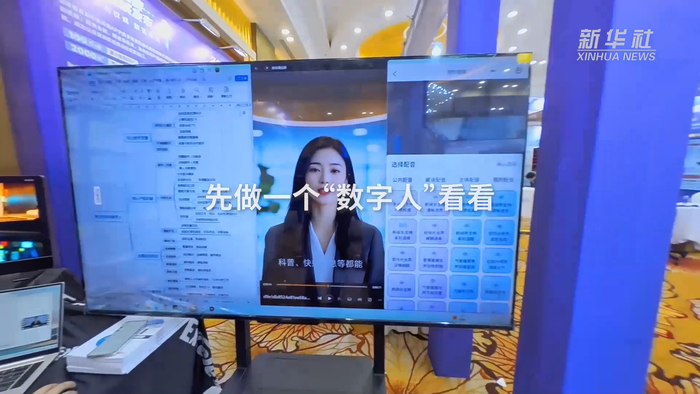
直面未来 不要停步——探访2025媒体融合发展鄂尔多斯年会媒体融合技术展
Xin Hua She· 2025-10-13 10:23
Core Points - The conference focuses on the future direction of media integration development with the support of AI technology [2] - The event is taking place in Ordos City, Inner Mongolia, highlighting the significance of the location for media innovation [2] Group 1 - The 2025 Media Integration Development Conference features a technology exhibition showcasing advancements in media integration [2] - The use of drones and AI in media centers is emphasized, indicating a trend towards automation and intelligent solutions in the industry [3] Group 2 - The conference aims to explore how media integration can evolve through technological advancements, particularly in AI [2][3] - The event brings together industry professionals to discuss and demonstrate innovative media technologies [2]