
年俗文化

Search documents
新春走基层丨包黏豆包 全村人“黏”住的年味乡情
Xin Hua She· 2026-02-04 02:04
Group 1 - The article highlights the tradition of making "Nian Dou Bao" (sticky bean buns) in Dahuangshi Village, Ma Jia Zhai Town, Kaiyuan, Liaoning, which symbolizes the villagers' hopes for a prosperous new year [1][3] - The filling for the sticky bean buns is made from locally sourced, plump red beans, which are steamed and then hand-mashed to retain their natural sweetness [1] - The cold winter in Northeast China serves as a natural refrigerator for storing the sticky bean buns, allowing them to be preserved throughout the winter [3] Group 2 - The tradition of making sticky bean buns not only carries the memories of the New Year customs but also reflects the beautiful life in rural areas [3]

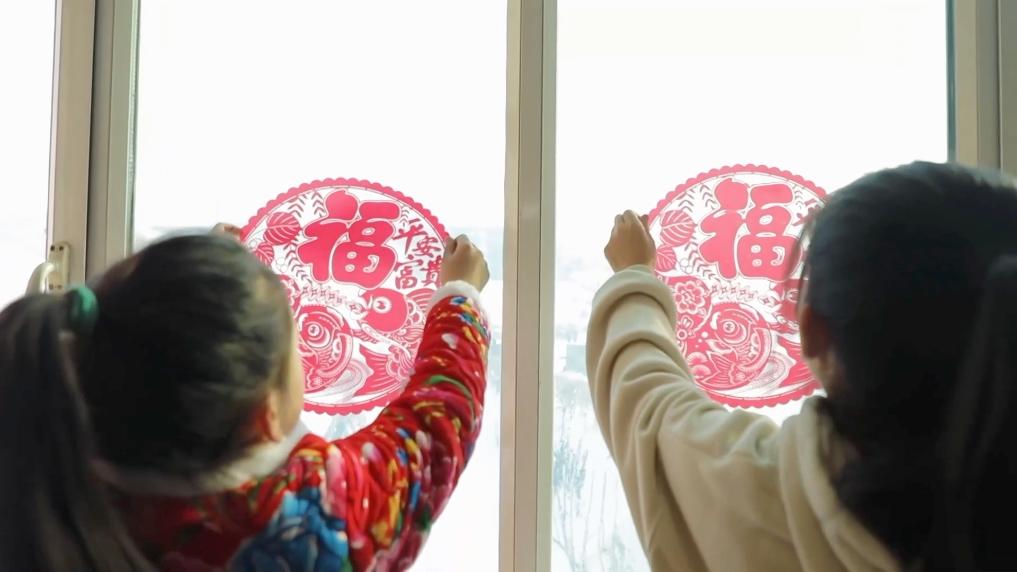
在天津非遗里感受浓浓年味
Xin Lang Cai Jing· 2026-01-29 22:57
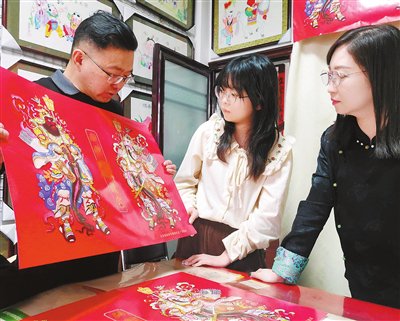
Core Insights - The article highlights the revival of traditional Chinese New Year customs in Tianjin through various intangible cultural heritage projects, emphasizing the importance of these practices in enhancing the festive atmosphere as the Spring Festival approaches [3][4][5][6][7] Group 1: Yangliuqing Shanshi Ronghua - The tradition of wearing Ronghua (floral hairpins) during the New Year is significant for women in Tianjin, symbolizing good fortune and the welcoming of the new year [4] - Su Xiulan, the representative inheritor of the Ronghua making technique, has innovated the designs to include modern accessories like hairpins and brooches, appealing to a broader audience [4] - There are over 100 varieties of Ronghua, each with different symbolic meanings, catering to various age groups and preferences [4] Group 2: Liu Shangdao Village Box Flower - The Box Flower tradition in Liu Shangdao Village is a cherished aspect of the New Year, with villagers eagerly anticipating the return of this collective memory through festive displays [5] - The Box Flower features 6 to 8 different lantern designs hidden within a lantern box, showcasing a blend of various artistic techniques [5] - The technique has a rich history of over 260 years and was originally introduced by palace craftsmen, symbolizing the creativity and aesthetic values of ancient laborers [5][6] Group 3: Yangliuqing Woodblock New Year Paintings - The practice of pasting door gods, a significant New Year ritual, is being revived by Huo Shulin, a seventh-generation inheritor of Yangliuqing woodblock painting [7] - Huo Shulin has created innovative door god paintings that are easier to apply, aiming to rekindle the tradition in modern households [7] - The initiative also includes transforming traditional door god images into contemporary home decor items, integrating cultural heritage into everyday life [7]
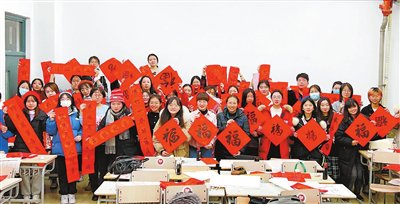
手写春联“圈粉”年轻人
Xin Lang Cai Jing· 2026-01-28 22:02
Core Viewpoint - The resurgence of handwritten Spring Festival couplets among young people reflects a blend of traditional culture and modern creativity, driven by the accessibility of online platforms for customization and order placement [3][4]. Group 1: Cultural Significance - Spring Festival couplets are an integral part of Chinese cultural traditions, serving not only aesthetic purposes but also conveying deeper meanings and cultural insights [4]. - The practice of writing and displaying couplets involves specific rules regarding structure and placement, emphasizing the cultural importance of these traditions [4]. Group 2: Market Trends - There is a noticeable shift in consumer behavior, with customers placing orders for personalized couplets well in advance of the traditional peak season, indicating a growing demand for customized products [3]. - Young consumers are increasingly opting for shorter, more compact couplets that fit modern living spaces, often integrating traditional designs with contemporary elements [5]. Group 3: Artistic Expression - Handwritten couplets allow for personal expression, as each piece reflects the writer's emotions and cultural understanding, enhancing the connection between art and daily life [4]. - The innovation in couplet design, such as the use of short couplets and unique materials, showcases the evolution of traditional art forms in response to contemporary lifestyles [5].
一碗刨猪汤,何以唤醒年味记忆?
Xin Hua She· 2026-01-26 08:31
Core Insights - The article highlights the emotional resonance and cultural significance of the "刨猪汤" (Pork Soup) tradition, which has evolved into a widespread celebration of traditional customs across various regions in China, particularly during the Spring Festival [1][2][5] Group 1: Cultural Significance - The tradition of "killing the New Year pig" in Chongqing's Hechuan district symbolizes neighborly assistance and communal celebration, reflecting a deep emotional connection to traditional customs [2][3] - The phrase "Come help me with the pig, and I'll treat you to a meal" resonates with many who yearn for the warmth of community and the essence of the New Year [2][5] Group 2: Regional Variations - In Sichuan's Pujiang County, the "Arrow Tower New Year Pig Festival" has become a significant cultural event, attracting 25,000 visitors and generating over 1 million yuan in tourism revenue [3][4] - In Guizhou's Shiqian County, the "Thousand-Person Pork Soup Feast" showcases local customs and has drawn over 1.3 million tourists since mid-October 2025, resulting in a total tourism revenue of 960 million yuan [4] Group 3: Emotional and Economic Impact - The article emphasizes that these traditional activities not only fulfill emotional needs for reunion and sharing but also stimulate local economic development through tourism [4][5] - The integration of traditional customs with modern tourism strategies demonstrates the potential for cultural practices to thrive in contemporary society [4][5]
新加坡媒体:爆火杀猪宴展现中国民间年俗文化
Xin Lang Cai Jing· 2026-01-16 23:11
Group 1 - The event known as the "pig-killing feast" in Chongqing has gained significant attention, with a viral video leading to over 440,000 likes and 270,000 shares within 24 hours, attracting around 10,000 visitors to the village [1] - The local tourism authority capitalized on the influx of visitors by distributing tickets to nearby attractions and ensuring safety through traffic management and volunteer support [1] - The scale of the event expanded from the initial plan of killing two pigs to five, with contributions from netizens and local tourism sponsorship, showcasing community engagement and support [1] Group 2 - The "pig-killing feast" has been described as a representation of genuine human connection and warmth in rural life, with many praising the authenticity of the experience [2] - Despite some controversies, the overall reception of the event has been positive, highlighting the cultural significance and community spirit associated with such gatherings [2] - The event has inspired other rural areas to consider similar activities to boost local tourism, indicating a potential trend in rural cultural events [2]
【西街观察】“死了么”与“按猪宴”,安与不安殊途同归
Bei Jing Shang Bao· 2026-01-13 14:47
Group 1 - The app "Are You Dead?" has gained popularity as a safety tool for the elderly living alone, reflecting societal concerns about loneliness and safety [1][2] - The viral trend of "Pig Pressing" highlights a nostalgic connection to family gatherings and traditional customs, resonating with many who feel disconnected from their roots due to urbanization [2][3] - The rise of these two trends indicates a collective societal need for emotional security and connection, addressing the complexities of living alone and the associated risks [3] Group 2 - The discussion surrounding the app and the "Pig Pressing" event underscores the broader societal issues of individual safety and emotional fulfillment in contemporary life [3] - The phenomenon reveals a growing awareness of the challenges faced by the solitary population, prompting a need for effective social support systems [3]