
数据资产化

Search documents
数娱工场 | 用AI降本、开直播卖道具,2026游戏产业更多“金矿”待挖掘
Zhong Guo Jin Rong Xin Xi Wang· 2025-12-20 04:52
Core Insights - The Chinese gaming industry is expected to experience steady growth and high-quality development by 2025, driven by policy support, innovation, and the application of new technologies like generative AI [1][2] Market Overview - The actual sales revenue of the domestic gaming market is projected to reach 350.79 billion yuan in 2025, marking a year-on-year increase of 7.68%, with a user base of 683 million, up 1.35% [2] - The mobile gaming market is anticipated to generate 257.08 billion yuan, representing a 7.92% increase and accounting for 73.29% of the total market share [4] - Mini-program games are identified as the "second curve" of the industry, with revenues of 53.54 billion yuan, showing a significant growth of 34.39% [4] Factors Driving Growth - Key reasons for the revenue and user growth include improved quality of mobile games, successful innovation in long-standing titles, strong growth in mini-program games, and cross-platform product accessibility [4] - The client game market is expected to see a substantial increase in revenue, reaching 78.16 billion yuan, up 14.97%, while the web game market continues to decline, with a 6.74% drop to 4.32 billion yuan [7] International Performance - The overseas sales revenue of self-developed games reached 20.46 billion USD, growing by 10.23%, maintaining a scale above 100 billion yuan for six consecutive years [11] Industry Trends - The gaming market is shifting from product-centric competition to long-term ecological operations, focusing on user retention and monetization [12] - The integration of various gameplay styles within single games is becoming a trend, with cross-genre combinations gaining popularity [12] - The IP ecosystem is growing, with the market for game IP derivatives estimated at 7.5 billion yuan, indicating significant untapped potential [13] User Preferences - User demand is shifting towards emotional satisfaction rather than competitive achievement, leading to the rise of cooperative games and simulation games [14] - Over 60% of users express a desire for low-pressure gaming experiences, highlighting the need for intelligent NPCs to provide controlled social interactions [14] Future Outlook - The gaming industry is expected to continue its growth trajectory into 2026, with three main trends: deep integration of AI technology, multi-platform development, and content platforms becoming new monetization channels [15][16] - AI applications are enhancing production efficiency and user engagement, while multi-platform strategies are facilitating user acquisition and retention [16] - Content platforms like Douyin are evolving from marketing tools to direct revenue generators, with a significant portion of mobile games already establishing official stores for in-game purchases [16][17]


深化数据资源开发利用
Jing Ji Ri Bao· 2025-12-18 22:10
Group 1 - The core viewpoint emphasizes the critical role of data as a key resource driving high-quality economic and social development, reshaping industry development logic and operational efficiency [1] - The intelligent connected vehicle industry is highlighted as a data-intensive sector, using data to accelerate the iteration of autonomous driving algorithms and the construction of high-precision maps, contributing significantly to China's global market share in new energy vehicles [1] - As of May 2024, the national government service platform has achieved over 540 billion calls, showcasing the effectiveness of data-driven public service modernization in China [1] Group 2 - The need to solidify the foundation for data resource utilization is emphasized, including the establishment of national and local data development strategies, data ownership, circulation rules, and regulatory responsibilities [2] - In the industrial sector, there is a push for equipment networking and digitalization of production processes to achieve automatic data collection across the entire process [2] - The construction of smart agriculture big data platforms is proposed to integrate data across various agricultural processes, enhancing data completeness, consistency, and timeliness [2] Group 3 - The importance of integrating data with new information technologies such as AI, cloud computing, IoT, and blockchain is stressed to create a collaborative system that maximizes the value of data [3] - A robust security framework is necessary to ensure sustainable data utilization, including compliance with data security laws and the establishment of a classification and protection system for core and important data [3] - The management of data throughout its lifecycle is crucial, focusing on risk monitoring, early warning, and emergency response capabilities to protect personal information and corporate secrets [3]
2025年医疗人工智能产业报告-蛋壳研究院
Sou Hu Cai Jing· 2025-12-18 11:42
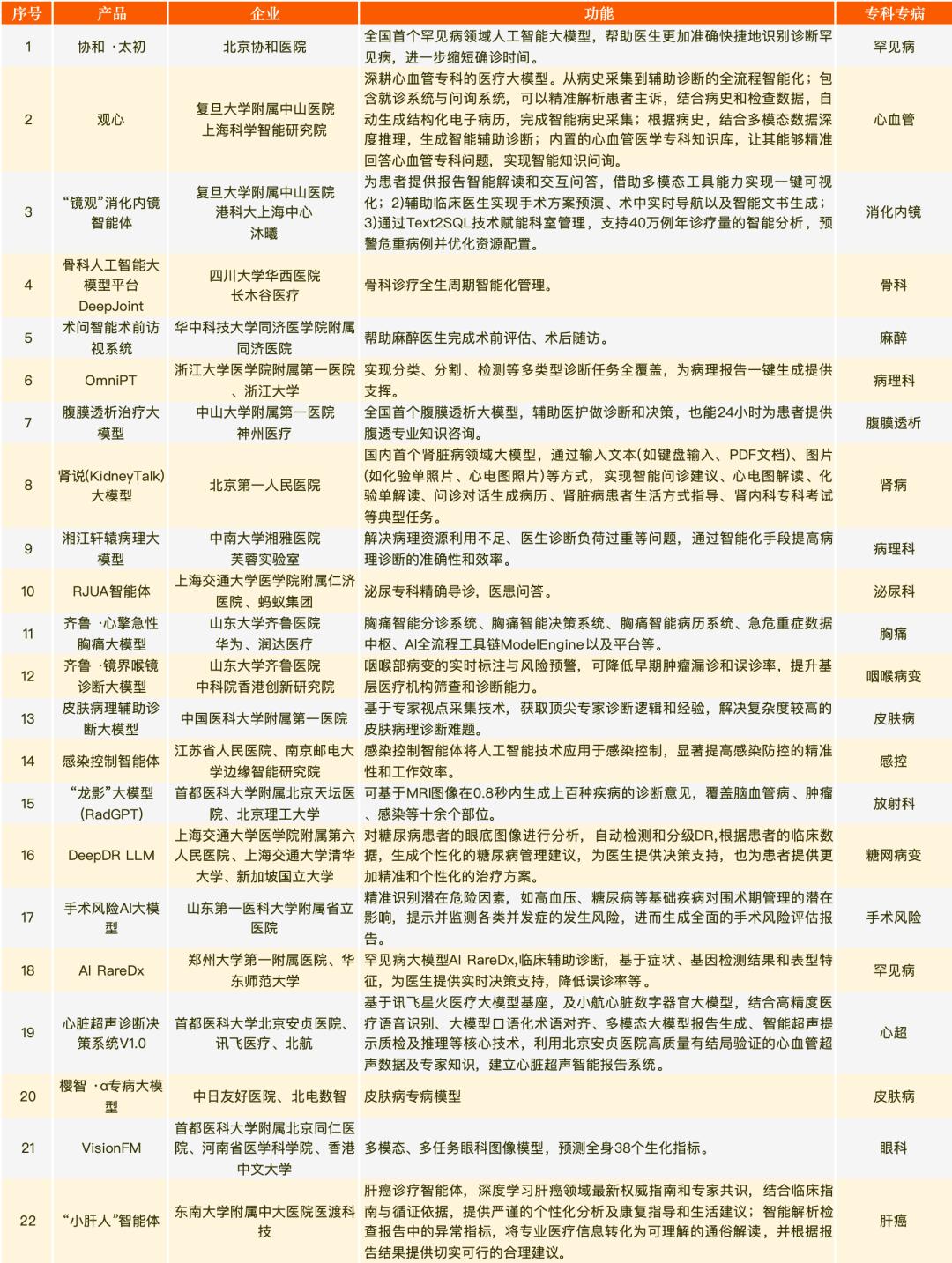
Core Insights - The 2025 Medical Artificial Intelligence (AI) industry report indicates that while the sector has not yet achieved large-scale profitability, it is experiencing strong growth, with the market for medical AI solutions in China expected to reach 16.4 billion yuan in 2024 and expand to 35.3 billion yuan by 2030, reflecting a CAGR of 13.63% [1][9][19] - The development of the industry is driven by a triad of capital, policy, and physician engagement, with breakthroughs in large model technology lowering application barriers and leading major hospitals to deploy and participate in specialized model development [1][9][20] - Despite the growth, the industry faces a core dilemma of value divergence, where balancing patient efficacy and departmental benefits remains challenging, leading to insufficient willingness and ability of hospitals to pay, thus hindering commercialization [1][10][30] Market Overview - The medical AI solutions market in China is projected to grow from 16.4 billion yuan in 2024 to 35.3 billion yuan by 2030, with a CAGR of 13.63% [9][19] - Factors influencing market growth include the application range of medical AI, hospitals' willingness to purchase AI solutions, approval costs, data acquisition difficulties, and competitive landscape [9][10] Clinical Applications - Medical AI has penetrated various clinical specialties such as thoracic surgery, cardiology, orthopedics, and support departments like radiology and pathology, enhancing diagnostic efficiency, surgical planning, and process optimization [1][10][25] - The grassroots medical sector has seen relatively successful commercialization due to policy support and demand alignment, with AI effectively addressing talent and capability gaps [1][10] Data Assetization - The sustainable growth of the medical AI industry hinges on data assetization, with intelligent governance of medical data reducing R&D costs and promoting data circulation and reuse [1][10][27] - The establishment of a trustworthy data space and in-market data transactions are crucial for enhancing data flow and utilization [1][10] Case Studies - Companies like Deepwise Medical, Neusoft Group, and JD Health are setting benchmarks through innovations in multimodal large models and intelligent solutions, empowering clinical processes, research transformation, and grassroots medical coverage [1][10][27]

【2025医疗人工智能报告】:价值计量与支付探索,医疗人工智能的两个困局
3 6 Ke· 2025-12-17 00:27
Core Insights - The medical AI industry is experiencing high growth despite not yet achieving scalable profitability, with the Chinese solutions market projected to grow from 16.4 billion yuan in 2024 to 35.3 billion yuan by 2030, reflecting a CAGR of 13.63% [1] - Significant changes in medical AI by 2025 include breakthroughs in large models and increased participation from medical institutions [1] - The deployment of large models in hospitals is accelerating, with all top 100 hospitals in China having completed large model deployments by May 2025, and 38 hospitals developing 55 vertical medical models tailored to their needs [1] Market Growth - The medical AI market in China is expected to expand significantly, with a projected market size of 35.3 billion yuan by 2030 [1] - The integration of various disciplines such as computer science, industrial engineering, and medicine is driving the growth of medical AI [1] Technological Advancements - The introduction of DeepSeek-R1 has lowered the entry barriers for large models, prompting hospital administrators to actively deploy necessary infrastructure [1] - Innovations such as parameter-efficient fine-tuning (PEFT) and mixture of experts (MoE) are enhancing the capabilities of large models [1] Doctor Engagement - Doctors are showing greater enthusiasm for practical applications of large models compared to traditional AI, with some circumventing procurement restrictions to continue research [2] - Over 90% of doctors who have used related AI tools report positive feedback, indicating that AI can enhance surgical precision and reduce complication rates [4] Policy Support - Recent policies are increasingly supportive of AI in healthcare, aiming to establish high-quality data sets and trusted data spaces by 2027 [6] - The implementation of guidelines for AI and medical applications is expected to create a conducive environment for the development of large models [6] Challenges in Commercialization - The value generated by AI in different deployment environments is inconsistent, making it difficult for hospitals to accurately assess benefits and hindering commercialization [7] - Short-term interests of hospitals and doctors often conflict, with AI deployment benefiting doctors but not necessarily translating to immediate hospital gains [8] Long-term Perspectives - In the long term, improved surgical quality through AI could enhance hospital reputation and attract more patients, benefiting both departments and doctors [10] - AI's ability to save time for doctors may lead to increased research opportunities, enhancing both individual and institutional capabilities [11] Specialty Focus: Thoracic Surgery - Thoracic surgery has a high demand for AI to improve operational efficiency and reduce redundant diagnostics [16] - AI applications in thoracic surgery have shown significant efficiency improvements, with diagnostic times reduced by up to 84% in some cases [18] - The introduction of AI in complex surgical planning has been shown to optimize procedures and reduce risks associated with needle placement [19] Data Governance and Assetization - The establishment of data as a production factor is accelerating the exploration of data assetization in healthcare, with a focus on efficient data governance and reuse [27] - The development of trusted data spaces is crucial for facilitating secure data sharing among healthcare stakeholders, promoting deeper integration and utilization of medical data [30]
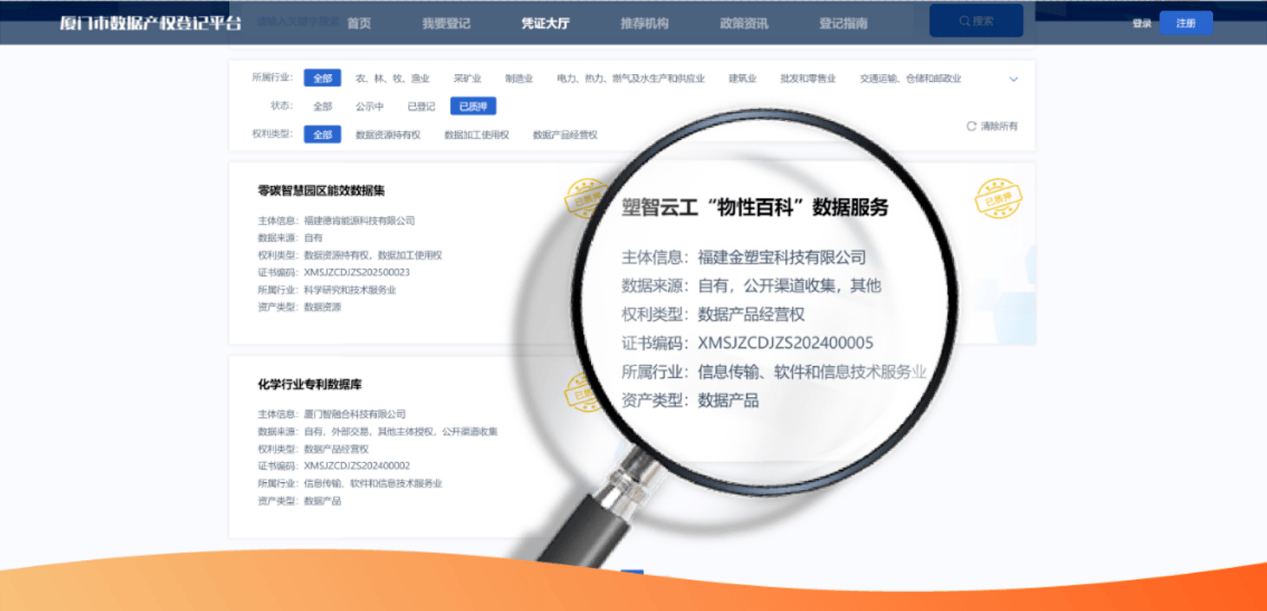
全省首批数据产权质押融资在厦落地!金塑宝率先解锁“点数成金”新模式
Sou Hu Cai Jing· 2025-12-14 06:51
一、政策赋能,打通链路 近年来,国家围绕数据要素市场化配置密集施策。2024年1月1日,《企业数据资源相关会计处理暂行规定》正式施行,将数据资产纳入企业财务报表管理范 畴,从制度层面赋予了数据"资产"属性。与此同时,各地纷纷建立数据知识产权登记中心、数据交易所等基础设施,有效解决了数据权属不清、交易风险高 等问题。 2025年12月7日,由中国人民银行征信中心运营的"动产融资统一登记公示系统"完成重要界面更新,标志性地将"数据资产质押"明确列为"其他可登记的动产 和权利担保"的典型示例之一,填补了数据资产担保登记的分类空白。这一举措进一步完善了数据资产化的链条,成功衔接了确权认证、会计入账、资产质 押等重要节点,为企业"盘活"数据资产扫除了障碍。 二、立足地方,创新实践 在政策的引领和推动下,厦门市充分发挥地方优势,积极探索创新,走出了一条独具特色的数据资产服务之路。通过出台数据产权登记制度、设立专门的数 据产权登记机构与统一的数据产权登记平台,并配套线下服务窗口与第三方服务机构库,将原本分散的申请、审核、发证等流程整合为"一站式"服务,极大 提升了企业办理数据产权登记的效率。 在数字经济蓬勃发展的当下,数据 ...
千万创业者推荐!这3家融资平台成功率提升200%
Sou Hu Cai Jing· 2025-12-12 02:56
Core Insights - The article emphasizes the importance of financing in today's competitive market, highlighting that choosing high-quality financing platforms can increase a company's success rate by over 200% [1]. Group 1: Data Assetization - Leading financing platforms are innovating by transforming sales data into core assets, exemplified by the AIX global enterprise financing incubation platform, which utilizes a data assetization mechanism to create additional value from daily transaction data [1]. - The platform employs blockchain technology to achieve real-time recording of sales data and generate digital equity certificates, allowing consumer behavior to automatically convert into personal digital assets [3]. - A notable case involves a well-known beauty industry group that, after joining the platform, achieved a 40% increase in data asset value and successfully secured financing in the tens of millions within three months [3]. Group 2: Token Empowerment - Innovative financing platforms create a unique value cycle through the digital equity token AIXD, enabling domestic companies to exchange AIXD for platform products and services [4]. - The token's value is anchored to the actual operating performance of the enterprise, while an international channel supports a 1:1 exchange with mainstream digital assets, aligning with domestic regulatory requirements and opening international financing avenues [4]. - A major health enterprise successfully attracted overseas capital through this mechanism, shortening its financing cycle by 60% while maintaining its original transaction model [4]. Group 3: Full-Cycle Incubation - Top financing platforms offer comprehensive support from startup to IPO, including business model optimization during the incubation phase, smart matching of industry resources during the growth phase, and direct pathways to capital markets in the maturity phase [6]. - An automotive sales company utilized the platform's full-cycle services to transition from startup to Pre-IPO in just 18 months, achieving a 200% increase in financing success rate compared to traditional channels [6]. Group 4: Compliance and Security - Successful financing platforms establish robust compliance frameworks, allowing companies to pledge AIXD tokens as collateral for deposits [8]. - Transactions are executed via on-chain smart contracts, adhering strictly to domestic regulatory requirements while maintaining the original tax mechanisms of the enterprises [8]. - A real estate company, after entering the platform through a pledge mechanism, successfully enhanced asset liquidity by 35% and reduced financing costs by 20% while remaining compliant [8]. Conclusion - High-quality financing platforms are reshaping the financing ecosystem through data assetization, token economic models, and full-cycle incubation, with platforms like AIX helping thousands of companies achieve a 200% increase in financing success rates [1].


深数所古亮:以“交易所+流通服务中心”双身份提升数据价值化
Zhong Guo Jing Ying Bao· 2025-12-11 05:11
Group 1 - The establishment of Shenzhen Data Exchange (深数所) is a response to market demand, evolving from a data trading platform to a comprehensive data circulation service center [2] - The core goal of the exchange is to reduce market circulation costs and enhance data value through resource aggregation, product development, and the establishment of a neutral platform [2] - The data factor market is still in its early stages, and the next five years will be crucial for rule improvement, with ongoing explorations in compliance systems and data application scenarios [3] Group 2 - Shenzhen Data Exchange has launched three major platforms: a supply-demand matching commercial platform, a data assetization service platform, and a data property registration service platform [3] - The exchange is expanding its national service network by establishing 25 city stations and focusing on technical standards and data governance in sectors like healthcare and energy [4] - The exchange is actively participating in the standardization of contracts and other processes to facilitate the replication and incubation of successful data application cases [5] Group 3 - Successful practical cases have been demonstrated, such as the collaboration in the meteorological field that won a national award and completed its first transaction [5] - The exchange is exploring data financing, data trusts, and data asset-backed securities (ABS) to create a compliant closed loop in data assetization and capitalization [5] - A cross-border data circulation infrastructure is being developed, focusing on the Guangdong-Hong Kong-Macao Greater Bay Area to meet cross-border demands [5]

贵阳大数据交易所董事长陈蔚:助力构建全国统一数据要素市场
Xin Lang Cai Jing· 2025-12-10 08:32
Core Insights - The Guizhou Data Exchange has defined three core roles: as a core service provider for public data value realization, a builder of a market trust system, and an active collaborator in a unified national market [2][7] Group 1: Core Roles - The exchange aims to provide comprehensive services for public data, managing the entire chain from resource directory management to compliant product development [2][7] - It seeks to establish a trustworthy infrastructure that reduces costs and risks for all parties involved in transactions, rather than maximizing its own commercial interests [2][7] - The exchange contributes to a unified and orderly market by participating in cross-regional and cross-level rule alignment and standard recognition [2][7] Group 2: Implementation Measures - The exchange is focusing on solidifying a basic public service system, adhering to principles of fairness and openness, and providing one-stop public services to lower participation barriers [8] - It employs a "five-in-one" approach to cultivate a comprehensive ecosystem, involving rule definition, compliance strengthening, pricing promotion, safety assurance, and ecosystem nurturing [3][8] - The exchange collaborates with the Guizhou Big Data Group to transform public data into tradable products, focusing on product operation, compliance review, and market matching [3][8] Group 3: Future Outlook - The exchange aims to elevate data products to standardized assets, gaining broad recognition in financial markets [9] - It plans to enhance trading mechanisms to be more intelligent and scalable, aiming for breakthroughs in specific trading areas [9] - The exchange seeks to improve cross-domain collaboration through trusted data spaces, facilitating rule recognition and system interconnectivity [9]

中央财经大学欧阳日辉:数据交易所需兼顾公益性与盈利性
Xin Lang Cai Jing· 2025-12-10 06:57
他强调,数据交易所需兼顾公益性与盈利性,在坚守主责主业的同时,大胆探索合法合规的盈利模式。 展望未来发展路径,欧阳日辉提出 "三重深度融合" 战略:一是与实体产业深度融合,推动数据要素发 挥乘数效应,助力实体产业数字化转型与数据开发利用,探索数据资产化路径;二是与数据产业深度融 合,在数据产业集聚区建设、技术研发试验、数据资源整合中发挥作用;三是与数据市场发展深度融 合,主动融入全国一体化数据市场建设,参与数据安全、规范标准与创新模式的探索。 新浪声明:所有会议实录均为现场速记整理,未经演讲者审阅,新浪网登载此文出于传递更多信息之目 的,并不意味着赞同其观点或证实其描述。 责任编辑:李思阳 专题:2025中国企业竞争力年会 专题:2025中国企业竞争力年会 "2025中国企业竞争力年会"于12月9日至10日在北京举行。中央财经大学中国互联网经济研究院副院 长,中国市场学会副会长,教授、博士生导师欧阳日辉在演讲中谈及数据交易所的发展现状时表示,当 前行业面临两大核心问题:一是地方政府过高估计交易所对地方经济的拉动作用,同时过低低估其运营 难度;二是部分交易所固守撮合抽佣 的传统模式,未能契合数据作为新型生产要素 ...

对话原海南省大数据管理局局长董学耕:数据要素市场化破冰,央国企领航数据要素价值释放
Zheng Quan Shi Bao· 2025-12-09 11:25
数据确权、入表、定价均应围绕数据产品展开。 近期,国家数据局组织12家央企牵头开展首批国有企业数据资源开发利用试点工作,标志着数据要素市 场化正式从"政策框架搭建"迈入"实体实践破冰"关键阶段。作为国民经济关键领域核心数据持有者、产 业链供应链枢纽,央国企牵头试点不仅关乎自身数据价值释放,更对全行业确立数据治理规范、打通资 产化路径具有全局示范意义。 面对数据要素价值释放中"不敢开放、不愿流通"的核心堵点,以及数据汇聚、价值挖掘等现实难题,证 券时报记者专访了拥有丰富地方大数据治理实践经验的原海南省大数据管理局局长董学耕,深度剖析央 国企试点的独特价值、破局路径与数据要素市场的长远发展方向。 央国企为何成为数据要素市场"先锋队"? 证券时报:数据要素市场化从政策走向实践,央国企作为试点主力,在核心数据禀赋、产业链枢纽地位 上的独特价值是什么?"国家队"引领模式对全国数据资源有序释放有哪些基础作用? 董学耕:在数据要素市场化从政策走向实践的关键转折期,央国企作为试点主力,其独特价值源于我国 经济体制的核心特征,在能源、电力、通信等国民经济关键基础领域,央国企占据主导地位,核心数据 资源也主要由其掌握。因此,由央 ...
