
IP生态化

Search documents
从影视IP到旅行足迹:飞扬集团联手中国民族影视艺术发展促进会,以“文旅卡牌”贯通文娱消费新链路
Jin Tou Wang· 2026-01-28 07:08
Core Viewpoint - The deep integration of culture and tourism is driving industry upgrades, with a significant demand for quality content and immersive experiences. Zhejiang Feiyang International Tourism Group and the China National Film and Television Art Development Promotion Association have launched the "Travel with Cultural Tourism Card" initiative to transform the popularity of film content into tangible travel experiences [1][3]. Group 1: Strategic Partnership - The collaboration between Feiyang Group and the China National Film and Television Art Development Promotion Association represents a strategic match of cultural tourism resources and top-tier film content [1][3]. - Feiyang Group, as the first tourism company listed on the Hong Kong Stock Exchange, has built a nationwide network of scenic spots, hotels, and travel routes, achieving an annual transaction volume exceeding 5 billion yuan [3]. - The partnership aims to leverage the strengths of both organizations, with Feiyang focusing on the "Cultural Tourism + Technology + IP" ecosystem and the Association providing unparalleled content planning and resource coordination capabilities [3][4]. Group 2: Innovative Consumption Model - The "Travel with Cultural Tourism Card" initiative creates an immersive consumption loop by using physical cards that connect viewing experiences to travel bookings [6][7]. - Each themed micro-short film will have a corresponding cultural tourism card, designed to integrate the storyline, characters, and filming locations, thus maintaining audience engagement even after the film's release [7]. - The cards will incorporate NFC technology and compliant blockchain to ensure authenticity and traceability, facilitating a seamless transition from online interest to offline action [8]. Group 3: Strategic Depth - The partnership is set for three years, indicating a long-term strategic vision to create a replicable "film + tourism" integration ecosystem [10]. - The project will be executed in four phases: preparation, pilot, promotion, and deepening, with the goal of producing 100 themed micro-short films and associated cards within a year [10]. - A data-driven approach will be employed to analyze card sales and user preferences, providing insights for future content creation and product optimization [10]. Group 4: Industry Insights - The collaboration exemplifies a trend where quality content is becoming a significant entry point for high-end consumer traffic and a value amplifier for the physical industry [11][12]. - The integration of "culture + policy" and "IP + resources" is crucial for aligning cultural tourism IP with national digital strategies, enhancing both commercial and social value [12]. - The initiative aims to effectively convert online traffic into offline consumption, addressing long-standing challenges in the tourism industry [12]. Group 5: Conclusion - The "Mountain River Universe Plan" signifies a shift from mere tourism business expansion to a broader practice of revitalizing cultural resources through modern commerce and technology [13][14]. - The initiative aims to create a new travel revolution, transforming fleeting online emotions into tangible offline journeys, thereby enriching cultural experiences and enhancing the quality of life [14].


城市传媒IP矩阵赋能文化新消费
Zheng Quan Ri Bao Zhi Sheng· 2026-01-26 10:37
Group 1 - The core viewpoint of the articles highlights the strategic transformation of the company from a traditional content provider to an IP ecosystem operator, emphasizing the importance of IP in activating commercial value across multiple industries [1][2][3] - The company has successfully developed the "Youth Reading" brand into a cultural IP matrix, which includes 20 series and 64 books, achieving over 10 million copies sold and nearly 300 million yuan in sales revenue [2] - The company is actively embracing media integration by developing e-books, audio courses, radio dramas, and cultural products, thus creating a comprehensive ecosystem that combines books, practice, and education [2] Group 2 - The company aims to leverage emerging technologies such as VR, AI, and spatial recognition to enhance cultural experiences and engage youth in a more interactive manner [3] - Future plans include deepening the IP strategy, focusing on original content, copyright operations, and cross-industry collaboration to explore IP applications in cultural, tourism, education, and technology sectors [3]

3大报告发布!射击类带来百亿增量,4个方向潜力显著
Sou Hu Wang· 2025-12-22 09:22
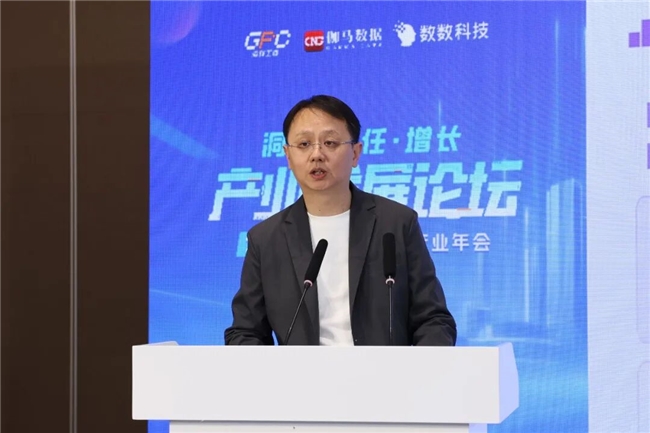
Core Insights - The forum focused on the theme "Insight · Responsibility · Growth" and featured multiple keynote speeches along with the release of several industry reports, including the "Women-oriented Game Research Report" and the "2025 China Game Industry Minor Protection Report" [1][4][5] Group 1: Women-oriented Games - Women-oriented games are specifically developed for female players and represent one of the fastest-growing segments in the gaming industry, contributing to the growth of IP ecosystems and cultural innovation [4] - The report emphasizes the economic, cultural, and social value of women-oriented games, highlighting their role in emotional support and cultural transformation [4] - The report identifies challenges faced by women-oriented games and suggests collaborative efforts to create a healthy ecosystem for their development [4] Group 2: Minor Protection in Gaming - The "2025 China Game Industry Minor Protection Progress Report" indicates that 13.42% of minors spend over 4 hours daily on online entertainment, with online gaming accounting for 19.7% of their entertainment time [5] - The report shows that 71.0% of minors have their gaming time limited to 3 hours per week, and 90.4% do not exceed monthly spending limits [5][6] - Emphasis is placed on the need for collaboration among families, schools, and society to ensure the long-term protection of minors in gaming [6] Group 3: Industry Trends and Opportunities - The "2026 China Game Industry Trends and Potential Analysis Report" highlights that shooting games contributed over 10 billion yuan to the market in 2025, marking a key growth driver [8] - The report outlines a dual structural shift in the gaming industry from product competition to ecosystem operation and from gameplay satisfaction to emotional design [8][9] - Key growth directions include platformization, IP ecosystem development, and the integration of user-generated content (UGC) and mini-program games [9][10] Group 4: Globalization and AI in Gaming - The gaming industry is increasingly focusing on globalization as a strategy for growth, with companies like Youzu Network emphasizing the importance of cultural resonance and AI innovation [13] - AI is becoming a critical factor in enhancing efficiency and transforming operational models within the gaming industry [20][27] - Companies are exploring AI-driven solutions to improve user engagement and reduce customer acquisition costs, indicating a shift towards value competition in the industry [20][27] Group 5: Payment Strategies and Monetization - The strategic value of payment systems in gaming is highlighted, with third-party payment solutions becoming essential for fine-tuned operations and compliance [22] - Companies are addressing monetization challenges through innovative advertising solutions and mixed monetization strategies to enhance user experience and return on investment [24][25] Group 6: Community and Cultural Engagement - The "Oasis Guardian Public Welfare Action" initiative aims to enhance the protection of minors in gaming, reflecting a commitment to social responsibility within the industry [29][30] - The initiative seeks to establish a replicable model for minor protection through collaboration among enterprises, experts, and communities [30]
数娱工场 | 用AI降本、开直播卖道具,2026游戏产业更多“金矿”待挖掘
Zhong Guo Jin Rong Xin Xi Wang· 2025-12-20 04:52
Core Insights - The Chinese gaming industry is expected to experience steady growth and high-quality development by 2025, driven by policy support, innovation, and the application of new technologies like generative AI [1][2] Market Overview - The actual sales revenue of the domestic gaming market is projected to reach 350.79 billion yuan in 2025, marking a year-on-year increase of 7.68%, with a user base of 683 million, up 1.35% [2] - The mobile gaming market is anticipated to generate 257.08 billion yuan, representing a 7.92% increase and accounting for 73.29% of the total market share [4] - Mini-program games are identified as the "second curve" of the industry, with revenues of 53.54 billion yuan, showing a significant growth of 34.39% [4] Factors Driving Growth - Key reasons for the revenue and user growth include improved quality of mobile games, successful innovation in long-standing titles, strong growth in mini-program games, and cross-platform product accessibility [4] - The client game market is expected to see a substantial increase in revenue, reaching 78.16 billion yuan, up 14.97%, while the web game market continues to decline, with a 6.74% drop to 4.32 billion yuan [7] International Performance - The overseas sales revenue of self-developed games reached 20.46 billion USD, growing by 10.23%, maintaining a scale above 100 billion yuan for six consecutive years [11] Industry Trends - The gaming market is shifting from product-centric competition to long-term ecological operations, focusing on user retention and monetization [12] - The integration of various gameplay styles within single games is becoming a trend, with cross-genre combinations gaining popularity [12] - The IP ecosystem is growing, with the market for game IP derivatives estimated at 7.5 billion yuan, indicating significant untapped potential [13] User Preferences - User demand is shifting towards emotional satisfaction rather than competitive achievement, leading to the rise of cooperative games and simulation games [14] - Over 60% of users express a desire for low-pressure gaming experiences, highlighting the need for intelligent NPCs to provide controlled social interactions [14] Future Outlook - The gaming industry is expected to continue its growth trajectory into 2026, with three main trends: deep integration of AI technology, multi-platform development, and content platforms becoming new monetization channels [15][16] - AI applications are enhancing production efficiency and user engagement, while multi-platform strategies are facilitating user acquisition and retention [16] - Content platforms like Douyin are evolving from marketing tools to direct revenue generators, with a significant portion of mobile games already establishing official stores for in-game purchases [16][17]
