法治

Search documents
无人配送车上路法律难题待解
Xin Lang Cai Jing· 2026-01-06 21:34
Core Viewpoint - The article emphasizes the need for clear legal responsibility and governance mechanisms for autonomous delivery vehicles to balance innovation and safety, ensuring the industry develops in a secure and healthy manner [1][3]. Group 1: Current State of Autonomous Delivery Vehicles - Autonomous delivery vehicles have emerged as a new force in logistics, particularly in the "last mile" delivery, reducing labor costs for logistics companies and enhancing consumer convenience [1][2]. - However, the industry faces significant legal challenges, including unclear qualifications for operation, responsibility in case of accidents, and potential privacy violations from data collection [2]. Group 2: Legal and Regulatory Framework - There is currently no unified national standard for the qualifications of autonomous delivery vehicles, with only a few local regulations addressing technical parameters for manufacturers and vehicles [2]. - The legal status of autonomous delivery vehicles remains ambiguous, as they are neither clearly classified as motor vehicles nor non-motor vehicles, posing challenges for the industry's healthy development [2]. Group 3: Innovation and Governance - Continuous technological innovation is crucial for the development of autonomous delivery vehicles, with a focus on improving algorithms and ensuring that technological advancements translate into reliable real-world applications [2]. - The legal framework should allow for innovation while establishing clear boundaries for traffic safety and data privacy, thus fostering a collaborative governance mechanism that balances innovation with safety [3]. - The industry must operate within a legal framework that clarifies responsibilities and mitigates risks, ensuring that technological advancements provide safety and trust for consumers, ultimately driving high-quality industry growth [3].
法律,为正当防卫“撑腰”
Xin Lang Cai Jing· 2026-01-03 23:22
Group 1 - The new law, effective from January 1, 2026, clarifies the legal boundaries of self-defense, reinforcing citizens' rights and promoting social justice [1] - Article 19 of the new law states that actions taken to prevent ongoing unlawful harm do not constitute a violation of public security management, even if the defensive actions exceed necessary limits [1][2] - The law aims to eliminate the previous enforcement practices that discouraged individuals from defending themselves, thereby empowering citizens to uphold justice [1] Group 2 - The new law encourages citizens to defend their rights while also establishing limits to prevent misuse of self-defense as a means of retaliation [2] - It provides clear guidance for law enforcement to distinguish between legitimate self-defense and intentional wrongdoing, promoting fair and just enforcement [2] - The successful implementation of the law relies on accurate understanding by law enforcement, public legal education, and fostering a societal consensus on upholding justice [2]
在法的门前等一场大雪纷飞
Xin Lang Cai Jing· 2026-01-03 21:17
转自:法治日报 (来源:法治日报) □ 刘白鸽 第一千零一个黄昏沉降时, 青铜门环含住未降落的星光。 有人立于青石阶前, 身后是攒动的 灯河—— 每盏提灯里, 都煅烧着待称量的判词。 他在等一场大雪, 等所有未被言说的凛冽, 在天空 静静织补真相的经纬。 看啊,冰凌正在天平两端, 校准子夜的砝码。 他呼出的白雾爬上刻度, 为所有 缄默的契约, 测读温度计里上升的黎明。 而雪,终于开始纷扬—— 这场天空最公正的播洒, 不遗漏任 何角落。 它们轻轻覆盖大地、青石阶, 每一片都是会呼吸的讯息, 印着融水规划的河床, 与种子深藏 的走向。 此刻门轴传来暖响, 积雪忽然透明。 原来每片雪花都是, 一面朝向人间的透镜: 聚焦无数 等待的凝视, 将尘封的真相, 折射成彩虹的证言。 积雪悄然融为溪水, 洗净青石上淤积的暗痕。 当 钟楼传来新历第一响, 所有冻结的时辰开始奔流: 原来最恢弘的大雪纷飞, 是亿万沉默的碎羽, 在光 的刻度里同时苏醒, 并将群山推向晴空。 门,始终开着。 等万物在法典的留白处, 同时苏醒的声响。 ...
法治的气度
Xin Lang Cai Jing· 2026-01-03 21:17
□ 万学忠 谈到法治,你会想到什么?一下子闪现出来的是警察、监狱、法庭,还是包公、窦娥、辛普 森? 谈到法治,让你把它想象为一个人,他(她)是男人还是女人?老年还是青年?粗鄙还是文雅? 在我想来,法治既可以是男人,也可以是女人。是男人,他一定是佩剑的侠客,飘洒俊逸;是女人,她 一定柔中带刚,温婉坚毅。他(她)既不老态龙钟,也不轻浮稚嫩。 他(她)的气质一定是光-明- 伟-岸! 法治,重在治权、治官。因而,法治内心火热,外表冷峻。火热,是给民众的关怀;冷峻, 是对权力的凝视。 法治,求良法善治。定尺度必权衡上下左右,谋善治必考量利弊得失。因而,法治 冷静淡定,沉稳持重。笑时不露齿,怒时不眦目。张弛有度,进退合规,举止得体。 法治,扬善惩 恶。褒扬义举,有温度辅以德治;惩治邪恶,划红线禁踏雷区。因而,法治有无疆大爱,也有雷霆之 怒。 法治,追求实质正义,更重程序正义。法治"不允许任何人成为自己案件的法官","即使不同意你 的观点,也誓死捍卫你的发言权"。因而,法治挥利剑斩邪恶必讲剑法;扬正义除妖魔不弃武德。 法治 是权利和权力语境下的和谐状态和追求这种和谐状态的进程、方式。 法治是极夜的阳光,是沙漠的绿 洲,是寒 ...
以法治护航全民阅读
Xin Lang Cai Jing· 2026-01-03 19:17
法治的意义,在于以国家意志破解资源失衡、推广乏力、服务失效等结构性难题。实践中,不少地方的 探索富有成效:甘肃把农家书屋搬上了"云端",村民指尖轻触就能漫游书海;浙江、安徽等地推动城乡 图书"通借通还",为书本插上流动的"翅膀"……条例明确"促进全民阅读均衡协调发展",意味着推动阅 读资源向基层倾斜、向薄弱处流动,成为一项必须履行的法定义务。 今天,指尖划过屏幕,信息如瀑布流般冲刷,数字阅读变得越来越便利,而传统阅读则受到冲击。条例 明确支持数字阅读与传统阅读相结合,推动优质数字阅读内容供给,同时要求数字阅读服务提供者加强 内容管理,营造健康向上的数字阅读环境。让每一种阅读形态都能找到其价值,将滋养一个更完整、更 温暖的阅读生态。 全民阅读"一个都不能少",意味着特殊群体的权益不能无着落。中国盲文图书馆联合数字平台推出无障 碍AI伴读系统,通过优质有声书和语音导航,让视障群体"听"见广阔的世界。法治是公平正义的基石, 不只为乱象划出清晰明确的红线,也致力于守住公平正义的底线。以法治的形式支持全民阅读无障碍设 施建设,阅读的光亮将照得更远、惠及更广人群。 法治不仅是社会治理的手段,也是守护精神家园的基石。在法治 ...
告别“还手即互殴”,让法治为正义撑腰
Xin Lang Cai Jing· 2025-12-31 20:03
Group 1 - The revised Public Security Administration Punishment Law will take effect on January 1, 2026, clarifying the distinction between legitimate self-defense and mutual fighting, addressing previous enforcement practices that led to public dissatisfaction [1][2] - The new Article 19 states that actions taken to stop unlawful infringement are not considered illegal, correcting the previous ambiguity where victims could be penalized for defending themselves [1][2] - The law aims to end the "both sides get punished" approach, which blurred the lines between aggressor and defender, thus encouraging victims to defend themselves without fear of legal repercussions [1][2] Group 2 - The significance of the legal revision lies in establishing clear boundaries for self-defense, which must meet specific criteria, while mutual fighting involves provocation and intent to harm from both parties [2] - This legal clarification is expected to empower victims to exercise their right to self-defense without the fear of being held accountable, while also preventing the abuse of self-defense rights [2] - The implementation of the new law marks a new beginning for legal protection of public welfare, requiring both law enforcement and the public to understand and appropriately utilize the right to self-defense [2]
人民时评:以法治护航全民阅读
Ren Min Ri Bao· 2025-12-31 04:57
Core Viewpoint - The introduction of the "National Reading Promotion Regulations" marks a significant step towards institutionalizing and legalizing national reading initiatives, aiming to enhance the cultural and moral quality of the population and promote a reading-friendly society [1][2]. Group 1: Policy and Development - The "14th Five-Year Plan" suggests advancing the construction of a reading society, with the new regulations set to take effect on February 1, 2024, providing a legal framework for promoting reading [1]. - By the end of 2024, there will be 3,248 public libraries and over 40,000 new public cultural spaces across the country, indicating robust growth in the national reading initiative [1]. Group 2: Challenges and Solutions - There are significant barriers to reading, particularly for rural residents who have lower reading rates and narrower reading scopes compared to urban residents [1]. - The regulations aim to address structural issues such as resource imbalance and ineffective promotion by mandating the equitable distribution of reading resources, especially to underprivileged areas [2]. Group 3: Digital and Traditional Reading - The regulations support the integration of digital and traditional reading, promoting the supply of quality digital reading content while ensuring content management to foster a healthy digital reading environment [2]. - The introduction of an AI reading companion system for visually impaired individuals exemplifies the commitment to making reading accessible for all, ensuring that no group is left behind [2]. Group 4: Cultural Vision - The initiative aims to transform reading services from mere physical presence to effective engagement, creating inviting spaces in libraries and bookstores that encourage community interaction [3]. - The overarching goal is to contribute to the vision of a culturally strong socialist nation through enhanced reading practices [3].
从衣食住行到数字安全 这一年这些法律守护着我们
Yang Shi Wang· 2025-12-30 22:20
Core Points - In 2025, the National People's Congress (NPC) focused on legislation to address public concerns and improve people's livelihoods, enacting 6 new laws and amending 15 existing laws [2][4][6] Group 1: New Legislation - The NPC passed 6 new laws in 2025, including the "Private Economy Promotion Law," "Nuclear Energy Law," "Public Health Emergency Response Law," "National Park Law," "Legal Education Promotion Law," and "Hazardous Chemicals Safety Law" [4][6] - The "Private Economy Promotion Law," effective from May 20, 2025, marks a significant milestone in economic legislation, establishing legal status for the private economy and enhancing investor confidence [6] Group 2: Amendments to Existing Laws - A total of 15 laws were amended in 2025, including the "Public Security Administration Punishment Law," "Anti-Unfair Competition Law," and "Maritime Law," aimed at modernizing social governance and ensuring national security [7][9] - The revised "Anti-Unfair Competition Law," effective from October 15, 2025, introduces new regulations against low-price competition and data rights violations, enhancing the competitive environment for market participants [9] - The "Public Security Administration Punishment Law" underwent its first comprehensive revision in nearly 20 years, addressing new social governance issues and increasing penalties for serious offenses [11] Group 3: Focus on Food Safety and Community Governance - The revised "Food Safety Law," effective from December 1, 2025, implements stricter regulations on the transportation of liquid foods and establishes accountability across the supply chain to ensure food safety [12][14] - Amendments to the "Village Committee Organization Law" and "Urban Residents Committee Organization Law" aim to enhance democratic processes and community governance, addressing rural and urban governance challenges [16]

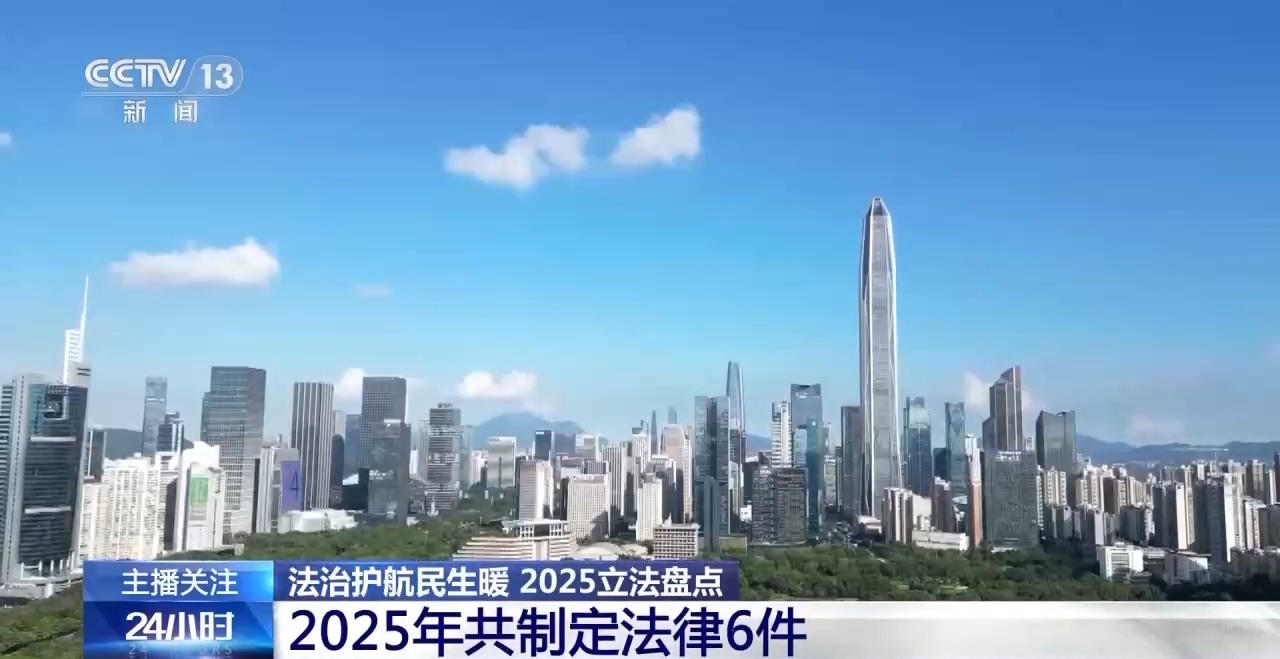
法治护航民生暖 2025立法盘点:2025年共制定法律6件
Yang Shi Wang· 2025-12-30 17:16
央视网消息:年终岁末,法治的温度浸润在民生的方方面面。2025 年,全国人大常委会聚焦群众 急难愁盼,回应民生需求,用制度力量筑牢幸福根基。一起来看看2025年,都有哪些法律在守护着我们 的生活。 ...
笃行实干彰正义 砥砺奋进启新程
Xin Lang Cai Jing· 2025-12-28 22:35
Core Viewpoint - The article highlights the significant advancements and initiatives taken by the QianNan Prefecture courts in promoting justice, enhancing legal awareness, and improving the legal environment for citizens and businesses, particularly in rural areas and for vulnerable populations [3][4][6][12]. Group 1: Judicial Achievements and Innovations - Judge Chen Fujiang, recognized as a national model judge, exemplifies the dedication of judicial workers in QianNan, contributing to over 400,000 legal documents and 500,000 mediation efforts during the 14th Five-Year Plan [3][4]. - The QianNan courts have implemented the "Fengqiao Experience" to enhance grassroots governance, focusing on multi-faceted collaboration and technological empowerment to support regional economic development and rural revitalization [4][5]. - The establishment of a seamless mechanism for case handling has improved efficiency, allowing for rapid resolution of disputes, such as the "Li Ji Jie" model for tourism-related conflicts, which achieves case closure within two hours [4][5]. Group 2: Focus on Public Welfare and Legal Aid - The QianNan courts have prioritized judicial assistance, addressing the needs of impoverished individuals affected by legal issues, with over 330 cases of judicial aid processed and more than 13.68 million yuan disbursed in aid [6][12]. - Initiatives like the "26°C Warm Harbor" program in Huishui County aim to educate children about the law, ensuring that legal knowledge is integrated into their daily lives [6][7]. Group 3: Protection of Minors and Community Engagement - The courts have adopted a "most favorable to minors" principle, enhancing protections for children through comprehensive judicial reforms and community-based educational programs [7][8]. - Various local brands have been developed to promote juvenile justice protection, ensuring a collaborative approach involving families, schools, and social networks [7][8]. Group 4: Economic and Environmental Justice - The QianNan courts have introduced innovative measures to support struggling businesses, such as flexible judicial actions for small and medium enterprises, and have successfully revived distressed companies through bankruptcy restructuring [12][13]. - Environmental protection initiatives have been established, including the "Blue Velvet" judicial protection brand, focusing on ecological governance and the sustainable management of natural resources [11][12]. Group 5: Overall Impact and Future Directions - The QianNan courts have made significant strides in enhancing public trust in the judicial system, with a focus on delivering justice that is both fair and accessible, thereby improving the overall legal environment for citizens and businesses [10][12]. - Continuous reforms and innovations are being pursued to ensure that the judicial system remains responsive to the needs of the community, fostering a culture of legal awareness and compliance [12][13].