现实世界资产代币化(RWA)

Search documents
瑞和数智(03680) - 自愿性公告 - 关於现实世界资產代币化及新能源合作的框架协议
2025-08-28 14:34
香港交易及結算所有限公司及香港聯合交易所有限公司對本公告的內容概不負 責,對其準確性或完整性亦不發表任何聲明,並明確表示,概不對因本公告全部 或任何部份內容而產生或因倚賴該等內容而引致的任何損失承擔任何責任。 Ruihe Data Technology Holdings Limited 關於現實世界資產代幣化及新能源合作的框架協議 瑞和數智科技控股有限公司 (於開曼群島註冊成立之有限公司) (股份代號:3680) 自願性公告– 本 自 願 性 公 告 由 瑞 和 數 智 科 技 控 股 有 限 公 司(「本公司」,連 同 其 附 屬 公 司 統 稱「本 集 團」)發 佈,旨 在 向 本 公 司 股 東 及 潛 在 投 資 者 提 供 本 集 團 最 新 業 務 發 展 情 況。 本公司董事會(「董事會」)欣然宣佈,本集團已與鐵林超光(深圳)科技有限公司(「合 作夥伴」)簽 訂 框 架 協 議(「框架協議」),旨 在 建 立 緊 密 合 作 關 係,共 同 推 進 現 實 世 界 資 產(「RWA」)代 幣 化 領 域 的 業 務。據 董 事 所 知,合 作 夥 伴 及 其 最 終 實 益 擁 有 人均為本公司 ...
驴跡科技(01745.HK)涨超8% 拟与香港科技公司就RWA产品及其他数位资产等进行合作
Sou Hu Cai Jing· 2025-08-25 02:03
Core Viewpoint - The company, 驴跡科技 (01745.HK), has announced a potential framework cooperation agreement with a Hong Kong-based technology firm to develop projects related to the tokenization of cultural and creative intellectual property as real-world assets (RWA) and other digital assets [1]. Group 1: Cooperation Details - The initial discussions indicate that both parties aim to collaborate on RWA products and other digital asset projects [1]. - The company will leverage its strengths in global geographical and cultural education and digital content in scenic areas to support the development of related assets and provide technical support for the foundational platform [1]. - The cooperation partner will work with qualified financial institutions to develop RWA products and provide professional services for the launch of these products, fundraising through digital and fiat currencies, and asset appreciation through trading [1]. Group 2: Infrastructure and Strategic Partnership - Both parties plan to jointly invest and operate a data center in Hong Kong as the infrastructure for the projects [1]. - The cooperation partner is a supplier of Kingsoft Cloud solutions, distributing products in the Hong Kong financial sector and closely linked with resources in data operations, financial markets, and web3 [1]. - The partner has collaborated with a Chinese financial institution that is regulated by the Hong Kong Securities and Futures Commission to enhance its license for virtual asset portfolio management services [1].
驴迹科技(01745) - 自愿公告 - 潜在业务更新
2025-08-24 23:50
香港交易及結算所有限公司及香港聯合交易所有限公司對本公告的內容概不負 責,對其準確性或完整性亦不發表任何聲明,並明確表示,概不對因本公告全部 或任何部份內容而產生或因倚賴該等內容而引致的任何損失承擔任何責任。 – 1 – 本 公 司 謹 此 強 調,截 至 本 公 告 日 期,有 關 框 架 合 作 協 議 的 合 作 細 節 及 最 終 商 業 模式仍處于初步階段,尚待進一步磋商及落實。本公司亦確認,雙方並未就框架 合 作 協 議 達 成 任 何 具 體 條 款 或 簽 署 最 終 協 議。本 公 司 將 根 據 香 港 聯 合 交 易 所 有 限公司證券上市規則及其他適用法律法規之規定,于必要時再作公佈。 承董事會命 Lvji Technology Holdings Inc. 驢跡科技控股有限公司 (於開曼群島註冊成立的有限公司) (股份代號︰1745) 自願公告 潛在業務更新 本 公 告 由 驢 跡 科 技 控 股 有 限 公 司(「本公司」,連 同 其 附 屬 公 司 統 稱 為「本集團」) 自願作出。 近 期,本 公 司 與 一 間 位 於 香 港 的 科 技 公 司(「合作方」)進 行 溝 通,擬 ...
8月以来股价累计涨幅翻倍 大洋集团对外发布Web 4.0转型计划
Zheng Quan Shi Bao Wang· 2025-08-22 14:11
Core Insights - The stock price of Ocean Group (01991.HK) surged over 6% intraday on August 22, closing up 4.03% at HKD 1.55 per share, with a cumulative increase of over 115% from August 1 to date [1][2] Group 1: Web 4.0 Strategy - Ocean Group held a Web 4.0 strategy launch event on August 20, unveiling its transformation blueprint and initiating the Real World Asset (RWA) ecosystem [1] - The chairman, Shi Qi, emphasized that Web 4.0 represents not only a technological evolution but also an ecological reconstruction, aiming to build a smart, autonomous, and sustainable digital economy [1] - The core framework of the Web 4.0 strategy includes three pillars: Data Standardization, Asset Tokenization, and Transnational Value, leveraging AI digital humans to empower education, gaming, and healthcare sectors [1][2] Group 2: Sector-Specific Applications - In the education sector, AI digital human technology will generate personalized content, RWA-izing research outcomes for knowledge asset sharing and cash flow stabilization [2] - The gaming sector will utilize AI digital human technology to enhance immersion, tokenizing virtual assets like props and land to construct a metaverse economy [2] - In the healthcare sector, AI digital human medical assistants will RWA-ize health data and service assets, improving user experience and generating capital returns [2] Group 3: Revenue Streams - Ocean Group anticipates deriving four types of revenue from its involvement in the AI industry: income from AI digital human traffic, one-stop financing consulting for SMEs involving AI and RWA, transaction fees related to RWA trading, and subscription fees for multilingual and multicultural AI customer service and marketing outsourcing [2] Group 4: Company Background - Established in 1991 and listed on the Hong Kong Stock Exchange in 2007, Ocean Group is one of the largest integrated service providers in silicone raw material production and processing [2] - The company has achieved rapid asset growth through comprehensive industry integration, structural adjustments, and value reconfiguration, with main business segments including silicone, digital marketing, retail, healthcare, and hospitality [2]
稳定币:币圈“破圈”,重构支付新范式
SPDB International· 2025-08-07 10:12
Investment Rating - The report does not explicitly provide an investment rating for the stablecoin industry Core Insights - The stablecoin market is experiencing explosive growth, driven by increased trading frequency in the cryptocurrency market, advantages in payment and settlement, rising geopolitical risks, and a positive cycle of regulatory compliance and institutional adoption [1][18] - Stablecoins are evolving from mere trading tools in the crypto ecosystem to a new financial infrastructure, acting as a bridge between the crypto world and traditional finance [1][30] - The growth drivers for the stablecoin industry are shifting from cryptocurrency trading demand to cross-border payments, with Real World Asset (RWA) tokenization expected to become a new growth driver in the long term [1][18] Summary by Sections What are Stablecoins? - Stablecoins are cryptocurrencies that maintain value stability by being pegged to assets like fiat currencies or commodities, solving the volatility issues of traditional cryptocurrencies while retaining the advantages of blockchain technology [7] Market Size - As of August 5, 2025, the global stablecoin market capitalization is nearly $270 billion, with a compound annual growth rate (CAGR) exceeding 100% from 2020 to 2025. The transaction volume is projected to reach $27.6 trillion in 2024, surpassing traditional payment giants Visa and Mastercard [18][22] Competitive Landscape - As of August 5, 2025, the stablecoin market is dominated by two major players: USDT with a market cap of approximately $164.7 billion (61% market share) and USDC with a market cap of $64.3 billion (24% market share) [22][23] Potential Impacts of Stablecoins - Stablecoins are expected to reshape global financial systems by lowering costs and increasing efficiency in cross-border payments, accelerating financial disintermediation, reinforcing the dominance of the US dollar, and promoting the development of decentralized finance (DeFi) [1][38] Global Regulatory Framework - A global regulatory framework for stablecoins is rapidly forming, transitioning from unregulated growth to structured development. Key regulations include the US GENIUS Act, Hong Kong's Stablecoin Ordinance, and the EU's MiCA regulation, all aiming to establish clear guidelines for stablecoin issuance and operation [2][43][44]
“南沙金融30条”改革乘数效应加速显现
Jin Rong Shi Bao· 2025-07-29 02:49
Core Insights - Nansha, located at the geometric center of the Guangdong-Hong Kong-Macao Greater Bay Area, is set to undergo significant changes due to new supportive policies aimed at enhancing financial innovation and cooperation [1][2][6] Financial Market Connectivity - The Greater Bay Area is recognized as one of the most open and economically vibrant regions in China, with Nansha being a key area for financial reform and innovation, having implemented various policies such as QFLP pilot programs and integrated currency pools [1][2] - Nansha has established itself as a unique zone receiving national-level financial opening policies three times, fostering eight distinctive financial sectors including cross-border finance and shipping finance [1][2] Cross-Border RMB Business - The "Nansha Financial 30 Measures" emphasizes the promotion of cross-border RMB business innovation, with a reported RMB 2.49 trillion in cross-border RMB settlement in the Greater Bay Area from January to April 2025, marking a 28.8% year-on-year increase [2][3] - Nansha aims to leverage its position to enhance the effectiveness of cross-border RMB services for the real economy, supporting new trade settlement models and facilitating international shipping fee settlements in RMB [2][3] Technological and Digital Financial Innovation - The policy encourages the development of diversified intellectual property financial services, with a focus on technology and digital finance, as evidenced by the rapid credit assessment capabilities provided by the "Suiqi Cloud" platform [4][5] - Financial institutions are actively launching combined financial services such as "technology special loans + external direct investment" to address short-term funding needs while supporting long-term development [5][6] Market Response to Policy - The introduction of the "Nansha Financial 30 Measures" is seen as a critical step in deepening financial reform and supporting the Greater Bay Area's development as a high-level open portal [6][7] - Various financial institutions, including the Guangzhou Data Exchange, are quickly adapting to the new policies, forming international ecosystems for digital asset transactions and enhancing cross-border cooperation in futures and insurance [6][7] Nationwide Implications - The financial innovations and practices in Nansha are expected to serve as a reference for other regions in addressing financing challenges for technology innovation and enhancing financial market connectivity with overseas markets [7][8] - The ongoing reforms in Nansha are anticipated to accelerate the multiplier effect of financial reforms across the country, with a focus on improving regulatory frameworks and operational processes to facilitate cross-border investments [8]
二度“接盘”万达资产中国儒意首次回应收购快钱逻辑
Zheng Quan Shi Bao· 2025-07-24 18:22
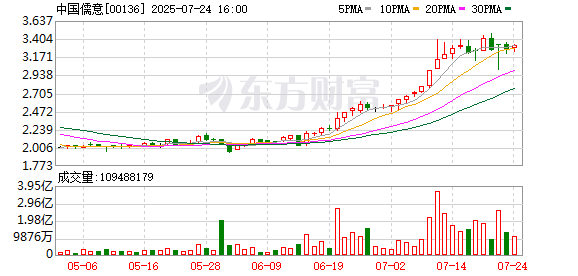
Core Viewpoint - The third-party payment platform Kuaiqian has been acquired by China Ruyi for 240 million yuan, marking its entry into the fintech sector after a series of strategic acquisitions in the entertainment industry [2][3][11]. Group 1: Acquisition Details - China Ruyi announced the acquisition of a 30% stake in Kuaiqian Financial Services for 240 million yuan, with the payment structured in three installments [3][11]. - The seller, Wanda Group, previously acquired a controlling stake in Kuaiqian for 315 million USD in 2014, holding 30% post-acquisition [3][11]. - Kuaiqian has been operating independently under Wanda's ownership, with limited management involvement from Wanda in recent years [4][11]. Group 2: Strategic Rationale - The acquisition is seen as a strategic move for China Ruyi to diversify into the fintech sector, leveraging its existing entertainment and content ecosystem [5][11]. - China Ruyi aims to enhance its platform capabilities by integrating payment solutions into its various business lines, including gaming and cinema [7][11]. - The company has a significant user base, with over 500 million users across its platforms, which could provide substantial growth opportunities for Kuaiqian [7][11]. Group 3: Future Collaboration - China Ruyi plans to maintain Kuaiqian's independent operations while participating in major decisions, including board appointments and strategic direction [7][11]. - There is potential for developing payment products tailored to entertainment scenarios, such as cinema payments and membership wallet solutions [7][11]. - Kuaiqian has initiated overseas expansion efforts, and the partnership with China Ruyi may accelerate these initiatives by providing additional resources [7][11]. Group 4: Market Context - The third-party payment license has become increasingly valuable, with multiple acquisitions in the sector, highlighting the competitive landscape [3][11]. - Kuaiqian, as one of the earliest licensed payment institutions in China, has established a foothold in various sectors, including insurance and finance [6][11]. - The acquisition aligns with regulatory encouragement for compliant and resourceful institutions to participate in the payment industry [5][11].

北水动向|北水成交净买入29.02亿 建设银行(00939)再创新高 北水全天抢筹近6亿港元
智通财经网· 2025-07-10 09:57
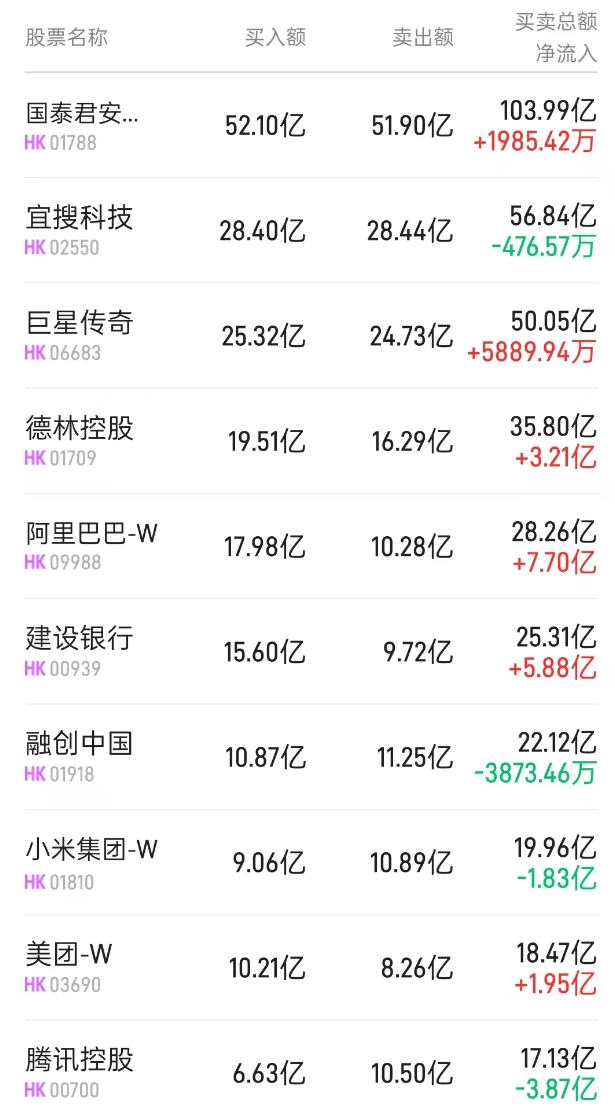
Group 1 - Northbound capital recorded a net purchase of HKD 29.02 billion in the Hong Kong stock market on July 10, with HK Stock Connect (Shanghai) contributing HKD 15.79 billion and HK Stock Connect (Shenzhen) contributing HKD 13.23 billion [1] - The most purchased stocks by northbound capital were China Construction Bank (00939), Alibaba-W (09988), and Meituan-W (03690) [1] - The most sold stocks included Tencent (00700), Xiaomi Group-W (01810), and Sunac China (01918) [1] Group 2 - China Construction Bank saw a net purchase of HKD 5.87 billion, with its stock price reaching a new high [4] - Alibaba-W and Meituan-W received net purchases of HKD 5.72 billion and HKD 4.85 billion, respectively, amid a competitive subsidy war among major food delivery platforms [5] - Derlin Holdings (01709) received a net purchase of HKD 3.55 billion, planning to tokenize assets worth HKD 500 million [5] Group 3 - E-surfing Technology (02550) had a net purchase of HKD 262 million, with Barclays increasing its stake significantly [6] - Guotai Junan International (01788) faced a net sell-off of HKD 903.5 million despite projecting a substantial profit increase [6] - Xiaomi Group-W experienced a net sell-off of HKD 3.78 billion, with a significant drop in electric vehicle sales [6]

重磅电话会议:稳定币主题,如何把握?
2025-07-07 00:51
Summary of Conference Call on Stablecoins Industry Overview - The focus of the conference call is on the stablecoin industry, which is characterized by significant potential, novelty, and multiple catalysts for growth. The implementation of stablecoin regulations in Hong Kong and the potential IPOs of overseas cryptocurrency companies are highlighted as key catalysts for the market [1][5]. Core Insights and Arguments - **Theme Investment Trend**: The current market trend favors theme investments, driven by the development stages of industries. The dominant industry, AI, has released its upstream computing power, while downstream applications are yet to see systematic investment. This has led to a focus on themes such as humanoid robots, controlled nuclear fusion, new consumption, and stablecoins [2]. - **Investment Logic for Stablecoins**: The investment logic for stablecoins includes: 1. The implementation of stablecoin regulations in Hong Kong starting August 1, which is expected to drive business developments [5]. 2. Potential IPOs of overseas cryptocurrency companies, such as Circle, which could influence the stablecoin market [5]. 3. Numerous catalysts from both industry and policy perspectives warranting close tracking [5]. - **Key Beneficiaries**: Companies involved in the technical infrastructure for stablecoins, such as blockchain technology and issuance support, digital wallets, and cross-border payment companies, are expected to benefit as stablecoin applications become more prevalent [6][7]. Important but Overlooked Content - **Financial IT Relevance**: The stablecoin market is closely linked to financial IT, including banking IT systems, non-bank institution IT systems, and third-party payment services. Companies with a strong presence in these areas, especially those with international operations, are likely to have significant growth potential [8]. - **Highlighted Companies**: - **Jinbeifang Bank IT Company**: Recognized for its leading software development revenue among bank IT companies, with deep involvement in the digital RMB infrastructure and strategic partnerships in Hong Kong, making it a key recommendation in the stablecoin context [9][10]. - **Changliang Technology**: Noted for its high overseas revenue share and experience in virtual asset trading and digital currency system construction, with significant backing from Tencent [11]. - **Hengsheng Electronics**: Gained a substantial market share in Hong Kong's brokerage trading systems and is well-positioned to benefit from the growing virtual asset market [12]. - **New Guodu**: Established a strong global payment network and is well-prepared to expand virtual asset trading in cross-border payments [13]. - **RWA Companies**: Companies like Longxin Technology and Jieshun Technology are positioned to explore the digital asset value chain, including stablecoin issuance and compliance trading [14].
大金融赛道走低
Zheng Quan Shi Bao· 2025-06-30 04:32
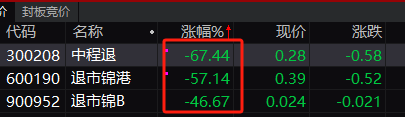
Market Overview - The A-share market showed an overall upward trend on June 30, with most sectors and stocks rising [3][4] - The large financial sector experienced a slight decline, with the securities sector seeing the largest drop [5][6] Sector Performance - Key sectors that performed well included aviation, internet, public transportation, shipping, communication equipment, and semiconductors [4] - The large financial sector, including banks and insurance, showed weak performance [6] Delisting and Stock Performance - Three stocks entered the delisting arrangement period, with prices dropping significantly, some by over 60% [2][8] - Specific stocks that faced severe declines included Zhongcheng Tui (300208) and Tui Shi Jin Gang (600190), with Zhongcheng Tui's price dropping over 70% at one point [10][11] Company Announcements - Zhongcheng Tui was notified of its stock termination due to negative net assets and received adverse audit opinions for its financial reports [10] - Tui Shi Jin Gang faced penalties for falsifying profits through false trade practices and had multiple years of financial reports with false records [11] Hong Kong Market Activity - In the Hong Kong market, Yisou Technology saw a dramatic increase, with its stock price rising over 100% after announcing a framework cooperation agreement with a technology partner [12] - The agreement involves collaboration on asset tokenization and potential acquisitions for data centers, with a budget not exceeding 3 billion HKD [13]