石油贸易

Search documents
US wants Venezuelan oil flowing again with revenues in US accounts, Wright says
Reuters· 2026-01-07 14:04
Core Viewpoint - The U.S. government aims to resume Venezuelan oil production, deposit funds into U.S.-controlled accounts, and establish favorable conditions for U.S. oil companies to operate in Venezuela [1] Group 1 - The U.S. government is actively seeking to restart Venezuelan oil exports, which have been significantly impacted by sanctions and political instability [1] - There is a focus on creating a framework that allows U.S. oil companies to engage in the Venezuelan market, potentially increasing oil supply [1] - The initiative reflects a strategic move to stabilize global oil markets and address domestic energy needs [1]


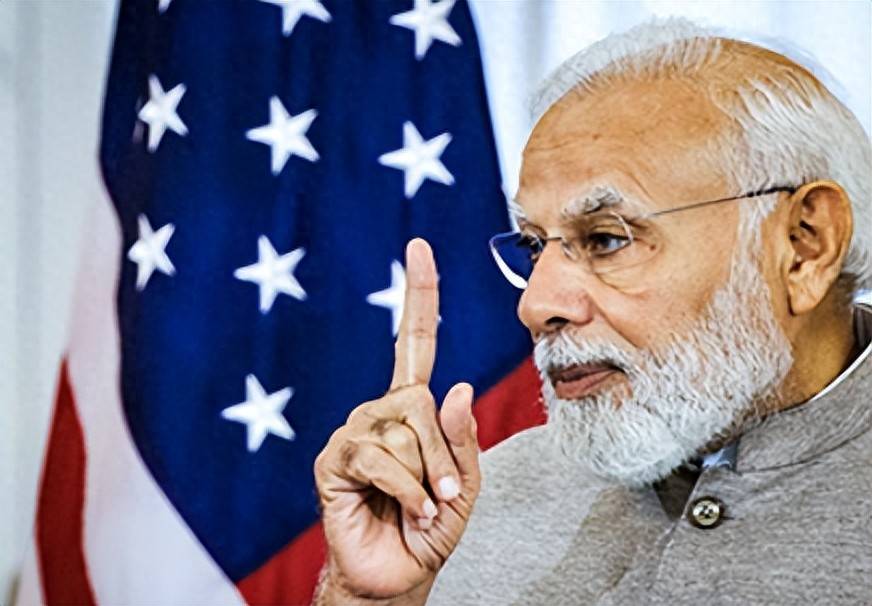
印度国营炼油企业持续采购俄罗斯石油 与此同时印度政府正寻求美国的关税减免
Xin Lang Cai Jing· 2026-01-07 08:21
Core Viewpoint - Despite the Indian government's efforts to seek exemptions from U.S. taxes on Russian oil purchases, state-owned refineries in India continue to buy Russian oil [2][6]. Group 1: U.S. Tax and Sanctions - The U.S. imposed a 25% "secondary" tax on Indian goods in August due to India's ongoing imports of Russian crude oil [2][6]. - In late November, the U.S. government sanctioned Russian companies, including Lukoil and Rosneft [2][6]. - U.S. Senator Lindsey Graham mentioned that India's ambassador requested President Trump to lift these taxes, arguing that India has reduced its Russian oil purchases [2][6]. Group 2: Indian Oil Demand and Imports - Analysts noted that while India's overall demand for Russian crude oil decreased in December, this decline was primarily due to Reliance Industries reducing its purchases [2][6]. - State-owned enterprises in India have offset some of the decline in Russian oil demand [2][6]. - Rystad Energy estimated that since November, India's daily imports of Russian crude oil have decreased by approximately 300,000 barrels, down to 1.7 million barrels [7]. - However, Rystad Energy expects a slight rebound in January, with daily imports projected to rise to 1.8 million barrels [7]. Group 3: Current Import Levels - In December, India's daily imports of Russian crude oil fell by 595,000 barrels, reaching 1.24 million barrels, the lowest level since December 2022 [8]. - Despite the overall decline, state-owned refineries are maintaining stable processing levels of Russian crude oil, driven by domestic fuel demand and economic efficiency [8].
WTI短线走低,特朗普称委内瑞拉将向美国交付3000-5000万桶石油
Hua Er Jie Jian Wen· 2026-01-06 23:57
Core Viewpoint - Venezuela is set to deliver between 30 million to 50 million barrels of high-quality, sanctioned oil to the United States, which will be sold at market prices, with the proceeds under the control of Trump [1] Group 1 - Venezuela's oil delivery is significant, with a volume ranging from 30 million to 50 million barrels [1] - The oil being delivered is described as high-quality and currently under sanctions [1] - The sale will occur at market prices, indicating potential revenue generation for the involved parties [1]
告别廉价俄油?信实工业带头停采俄油
Ge Long Hui A P P· 2026-01-06 09:33
Core Viewpoint - Reliance Industries anticipates no deliveries of Russian crude oil in January, potentially leading to a significant drop in India's imports of Russian oil to a multi-year low [1] Group 1: Company Operations - Reliance Industries operates the world's largest refining complex and was the largest buyer of Russian crude oil in India last year [1] - The Jamnagar refinery of Reliance has not received any Russian oil in the past three weeks and does not expect any deliveries in January [1] Group 2: Market Implications - The statement from Reliance contradicts a previous media report claiming that three tankers carrying Russian oil were en route to the Jamnagar refinery [1] - Indian authorities have requested refiners to disclose their weekly purchases of Russian and American oil, indicating a potential shift in import strategy [1] - As New Delhi seeks to negotiate a trade agreement with Washington, India's imports of Russian crude may fall below one million barrels per day [1]
US might keep or might sell oil seized near Venezuela, Trump says
Reuters· 2025-12-22 22:54
U.S. President Donald Trump said on Monday the United States would maybe keep and maybe sell the oil it had seized off the coast of Venezuela in recent weeks, adding the United States would also keep ... ...

俄媒曝光:印度仍继续购买俄罗斯石油
Huan Qiu Shi Bao· 2025-11-17 09:03
Core Insights - Despite pressure from the United States, India continues to purchase Russian oil, with Indian Oil Corporation (IOC) making payments for five batches of oil to be delivered in December [1] - IOC has procured approximately 3.5 million barrels of Russian ESPO crude oil at prices close to Dubai quotes, scheduled for delivery at eastern Indian ports [1] - IOC's procurement strategy includes a mix of Russian ESPO and Sokol crude for early next year, while also considering low-sulfur crude from West Africa and the United States [1] Group 1 - The U.S. government has been pressuring India to halt Russian oil purchases, even imposing high tariffs on Indian imports [1] - Indian Oil Corporation's CFO, Anuj Jain, stated that the company intends to maintain its cooperation with Moscow as long as transactions comply with sanctions [1] - IOC's procurement documents specify that sellers must ensure the oil is not sourced from entities sanctioned by the U.S., U.K., EU, UN, or India [1]
印度削减12月俄罗斯原油订单 转而增加采购美国原油
Ge Long Hui A P P· 2025-11-11 09:14
Core Insights - India has reduced its planned oil purchases from Russia for December, indicating significant impacts from Western sanctions and trade negotiations with the U.S. [1] Group 1: Oil Procurement Changes - Five major Indian refiners have not placed any orders for Russian oil for the upcoming month [1] - The cautious approach of Indian refiners may be influenced by ongoing trade negotiations between New Delhi and Washington [1] Group 2: Trade Negotiations and Commitments - As part of the trade negotiations, India has committed to purchasing more U.S. crude oil [1] - Currently, 36% of India's crude oil imports come from Russia, but the impending global oil supply surplus will make it easier for India to seek alternative sources [1]
10月上半月印度进口的俄罗斯石油量增加
Yang Shi Xin Wen· 2025-10-19 07:28
Group 1 - India's oil imports from Russia have increased in the first half of October, averaging about 1.8 million barrels per day, which is an increase of approximately 250,000 barrels per day compared to September [1] - The increase in imports is attributed to rising domestic market demand in India [1] Group 2 - U.S. President Trump claimed that Indian Prime Minister Modi indicated India is prepared to stop purchasing Russian oil [3] - However, the Indian Ministry of External Affairs spokesperson stated they are unaware of any such communication between Modi and Trump and do not know if there was a commitment to stop purchasing Russian oil [3]
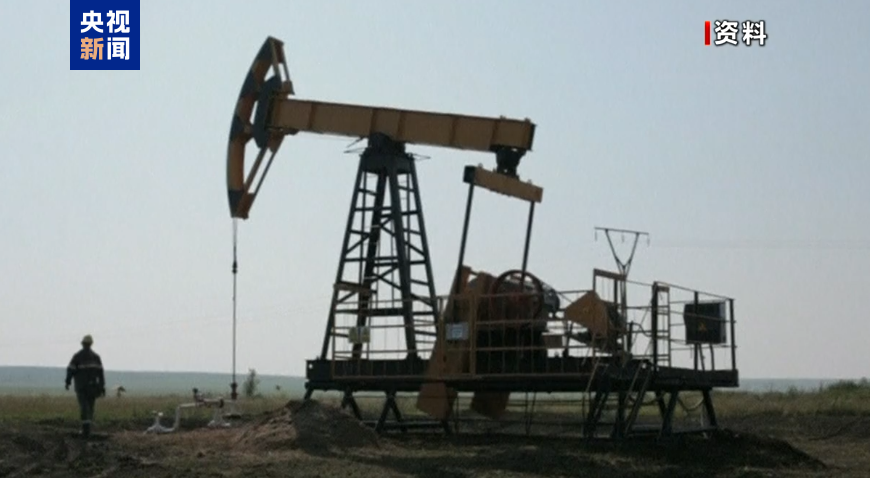
US Treasury calls on G7, EU to impose tariffs on China, India over Russian oil purchases
Reuters· 2025-09-12 13:28
Group 1 - The U.S. Treasury has urged G7 and EU allies to implement "meaningful tariffs" on goods from China and India to curb their purchases of Russian oil [1] - The call for tariffs is part of a broader strategy to address the ongoing geopolitical tensions and economic implications of Russian oil purchases [1] - The G7 finance ministers are expected to convene to discuss these measures and their potential impact on global markets [1]

1天后,特朗普等来了一个坏消息,印度做出的决定,直戳他肺管子
Sou Hu Cai Jing· 2025-09-02 02:40
Core Viewpoint - India is not only continuing to purchase Russian oil but plans to increase imports by 10% to 20% in September compared to August, despite U.S. sanctions [1][3]. Group 1: India's Oil Import Strategy - The increase in oil imports translates to an additional 150,000 to 300,000 barrels per day [3]. - India's largest buyers of Russian oil have remained silent on the decision to increase purchases, but recent attitudes suggest a strong likelihood of continued imports [5]. - The decision to increase imports is driven by economic benefits, as Russian oil offers significant price advantages during Western sanctions [8]. Group 2: U.S. Sanctions and Political Dynamics - The U.S. recently imposed an additional 25% tariff on India, bringing the total tariff on Indian imports of Russian oil to 50% [3][10]. - Trump's strategy aimed to pressure India into compliance regarding Russian oil imports, but India has chosen to defy this pressure [6][10]. - The U.S. intervention is viewed as a form of domestic interference, highlighting a display of hegemonic behavior [12]. Group 3: Market Implications - The EU plans to lower the price cap on Russian oil to $47.60 per barrel starting September 2, which is 15% below market price, further complicating the dynamics of oil imports [8]. - India's actions may undermine U.S. influence and demonstrate a rejection of external pressures, potentially impacting future geopolitical relations [10][12].