精密制造

Search documents
曾芳勤的“红舞鞋”再次开始加速旋转
经济观察报· 2025-07-03 07:12
Core Viewpoint - The article discusses the strategic shift of Lingyi Technology into the humanoid robot industry, emphasizing the company's ambition to become a top player in this emerging field while leveraging its expertise in precision manufacturing [2][4]. Group 1: Company Overview - Lingyi Technology, led by Chairman and General Manager Zeng Fangqin, has achieved significant growth, with projected revenue exceeding 44 billion yuan and a market capitalization of approximately 62 billion yuan by 2024 [2]. - The company has established itself as a key player in the consumer electronics supply chain, focusing on precision manufacturing and cost-efficiency [2][3]. Group 2: Strategic Goals - Lingyi Technology aims to become one of the top three manufacturers of embodied intelligent hardware globally, marking a significant strategic pivot towards humanoid robotics [2][6]. - The company plans to utilize its extensive manufacturing capabilities and experience to establish order in the currently chaotic humanoid robot market, which lacks standardized practices and business models [4][6]. Group 3: Competitive Advantages - The company possesses a mature and validated manufacturing system, which includes comprehensive process capabilities across various precision manufacturing techniques [6][7]. - Lingyi Technology has a strong foundation in automation, with proprietary technologies and a vast array of real-world application scenarios across its 58 global manufacturing bases [6][7]. - The company aims to reduce costs and improve efficiency in the humanoid robot sector by addressing common design challenges and promoting standardized components [8][10]. Group 4: Investment and Long-term Vision - Lingyi Technology is committed to a long-term investment strategy in humanoid robotics, viewing it as a critical future growth area while maintaining healthy cash flow from its existing consumer electronics business [14][15]. - The company is prepared for a multi-year investment horizon, with a focus on nurturing the new robotics business while ensuring profitability in its current operations [15][16]. Group 5: Market Dynamics and Collaboration - The company emphasizes the importance of collaboration and ecosystem building in the humanoid robotics space, engaging with various partners to foster innovation and standardization [22][23]. - Lingyi Technology's approach includes internal teams focusing on different aspects of robotics development, ensuring a diversified strategy that mitigates risks associated with relying on a single technology path [22][23]. Group 6: Future Outlook - The humanoid robotics business is expected to play a crucial role in Lingyi Technology's future, alongside its established consumer electronics and automotive electronics segments [25][26]. - The company envisions a balanced growth strategy across these three areas, enhancing resilience against market fluctuations and fostering innovation [27].



恒锋工具上市9周年:归母净利润增长90%,市值较峰值蒸发四成
Jin Rong Jie· 2025-07-01 02:23
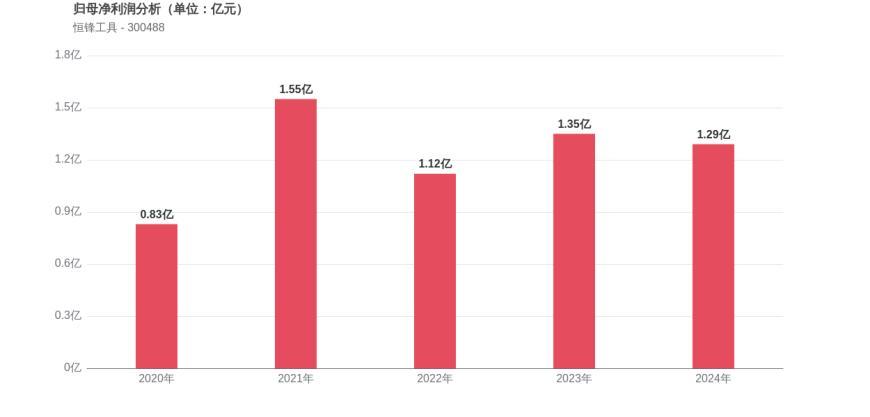
Core Insights - Hengfeng Tools has experienced significant growth since its listing on July 1, 2015, with its market capitalization increasing from 1.81 billion yuan to 5.648 billion yuan, reflecting a deep focus on precision manufacturing [1][6] - The company's revenue and profit have shown volatility in recent years, despite an overall upward trend in revenue [3][4] Business Overview - Hengfeng Tools specializes in modern efficient cutting tools, high-end production services, and intelligent manufacturing products, with precision complex cutting tools accounting for 61.42% of revenue and precision efficient cutting tools at 21.90% [3] - The company achieved a net profit attributable to shareholders of 0.68 billion yuan in its first year of listing and reached 1.29 billion yuan by the latest complete fiscal year in 2024, marking a cumulative profit growth of 90.04% [3] Financial Performance - Revenue increased from 387 million yuan in 2020 to 608 million yuan in 2024, indicating a general growth trend but with fluctuations in growth rates [3] - Net profit rose from 830 million yuan in 2020 to 1.29 billion yuan in 2024, exhibiting clear cyclical volatility [4] Market Capitalization - Since its listing, Hengfeng Tools' market capitalization has grown by 2.12 times, peaking at 9.604 billion yuan on February 26, 2025, with the stock price reaching 56.07 yuan [6] - As of June 30, the stock price was 32.62 yuan, resulting in a market capitalization of 5.648 billion yuan, reflecting a decrease of 3.957 billion yuan from its peak, equating to a 41.20% market value evaporation [6]

飞亚达20250606
2025-06-09 01:42
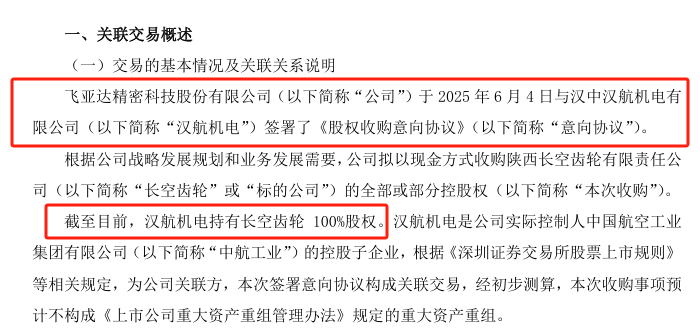
Summary of Feiyada's Conference Call Company Overview - **Company**: Feiyada - **Year Established**: 1987 - **Main Business**: Watch manufacturing, precision technology, and smart wearables - **2024 Revenue**: Approximately 4 billion CNY (around 570 million USD) - **2024 Net Profit**: 285 million CNY (around 40 million USD) - **Key Region**: South China contributes 47% of revenue [2][3] Core Business Segments - **Watch Business**: - Self-branded watches (Feiyada) account for about 20% of total sales - Swiss luxury watch sales constitute approximately 70% of total sales - Property leasing contributes about 3.3% [3] - **Precision Manufacturing**: - Focus on precision gears and reducers, especially in aerospace applications - Recent acquisition of PROPDO, a leading manufacturer in this field [2][4][5] Strategic Initiatives - **Acquisition of PROPDO**: - Aimed at accelerating development in precision manufacturing - PROPDO specializes in small modulus gears and reducers, with applications in aerospace and robotics - The acquisition is seen as a strategic move to enhance technical capabilities and market reach [2][4][5][6] - **Future Focus**: - Emphasis on both watch business and precision manufacturing as key growth areas - Expectation for PROPDO to maintain growth in line with macroeconomic trends, particularly in civil aviation projects like C919 [2][4][8] Financial Performance and Projections - **Historical Performance**: - PROPDO has shown stable revenue and profit growth in recent years - Future revenue growth may be impacted by fluctuations in aerospace projects [5][6] - **Long-term Outlook**: - Feiyada anticipates that precision manufacturing will become a significant revenue driver over the next 10 to 20 years [5][6] Market Dynamics - **Consumer Market Influence**: - Feiyada's brand holds significant influence in the Chinese market - Confidence in the long-term prospects of the watch market despite short-term fluctuations due to economic conditions [7] - **Smart Wearables**: - The company is actively developing smart wearable technology, with the "Extreme Fox" brand being a highlight [2][29] Competitive Landscape - **Swiss Watch Market**: - Feiyada ranks second among Swiss watch distributors in China, with a significant market share [24] - Competitors include major brands like Rolex and Omega, with average customer spending ranging from 20,000 to 30,000 CNY [25][26] Challenges and Considerations - **Market Volatility**: - The aerospace sector has shown performance volatility, which may affect future revenue [19][21] - **Talent Acquisition**: - Challenges in attracting high-end talent in certain regions, but efforts are being made to bolster the workforce [9][12] Conclusion - **Strategic Direction**: - Feiyada is committed to expanding its precision manufacturing capabilities while maintaining a strong presence in the watch market - The acquisition of PROPDO is a pivotal step in this transformation, aiming for synergy and enhanced market competitiveness [10][18]

陕西汉中齿轮厂,站在了腕表巨头飞亚达背后
Mei Ri Jing Ji Xin Wen· 2025-06-06 08:55
Core Viewpoint - The acquisition of Shaanxi Changkong Gear Co., Ltd. by Feiya Group aims to enhance its high-end precision manufacturing capabilities, particularly in the context of the declining traditional watch market and the rise of smart wearable devices [2][3][12]. Company Summary - Feiya Group plans to acquire a controlling stake in Shaanxi Changkong Gear, a hidden champion in the small modulus gear sector, which is controlled by the same parent company, AVIC [3][4]. - The acquisition is part of Feiya's strategy to overcome technical bottlenecks and explore new growth avenues, particularly in aerospace watches and smart wearables [3][11]. - Shaanxi Changkong Gear, established in 1969, is the only specialized gear manufacturer under AVIC and a leader in the domestic small modulus gear market, with total assets of 673 million yuan and net assets of 232 million yuan as of the end of 2024 [6][8]. Industry Context - The traditional watch market is facing significant challenges, with a reported 18%-20% decline in personal luxury goods sales in mainland China, and a 25.8% drop in Swiss watch exports to China [16]. - In contrast, the demand for smart wearable devices has surged, with a 20.1% increase in shipments in the first three quarters of the year, positioning China as the global leader in this segment [16]. - The acquisition reflects a broader trend of capital mergers in the Han Zhong region, which is undergoing a revaluation of its industrial assets and transitioning towards new industries [21][24].
人形机器人加速“进化”(新时代画卷)
Ren Min Ri Bao· 2025-05-17 21:40
Core Insights - The humanoid robot technology is rapidly advancing, with significant developments showcased by various companies, indicating a shift from demonstrations to scaled testing and limited applications in fields like industrial manufacturing and elder care [1][2] - The year is projected to be a "production year" for humanoid robots, with market opportunities expanding as products become more available [1] - Technological advancements in AI and precision manufacturing are enhancing the capabilities of humanoid robots, allowing for more complex movements and better human interaction [1] Industry Development - China is keeping pace with global advancements in humanoid robot research and development, supported by a gradually established industrial chain [2] - The domestic market's large scale and diverse application scenarios provide significant opportunities for the industry's growth [2] - Government initiatives and regulatory measures are creating a more structured market environment for the development of humanoid robots [2] Future Outlook - While humanoid robots are making progress, there is a need for continued efforts to ensure stability and reliability in their performance [2] - A culture of understanding and tolerance for occasional errors in robot performance is essential for fostering innovation and breakthroughs in the field [2] - There is optimism that humanoid robots will increasingly integrate into real-world applications and perform a wider range of tasks in the near future [2]

美国财长贝森特:美国需要精密制造,不一定是纺织业。
news flash· 2025-04-29 13:05
Core Viewpoint - The U.S. Treasury Secretary emphasizes the need for precision manufacturing in the U.S., indicating that it is not limited to the textile industry [1] Group 1 - The U.S. requires advancements in precision manufacturing to enhance its industrial capabilities [1] - The focus on precision manufacturing suggests a shift towards high-tech industries rather than traditional sectors like textiles [1]
未来五年机器人全产业链耗铜量分析及趋势解读
雪球· 2025-03-22 08:32
Core Viewpoint - The article discusses the rapid growth of the robotics industry driven by advancements in artificial intelligence, the Internet of Things, and precision manufacturing technologies, highlighting the critical role of copper in the robotics supply chain and projecting significant increases in copper demand over the next five years [2][39]. Group 1: Copper Consumption in Robotics Supply Chain - In the upstream segment, each industrial robot consumes approximately 6-12 kg of copper, while collaborative robots consume 12-15 kg due to their lightweight design [8]. - The midstream segment sees each industrial robot consuming about 4.7-8.3 kg of copper, primarily from wiring and mechanical components [13]. - In the downstream segment, the total copper consumption per robot is estimated at 8-14.5 kg, including energy modules and maintenance needs [18]. Group 2: Future Copper Demand Projections (2025-2030) - The total copper demand from the robotics industry is projected to increase from 214,000 tons in 2025 to 810,000 tons in 2030, reflecting a compound annual growth rate of 30.6% [39]. - The demand for humanoid robots alone could add an additional 250,000 to 400,000 tons of copper annually if production exceeds 5 million units by 2030 [22]. Group 3: Technological Trends Impacting Copper Demand - The rise of humanoid robots, such as Tesla's Optimus and Xiaomi's CyberOne, could lead to a copper consumption of 50-80 kg per unit due to increased motor requirements [21]. - Upgrades to high-frequency, high-precision motors are expected to increase copper consumption by an additional 30-50% in winding density, adding 3-5 tons of copper demand annually by 2030 [24]. - The limitations of aluminum and carbon fiber composites in terms of conductivity suggest that copper will remain irreplaceable in precision robotics applications [25]. Group 4: Regional Market Dynamics and Supply Chain Risks - China, as the largest robot manufacturer, is expected to drive copper demand to account for 45-50% of global needs by 2025, influenced by national policies [28]. - Supply chain risks are highlighted, with China's copper self-sufficiency below 30%, relying heavily on imports from politically sensitive regions [29]. - In Europe and the U.S., high-end manufacturing and environmental regulations may increase copper processing costs by 5-8% [31]. Group 5: Investment and Industry Recommendations - Companies involved in producing electromagnetic wire and copper alloys for high-end applications are expected to see significant demand growth [34][35]. - Monitoring copper price fluctuations is crucial, as prices exceeding $12,000 per ton could increase manufacturing costs by 8-12% [36]. - Keeping track of advancements in superconducting materials and composite metals is essential for anticipating potential threats to copper's dominance in the industry [37].