系统观念

Search documents
生态文明建设实现新进步 “扎实推进山水林田湖草沙一体化保护和系统治理”
Ren Min Ri Bao· 2025-10-19 22:16
Core Viewpoint - The article emphasizes the importance of integrated ecological governance in addressing desertification and improving river ecosystems, particularly focusing on the Kuyang River in Inner Mongolia [1][2][3]. Group 1: Ecological Governance - The Kuyang River, a tributary of the Yellow River, has undergone significant ecological changes due to systematic governance efforts aimed at addressing desertification and improving water quality [1][2]. - The governance approach has shifted from isolated water management to a comprehensive strategy that includes land reclamation and afforestation, involving multiple departments such as water resources, agriculture, and natural resources [2][3]. Group 2: Systematic Approach - The systematic governance model is highlighted as essential for effective river management, addressing issues like soil erosion and vegetation loss, which contribute to high sediment levels in the river [2][3]. - The integration of various ecological elements—mountains, water, forests, fields, lakes, grasslands, and deserts—is crucial for achieving sustainable environmental improvements [4]. Group 3: Progress in Ecological Civilization - The transformation of the Kuyang River reflects broader advancements in ecological civilization during the 14th Five-Year Plan period, showcasing a nationwide commitment to integrated ecological protection and restoration [3][4]. - The article underscores the need for top-level design and a holistic view of ecosystems to drive green development and promote harmony between humans and nature [4].
坚持系统观念 统筹推进党和国家各项事业
Xin Hua She· 2025-10-19 22:02
Core Viewpoint - The article emphasizes the importance of a systematic approach in advancing the various undertakings of the Party and the state, particularly during the "14th Five-Year Plan" period, highlighting the achievements and transformative changes made through this perspective [1][2][3]. Group 1: Achievements During the "14th Five-Year Plan" - The "14th Five-Year Plan" has seen significant progress in economic and social development, with key indicators exceeding expectations, including a rise in economic output and improvements in social welfare [2][4]. - The total economic output has crossed significant thresholds, reaching over 130 trillion yuan, with projections to hit 140 trillion yuan by 2025 [4]. - The domestic demand has contributed over 86% to economic growth, while the total value of goods trade increased from 32.2 trillion yuan to 43.8 trillion yuan [4]. Group 2: Systematic Approach in Policy Implementation - The systematic approach has been applied in various reforms, including the market-oriented allocation of factors of production and the deepening of state-owned enterprise reforms [5][6]. - The Party has focused on key tasks and critical links to drive strategic and leading reforms, ensuring that various reform measures are interconnected and mutually supportive [5][6]. - The emphasis on a systematic methodology has led to a more coordinated and effective implementation of policies across different sectors, enhancing overall governance efficiency [9][14]. Group 3: Future Directions and Strategic Planning - Moving forward, the focus will be on maintaining a comprehensive and coordinated approach to achieve the goals set for the "15th Five-Year Plan," ensuring alignment with national priorities [10][15]. - The need for a "one chessboard" mentality is highlighted, encouraging regional contributions to national economic stability and growth [16]. - The article stresses the importance of practical actions and consensus-building to ensure effective implementation of plans and strategies [18][19].
坚持系统观念 统筹推进党和国家各项事业——“十四五”时期经济社会发展实践与启示述评之六
Xin Hua She· 2025-10-19 14:32
Core Viewpoint - The article emphasizes the importance of a systematic approach in guiding the development of the Party and the country, particularly during the "14th Five-Year Plan" period, to achieve significant progress and transformative changes in economic and social development [1][2][3]. Group 1: Systematic Approach in Development - The systematic approach is highlighted as a scientific method to address complex situations and promote development, ensuring coordinated progress across various fields and the overall modernization of socialism [1][2]. - The "14th Five-Year Plan" is seen as a crucial period for advancing towards the second centenary goal, with significant achievements in economic growth, social welfare, and ecological progress attributed to this systematic thinking [2][3]. Group 2: Economic and Social Achievements - During the "14th Five-Year Plan," the average contribution rate of domestic demand to economic growth exceeded 86%, while the total value of goods trade increased from 32.2 trillion yuan to 43.8 trillion yuan [4]. - Economic development maintained a steady pace, with the total economic output surpassing 110 trillion yuan, 120 trillion yuan, and 130 trillion yuan, projected to reach 140 trillion yuan by 2025 [4]. Group 3: Reforms and Policy Implementation - The article discusses the implementation of comprehensive reforms in various regions, aiming to enhance overall productivity and achieve systemic effects through coordinated efforts [5][6]. - Key reforms include the establishment of a high-level socialist market economy, deepening state-owned enterprise reforms, and addressing demographic challenges such as aging [5][6]. Group 4: Security and Stability - The article emphasizes the need for a systematic approach to ensure security in various sectors, including food, energy, and finance, highlighting the importance of stability as a prerequisite for development [8][9]. - The strategy of "storing grain in the land and technology" has been implemented to maintain food security, with annual grain production consistently above 1.3 trillion jin [8]. Group 5: Future Directions - Looking ahead, the article stresses the necessity of maintaining a systematic perspective in planning and executing policies to convert institutional advantages into governance efficiency [9][10]. - The "15th Five-Year Plan" is positioned as a critical period for solidifying the foundation for socialist modernization, requiring a collaborative effort across various sectors [10][11].
坚持系统观念 提升治理效能 立体开展海洋生态环境治理
Ren Min Ri Bao· 2025-10-09 02:14
Core Viewpoint - The emphasis on marine ecological civilization construction and the importance of protecting marine biodiversity and preventing marine pollution is highlighted as essential for sustainable development and ecological security [1] Group 1: Strategic Goals - The complexity of marine ecological environment governance necessitates a comprehensive approach that balances ecological, economic, and social benefits while promoting high-quality marine development [2] - The strategy should prioritize ecological protection and innovation to optimize marine resource allocation and enhance the marine economy [2] Group 2: Governance Chain Extension - A shift from fragmented governance to a comprehensive approach covering the entire process from source to end is essential for effective marine ecological environment management [3] - Emphasis on controlling land-based pollution sources and implementing ecological restoration post-pollution management to ensure sustainable marine ecosystems [3] Group 3: Resource Aggregation - Establishing cross-regional and cross-departmental cooperation mechanisms is crucial for effective marine ecological environment governance, moving from fragmented efforts to integrated strategies [4] - The need for a unified strategic framework and clear responsibilities among departments to enhance collaboration and address governance challenges is emphasized [4] Group 4: Comprehensive Governance Methods - Utilizing a combination of legal, market, and technological approaches is vital for achieving synergistic effects in marine ecological governance [5] - The implementation of strict legal frameworks and economic incentives is necessary to guide marine development activities and protect marine ecosystems [5]
坚持系统观念 提升治理效能 立体开展海洋生态环境治理(专题深思)
Ren Min Ri Bao· 2025-10-08 23:21
Core Viewpoint - The emphasis on marine ecological civilization construction and the importance of protecting marine biodiversity and preventing marine pollution is highlighted as essential for sustainable development and ecological security [1][2]. Group 1: Strategic Goals - The complexity of marine ecological environment governance necessitates a comprehensive approach that balances ecological, economic, and social benefits [2]. - The strategy should prioritize ecological protection while promoting high-quality marine economic development, ensuring that short-term gains do not compromise long-term sustainability [2][3]. Group 2: Governance Chain - A shift from fragmented governance to a comprehensive approach that includes source control, process management, and end-point treatment is essential for effective marine ecological governance [3]. - Emphasis on controlling land-based pollution sources and implementing ecological restoration post-pollution management is crucial for maintaining marine ecosystem health [3]. Group 3: Resource Integration - Establishing cross-regional and cross-departmental cooperation mechanisms is necessary to enhance the effectiveness of marine ecological governance [4]. - A unified strategy and policy framework should be developed to break down barriers between departments and clarify responsibilities, promoting proactive collaboration [4]. Group 4: Governance Methods - A multi-faceted approach utilizing legal, market, and technological tools is vital for effective marine ecological governance [5]. - The implementation of strict legal frameworks and economic incentives, alongside the integration of advanced technologies, will enhance the efficiency and effectiveness of governance efforts [5].
立体开展海洋生态环境治理(专题深思)
Ren Min Ri Bao· 2025-10-08 22:11
Core Viewpoint - The emphasis on marine ecological civilization construction and the importance of protecting marine biodiversity and preventing marine pollution is highlighted as essential for sustainable development and ecological safety [1][2]. Group 1: Strategic Goals for Marine Ecological Governance - The complexity of marine ecological governance necessitates a comprehensive approach that balances ecological, economic, and social benefits, ensuring high-quality marine development while prioritizing ecological protection [2][3]. - The need to balance short-term economic returns from marine resources with long-term ecological sustainability is emphasized, advocating for a systematic approach to governance that includes both local and global considerations [2][3]. Group 2: Comprehensive Governance Approaches - A shift from fragmented governance to a holistic approach that encompasses the entire process from source to end is necessary, focusing on controlling land-based pollution and extending governance mechanisms to include ecological restoration [3][4]. - The establishment of a cross-regional and cross-departmental cooperation mechanism is crucial for effective marine ecological governance, promoting collaboration and resource integration among various departments [4][5]. Group 3: Innovative Governance Methods - The integration of various governance methods, including legal, market, and technological approaches, is essential for achieving a synergistic effect in marine ecological governance [5][6]. - The implementation of strict legal frameworks and economic incentives is necessary to guide marine development activities and protect marine ecosystems, ensuring compliance and accountability [5][6].
用党的创新理论改造主观世界和客观世界
Ren Min Ri Bao· 2025-09-24 01:29
Group 1 - The core viewpoint emphasizes the importance of using the Party's innovative theory to transform both the subjective and objective worlds, guided by a scientific worldview and methodology [1][2][22] - The integration of Marxist principles with China's specific realities and traditional culture is highlighted as a means to innovate and develop the Party's theory [2][3] - The commitment to a people-centered approach is underscored, reflecting the Party's fundamental political stance and its dedication to improving the lives of the populace [3][4] Group 2 - The necessity of self-confidence and independence in addressing China's unique challenges is stressed, advocating for a path that is distinctly Chinese [5][6] - The importance of problem-oriented practices is emphasized, with a focus on identifying and solving contemporary issues faced by society [7][8] - A systematic approach to governance and development is advocated, ensuring that various strategies are coordinated and aligned with overarching goals [9][10] Group 3 - The significance of a global perspective is highlighted, with an emphasis on China's role in promoting peace and development on a global scale [10][11] - The need for political capability and leadership skills among Party members is stressed, ensuring alignment with the Party's core values and objectives [11][12] - The adherence to the Party Constitution as a fundamental guideline for governance and action is emphasized, reinforcing the commitment to serving the people [13][14] Group 4 - The importance of a long-term and holistic view in decision-making is highlighted, ensuring that local actions contribute to national goals [14][15] - The necessity for leaders to enhance their capabilities across various domains is emphasized, preparing them to tackle challenges effectively [16][17] - The call for a strong work ethic and integrity among Party members is underscored, promoting a culture of diligence and accountability [17][18] Group 5 - The cultivation of a correct view of achievements is emphasized, focusing on genuine contributions to society rather than personal accolades [21][22] - The relationship between theory and practice is highlighted, advocating for a continuous interaction that drives both personal and societal transformation [22]
方颖:把坚持问计于民落到实处
Jing Ji Ri Bao· 2025-09-23 00:04
Core Points - The year marks the conclusion of the "14th Five-Year Plan" and the planning for the "15th Five-Year Plan," emphasizing the importance of scientific planning in governance and modernization of the governance system [1][2] - The "15th Five-Year Plan" is crucial for implementing the strategic deployments of the 20th National Congress of the Communist Party and advancing Chinese-style modernization [1][2] - Historical evidence shows that long-term planning has significantly contributed to China's economic development and social stability, transitioning from basic needs to overall well-being [2] Group 1 - The importance of scientific decision-making, democratic decision-making, and legal decision-making in the planning process is highlighted, ensuring that top-level design and public consultation are integrated [3][4] - The "14th Five-Year Plan" involved extensive public engagement, with over 311.3 million suggestions collected online, setting a precedent for public participation in planning [3][4] - The need for a systematic approach in planning is emphasized, focusing on the interconnections between micro and macro, local and overall, and current and long-term relationships [6] Group 2 - The establishment of effective channels for public consultation is necessary to gather genuine public opinion and enhance understanding of strategies and plans [4] - Utilizing digital technology can improve data collection and analysis, allowing for better understanding of public needs and governance challenges [5][6] - A systematic view is essential for integrating top-level design with public input, ensuring that societal concerns are embedded in the overall planning framework [6]
城市建设要“面子”更要“里子”(记者手记)
Ren Min Ri Bao· 2025-09-18 22:12
Core Viewpoint - The article emphasizes the importance of focusing on the "substance" of urban construction, which includes safety and ecological considerations, rather than just the "facade" or aesthetic aspects of cities [1][4]. Group 1: Urban Development and Safety - Urban development should prioritize both ecological and safety aspects, as highlighted by Xi Jinping's emphasis on building resilient cities [1]. - The current urbanization phase in China requires a shift from superficial construction to addressing underlying infrastructure issues, particularly in aging facilities that are underperforming [1][2]. Group 2: Systematic Approach - A systematic approach is necessary for urban safety, involving coordination among various departments such as meteorology, water management, and emergency services to effectively manage flood risks [2]. - Integrating both above-ground and underground planning is crucial for enhancing the overall integrity and systematization of urban infrastructure [2]. Group 3: Technological Empowerment - The use of technology, such as IoT and big data, is essential for improving urban safety and operational efficiency, moving from reactive to proactive risk management [2][3]. - By the end of 2024, China plans to update and renovate 165,000 kilometers of aging gas pipelines and enhance urban drainage systems, significantly improving urban resilience [3]. Group 4: Quality of Life - A solid "substance" in urban infrastructure leads to a more attractive "facade," ensuring that citizens can live with peace of mind and security [4].
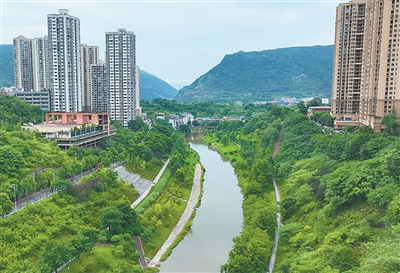
我爱在栋梁河边健步走(我家门前有条河)
Ren Min Ri Bao· 2025-09-17 22:22
Core Points - The article highlights the transformation of Dongliang River from a polluted state back to a clean and vibrant ecosystem, showcasing the successful efforts in environmental restoration and community involvement [1][2][4] - The government has implemented measures such as closing polluting factories, upgrading environmental facilities, and enhancing public amenities along the river, contributing to both ecological and social improvements [2][4] Group 1: Environmental Restoration - Dongliang River has undergone significant changes over the decades, transitioning from clear waters to pollution and back to clarity, with factories now equipped with wastewater treatment facilities ensuring compliance with discharge standards [2] - The restoration process involved comprehensive management of upstream and downstream areas, as well as collaboration between different districts to monitor water quality effectively [1][2] Group 2: Community Engagement - Local residents, including the elderly, actively participate in the protection of Dongliang River, demonstrating a collective effort to maintain the improved ecological environment [1][4] - The introduction of community river managers has fostered a sense of responsibility among residents, encouraging them to engage in environmental protection activities [1][4] Group 3: Infrastructure Development - The government has enhanced the riverbank area with new public facilities, including walking paths, restrooms, and bridges, improving accessibility and promoting recreational activities for the community [2][4] - The focus on natural restoration at the river mouth reflects a commitment to preserving the ecosystem while providing spaces for public enjoyment [2]