量子纠缠

Search documents
科学家直接观测到重费米子量子纠缠
Ke Ji Ri Bao· 2025-08-07 23:34
Core Insights - Scientists from Osaka University and Hiroshima University have observed quantum entanglement in cerium rhodium tin (CeRhSn) material, regulated by Planck time, marking a significant advancement in quantum computing research [1][2] - The study published in the journal "npj Quantum Materials" highlights the unique properties of heavy fermions and their potential applications in solid-state quantum computers [1][2] Group 1: Quantum Entanglement and Heavy Fermions - The research confirms that the behavior of heavy fermions aligns with the mathematical description of quantum entanglement, with entanglement duration influenced by Planck time [2] - Heavy fermions are formed due to strong interactions between conduction electrons and localized magnetic electrons, leading to unconventional superconductivity and other unique properties [1] - The unique lattice structure of CeRhSn exhibits geometric frustration, preventing the system from reaching a stable energy state, thus resulting in various quantum phenomena [1] Group 2: Implications for Quantum Computing - The findings provide a deeper understanding of the nature of quantum entanglement and the complex interactions between heavy fermions, paving the way for manipulating quantum states in solid materials [2] - Continued research on these entangled states could offer new solutions for quantum communication and quantum computing technologies [2]
“推动量子技术在更多产业领域应用”——潍坊学院瞄准“高精尖”发展特色学科
Ke Ji Ri Bao· 2025-08-05 23:46
Core Insights - The quantum technology team at Weifang University has made significant advancements in weak signal detection, addressing challenges in precision sensors [1] - The team is focused on enhancing quantum computing performance, precision measurement, and device efficacy through their ongoing research projects [2] - Weifang University's quantum team is recognized as a leader in quantum technology research and has developed several high-quality entangled photon sources [3] Research and Development - The quantum information technology research institute at Weifang University is one of the earliest dedicated institutions for quantum research in Shandong Province [2] - The laboratory has the largest facilities for quantum entanglement experiments in Shandong, with a history of producing world-class entangled photon sources [3] - The laboratory has achieved breakthroughs in quantum remote operations, improving fidelity from 80% to 90% through extensive optimization efforts [4] Industry Application - The team aims to promote the application of quantum technology across various industries, establishing a comprehensive R&D platform from basic research to industrial incubation [5] - Over the past three years, the laboratory has undertaken more than 110 applied research projects, securing approximately 35 million yuan in funding and achieving technology transfer worth 2.1 million yuan [6]
院士担任高峰论坛核心演讲嘉宾,驱动产学研协同创新|邀请
Sou Hu Cai Jing· 2025-07-30 11:58
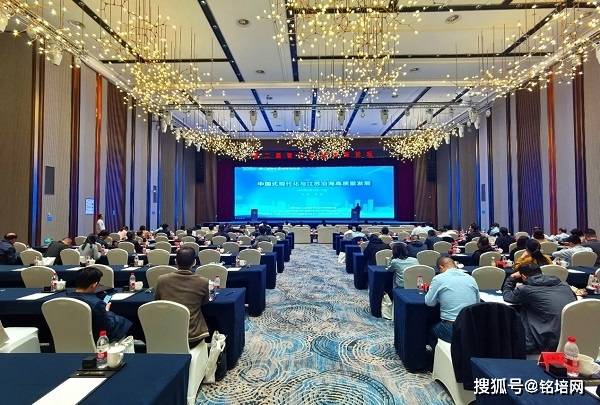
在科技创新与学术交流深度交融的背景下,高峰论坛特邀中国科学院、中国工程院多位院士担任核心演讲嘉宾。此举旨在以前 沿科研洞见夯实论坛专业性,打通产学研转化路径,为战略产业升级注入科学动能。 两院院士作为中国科技界的领航者,其深度参与大幅提升论坛权威性: 二、学界影响力激活社会动能 院士参与带来的多维价值辐射: 三、战略合作机制的精细化运作 论坛主办方铭培网联合专业机构优化院士参与机制: 四、创新生态的长效价值 院士参与论坛持续释放创新红利: 院士群体的深度参与,使论坛成为国家创新体系的重要节点。随着科研端与产业端协作深化,这种"学术引擎+产业载体"模式将 持续释放创新裂变效应,为中国式现代化建设提供核心驱动力。 铭培网--作为全球高端专家资源平台,致力于汇聚国内外前政界人士、诺贝尔奖得主、经济学家、商业领袖、国学文化学者、军 事顾问及主持人等专业人才,通过组织论坛讲座、企业访问活动和管理咨询等,助力中国经济科技发展。邀请专家进行大会发 言、商务考察、或技术协作。 一、顶尖智脑锚定学术高度 1. 理论前沿性与实践融合:院士演讲内容涵盖基因编辑、人工智能、新材料等国家战略领域的最新突破,同步剖析技术落地 瓶颈与产业 ...

中国科研团队研发出新型量子纠缠光源
Huan Qiu Wang Zi Xun· 2025-07-11 07:04
Core Insights - A new spontaneous two-photon radiation scheme has been proposed by a team from Sun Yat-sen University, achieving a fidelity of 99.4% for a demand-triggered quantum entangled light source, published in Nature [1][2] Group 1: Research Breakthrough - The research introduces a novel cavity-induced spontaneous two-photon radiation scheme that matches the intensity of single-photon radiation, challenging the traditional understanding that two-photon radiation is inherently weaker than single-photon processes [2] - The team utilized a solid-state "artificial atom" structure at the nanoscale to enhance the probability of emitting two correlated photons simultaneously, a phenomenon known as spontaneous two-photon radiation [1][2] Group 2: Technological Advancements - Advances in semiconductor material growth and device processing technologies have provided critical support for the experimental realization of spontaneous two-photon radiation [2] - The design of ultra-high-quality optical microcavities has allowed for fine-tuning of the photon generation process, increasing the radiation efficiency of two photons from less than 0.1% to approximately 50% [2] Group 3: Implications for Quantum Technologies - The high fidelity of the entangled photon source indicates significant potential for enhancing the security of quantum communication, reliability of quantum computing, and precision of quantum metrology [2]
实验制备高维多光子纠缠态保真度达91%
Ke Ji Ri Bao· 2025-06-03 23:23
Core Viewpoint - The research team led by Guo Guangcan from the University of Science and Technology of China has successfully achieved the preparation of high-fidelity high-dimensional multipartite entangled states and observed the existence of genuine high-dimensional non-locality for the first time, marking a significant advancement in quantum information science [1][2]. Group 1: Research Achievements - The team developed a method for preparing high-dimensional multipartite entangled states based on the principle of "path indistinguishability," which encodes three-dimensional quantum states using the path degree of freedom of photons [2]. - The experiment successfully created a Greenberger-Horne-Zeilinger (GHZ) state of three-photon three-dimensional multipartite entanglement with a fidelity of 91%, setting a new record for high-dimensional multipartite entangled states [2]. - The research established a new Bell inequality testing paradigm, experimentally confirming quantum correlations that exceed the theoretical limits of qubit systems, thus providing a solid foundation for non-locality detection [2]. Group 2: Implications and Applications - This breakthrough fills a gap in the international experimental research field of high-dimensional multipartite quantum non-locality and deepens the understanding of the nature of quantum entanglement [2]. - The findings provide critical technological support for constructing scalable, high-capacity, and noise-resistant quantum information processing systems [2]. - High-dimensional multipartite entangled states are expected to have broad application prospects in cutting-edge fields such as quantum communication, quantum computing, and quantum precision measurement [2].
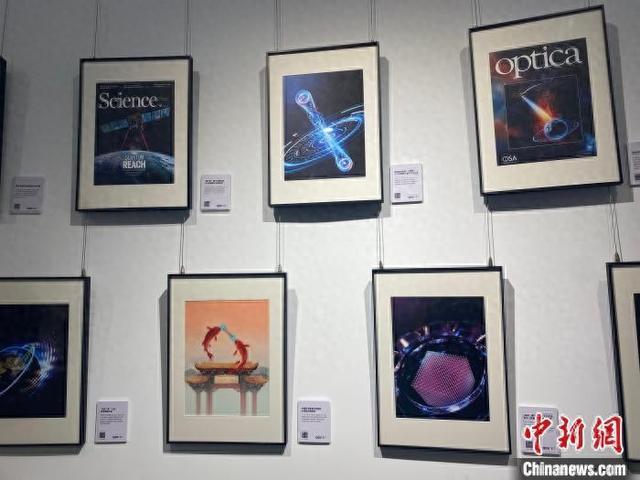
“Q世纪:量子物理百年科普展”在中国科大展出
Huan Qiu Wang Zi Xun· 2025-05-09 13:19
Core Viewpoint - The "Q Century: Quantum Physics Centenary Science Exhibition" opened at the University of Science and Technology of China, marking a significant event in the celebration of the centenary of quantum mechanics [1][3]. Group 1: Exhibition Overview - The exhibition is part of a series of activities celebrating the 100th anniversary of modern quantum mechanics, which will be in 2025, and is recognized as the "International Year of Quantum Science and Technology" by UNESCO [3]. - The exhibition features three main sections: "Our Superconducting Quantum Computer," "The Century Leap of Quantum Physics," and "The Magical Quantum World," showcasing key quantum concepts such as Schrödinger's cat and quantum entanglement [3]. Group 2: Innovative Presentation - The curatorial team has transformed abstract theories into perceivable artistic forms, including a "Quantum Music Laboratory" where real sounds from quantum labs are artistically restructured into quantum dance music [3]. - A "Universal Map" presents a historical map of technology using traditional artistic techniques, offering a unique perspective on the relationship between art and technological development [3]. - The "Quantum Journal Cover Wall" artistically presents rich scientific theories, providing a new perspective on the evolution of quantum technology [3]. Group 3: Public Engagement - The exhibition features a 1:1 model of the "Zuchongzhi No. 2" superconducting quantum computer, allowing the public to explore the mysteries of quantum computing [5]. - Visitors can observe the core structure of superconducting quantum chips through microscopes and experience an immersive view of "Zuchongzhi No. 3" using a naked-eye 3D grating screen, highlighting recent breakthroughs by Chinese quantum scientists [5]. - Chinese scientists, represented by the University of Science and Technology of China, have made significant contributions to the development of quantum mechanics, opening up infinite possibilities for its future [5].