
量子技术

Search documents
刚刚,图灵奖2025公布,荣誉属于两位量子信息科学奠基人
机器之心· 2026-03-18 11:02
Core Viewpoint - The 2025 ACM A.M. Turing Award is awarded to Charles H. Bennett and Gilles Brassard for their foundational contributions to quantum information science and transformative roles in secure communication and computation [1][3]. Group 1: Award Significance - The ACM A.M. Turing Award, often referred to as the "Nobel Prize of Computing," carries a prize of $1 million funded by Google [3]. - Bennett and Brassard are recognized as pioneers in quantum information science, a field that intersects physics and computer science, utilizing quantum mechanics for information processing and transmission [4]. Group 2: Contributions to Quantum Cryptography - In 1984, Bennett and Brassard proposed the first practical quantum cryptography protocol, known as the BB84 protocol, which ensures secure key distribution based on physical laws, even against adversaries with unlimited computational power [4][5]. - The BB84 protocol does not rely on computational assumptions, achieving information-theoretic security by leveraging the fundamental properties of quantum information, which cannot be copied or measured without disturbance [5]. Group 3: Impact on Computing Theory - Their work has reshaped the theoretical foundations of computation, including the demonstration of quantum teleportation and entanglement distillation, which are crucial for scalable quantum communication [6]. - Bennett and Brassard's collaboration has bridged the gap between physics and computer science, influencing various fields such as cryptography, algorithm design, and computational complexity [6]. Group 4: Future of Quantum Information Science - The future of quantum information science includes exploring fault-tolerant quantum computers, new quantum algorithms, and long-distance quantum communication supported by satellites and quantum repeaters [11]. - Their insights continue to impact both foundational research and practical innovations in the rapidly evolving field of quantum technology [11].


欧盟在科技领域下手,中国学者:伤害不大,可能让欧洲更孤立
Xin Lang Cai Jing· 2026-02-22 03:29
Core Viewpoint - The European Union (EU) has announced that starting in 2026, Chinese researchers will be excluded from the "Horizon Europe" cooperation program, marking a shift from partnership to strategic competition in the tech sector between China and the EU [1][3]. Group 1: Horizon Europe Program - "Horizon Europe" is the EU's flagship research and innovation program, dating back to the 1980s, which has attracted applicants from over 100 countries [1]. - In the previous funding cycle (2014-2020), the program had a budget of approximately 800 billion euros, with the US and China being the top non-EU participants [1]. - The program prioritizes fields such as artificial intelligence and quantum technology [1]. Group 2: New Regulations and Restrictions - The new regulations, introduced in December, specifically outline restrictions against Chinese institutions, citing "research security and potential military applications" as the rationale [3]. - The ban will cover critical areas including artificial intelligence, quantum technology, semiconductors, and biotechnology, requiring non-Chinese researchers to prove that their partners are not affiliated with Chinese institutions [3]. - However, Chinese institutions will still be able to apply for or participate in specific research projects related to climate, biodiversity, food, and agriculture [4]. Group 3: Reactions and Implications - Experts have expressed that the ban may not significantly harm China but could lead to greater isolation for Europe [6][7]. - Concerns have been raised regarding the EU's focus on intellectual property issues, with some arguing that the real risk of IP theft lies more with commercial entities than with researchers making cutting-edge discoveries [6]. - The shift in policy reflects a broader trend of geopolitical factors shaping research relationships, with warnings that such restrictions could reduce the EU's ability to attract Chinese talent and fragment the global research landscape [7].
工银瑞信年度策略解读:把握传统产业升级、新兴产业扩张与前沿领域投资机遇
Jiang Nan Shi Bao· 2026-02-06 02:15
Core Viewpoint - The "15th Five-Year Plan" is expected to provide clear direction and policy support for the capital market, with a focus on traditional industry upgrades, emerging industry demand expansion, and thematic investments in frontier industries [1] Macro Analysis: Opportunities in Financial Assets - The liquidity environment is expected to remain relatively loose both globally and domestically, providing opportunities across various financial assets, with a particular emphasis on the A-share equity market [2] - Current A-share market valuations are considered reasonable based on historical rolling returns, suggesting that the market is not overly expensive [2] - Two core supporting factors for the A-share market include a friendly liquidity environment and an anticipated upward trend in the profit cycle due to improved supply-demand dynamics [2] Trend Assessment: Technological Self-Reliance - The "15th Five-Year Plan" emphasizes technological self-reliance as a strategic task, highlighting the importance of technological innovation and productivity improvement for sustainable economic development [4] Insight into Opportunities: Three Structural Directions - The "15th Five-Year Plan" outlines three key investment directions: 1. Traditional industries such as chemicals, shipbuilding, and metallurgy are expected to enhance profitability through supply-side policies and optimization [5][6] 2. Emerging industries like artificial intelligence and energy storage are projected to experience sustained demand growth, leading to rapid development [6] 3. Frontier industries, including embodied intelligence and quantum technology, are seen as having significant growth potential and should be monitored for breakthroughs in basic scientific research [6] Rational Layout: Understanding Industry Trends - Investors are advised to recognize industry trends and avoid frequent timing based on short-term fluctuations, particularly in the high-growth and high-volatility technology sector [7] - The investment strategy should focus on understanding industry development trends and adjusting strategies only when substantial changes occur in the underlying fundamentals [7]
杨德龙:马年有望延续慢牛长牛趋势,板块轮动或呈现“先小登、再中登、后老登”顺序
Ge Long Hui· 2026-02-04 07:23
Group 1 - The core viewpoint is that the A-shares and Hong Kong stocks are expected to continue a slow bull market trend in the upcoming Year of the Horse, with a noticeable increase in market profitability and further sector rotation anticipated [1] - Different sectors are being referred to in a way that reflects structural differentiation: technology stocks are humorously called "small Deng stocks," while traditional sectors like liquor are referred to as "old Deng stocks." New energy, military industry, and non-ferrous metals (including precious metals) are seen as "medium Deng stocks" [1] - The expected order of sector rotation in a slow bull market is "first small Deng, then medium Deng, and finally old Deng" [1] Group 2 - In terms of industry allocation, it is essential to align with the "14th Five-Year Plan" and relevant policy directions, with a focus on technological innovation [1] - Key areas of focus in the technology sector include semiconductor chips, artificial intelligence, innovative pharmaceuticals, solid-state batteries, and computing power algorithms, as well as future technologies like controllable nuclear fusion and quantum technology [1] - The real estate sector is still in an adjustment period, but core areas in first-tier cities may see a rebound due to scarcity and demand support, with transaction volumes potentially increasing [1] Group 3 - In the precious metals sector, the price increase in the Year of the Horse is unlikely to replicate the gains of the past two years due to already high price levels, but the long-term trend remains unchanged [2] - Allocating about 20% of an investment portfolio to gold assets over a 5-10 year horizon is still considered an effective way to hedge against inflation and currency devaluation [2]
杨德龙:2026年全球经济形势与投资机遇变化
Xin Lang Ji Jin· 2026-02-01 10:02
Group 1: Economic Trends and Currency Dynamics - The Federal Reserve is expected to continue its interest rate cut cycle into 2026, potentially lowering rates by at least two times, which may lead to a further decline in the US dollar index from around 110 to 97 [1] - The trend of "de-dollarization" is gaining momentum as more countries diversify their reserves away from the US dollar, influenced by the US's use of its currency for sanctions and its high national debt of $38 trillion [2] - The US 10-year Treasury yield has risen to 4.5%, reflecting increased risk premiums, while China's 10-year Treasury yield stands at approximately 1.6% [2] Group 2: Commodity Markets and Resource Management - The US has been stockpiling copper, reaching 400,000 tons, which has contributed to rising copper prices, impacting manufacturing sectors in China [3] - The US's actions in Venezuela, particularly regarding oil resources, highlight its aggressive resource acquisition strategy, which may further destabilize international relations [3] Group 3: Domestic Economic Policies and Growth - China's GDP growth reached 5% last year, but retail sales growth has slowed, indicating a need to boost domestic demand through increased income and investment [3] - The focus of China's economic policy is shifting towards enhancing domestic consumption and reducing overcapacity in traditional industries [3] Group 4: Investment Opportunities in Technology - The 14th Five-Year Plan emphasizes support for technology innovation sectors such as robotics, semiconductors, and quantum technology, which are expected to perform well in 2026 [4] - The capital market is witnessing a shift as residents are moving savings towards the stock market, with a significant amount of deposits maturing and seeking higher returns [5] Group 5: Market Dynamics and Consumer Behavior - The current bull market is expected to positively impact consumer spending, stabilize the housing market, and support the growth of technology firms, potentially leading to the emergence of new industry leaders [6] - The number of new stock accounts opened exceeded 27 million last year, indicating a growing participation in the capital market, which may help offset wealth losses from declining property prices [6]
为何要扩围国际科创中心
Jing Ji Ri Bao· 2026-01-27 22:15
Core Viewpoint - The 2025 Central Economic Work Conference emphasizes the construction of international technology innovation centers in Beijing (Jing-Jin-Ji), Shanghai (Yangtze River Delta), and the Guangdong-Hong Kong-Macau Greater Bay Area, aiming to enhance China's innovation system and international competitiveness through regional collaboration and integration [1][2][3]. Spatial Integration - The expansion of the three international technology innovation centers from a "single point" to "city cluster collaboration" is essential to break administrative barriers and create complementary innovation spaces, enhancing competitiveness against global innovation clusters [1][2]. - The 2025 Global Innovation Index Report indicates that Shenzhen-Hong Kong-Guangzhou, Beijing, and Shanghai-Suzhou rank among the top ten global innovation clusters, with Shenzhen-Hong Kong-Guangzhou leading the list, showcasing the growing influence of these centers [1]. Element Integration - The three international technology innovation centers are home to the country's best innovation resources, including a significant proportion of key laboratories and high-tech enterprises, facilitating the efficient flow and allocation of innovation elements [2]. - Beijing has maintained a research and development investment intensity of over 6% for six consecutive years, while the Yangtze River Delta accounts for about one-third of national indicators in various technology spending and patent ownership [2]. Industry Integration - The centers gather top universities, research institutions, and enterprises, forming a complete chain from basic research to technology application, which accelerates the application of innovative results [2]. - The key to expanding these centers is to optimize the collaborative innovation model that integrates industry needs, technological solutions, and market validation [2]. Institutional Integration - The three regions have unique advantages in exploring innovation systems, with efforts to establish mechanisms for cross-regional planning, benefit sharing, and risk sharing, promoting a collaborative innovation environment [3]. - The expansion aims to integrate local institutional advantages to break down administrative divisions and foster a cooperative innovation landscape [3]. National Impact - The expanded centers will serve as a "power source" for national integration of production, education, and research, enhancing the diffusion of core technological achievements and supporting industrial upgrades across regions [4]. - The centers will focus on improving the efficiency of innovation chains, enhancing industrial chain levels, and constructing a nationwide network for the flow of innovation elements [4]. Strategic Development - To transform the centers into world-class sources of technological innovation, a systematic approach is needed to enhance integration efficiency, address element flow barriers, and strengthen industry-research collaboration [5][6]. - Establishing cross-regional innovation joint ventures and governance mechanisms will promote an open and inclusive innovation environment [6].
直击达沃斯|对话世界经济论坛执行董事蒋瑞杰:中国正重塑全球技术创新与治理格局
Xin Lang Cai Jing· 2026-01-23 11:18
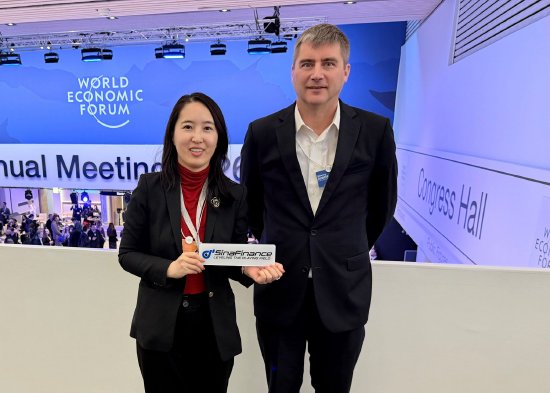
Core Insights - The World Economic Forum Executive Director Jeremy Jurgens highlighted China's significant global innovation and industrialization capabilities in key technology sectors [1][12]. Group 1: Green Technology - Green technology is identified as one of the most impactful areas, transforming global economic structures through industrial electrification, automotive transformation, and the integration of low-cost solar energy with battery storage [3][12]. - China's advancements in green technology not only drive changes in industrial structure but also provide scalable technological pathways to address climate change [6][12]. Group 2: Artificial Intelligence - Innovations in artificial intelligence, particularly low-cost and open-source models, are lowering the barriers to AI application, allowing a broader population to benefit from technological advancements [3][12]. - The proliferation of affordable, high-performance AI models is expected to enhance AI capabilities across a wider range [6][12]. Group 3: Future Areas of Influence - Over the next five to ten years, China's influence is anticipated to expand in established areas such as green technology, digital technology, and advanced manufacturing, where it has demonstrated strong scalability and execution capabilities [6][15]. - Two emerging fields of interest are quantum computing and biotechnology, with China making significant progress in quantum technologies and having unique conditions for the standardization and industrialization of biotechnology [7][15]. Group 4: Global Standards and Governance - The importance of technology governance and standard-setting is increasing amid intensifying global competition, particularly in AI, data governance, and cybersecurity [3][12]. - Avoiding fragmentation of global technology standards is crucial, and participation in multilateral mechanisms for standard coordination is essential for enhancing technology diffusion and innovation sharing [8][17]. Group 5: Innovation Ecosystem - The World Economic Forum emphasizes the need for collaboration among large enterprises, SMEs, government, and academia to create an effective innovation ecosystem [4][13]. - Continuous cooperation with Chinese enterprises, policymakers, and innovation groups is seen as vital for fostering breakthroughs in battery technology, robotics, AI, and biotechnology [4][18]. Group 6: Importance of Participation - Active participation in international dialogues is crucial for Chinese business leaders and policymakers to share their perspectives and reduce misunderstandings [10][18]. - Engaging in these discussions is believed to enhance external understanding and trust, fostering a more constructive global cooperation atmosphere [10][18].
爱尔兰将批准廷德尔研究所1亿欧元扩建计划
Shang Wu Bu Wang Zhan· 2026-01-23 04:14
Core Viewpoint - Ireland is set to approve a €100 million expansion plan for the Tyndall National Institute, which will establish a 17,500 square meter advanced research facility at University College Cork, marking a significant step in Ireland's ambition to become a "Silicon Island" [1] Group 1: Investment and Funding - The project will receive substantial national funding from the Department of Further and Higher Education, Research, Innovation and Science, with additional support from the Departments of Enterprise, Trade and Employment, Public Expenditure, and University College Cork's own funds [1] - In May of the previous year, over €70 million was allocated from national and EU funds to support Tyndall's involvement in three EU pilot projects, including one aimed at accelerating advanced semiconductor technology development [1] Group 2: Research Focus - The Tyndall National Institute, established through collaboration between University College Cork, the Irish Science Foundation, and the Department of Enterprise, focuses on research areas such as compound semiconductors, wafer-level and chip technology, communications, packaging and integration, environmental sensing, and energy [1]
国盾量子:拟签订技术实施许可合同
Ge Long Hui· 2026-01-20 10:10
Core Viewpoint - The company, Guodun Quantum (688027.SH), plans to sign licensing agreements with the University of Science and Technology of China (USTC) for several patents and software copyrights, indicating a strategic move to enhance its technological capabilities and product offerings [1] Group 1: Licensing Agreements - The company intends to sign one patent/technology licensing contract and one software copyright/technology licensing contract with USTC, involving a total of 4 patents, 3 software copyrights, and 2 proprietary technologies [1] - The ownership of the technological achievements will be jointly held by USTC and another party [1] - The company will pay an entry fee and sales share as stipulated in the contract [1] Group 2: Additional Agreements - The company plans to sign similar licensing agreements with the other owner of the technological achievements, with terms consistent with those agreed upon with USTC [1]

杨德龙:2026年我国资本市场投资机会明显增多|立方大家谈
Sou Hu Cai Jing· 2026-01-19 12:29
Economic Growth - The overall economy achieved stable growth, with GDP growth projected at 5% for the year, reflecting a recovery and improvement trend [1] - Quarterly GDP growth rates for 2025 are forecasted at 5.4%, 5.2%, 4.8%, and 4.5% respectively [1] - China's trade surplus reached a historic high of over $1.1 trillion, showcasing the competitiveness of Chinese export products [1] Domestic Demand - The main issue in domestic demand is the imbalance of strong supply versus weak demand, with stable prices indicating insufficient demand [1] - Policies to stabilize consumption include promoting trade-in programs and subsidies for certain products, which have positively impacted sales [1] - Retail sales growth remains relatively low, indicating the need for further policies to enhance residents' income and unlock greater consumption potential [1] Income Disparity - Rural residents experienced a real income growth rate of 6%, significantly higher than the 4.2% growth for urban residents, indicating structural improvement [2] - The decline in labor demand in some urban factories has led to a return of laborers to rural areas, contributing to faster income growth in rural regions [2] Investment Opportunities - The new energy sector is witnessing a differentiated market, with some areas showing profit improvements while others face significant losses, emphasizing the need for value investment [3] - The stock market is currently in a phase of adjustment, with expectations for stronger performance around the Spring Festival [4] - The technology sector is expected to remain a dominant feature, with emerging industries such as robotics, semiconductor chips, and biomedicine identified as beneficiaries of economic transformation [3][4]