区块链技术

Search documents
海南省88名选手将角逐第三届全国技能大赛
Hai Nan Ri Bao· 2025-09-12 02:09
Group 1 - The Hainan delegation will consist of 88 participants competing in the Third National Skills Competition, covering 82 competition projects [1] - The competition will take place from September 19 to 23 in Zhengzhou, Henan Province, featuring a total of 106 competition projects [2] - The projects include advanced fields such as cloud computing, CNC milling, aircraft maintenance, digital construction, additive manufacturing, blockchain technology, HarmonyOS application development, digital twin application technology, artificial intelligence engineering technology, mechatronics, and drone systems [2] Group 2 - Traditional competition projects include childcare, beauty, hairdressing, floral art, retail, welding, baking, cooking, Chinese pastry, restaurant service, and hotel reception [2]
北外滩网络安全论坛启幕
Jie Fang Ri Bao· 2025-09-12 01:45
Core Insights - The "2025 Fourth North Bund Cybersecurity Forum and Intelligent Security Technology and Equipment Exhibition" commenced in Shanghai, focusing on the intersection of artificial intelligence and risk management [1][2] - The exhibition showcased cutting-edge technologies and applications in the cybersecurity field, emphasizing the theme of "Artificial Intelligence + Security" [1] - The forum featured various sessions, including expert speeches and roundtable discussions, addressing new trends in cybersecurity and the application of artificial intelligence [1][2] Group 1 - The exhibition highlighted two notable companies incubated by the Shanghai Artificial Intelligence Research Institute, showcasing a domestic edge computing platform with a capacity of up to 1500 TOPS and a mechanical "dexterous hand" [1] - The forum included a special sub-forum on blockchain security and regulation, inviting experts to discuss security monitoring and regulatory practices related to digital and cryptocurrency [2] - The event attracted over 500 top experts and scholars in cybersecurity, data security, and artificial intelligence, with nearly 1500 attendees visiting the exhibition [2] Group 2 - The opening ceremony featured the release of the "2025 Fourth North Bund Cybersecurity Forum Initiative," aimed at fostering consensus and collaboration within the industry [2] - The forum's theme, "Network Iteration, Intelligent Future," reflects the ongoing evolution and integration of advanced technologies in the cybersecurity landscape [2] - Participants shared practical experiences and explored pathways for implementing cutting-edge technologies to enhance industry security [2]
币圈又吸金:Figure美股首秀大涨24%,市值超60亿美元
Sou Hu Cai Jing· 2025-09-11 23:46
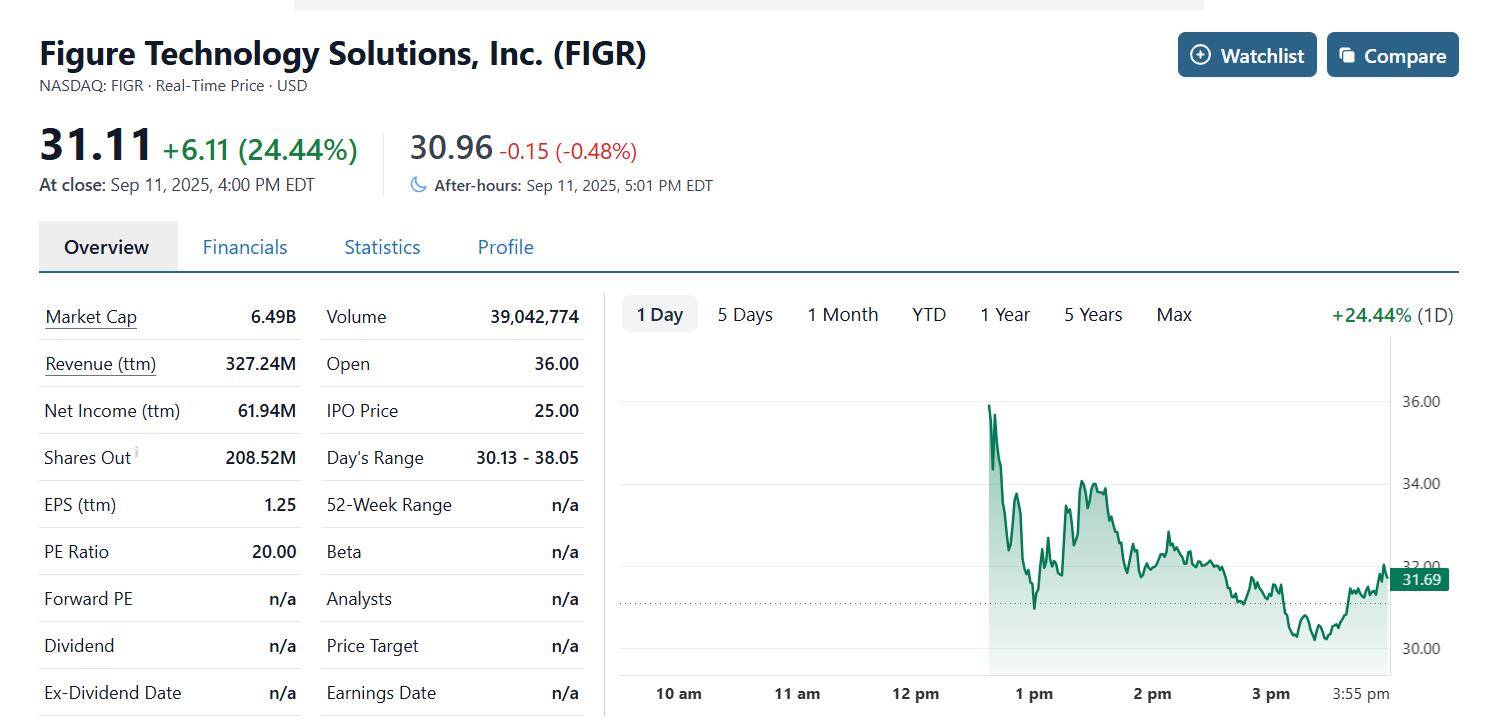
Core Viewpoint - The successful IPO of Figure Technology Solutions Inc. marks a continuation of the trend of cryptocurrency-related companies entering the public market, reflecting strong investor interest in blockchain-based firms with solid fundamentals [1][3][7]. Group 1: Company Overview - Figure Technology Solutions Inc. debuted on NASDAQ under the ticker FIGR, opening at $36, a 44% increase from its IPO price of $25, and closing at $31.11, up 24.4% [1][2]. - The company raised $787.5 million by issuing 31.5 million shares, exceeding the initial offering of 26.65 million shares due to strong demand [2][7]. - Figure's market capitalization reached approximately $6.49 billion at the close of its first trading day, with a valuation of $5.3 billion based on the IPO price and $7.6 billion based on the opening price [3][4]. Group 2: Financial Performance - For the first half of the year, Figure reported a net profit of $29.1 million and revenue of $190.6 million, compared to a net loss of $15.6 million and revenue of $156 million in the same period last year [4]. - The company anticipates a full-year revenue of $341 million and a net profit of $17.2 million for 2024, a significant improvement from 2023's projected revenue of $209.6 million and a net loss of $47.9 million [4]. - Figure facilitated approximately $6 billion in home equity loans over the past 12 months, marking a 29% year-over-year increase [4]. Group 3: Market Position and Technology - Figure utilizes blockchain technology to enhance its lending operations, having funded over $16 billion in loans since its inception in 2018 [3][4]. - The company claims to be the largest player in the public blockchain space for real-world assets, with significant adoption among major mortgage lenders [5][6]. - The CEO emphasized the practical value of blockchain in financial services, aiming to simplify transactions by reducing the number of intermediaries involved [5][6]. Group 4: Industry Trends - The IPO of Figure is part of a broader trend of cryptocurrency and blockchain companies seeking public listings, with more IPOs expected, including the notable Gemini exchange [3][7]. - The demand for Figure's IPO led to an increase in the share count and pricing range, indicating strong market interest in blockchain-related investments [7][8].

私行业务跑出加速度 成银行扩中收重要引擎
Zhong Guo Zheng Quan Bao· 2025-09-11 22:15
Core Insights - The private banking business has shown significant growth in both client numbers and assets under management (AUM), becoming a key driver for retail banking growth amid pressure on net interest margins [1][4]. Client Growth - Major state-owned banks have a strong advantage in private banking client numbers, with Agricultural Bank of China reporting 279,000 clients, an increase of 23,000 since the beginning of the year [2]. - China Construction Bank, Bank of China, and Bank of Communications reported private banking clients of 265,500, 216,900, and 102,600 respectively, while Postal Savings Bank had 41,400 clients, reflecting a growth of over 21% [2]. - Among joint-stock banks, China Merchants Bank leads with 182,700 clients, followed by Ping An Bank and CITIC Bank, both exceeding 90,000 clients [2]. - Several city commercial banks also reported impressive growth, with Ningbo Bank's private banking clients increasing by 20.27% to 30,000 [2]. AUM Growth - Private banking AUM growth outpaced overall retail AUM growth, with Agricultural Bank, Bank of China, China Construction Bank, and Bank of Communications reporting AUM of CNY 3.5 trillion, CNY 3.4 trillion, CNY 3.18 trillion, and CNY 1.39 trillion respectively, reflecting growth rates of 11.11%, 8.28%, 14.39%, and 7.20% [4]. - Joint-stock banks like Ping An Bank, CITIC Bank, and Industrial Bank reported private banking AUM exceeding CNY 1 trillion, with Minsheng Bank and Zheshang Bank showing AUM growth of over 10% [4]. Strategic Focus - Banks are increasingly focusing on deepening client service, with strategies tailored to high-net-worth individuals, such as China Construction Bank's integrated client management and Postal Savings Bank's innovative client activities [5]. - Future developments in private banking are expected to emphasize digitalization, service ecosystem integration, and global investment options, leveraging technologies like AI and blockchain for enhanced client service [6].
私行业务跑出加速度成银行扩中收重要引擎
Zhong Guo Zheng Quan Bao· 2025-09-11 20:17
Core Insights - The private banking business has shown significant growth in both client numbers and AUM (Assets Under Management), becoming a key driver for retail banking growth amid pressure on net interest margins [1][2][3] Client Growth - Major state-owned banks lead in private banking client numbers, with Agricultural Bank of China having 279,000 clients, followed by China Construction Bank with 265,500, and Bank of China with 216,900 [1] - China Construction Bank added 34,000 private banking clients in the first half of the year, while Postal Savings Bank saw a growth of over 21% in its client base [1][2] - In the joint-stock banks, China Merchants Bank leads with 182,700 clients, followed by Ping An Bank and CITIC Bank, each exceeding 90,000 clients [2] AUM Growth - Private banking AUM growth outpaces overall retail AUM growth, with Agricultural Bank of China reporting AUM of 3.5 trillion yuan, an increase of 11.11% from the beginning of the year [2][3] - Other state-owned banks also reported significant AUM growth, with China Construction Bank at 3.18 trillion yuan, reflecting a 14.39% increase [2][3] Business Strategy and Service Development - Banks are focusing on enhancing client services, with China Construction Bank integrating personal client management and supporting private entrepreneurs [3][4] - CITIC Bank is emphasizing tiered services for ultra-high-net-worth clients, while China Everbright Bank is targeting families, women, and business owners [4] - Future developments in private banking are expected to focus on digitalization, service ecosystem integration, and global investment opportunities [4]





今晚circle和aidc
小熊跑的快· 2025-09-11 14:20
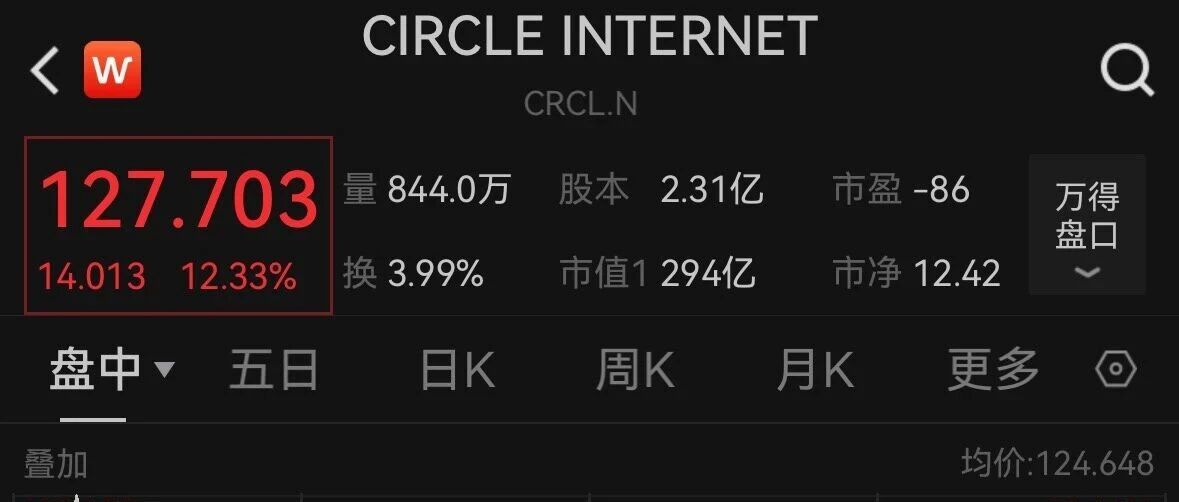
Group 1 - Nasdaq has introduced two trading models to meet diverse investor needs: traditional digital ownership and tokenized trading based on blockchain technology [1] - Investors can specify their preference for tokenized transactions when submitting orders, which will then be processed by the Depository Trust Company (DTC) [1] - This initiative aligns with the trend of traditional financial institutions entering the digital asset space and responds to regulatory changes in the crypto asset sector [1] Group 2 - The USDC has a competitive advantage as it is commonly listed as a default trading pair on many exchanges, and the US government is expected to support its transparency and security [1] - There has been a notable increase in interest in AIDC, suggesting potential new orders from major companies [3]
波场TRON网络费用大降60%!3.2亿用户转账成本直降,跨境支付快如闪电
Sou Hu Cai Jing· 2025-09-11 08:13
Core Insights - TRON has officially announced a 60% reduction in network fees, lowering on-chain transfer costs for ordinary users to below $0.001, which, combined with the existing zero-fee mechanism for USDT, marks a significant shift towards affordable stablecoin payments [1] - The technical upgrade has increased transaction processing speed to 8,300 transactions per second and reduced block confirmation time to 0.5 seconds, making transfers faster than ordering takeout [3] - TRON's collaboration with MoonPay allows U.S. users to complete fiat-to-crypto exchanges in just five minutes, streamlining the process significantly [5] - The jointly developed "Guidelines for Compliant Stablecoin Issuance" have been recognized by regulatory bodies like the EU's ESMA, positioning TRON as a rule-maker in the industry [6] - Over $80 billion in USDT is circulating on the TRON network, with 60% of transactions being under $1,000, indicating that stablecoins are becoming essential for everyday payments [7] - TRON is building an inclusive global financial network, with the rapid adoption of the USD1 stablecoin and the WLFI token enhancing the ecosystem's financial tools [8] - TRON's vision emphasizes that blockchain technology addresses current practical needs, transforming cross-border payments from luxury to necessity [10]

长沙馨何生物技术有限公司成立 注册资本100万人民币
Sou Hu Cai Jing· 2025-09-11 06:13
Company Overview - Changsha Xinhao Biotechnology Co., Ltd. has been established with a registered capital of 1 million RMB [1] - The legal representative of the company is Lan Feng [1] Business Scope - The company is involved in the operation of Class III medical devices and the rental of Class III medical equipment, which requires approval from relevant authorities before commencing operations [1] - It also engages in the sale of Class I and Class II medical devices, as well as the rental of Class I and Class II medical equipment [1] - Additional activities include wholesale of personal protective equipment, sales of sanitary products and disposable medical supplies, and sales of disinfectants (excluding hazardous chemicals) [1] Additional Services - The company offers a wide range of services including software development, sales, and outsourcing, as well as blockchain technology-related software and services [1] - It also provides marketing planning, market research (excluding foreign-related investigations), and health consulting services (excluding diagnostic services) [1] - Other activities include the sale and rental of various equipment, including office and teaching supplies, and the repair of specialized equipment [1]
万酒城“熊大”:酒水行业颠覆者,一个搬运希望的人……
Sou Hu Cai Jing· 2025-09-10 14:00
Core Insights - The article highlights the transformative journey of a figure in the liquor industry, known as "Xiong Da," who has redefined success by focusing on equitable wealth distribution and technological innovation in the sector [1][10][12] Group 1: Industry Transformation - The liquor industry has been disrupted by the introduction of blockchain technology and digital upgrades, which have streamlined operations and reduced intermediaries by 70% [4] - The company has achieved significant sales growth, with annual sales exceeding 100 billion and a projected sales figure of 12 billion for the first half of 2025 [7][10] - The establishment of a digital wine estate model has allowed for a unique business structure where there are no employees, only owners, indicating a shift towards a decentralized business model [7] Group 2: Leadership Philosophy - The leader emphasizes the importance of sharing wealth and creating value for all participants, stating that true wealth is about collective success rather than individual accumulation [7][10] - During the pandemic, the company made decisions that prioritized community support, such as waiving brand usage fees and sharing savings with delivery personnel, showcasing a commitment to social responsibility [7] - The leader's approach has garnered a loyal following of 6 million supporters, reflecting a strong alignment between the company's values and its community [7][10] Group 3: Vision for the Future - The company is positioned as a testing ground for the future of the liquor industry, with innovative practices that challenge traditional business models [7][10] - The narrative emphasizes that true business legends are defined not by their wealth but by their ability to inspire hope and create opportunities for others [10][12] - The leader's story serves as a reminder that a broader vision and a generous mindset can lead to greater market success and influence [12]

RWA与RDA:一字之差,底层逻辑天壤之别
Sou Hu Cai Jing· 2025-09-10 10:01
Core Concept - The article discusses the distinction between RWA (Real World Asset) and RDA (Revenue Generating Digital Asset), emphasizing the importance of understanding these concepts for making informed decisions in the context of blockchain integration with real-world assets [1][3]. Group 1: Definitions - RWA refers to the tokenization of tangible or intangible assets in the real world, representing ownership or a share of the asset itself [6]. - RDA represents the rights to future cash flows or revenues generated by an asset, without conferring ownership of the asset [6][4]. Group 2: Key Differences - The fundamental difference lies in ownership: RWA involves the transfer or division of ownership, while RDA does not change ownership, allowing the asset holder to retain full ownership [10]. - RWA is more complex due to legal structures, compliance, and asset custody, whereas RDA is simpler and focuses on cash flow rights [10]. - RWA is suitable for asset restructuring and financing, while RDA is ideal for short-term liquidity without losing ownership [10][11]. Group 3: Implications for Asset Holders - The choice between RWA and RDA depends on the asset holder's goals: RWA is better for deep asset restructuring and global liquidity, while RDA is more flexible for short-term financing needs [9][11]. - Understanding the differences between RWA and RDA can help asset holders communicate effectively with technology and project partners, ensuring their needs are accurately expressed [11].