一个中国原则

Search documents
专访|韩国专家批高市早苗涉台错误言论
Xin Hua She· 2025-11-20 03:00
Core Viewpoint - The remarks made by Japanese Prime Minister Kishi Nobuo regarding Taiwan are viewed as a betrayal of diplomatic integrity and a violation of international law, according to South Korean expert Kwon Gi-sik [1][2]. Group 1: Japan's Diplomatic Stance - Kwon Gi-sik emphasizes that Japan has no authority to interfere in China's internal affairs and should not challenge the One China principle, which is a fundamental consensus for maintaining peace in East Asia and the world [1]. - The comments made by Kishi Nobuo are criticized as inappropriate and damaging to regional peace, warranting strong condemnation [1]. Group 2: Historical Context and Military Concerns - Kwon Gi-sik warns against the resurgence of Japanese militarism, stating that it poses a danger to both Japan and its neighbors, potentially leading to a repeat of historical conflicts [2]. - He highlights the lack of historical reflection in Japan's education as a root problem, which contributes to a generation that does not understand its responsibilities towards other nations [2]. Group 3: Domestic Political Dynamics - The expert notes that Kishi Nobuo's provocations are politically motivated, aimed at rallying right-wing and centrist forces to maintain his fragile political position [2]. - Kwon Gi-sik argues that such actions are a serious misjudgment that could ultimately harm Japan's national interests [2]. Group 4: Regional Tensions and Future Outlook - Kwon Gi-sik identifies the long-standing tensions in East Asia as being exacerbated by U.S. policies, with Kishi Nobuo's actions further intensifying the situation [3]. - He calls for Japan to recognize the current realities and focus on building a peaceful East Asia, which is essential for the well-being of its citizens [3].
国际人士批评高市早苗错误言论严重违反国际法和国际关系基本准则
Yang Guang Wang· 2025-11-20 02:49
Group 1 - The core viewpoint is that Japanese Prime Minister Kishi Nobuo's remarks are seen as a serious interference in China's internal affairs and a threat to regional peace, violating international law and basic principles of international relations [1][2] - Former Thai Deputy Prime Minister Phin expressed that Kishi's comments pose a significant challenge to world peace and called for her to retract her statements to maintain international order [1] - Venezuelan National Assembly member Sanz criticized Kishi's remarks as provocative and a violation of the one-China principle, urging her to withdraw her statements for regional stability [1] Group 2 - Canadian Vancouver Peace Council President Kimbel-Carrieu stated that Taiwan is an inseparable part of China and warned against foreign interference, expressing concerns over Kishi's intentions for Japan's military expansion [1] - Japanese citizens protested in Kyoto against Kishi's remarks, labeling them as extremely dangerous and calling for an immediate retraction [1][2] - Protesters emphasized the need for Japan to reflect on its wartime history and for educational reforms to properly inform future generations [2]
波黑重申恪守一个中国原则和联大第2758号决议立场
Xin Hua She· 2025-11-19 23:49
新华社萨拉热窝11月19日电 波斯尼亚和黑塞哥维那(波黑)外交部近日向中国驻波黑大使馆致照会, 重申波黑政府恪守一个中国原则和联合国大会第2758号决议立场。 照会指出,波黑一贯坚持中华人民共和国政府是代表全中国的唯一合法政府的立场,并完全支持一个中 国原则。前南斯拉夫社会主义联邦共和国曾支持1971年联合国大会第2758号决议,该决议承认中华人民 共和国政府的代表是中国在联合国的唯一合法代表。波黑充分理解该决议的重要意义,并支持中华人民 共和国全面执行这一决议。 照会强调,今年是两国建交30周年。30年来,两国在互尊互信、互不干涉内政原则的基础上发展友好关 系,政治、经济、文化等领域合作不断深化。波方对双边关系蓬勃发展表示欣喜,中国对波投资不断增 加,双方互免签证政策惠及两国人民,文化和旅游往来日益密切。波黑将继续致力于推进对华关系,深 化经济与投资合作,促进两国文化和民间交流。(记者殷晓圣) ...
视频丨美学者批评高市涉台言论:罔顾历史 破坏地区和平
Yang Shi Xin Wen Ke Hu Duan· 2025-11-19 13:13
彼得·库兹尼克进一步指出,日本战后和平宪法曾是地区稳定的重要基石之一,但如今,日本首相高市早苗及其团队正推动削弱这一限制,推动国家走向再 军事化。 0:00 针对日本首相高市早苗近日就台湾问题作出的错误言论,当地时间18日,美国大学历史学教授彼得·库兹尼克指出,这类言论罔顾历史、违背战后国际秩 序,严重冲击地区稳定。他强调,高市早苗的错误言论,对中日关系及整个亚洲和平构成不容忽视的危险。 彼得·库兹尼克表示,日本首相高市早苗近期以"台湾有事即日本有事"作为论调,大幅提升地区紧张态势,其危险程度不可低估。专家指出,高市早苗的言 论无视中日关系最敏感的历史背景,也忽略战后国际秩序所设定的基本底线,对地区和平带来直接冲击。 美国大学历史学教授 彼得·库兹尼克:(高市早苗)的言论是如此愚蠢、无知又充满挑衅。日本(自1945年)遵守了战后安排,包括在1971年联合国的一次 投票,日本一直默认承认一个中国原则。而高市早苗是第一位公开背离这一原则的(日本首相)。这非常危险,也极具挑衅性。 美国大学历史学教授 彼得·库兹尼克:第九条是日本和平宪法的核心,被称为"最具和平主义精神的宪法",理应得到每个国家的借鉴,规定了日本永远 ...


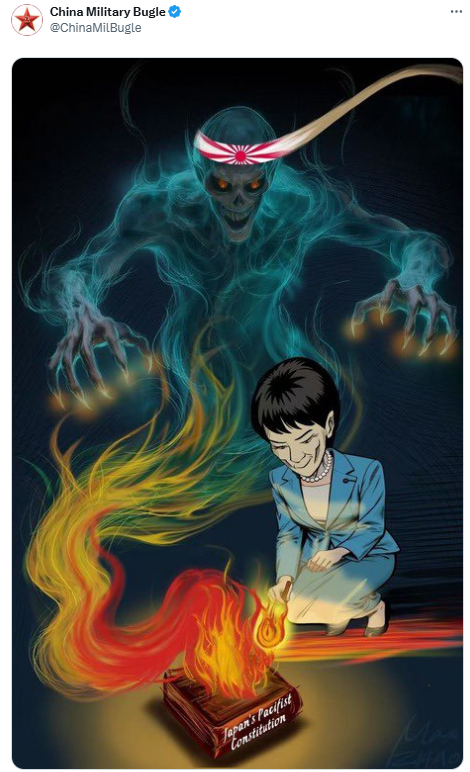
中国军号发图痛批“高市早苗为日本军国主义招魂”
Huan Qiu Wang· 2025-11-19 11:28
【环球网报道】日本首相高市早苗日前发表涉台错误言论,中方予以强烈谴责。中国军号19日在社交媒 体X上发图,痛批"高市早苗为日本军国主义招魂"。 随后,中国军号还发布一张漫画图,图片中的高市早苗点燃日本和平宪法,背后映出一个代表日本军国 主义的可憎鬼魂。 中国外交部发言人毛宁19日表示,高市早苗的涉台错误言论从根本上损害了中日关系的政治基础,激起 了中国人民的公愤和谴责。中方严肃敦促日方收回错误言论,停止在涉华问题上制造事端,以实际行动 认错纠偏,维护中日关系的政治基础。如果日方拒不撤回,甚至一错再错,中方将不得不采取严厉坚决 的反制措施。由此产生的一切后果由日方承担。 中国军号在帖文中介绍,当地时间11月18日下午,北京时间19日清晨,中国常驻联合国代表傅聪大使在 联大安理会改革问题全会的发言中表示,近期,日本首相高市早苗在国会发表涉台露骨挑衅言论,妄 称"台湾有事可能对日本构成'存亡危机事态'",暗示日方可援引所谓"集体自卫权"武力介入台海问题。 众所周知,世界上只有一个中国,中华人民共和国政府是代表全中国的唯一合法政府,台湾是中国领土 不可分割的一部分。 傅聪指出,高市早苗的涉台言论极其错误,极为危险,粗 ...
中方:日本根本没资格“入常”
证券时报· 2025-11-19 09:03
Group 1 - The core viewpoint of the article emphasizes that Japan's recent statements regarding Taiwan are seen as a serious violation of China's sovereignty and a challenge to international justice, undermining the post-war international order [1][2] - The article highlights that this year marks the 80th anniversary of the victory in the Second Sino-Japanese War and the liberation of Taiwan, underscoring Japan's historical aggression and colonial rule during World War II [1] - It is noted that Japan continues to face criticism for its failure to acknowledge its wartime atrocities, including the denial of events such as the Nanjing Massacre and the issue of "comfort women," which reflects a broader trend of historical revisionism [1][2] Group 2 - The article points out that Japan's Prime Minister, Fumio Kishida, has invoked the concept of a "survival crisis," raising concerns about a potential return to militarism, which is viewed as a threat to peace [2] - China warns Japan to cease its interference in domestic affairs and to refrain from provocative actions regarding Taiwan, stating that any military intervention would be considered an act of aggression [2] - The article asserts that China will firmly exercise its right to self-defense as granted by the UN Charter and international law to protect its sovereignty and territorial integrity [2]
中方:日本毫无资格要求成为安理会常任理事国
Ren Min Ri Bao· 2025-11-19 08:47
Core Viewpoint - The Chinese representative to the UN, Ambassador Fu Cong, criticized Japanese Prime Minister Fumio Kishida's provocative remarks regarding Taiwan, asserting that such statements threaten China's sovereignty and violate international principles [1][2]. Group 1: China's Position on Taiwan - Fu Cong emphasized that Taiwan is an inseparable part of China and that Japan's interference in China's internal affairs is dangerous and erroneous [1]. - The remarks made by Kishida are seen as a challenge to international justice and a violation of the post-war international order [1][2]. - Fu Cong warned Japan against playing with fire on the Taiwan issue, stating that any military intervention would be considered an act of aggression [2]. Group 2: Historical Context and Implications - The statement referenced Japan's militaristic history, noting that similar justifications for "survival crises" were used to initiate invasions, such as the 1931 Mukden Incident [2]. - Fu Cong questioned Japan's commitment to peace, given Kishida's advocacy for abolishing the constitutional clause that renounces war [2]. - The international community is urged to scrutinize Japan's ability to uphold its promises of peace and justice in light of its historical actions [2].
国台办:“台独”顽固分子为非作歹,罪有应得,必遭严惩
Zhong Guo Xin Wen Wang· 2025-11-19 08:02
Core Viewpoint - The spokesperson of the Taiwan Affairs Office emphasized that "Taiwan independence" advocates will face severe punishment for their actions, and the Democratic Progressive Party (DPP) is responsible for the tensions in cross-strait relations [1] Group 1: Political Context - The DPP's provocations regarding "Taiwan independence" are identified as the root cause of the current tensions and instability in cross-strait relations [1] - The spokesperson criticized DPP officials for attempting to shift blame and divert attention from their own actions [1] Group 2: Stance on "Taiwan Independence" - The spokesperson reiterated the importance of adhering to the "One China" principle and the "1992 Consensus" to maintain peace and stability in the Taiwan Strait [1] - It was stated that only by firmly opposing "Taiwan independence" and punishing its advocates can the interests and welfare of the Taiwanese people be effectively safeguarded [1]
中国代表在联合国怒批日本
Xin Jing Bao· 2025-11-19 07:44
据参考消息报道,11月18日,中国常驻联合国代表傅聪在联合国大会上怒批日本,并表示世界上只有一 个中国。傅聪还说,高市早苗的涉台言论极其错误、极为危险,粗暴干涉中国内政,严重违背一个中国 原则和中日四个政治文件精神,这样的国家根本没有资格要求成为安理会常任理事国。日前高市早苗公 然鼓吹武力介入台海的可能性,中方对此强烈不满、坚决反对。 ...
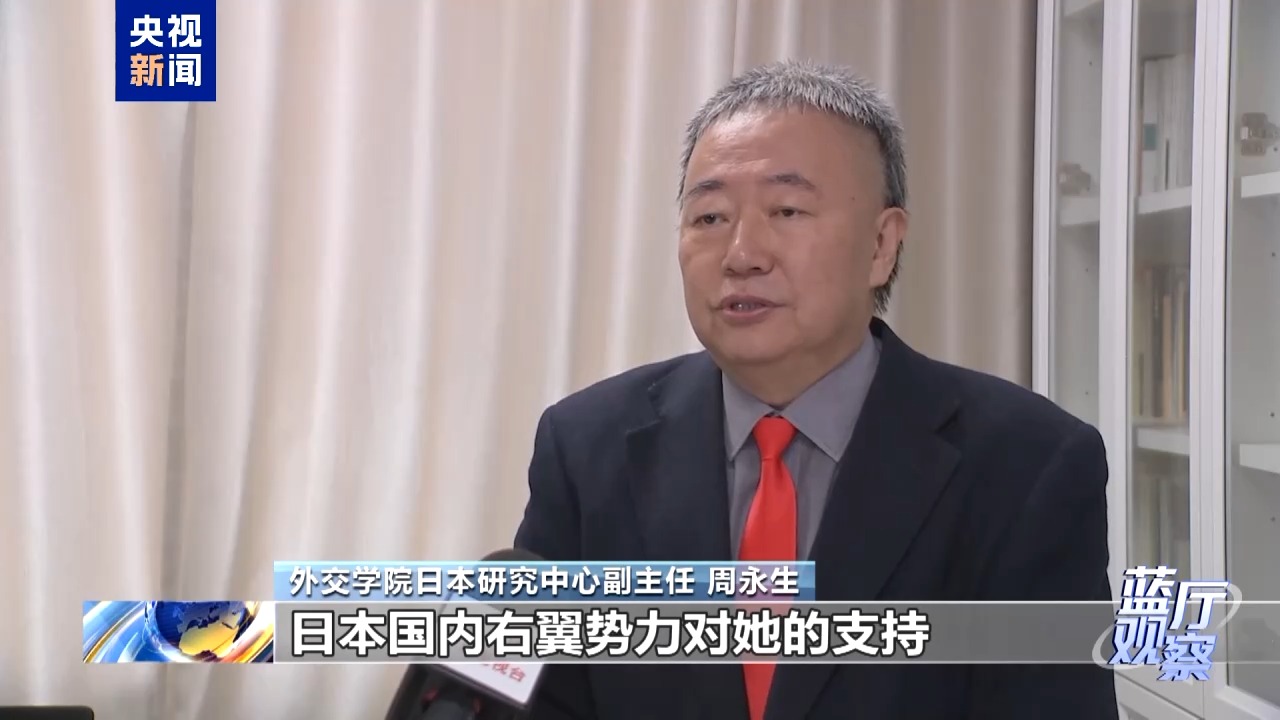
蓝厅观察丨高市早苗妄图“以台制华”不会得逞
Yang Shi Xin Wen Ke Hu Duan· 2025-11-19 05:54
Core Viewpoint - The recent provocative remarks by Japanese Prime Minister Sanae Takaichi regarding Taiwan have elicited strong responses from Chinese diplomatic and defense authorities, highlighting the tensions in cross-strait relations and Japan's historical insensitivity [1][10]. Group 1: Strategic Intentions Behind Takaichi's Remarks - Japanese right-wing politicians, in collaboration with "Taiwan independence" forces, have been promoting the narrative that "Taiwan's issues are Japan's issues," which reflects a broader strategy to use Taiwan as a geopolitical leverage point [2]. - Takaichi's statements are aimed at deterring China and asserting Japan's influence in East Asia, while also catering to domestic right-wing factions that support her [4]. - The Japanese government's military enhancements since 2022, focusing on offensive capabilities and sustained high-intensity operations, indicate an intention to interfere in China's internal affairs [6]. Group 2: Challenges to Sino-Japanese Relations - Takaichi's remarks pose a serious challenge to the political foundation of Sino-Japanese relations, which are governed by four key political documents that affirm Japan's commitments regarding Taiwan [7]. - Experts emphasize that Japan must adhere to its political commitments and international legal obligations concerning Taiwan to promote regional peace, as Takaichi's comments undermine the "One China" principle and the political basis of Sino-Japanese relations [9]. Group 3: Reactions from Taiwan - Takaichi's comments have been met with widespread condemnation from various sectors in Taiwan, with over 30 organizations publicly protesting against her statements, asserting that Taiwan will not be a victim of Japanese militarism [10]. - Taiwanese commentators argue that Takaichi's remarks reflect a persistent desire among Japanese right-wing factions to revive militarism, and they warn against any attempts to drag Taiwan into conflicts [12].