贸易协议
Search documents
特朗普要求降关税,日本却主动答应,石破茂为何如此妥协
Sou Hu Cai Jing· 2025-07-26 18:19
Group 1 - The core viewpoint of the article is that Trump's recent trade agreements with Japan and the Philippines signify a shift in regional power dynamics, particularly affecting the political futures of Japanese Prime Minister Kishida and Philippine President Marcos [1][15]. - Japan's automotive industry is significantly impacted by the U.S. reducing tariffs from 25% to 15%, which, while seemingly beneficial, actually diminishes Japan's competitive edge in the long term [3][5]. - Japan is required to invest $550 billion in the U.S. as part of the trade agreement, which could exacerbate its existing economic challenges and lead to capital outflow [6][8]. Group 2 - The trade agreement mandates Japan to open its markets for rice, automobiles, and energy, putting pressure on domestic industries and potentially harming local farmers due to increased competition from U.S. imports [8][10]. - The political landscape in Japan is unstable, with Kishida facing immense pressure following a historic loss in the recent Senate elections, leading to calls for his resignation [12][14]. - The Philippines' trade agreement with the U.S. includes a zero-tariff policy for U.S. goods entering the Philippines, while Philippine goods face a 19% tariff in the U.S., creating an imbalanced trade relationship [17][19]. Group 3 - President Marcos's attempts to seek U.S. support against China have not yielded the desired results, as the U.S. prioritizes its trade relations with China over supporting the Philippines [19][21]. - Marcos's political position is precarious due to rising tensions with the Duterte family and declining public support following electoral setbacks, complicating his ability to govern effectively [23][25].
特朗普称与欧盟达协议可能五成,后改口称或可达成,预计多数协议8月前完成
Hua Er Jie Jian Wen· 2025-07-25 22:55
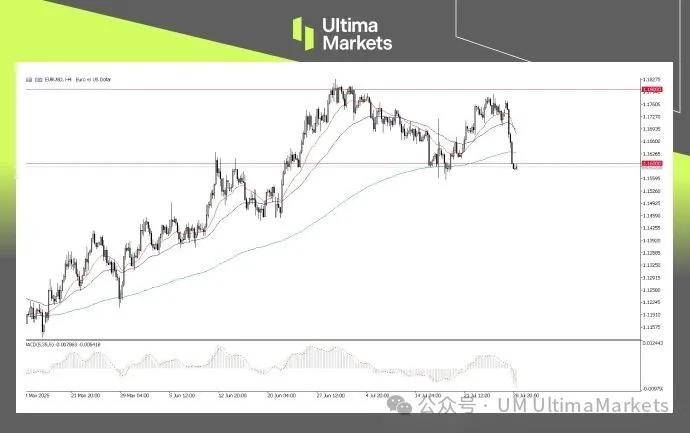
Group 1 - The core viewpoint of the news is the ongoing discussions between the EU and the US regarding trade relations, with a potential agreement on tariff reductions being a focal point [1][4][5] - Trump stated that the likelihood of reaching a trade agreement with the EU is around 50%, which caused a temporary drop in the euro against the dollar [1][5] - EU officials expressed optimism about reaching a trade agreement, potentially involving a 15% tariff rate, similar to a recent agreement with Japan [5][6] Group 2 - A face-to-face meeting is scheduled for July 27 in Scotland to further discuss trade cooperation and related disputes between the EU and the US [5][6] - Trump has previously announced a 30% tariff on EU imports starting August 1, with additional tariffs on specific industries, including a 25% tariff on automobiles and parts [5][6] - The EU is seeking to establish lower tariff quotas for certain steel and aluminum products and hopes for exemptions in specific sectors [6] Group 3 - Trump indicated that most trade agreements are expected to be finalized before August, with plans to issue around 200 tariff letters to other trading partners [7] - He downplayed the possibility of the UK negotiating a deal by removing its digital services tax in exchange for lower US tariffs on steel and aluminum [7] - Australia has recently lifted restrictions on US beef imports, which Trump praised as a positive step in trade negotiations [8]
特朗普称美欧达成协议几率仅五成
news flash· 2025-07-25 14:03
Core Viewpoint - The likelihood of reaching a trade agreement between the U.S. and the EU is perceived by Trump to be only 50% despite optimistic signals from EU diplomats [1] Group 1: Trade Agreement Prospects - Trump believes the chances of a trade agreement are "fifty-fifty," indicating uncertainty in negotiations [1] - U.S. and EU negotiators are reportedly working "closely" to achieve an agreement [1] Group 2: Tariff Implications - Trump has warned that if a trade agreement is not reached by August 1, the EU could face punitive tariffs of 30% on most goods [1] - Specific additional tariffs on certain industries will also be implemented if the agreement is not finalized [1] - Trump plans to issue more letters in the coming days to set new tariffs for other countries [1]
贵金属日报-20250725
Guo Tou Qi Huo· 2025-07-25 13:27
Report Industry Investment Rating - Not provided Core Viewpoints - The U.S. economic data shows resilience, with the July S&P Global Manufacturing PMI preliminary value at 49.5 falling short of expectations but the Services PMI at 55.2 being strong, and the weekly initial jobless claims at 217,000 remaining low. The precious metals are mainly in a wide - range oscillation. The probability of an unexpected confrontation is decreasing, but market uncertainties still exist [2]. - Silver has significant advantages over gold during the stage when domestic and foreign risk appetites are opened, and it is currently in an upward trend. Attention should be paid to whether the change in photovoltaic expectations affects the improvement of the term structure of silver demand expectations [2]. - The easing signs of the global trade situation and the strong performance of U.S. economic data are the main reasons for the decline in gold prices. These factors reduce investors' concerns about economic turmoil and weaken the attractiveness of gold as a safe - haven asset [2][3] Summary by Related Content Economic Data - The July S&P Global Manufacturing PMI preliminary value in the U.S. is 49.5, which is lower than expected, while the Services PMI is 55.2, showing strong performance. The weekly initial jobless claims are 217,000, remaining at a low level. The initial jobless claims for the week ending July 19 decreased by 4,000 to 217,000, the lowest level in three months, far lower than the economists' expected 226,000. The July U.S. Composite PMI rose from 52.9 in June to 54.6, and the Services PMI climbed significantly to 55.2, indicating an accelerated expansion of economic activities [2][3] Trade Situation - The U.S. and multiple countries are expected to reach tariff agreements one after another. The U.S. and Japan have reached a trade agreement that reduces the automobile import tariff to 15% and exempts some goods from punitive tariffs. The U.S. and the EU's trade negotiations have also shown positive progress, and the market expects the two sides to reach an agreement with a 15% benchmark tariff, lower than the 30% tariff level previously threatened by Trump [2] Precious Metals Market - Precious metals are mainly in a wide - range oscillation. Silver has significant advantages over gold during the stage when domestic and foreign risk appetites are opened and is in an upward trend. The change in photovoltaic expectations may affect the improvement of the term structure of silver demand expectations. The easing of the global trade situation and strong U.S. economic data have put pressure on gold prices [2]
每日机构分析:7月25日
Xin Hua Cai Jing· 2025-07-25 12:22
Group 1: Japan's Economic Outlook - Tokyo's inflation has decreased in July but remains high enough to support the Bank of Japan's consideration of policy normalization [1][2] - The Japanese government’s measures to stabilize prices are starting to show effects, yet core inflation pressures in Tokyo remain elevated [2] - The Bank of Japan is expected to raise its core inflation forecasts for fiscal years 2025 and 2026, excluding energy price fluctuations [2] Group 2: European Central Bank (ECB) Predictions - Morgan Stanley has postponed its prediction for ECB rate cuts from September to October, citing economic resilience and hopes for a US-EU tariff agreement [3] - Analysts from BNP Paribas believe that the ECB's optimistic outlook on the economic situation and potential trade agreements may lead to a pause in rate cuts [3] - High inflation and economic activity have supported the euro, with expectations that the ECB may maintain current rates unless significant economic deterioration occurs [3] Group 3: Currency Market Dynamics - Barclays analysts predict that investors are unlikely to engage in large-scale dollar selling during the upcoming portfolio rebalancing at the end of the month [4] - The dollar's performance has been supported by high core inflation, resilient economic activity, and a strong labor market, despite pressure from President Trump on the Federal Reserve [4] - The positive momentum in US equities continues, while US bonds have underperformed, influencing investor behavior in the foreign exchange market [4]