
公司治理

Search documents
华工科技产业股份有限公司第九届董事会第十九次会议决议公告
Shang Hai Zheng Quan Bao· 2025-12-01 19:18
Group 1 - The company held its 19th meeting of the 9th Board of Directors on December 1, 2025, via telecommunication, with all 9 directors present and voting [2][3] - The Board approved the proposal to abolish the Supervisory Board and amend the Articles of Association, with a unanimous vote of 9 in favor [3][4] - The proposal to revise various corporate governance systems was also approved, including amendments to the rules for Board meetings, shareholder meetings, and independent director work systems, all receiving unanimous support [5][7][9] Group 2 - The company plans to provide guarantees for 25 wholly-owned and controlled subsidiaries, with a total guarantee amount not exceeding 8.67 billion yuan, which is 85.19% of the company's audited net assets for 2024 [37] - The Board approved a proposal to apply for a total comprehensive credit limit of 19.831 billion yuan from 15 banks, covering various credit products [38] - The company will continue to engage in foreign exchange derivative hedging, with a maximum trading margin and premium not exceeding 16 million yuan, and a maximum contract value of 300 million yuan [39] Group 3 - The company will hold its 2025 Fourth Extraordinary General Meeting on December 17, 2025, with both on-site and online voting options available [41][52] - The meeting will address proposals that have been approved by the Board and Supervisory Board, with specific voting requirements for certain resolutions [59] - Shareholders must register for the meeting by December 15, 2025, and can participate in voting through designated systems [60][61]

4个月内两高管遭留置 富森美称与上市公司无关
Zhong Guo Jing Ying Bao· 2025-12-01 12:22
Core Viewpoint - The recent detention of two senior executives at Fusenmei raises concerns about potential systemic internal control deficiencies within the company, despite the management's assertion that these issues are unrelated to the company's operations [1][6]. Group 1: Executive Detention - Fusenmei announced that its Vice President and Board Secretary, Zhang Fengshu, is under investigation and has been detained, following the earlier detention of Chairman Liu Bing in July [2][3]. - During the detention, Zhang Fengshu is unable to fulfill his duties, and the company has appointed the CFO, Wang Hong, to temporarily take over these responsibilities [2]. - The company has stated that it is currently unaware if the detentions are related to the same case and will continue to monitor the situation [3]. Group 2: Shareholding Structure - Liu Bing, the controlling shareholder and chairman, along with his family members, holds over 80% of Fusenmei's shares, raising questions about concentrated family power and governance issues [4][6]. - The three family members, Liu Bing, Liu Yunhua, and Liu Yi, are all founders of Fusenmei and have a significant influence on the company's operations [5][6]. - Fusenmei maintains that it operates independently from its controlling shareholders and has a robust governance and internal control mechanism in place [6][7]. Group 3: Company Operations - Despite the detentions, Fusenmei asserts that its overall operations and governance remain normal, with no significant impact on production or management [7]. - The company emphasizes that all other directors and senior management are continuing their duties without interruption [7].

景区收入连跌6年,却砸9.6亿买地!宋城演艺关联交易惹众怒,“骚操作”早有前车之鉴
市值风云· 2025-12-01 10:10
Core Viewpoint - The article raises concerns about the governance level of Songcheng Performance (300144.SZ) following its acquisition of 100% equity in Hangzhou Songcheng Industrial Co., Ltd. for 9.63 billion, suggesting potential conflicts of interest and financial mismanagement [3][4][6]. Summary by Sections Acquisition Details - Songcheng Performance announced the acquisition of Hangzhou Songcheng Industrial, which includes land and buildings adjacent to its theme park, previously leased for operations [5][9]. - The acquisition price of 9.63 billion is considered excessively high, given that Hangzhou Songcheng Industrial's net profit for 2024 is projected at only 2.03 million, implying a payback period of nearly 474 years [6][7]. Financial Concerns - The acquisition raises suspicions about the financial health of the controlling shareholder, Songcheng Group, especially during a downturn in the real estate market [5][6]. - There is a notable 31% pledge ratio of shares held by Songcheng Group, indicating potential liquidity issues [6]. Revenue Performance - Songcheng Performance's revenue from its theme park has declined from 769 million in 2018 to 530 million in 2024, highlighting operational challenges rather than a need for expansion [10][11]. - The article argues that the decision to acquire land and property should be based on increased revenue and visitor numbers, which are currently lacking [12]. Historical Context - The article references past financial mismanagement, including a significant impairment loss of 1.8 billion in 2021 related to the acquisition of the "Liujianfang" platform, raising further doubts about governance practices [16][18]. - Previous regulatory issues, including incomplete disclosures and accounting adjustments, have led to warnings from regulatory bodies, further questioning the company's governance [20][21]. Conclusion - The article concludes that the recent acquisition, combined with historical financial practices, necessitates a reevaluation of Songcheng Performance's governance and operational strategies [13][14].


中金公司-宏观探市:股市长牛之中国道路:向新而生-18页
中金· 2025-12-01 03:18
Investment Rating - The report suggests a bullish outlook for the Chinese stock market, indicating potential for a long-term bull market driven by structural factors in both the asset and funding sides [2][3][8]. Core Insights - The report emphasizes that the long-term bull market in the Chinese stock market requires a combination of asset-side and funding-side factors, with globalization enhancing both aspects [3][18]. - It highlights that despite a decline in economic growth rates, stable profit growth and elevated valuation levels can sustain a bull market, drawing parallels with historical experiences from developed countries [15][22]. - The report identifies key drivers for the A-share market's upward momentum, including growth potential, high-quality overseas expansion, and improvements in corporate governance [4][5][6][7]. Summary by Sections Growth Potential - The report discusses the transition towards a more efficient economy, driven by innovation and research, as the financial cycle shifts downwards [4][24]. - It notes that China's R&D expenditure as a percentage of GDP has reached 2.6%, aligning with developed countries, and highlights the increasing complexity of the economy [25][30]. High-Quality Overseas Expansion - The report states that China is actively expanding through trade and investment, with high-tech and high-growth companies increasingly exposed to international markets [5][33]. - It mentions that the share of overseas revenue for specialized and innovative companies has risen significantly, indicating a shift towards global markets [35][39]. Corporate Governance Improvements - The report outlines various policies aimed at enhancing corporate governance, increasing transparency, and encouraging dividend payouts, which are expected to improve overall market returns [6][43]. - It highlights that the contribution of dividends to total returns in the A-share market has been low but is improving due to recent reforms [48][49]. Global Long-Term Funding - The report emphasizes the importance of stable long-term funding, particularly from insurance and pension funds, in supporting the bull market [7][57]. - It notes that global capital rebalancing may lead to increased foreign investment in the Chinese market, enhancing liquidity and valuation [61][63].

董事举报!参加董事会遭阻,同一董事会会议开两次
Zhong Guo Ji Jin Bao· 2025-12-01 01:50
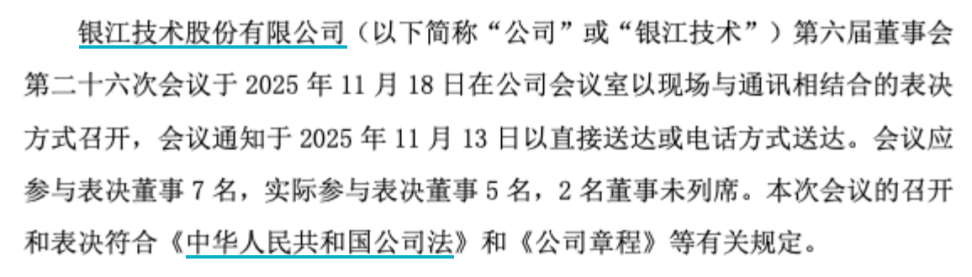
Core Viewpoint - The internal governance struggle at ST Yinjian is highlighted by the recent board meeting controversies, including absenteeism and lack of transparency in decision-making processes [1][4]. Group 1: Board Meeting Controversies - On November 18, ST Yinjian announced that the board approved new candidates with a unanimous vote of 5 in favor, 0 against, and 0 abstentions, despite two directors being absent [3]. - The two absent directors, Peng Xiaoyong and Cai Yang, claimed they were not absent voluntarily but were unable to attend due to a lack of communication from the acting chairman, leading to their "passive absence" [4][6]. - Peng Xiaoyong revealed that a board meeting had already been held on November 12 to discuss the same matters, where they voted against the proposals, but the company did not disclose the resolutions from that meeting [4][12]. Group 2: Communication Issues - Peng Xiaoyong expressed concerns about the serious violations in the meeting's convening and decision-making process, stating that he did not receive the meeting link until 28 hours after the meeting had already taken place [6][9]. - The acting chairman, Han Zhenxing, failed to provide the necessary meeting details and link in a timely manner, which is considered abnormal by Peng Xiaoyong [10]. - Peng Xiaoyong and Cai Yang reported that they were unable to review the agenda adequately before voting, leading them to oppose all proposals during the meetings [12][13]. Group 3: Legal Actions and Governance Issues - Peng Xiaoyong has reported the situation to regulatory authorities and has filed a lawsuit against the company, seeking to annul the decisions made under significant procedural flaws [13]. - A senior lawyer noted that the board's voting results should be disclosed promptly, and failure to do so due to opposing votes or lack of participation contradicts information disclosure regulations [15]. - The previous company secretary resigned after only two and a half months, indicating potential instability within the company's governance structure [16][18].

突发!董事举报!参加董事会遭阻,同一董事会会议开两次
Zhong Guo Ji Jin Bao· 2025-12-01 01:27
Core Viewpoint - The internal governance struggle at ST Yinjian (300020) has been exposed, highlighting issues such as delayed notifications for board meetings, lack of transparency in voting results, and the occurrence of two board meetings for the same agenda without proper disclosure [1][3][11]. Group 1: Board Meeting Issues - On November 18, ST Yinjian held a board meeting where the resolution for new board candidates was passed with a vote of 5 in favor, 0 against, and 0 abstentions [2]. - Two directors, Peng Xiaoyong and Cai Yang, were absent from the meeting, claiming they were "passively absent" due to a lack of response from the acting chairman when they sought information about the meeting [3][4]. - The same board meeting was held on November 12, where both directors voted against the resolutions, but the company did not disclose the results of that meeting [9][11]. Group 2: Communication Failures - Peng Xiaoyong reported that he did not receive the meeting link until 28 hours after the meeting had already taken place, raising concerns about the communication process [7][8]. - The acting chairman failed to provide necessary details about the meeting agenda in advance, which hindered the directors' ability to review the proposals adequately [4][9]. - The lack of timely communication and the use of an unknown number to send the meeting link were deemed abnormal by Peng Xiaoyong [8]. Group 3: Legal and Regulatory Actions - Peng Xiaoyong has reported the governance issues to regulatory authorities and has filed a lawsuit against the company to annul the decisions made during the meetings that had significant procedural flaws [11]. - A former company secretary left after only two and a half months, indicating potential instability within the company's governance structure [14].
突发!董事举报!参加董事会遭阻,同一董事会会议开两次
中国基金报· 2025-12-01 01:17
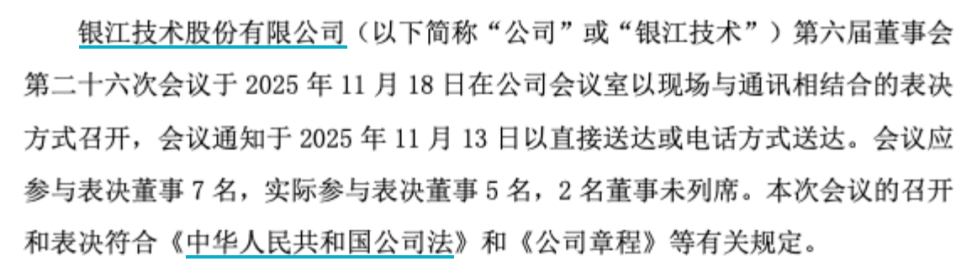
Core Viewpoint - The article reveals a governance power struggle within ST Yinjing, highlighted by irregularities in board meeting notifications and voting processes, leading to allegations of misconduct by certain board members [1][4][14]. Group 1: Board Meeting Irregularities - On November 18, ST Yinjing announced that the board meeting had a voting result of "5 votes in favor, 0 votes against, 0 abstentions" for the new board candidates, despite two directors being absent [3]. - Two directors, Peng Xiaoyong and Cai Yang, claimed they were not absent by choice but were unable to attend due to a lack of communication from the acting chairman, resulting in a "passive absence" [4][14]. - The board had previously met on November 12 to discuss the same matters, but the decisions made during that meeting were not disclosed to the public [10][14]. Group 2: Communication Failures - Peng Xiaoyong reported that he attempted to contact the acting chairman multiple times on the day of the meeting but received no response, and the meeting link was only sent to him 28 hours after the meeting had already taken place [6][8]. - The failure to provide meeting details in advance and the unusual method of sending the meeting link raised concerns about the legitimacy of the meeting process [8][14]. Group 3: Legal Actions and Governance Concerns - Peng Xiaoyong has reported the situation to regulatory authorities and filed a lawsuit against the company, seeking to annul the decisions made under questionable procedural circumstances [14]. - Legal experts indicated that the company is required to disclose board meeting results promptly, and failure to do so, especially when there are dissenting votes, violates information disclosure regulations [16].

苏州金鸿顺汽车部件股份有限公司关于2025年第一次临时股东大会增加临时提案暨股东大会补充通知的公告
Shang Hai Zheng Quan Bao· 2025-11-30 19:16
Group 1 - The company, Suzhou Jinhongshun Automotive Parts Co., Ltd., is holding its first extraordinary general meeting of shareholders in 2025 on December 10, 2025 [2][5] - The meeting will include a temporary proposal submitted by Gaode Investment Co., Ltd., which holds 15.00% of the company's shares [2][3] - The proposal aims to amend the company's articles of association regarding the cancellation of the supervisory board to comply with the latest legal requirements [3][4] Group 2 - The meeting will take place at the company's conference room located at No. 30 Changxing Road, Zhangjiagang Economic and Technological Development Zone, starting at 14:00 [7] - Online voting will be available through the Shanghai Stock Exchange's system on the same day, with specific voting time slots outlined [8] - The original equity registration date for the shareholders' meeting remains unchanged [9]

深圳市东方嘉盛供应链股份有限公司关于召开2025年第三次临时股东大会的通知
Shang Hai Zheng Quan Bao· 2025-11-30 19:12
Group 1 - The company will hold its third extraordinary general meeting of shareholders in 2025 on December 17 at 14:30 [3][7] - The meeting will combine on-site voting and online voting, with specific time slots for online voting [4][12] - Shareholders must register by December 10, 2025, to attend the meeting [5][10] Group 2 - The board of directors has approved a proposal to change the company's registered capital and amend the articles of association, increasing the registered capital from RMB 269,762,480 to RMB 377,667,472 [24][66] - The company will no longer have a supervisory board, with its functions transferred to the audit committee of the board of directors [62][67] - The amendments to the articles of association and governance systems require approval from the shareholders' meeting [66][68]

舍得酒业治理困局——“双头权力博弈”下的掏空上市公司
Zhong Jin Zai Xian· 2025-11-30 02:23
Core Viewpoint - The article discusses the significant decline in the performance of Shede Liquor due to weak consumer demand and governance issues, leading to a drastic drop in stock price and market capitalization, with a focus on the company's failed high-end strategy and internal conflicts among stakeholders [1][4]. Financial Performance - Shede Liquor's revenue fell to 5.357 billion yuan in 2024, a 24% decrease, with gross margin dropping to 65.5%, the lowest in eight years, and net profit margin at only 6.35% compared to the industry average of 14.95% [1][2]. - The company's core product, "Taste Shede," suffered due to price wars, with mid-to-low-end products now accounting for 35% of sales, an increase of 8 percentage points from 2023 [1][2]. - The company experienced a significant increase in inventory turnover days from 356 to 939 days, with inventory reaching 5.219 billion yuan, constituting 70% of current assets [6][7]. Governance Issues - The governance structure is characterized by a power struggle between the controlling shareholder, Fosun Group, and local state-owned assets, leading to fragmented decision-making and strategic short-sightedness [4][9]. - The company has seen a significant increase in employee numbers (from 6,630 to 9,816, a 48% rise) but with low revenue per employee of 561,000 yuan, indicating inefficiency [2][6]. - The management's incentive structure has failed, with stock options set at low performance targets, resulting in a lack of accountability and a significant drop in net profit margin from 30.38% in 2023 to 6.35% in 2024 [3][6]. Strategic Failures - The company's high-end strategy has been ineffective, with continued price increases leading to excess inventory rather than sustainable growth [6][8]. - The company has engaged in non-core expansions, such as tourism projects, which have long payback periods and are seen as a means for local government to achieve performance metrics at the expense of shareholder value [12][13]. Stakeholder Dynamics - The relationship between Fosun Group and local state-owned assets has created a "benefit alliance," where both parties prioritize their interests over those of minority shareholders, leading to systemic neglect of their rights [9][10]. - Frequent related-party transactions have resulted in risk transfer and asset depletion, with the company becoming a platform for various interests rather than focusing on its core business [10][14]. Conclusion - Shede Liquor has become a platform for various stakeholders to extract value, with the need for a restructuring of governance mechanisms and a return to core operations to avoid further deterioration of the company's foundation [14][15].
