新型能源体系

Search documents
新征程·新蓝图|加快建设新型能源体系 推动绿色转型发展
Xin Hua She· 2025-11-08 09:03
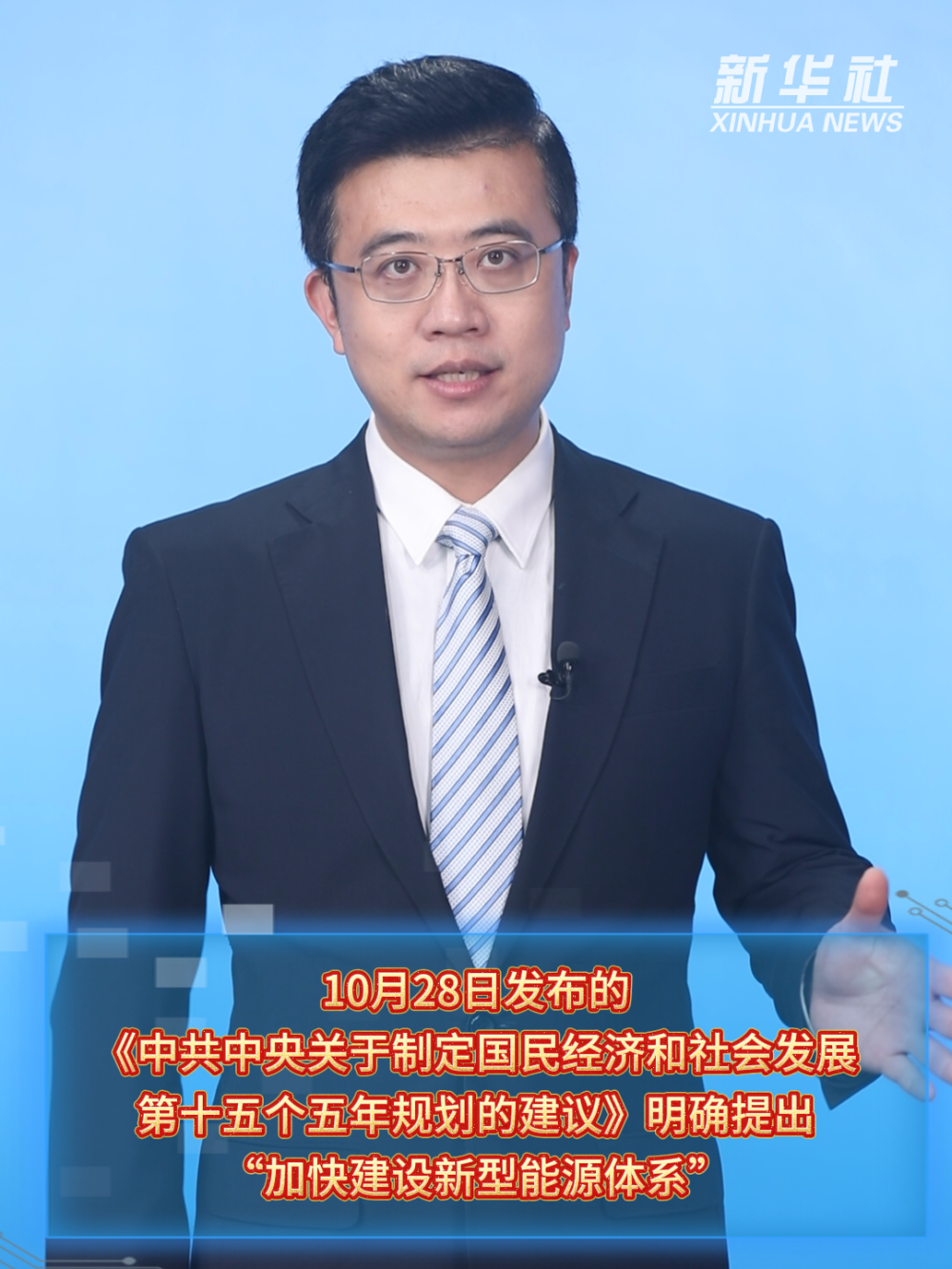
《建议》提出,持续提高新能源供给比重,推进化石能源安全可靠有序替代,着力构建新型电力系统,建设能源强国。 Harry 2 4 题华盛 JI TE NEW P t 1 声音来源: 声音来源: 中国华电集团有 副总工程师 李丁 华北电力大学国家能源发展战略研究院 执行院长 王鹏 不断增强对绿色电力保供 能源消费将更加绿色化低碳化 Supply in the same 0:00 10月28日发布的《中共中央关于制定国民经济和社会发展第十五个五年规划的建议》明确提出,"加快建设新型能源体系"。新型能源体系以非 化石能源为供应主体、化石能源为兜底保障、新型电力系统为关键支撑、绿色智慧节约为用能导向。加快建设新型能源体系,既能够推动能源 绿色低碳转型、支撑实现碳达峰碳中和,也是保障国家能源安全的重要支撑。 新华 社 XINHUA NEWS 10月28日发布的 《中共中央关于制定国民经济和社会发展 第十五个五年规划的建议》明确提出 "加快建设新型能源体系" 冠军 前 XINHUA NEWS 新型能源体系 以有影看能源为供应套体 化有能源为兜底保障 新型电力系统为关键支撑 缘色智慧节约为用能导向 加快建设新型能源体系 既能够 ...

新征程·新蓝图丨加快建设新型能源体系 推动绿色转型发展
Xin Hua She· 2025-11-08 08:52
10月28日发布的《中共中央关于制定国民经济和社会发展第十五个五年规划的建议》明确提出,"加快建设新型能源体系"。新型能源体系以非 化石能源为供应主体、化石能源为兜底保障、新型电力系统为关键支撑、绿色智慧节约为用能导向。加快建设新型能源体系,既能够推动能源 绿色低碳转型、支撑实现碳达峰碳中和,也是保障国家能源安全的重要支撑。 冠军 前 XINHUA NEWS 新型能源体系 以有影看能源为供应套体 化有能源为兜底保障 新型电力系统为关键支撑 缘色智慧节约为用能导向 加快建设新型能源体系 既能够推动能源绿色低碳转型 支撑实现碳达峰碳中和 也是保障国家能源安全的重要支撑 《建议》提出,持续提高新能源供给比重,推进化石能源安全可靠有序替代,着力构建新型电力系统,建设能源强国。 Harry 2 4 题华盛 JI TE NEW P t 1 声音来源: 声音来源: 中国华电集团有 副总工程师 李丁 华北电力大学国家能源发展战略研究院 执行院长 王鹏 不断增强对绿色电力保供 能源消费将更加绿色化低碳化 Supply in the same 新征程 新區零 • 加快建设新型能源体系 推动绿色转型发展 0 00 00 00 00 ...
谋篇布局“十五五”|读懂中国全面绿色转型决心
Zhong Guo Jing Ji Wang· 2025-11-08 07:39
Core Viewpoint - The "14th Five-Year Plan" emphasizes green development as a fundamental aspect of China's modernization, aiming to achieve carbon peak and carbon neutrality while enhancing ecological safety and green development momentum [3][4]. Group 1: Green Development Initiatives - The plan advocates for a strong commitment to the concept of "lucid waters and lush mountains are invaluable assets," promoting coordinated efforts in carbon reduction, pollution control, and ecological enhancement [4][5]. - It highlights the importance of comprehensive pollution prevention and ecological system restoration, focusing on source governance and multi-pollutant control [5][6]. Group 2: Energy Transition - The strategy includes accelerating the establishment of a new energy system, increasing the share of renewable energy, and ensuring a reliable transition from fossil fuels [7][8]. - It calls for the development of a new power system, emphasizing the integration of various energy sources such as wind, solar, and nuclear [8][9]. Group 3: Market Mechanisms and Standards - The plan proposes the establishment of market and pricing mechanisms suitable for the new energy system, including a carbon emissions trading market and a comprehensive green low-carbon standard system [9][10]. - It aims to enhance the capacity to respond to climate change, particularly extreme weather events, through improved frameworks and standards [9][10]. Group 4: Sustainable Lifestyle Promotion - The initiative seeks to promote green production and lifestyle changes, including the optimization of industrial layouts and urban planning to support low-carbon transitions [10][11]. - It emphasizes the need for financial, fiscal, and technological policies to incentivize green consumption and lifestyle practices [12].

绿色发展动能强劲!煤炭与新能源多维度融合发展 夯实能源稳定供应基础
Yang Shi Wang· 2025-11-08 02:36
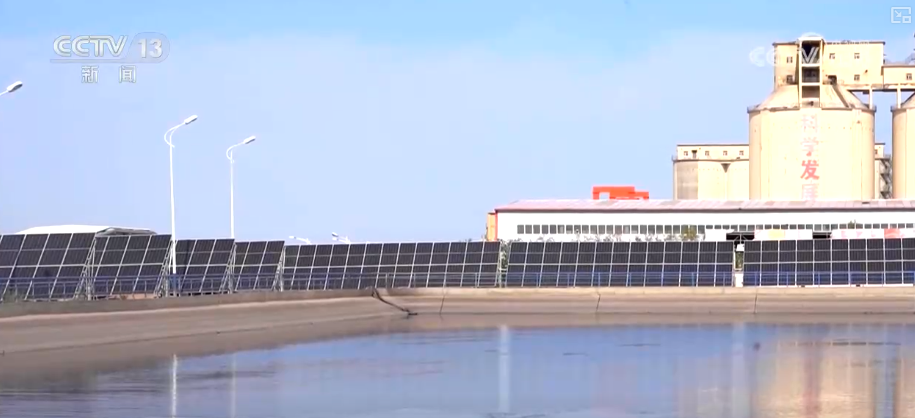
央视网消息:国家能源局11月7日出台关于推进煤炭与新能源融合发展的指导意见。我国将加快发展煤炭矿区光伏风电产业,推动矿区用能清 洁替代,建设一批清洁低碳矿区。 据介绍,此次出台的文件聚焦煤炭生产、用能等多个关键环节,从多个维度推进煤炭与新能源的融合发展。 在推动矿区用能清洁替代方面,加快煤炭生产重点环节电气化改造,推进矿区运输设备新能源替代,支持矿区建设充换电站、加氢站等。同 时,推动矿区地热能规模化开发利用,发展分布式太阳能供热,探索矿区多热源联合供热。 在加快发展煤炭矿区光伏风电产业方面,鼓励具备条件的产煤地区规划建设大型光伏基地,在风力资源充沛的矿区及周边区域,有序推进集中 式、分散式风电开发。 此外,还要鼓励矿区建设智能微电网,鼓励参与绿证绿电交易,提高矿区绿色电力使用比例,建设高效低碳零碳典型厂区园区,降低矿区碳排 放水平。 中国宏观经济研究院能源所研究员高虎表示,这个文件明确了煤炭企业与新能源深度融合发展的主要方式和利用途径,将能更好地指导煤炭企 业绿色低碳、转型发展。 加速构建新型能源体系 确保能源稳定供应 专家表示,推进煤炭与新能源融合发展,对夯实能源稳定供应基础,促进能源绿色低碳转型具有重要 ...
国家能源局关于推进煤炭与新能源融合发展的指导意见
国家能源局· 2025-11-07 09:39
Core Viewpoint - The article emphasizes the importance of integrating coal and renewable energy development to enhance energy stability and promote a green, low-carbon transition in the energy sector [3][4]. Overall Requirements - The integration of coal and renewable energy should be guided by Xi Jinping's thought, focusing on green and low-carbon directions, technological innovation, and the establishment of a new energy system by the end of the 14th Five-Year Plan [4]. Main Tasks - **Development of Photovoltaic and Wind Power in Mining Areas**: The article advocates for utilizing land resources in mining areas for solar power stations and encourages the establishment of large-scale photovoltaic bases in coal-producing regions [5]. - **Promotion of Clean Energy Substitution**: It calls for the electrification of key coal production processes and the use of electric and hydrogen-powered mining vehicles to enhance the clean energy level in mining operations [6]. - **Renewable Energy Heating and Cooling**: The article suggests utilizing geothermal energy and distributed solar heating in mining areas to meet heating demands [7]. - **Innovative Energy Development**: It encourages the establishment of smart microgrids in mining areas to integrate various energy sources and improve energy efficiency [8]. - **Collaboration Between Coal and Renewable Energy**: The article supports coal enterprises in integrating coal and renewable energy investments to enhance overall energy supply stability [9]. - **Technological Innovation and Talent Development**: It emphasizes the need for research in coal and renewable energy integration technologies and the cultivation of skilled professionals in this field [10]. - **Policy Support and Coordination**: The article highlights the necessity for coordinated policies to support the integration of coal and renewable energy, including financial backing and regulatory frameworks [11]. Implementation Organization - The National Energy Administration will oversee the coordination and evaluation of coal and renewable energy integration projects, ensuring the implementation of policies and standards [12].
国家能源局发布《关于推进煤炭与新能源融合发展的指导意见》
Zhong Guo Neng Yuan Wang· 2025-11-07 09:21
Core Viewpoint - The National Energy Administration has issued guidelines to promote the integration of coal and renewable energy, emphasizing green and low-carbon development, technological innovation, and the establishment of a mechanism for the fusion of coal and renewable energy to enhance the sustainable development of the coal industry by the end of the 14th Five-Year Plan [1][3][4]. Group 1: Overall Requirements - The guidelines are guided by Xi Jinping's thoughts and aim to implement the new development concept, focusing on energy security and green low-carbon direction, with significant achievements expected in the integration of coal and renewable energy by the end of the 14th Five-Year Plan [3][4]. Group 2: Main Tasks - Accelerate the development of photovoltaic and wind power industries in mining areas by utilizing land resources effectively and promoting local consumption of renewable energy [4][5]. - Promote clean energy alternatives in mining areas by electrifying key production processes and enhancing the use of electric and hydrogen-powered transport equipment [5][6]. - Gradually implement renewable energy heating and cooling solutions in mining areas, including geothermal energy and distributed solar heating [6][7]. - Innovate green energy development methods in mining areas by establishing smart microgrids and enhancing the use of green electricity [7][8]. - Extend the coal industry chain and promote synergy with renewable energy development, encouraging coal enterprises to invest in clean and efficient power generation [8][9]. Group 3: Policy Support - The integration of coal and renewable energy is included in the 14th Five-Year Plan, with support for local planning and financial backing for projects [9][10]. - The National Energy Administration will coordinate and evaluate the implementation of these guidelines, ensuring safety and regulatory compliance in project execution [10][11].
AI电力消耗引关注,电网ETF(561380)连续5日资金净流入超1.1亿元
Mei Ri Jing Ji Xin Wen· 2025-11-07 05:51
Core Insights - The increasing power consumption from AI has drawn attention, with the Electric Grid ETF (561380) experiencing a net inflow of over 110 million yuan for five consecutive days [1] - According to Changjiang Securities, if the power supply remains balanced in 2024, the U.S. is projected to face a total power gap of approximately 73.2 GW from 2025 to 2030, which could escalate to 201 GW if data center growth exceeds expectations, representing about 25% of North America's current peak load [1] - In China, there is a significant push to build larger data centers, leading to a rapid increase in AI-related power demand, alongside the recent announcement from the Central Committee regarding the acceleration of a new energy system [1] - The Electric Grid ETF (561380) tracks the Hang Seng A-share Electric Grid Equipment Index, which reflects the overall performance of publicly listed companies in the electric grid equipment sector [1]
单日“吸金”超3.8亿,全市场唯一的电网设备ETF(159326)已连续9天获资金净流入
Mei Ri Jing Ji Xin Wen· 2025-11-07 04:50
Group 1 - The electric grid equipment sector continues to show strong performance, with the only electric grid equipment ETF (159326) rising over 2.4% and attracting a net inflow of over 380 million yuan, reaching a new high of 1.578 billion yuan since its inception [1] - The recent popularity of the electric grid equipment sector is driven by a combination of domestic and international demand, with China's power equipment exports reaching 65.596 billion yuan from January to September 2025, a year-on-year increase of 36.33% [1] - The "14th Five-Year Plan" emphasizes the importance of a new energy system, providing long-term support for the industry's development [1] Group 2 - The electric grid equipment ETF (159326) tracks the CSI Electric Grid Equipment Theme Index, with a strong representation in sectors such as transmission and transformation equipment, grid automation equipment, cable components, and distribution equipment [2] - The ETF's holdings show a significant concentration in ultra-high voltage equipment, accounting for 64% of the portfolio, with over 6% in charging piles and over 14% in "nuclear fusion" related assets, the highest in the market [2] Group 3 - AI is expected to significantly boost electricity demand in the U.S., with OpenAI planning to deploy over 250 GW of computing centers by 2033, which may lead to increased electricity infrastructure needs [1] - The U.S. electricity infrastructure is currently lagging, necessitating a substantial increase in power generation and grid construction to meet future demands [1]
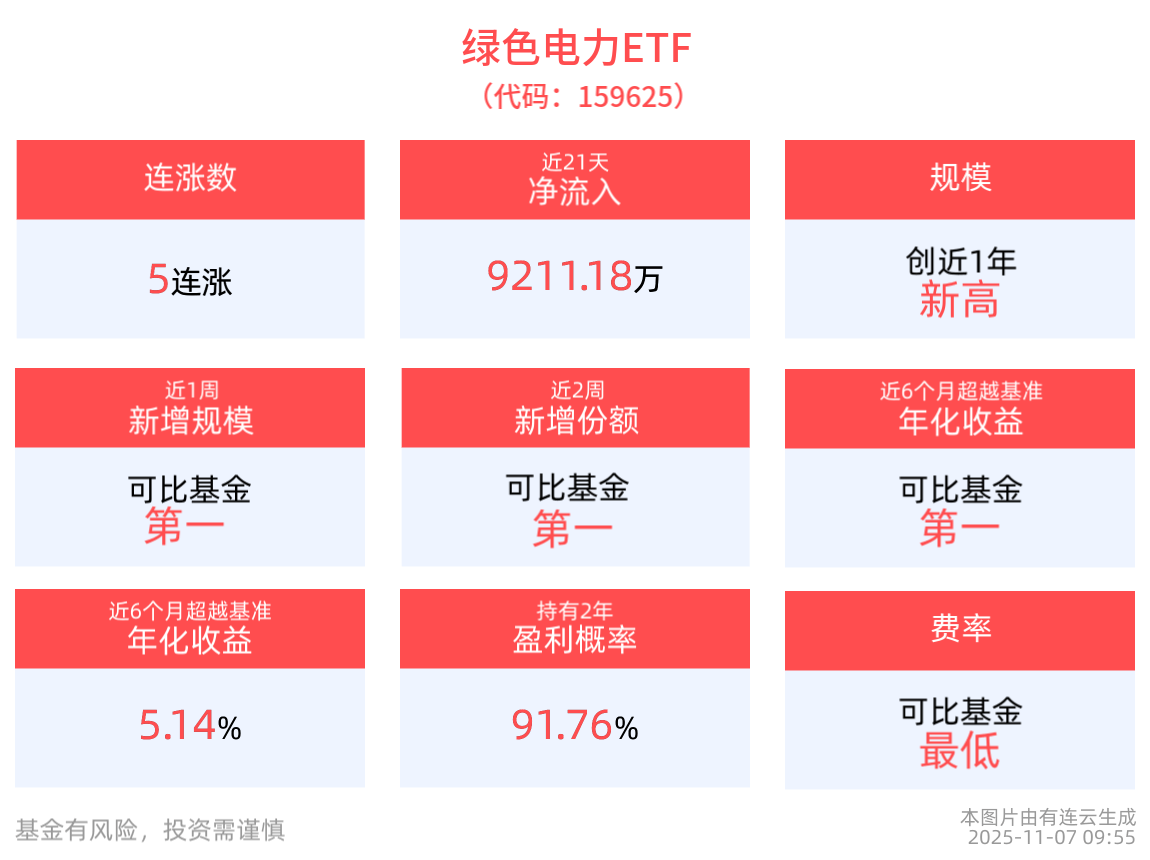
绿色电力ETF(159625)盘中涨近1%冲击5连涨,最新规模创近1年新高!
Sou Hu Cai Jing· 2025-11-07 02:20
Group 1: Green Power ETF Performance - The Green Power ETF has a turnover rate of 2.02% with a transaction volume of 9.0205 million yuan [2] - The latest scale of the Green Power ETF reached 444 million yuan, marking a one-year high and ranking first among comparable funds [2] - Over the past two weeks, the Green Power ETF's shares increased by 2 million shares [2] - In the last 21 trading days, there were net inflows on 11 days, totaling 92.1118 million yuan [2] - As of November 6, the net value of the Green Power ETF has risen by 24.10% over the past two years [2] - The highest monthly return since inception was 9.19%, with the longest consecutive monthly gains being 6 months and the highest cumulative gain being 14.85% [2] - The Green Power ETF outperformed its benchmark with an annualized excess return of 5.14% over the past 6 months, ranking first among comparable funds [2] Group 2: Electricity Consumption and Generation - From January to September, the total electricity consumption reached 77,675 billion kWh, a year-on-year increase of 4.6% [3] - The industrial electricity generation for the same period was 72,557 billion kWh, showing a year-on-year growth of 1.6% [3] - Breakdown of electricity generation from major sources shows thermal power and hydropower decreased by 1.2% and 1.1% respectively, while nuclear, solar, and wind power increased by 9.2%, 24.2%, and 10.1% respectively [3] - The total electricity consumption is expected to grow by around 5% for the entire year, with fourth-quarter growth anticipated to exceed that of the third quarter [3] - It is projected that by the end of 2025, the total installed power generation capacity will reach approximately 3.9 billion kW, a year-on-year increase of 16.5% [3] Group 3: Key Stocks in Green Power Sector - The top ten weighted stocks in the National Green Power Index account for 56.15% of the index, including companies like Three Gorges Energy, China Nuclear Power, and Yangtze Power [2] - The individual weightings of these stocks range from 9.60% for Three Gorges Energy to 2.82% for Huaneng International [5]






国家能源局召开学习贯彻党的二十届四中全会精神座谈会
国家能源局· 2025-11-07 01:51
Core Viewpoint - The article emphasizes the importance of implementing the spirit of the 20th Central Committee's Fourth Plenary Session within the energy sector, highlighting the need for political awareness and alignment with the central government's decisions [3][4]. Group 1: Key Messages from the Meeting - The meeting focused on the significance of understanding and implementing the achievements of the "14th Five-Year Plan" period, which are attributed to the leadership of the Central Committee and the guidance of Xi Jinping's thoughts [3]. - It is crucial to grasp the core essence of the plenary session's spirit, including the strategic tasks and major principles for the "15th Five-Year Plan" period [3][4]. - The meeting underscored the necessity of strengthening the Party's leadership as a fundamental guarantee for advancing modernization in China [4]. Group 2: Energy Development Strategies - The energy sector must prioritize energy security by enhancing domestic supply capabilities and diversifying overseas resource supplies to ensure a stable energy supply chain [4]. - There is a commitment to advancing the green and low-carbon transformation of energy, focusing on building a new energy system and promoting green energy consumption [4]. - The importance of technological innovation in the energy sector was highlighted, with an emphasis on smart, green, and integrated development to drive quality and efficiency changes [4]. - The meeting called for deepening energy system reforms and enhancing the market framework to stimulate vitality and optimize the business environment [4]. - Strengthening international cooperation in the energy sector is essential, with a focus on maintaining strategic confidence and expanding high-level openness while ensuring energy security [4]. Group 3: Regional Focus on Gansu Province - Gansu Province is recognized as a significant energy province, responsible for both meeting its energy needs and undertaking key tasks like "West-to-East Power Transmission" [5]. - The province has unique advantages in developing and utilizing renewable energy, which can facilitate its transition to a green and low-carbon energy system [5][6]. - The energy sector in Gansu is encouraged to leverage its strengths, accelerate technological innovation, and deepen market system construction to contribute to high-quality energy development [6].