
物联网

Search documents
港股异动 | 广和通(00638)涨超7% 端侧AI发展加速 机构看好公司新兴业务布局
智通财经网· 2026-01-12 07:15
Core Viewpoint - Guanghe Tong (00638) has seen a stock price increase of over 7%, currently at 18.05 HKD, with a trading volume of 209 million HKD, driven by the launch of its AI solution at Alibaba Cloud's event [1] Group 1: Product Development - Guanghe Tong recently showcased its self-developed MagiCore 2.0 lightweight computing solution, the Dream Eater AI package, at the Alibaba Cloud Tongyi exhibition [1] - The company has indicated that its 5G and V2X wireless communication modules and solutions are applicable in the autonomous driving sector, primarily focusing on smart cockpit applications in vehicles [1] Group 2: Market Position and Growth Potential - According to Shenwan Hongyuan, Guanghe Tong is a core player in the global IoT module market, with expectations that AI/robotics and vehicle/FWA deployments will continue to drive revenue growth [1]

2025年全球智慧家庭发明专利榜单揭晓:海尔智家14连冠
Huan Qiu Wang· 2026-01-12 06:32
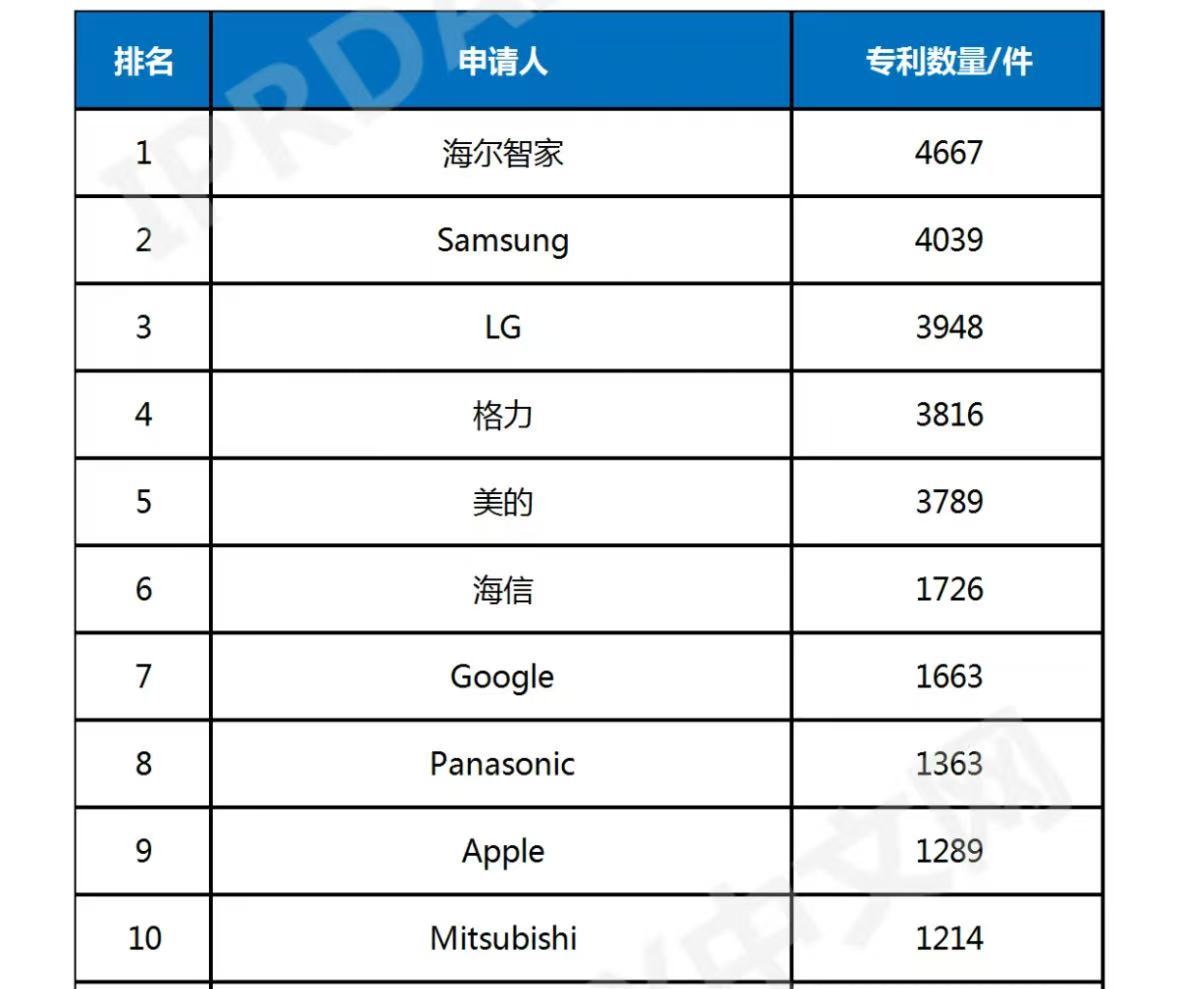
Core Viewpoint - The article emphasizes the importance of patents in the smart home industry as a measure of technological strength and innovation, highlighting Haier Smart Home's leadership with 4,667 patent applications, marking its 14th consecutive year at the top of the global rankings [1][2][4]. Group 1: Patent Leadership - Haier Smart Home leads the global smart home patent rankings with 4,667 published patent applications, followed by Samsung (4,039) and IG (3,948) [2]. - The continuous success of Haier Smart Home is attributed to its long-term commitment to innovation across smart appliances and comprehensive smart home solutions [2][4]. Group 2: Strategic Alignment - The shift in competition from individual smart products to ecosystem-based solutions aligns with Haier Smart Home's user-centric strategy, integrating AI as a foundational capability to enhance user experiences [4][5]. - Haier Smart Home's patent innovations are designed to address real user needs, exemplified by its AI-enabled refrigerator that accurately identifies food items with a 99.8% accuracy rate [5][6]. Group 3: User-Centric Innovations - Each patent from Haier Smart Home aims to enhance user experiences, such as smart appliances that interact seamlessly in various home scenarios, improving convenience and efficiency [6]. - The company's focus on transforming technological advancements into practical solutions ensures that smart home devices are intuitive and responsive to user habits [6][7]. Group 4: Future Outlook - Haier Smart Home's 14 consecutive years of patent leadership is seen as a foundation for future innovations, promising more intelligent and user-friendly smart living solutions [7].


德明利涨2.12%,成交额21.57亿元,主力资金净流出7598.89万元
Xin Lang Zheng Quan· 2026-01-12 06:25
Core Viewpoint - Demingli's stock price has shown fluctuations with a recent increase of 3.51% year-to-date, but a decline of 3.95% over the last five trading days, indicating volatility in its market performance [2]. Group 1: Stock Performance - On January 12, Demingli's stock rose by 2.12%, reaching 240.03 CNY per share, with a trading volume of 2.157 billion CNY and a turnover rate of 5.68%, resulting in a total market capitalization of 54.45 billion CNY [1]. - Year-to-date, Demingli's stock price has increased by 3.51%, with a 3.95% decline over the last five trading days, a 10.57% increase over the last 20 days, and a 22.18% increase over the last 60 days [2]. Group 2: Company Overview - Shenzhen Demingli Technology Co., Ltd. was established on November 20, 2008, and went public on July 1, 2022. The company specializes in the design and development of flash memory controller chips, storage module application solutions, and sales of storage module products [2]. - The revenue composition of Demingli includes embedded storage products (41.37%), solid-state drives (37.34%), mobile storage products (13.06%), memory modules (8.22%), and others (0.01%) [2]. - Demingli operates within the semiconductor industry, specifically in digital chip design, and is associated with sectors such as automotive electronics, IoT, AIPC concepts, and storage concepts [2]. Group 3: Financial Performance - For the period from January to September 2025, Demingli reported a revenue of 6.659 billion CNY, reflecting a year-on-year growth of 85.13%. However, the net profit attributable to shareholders was -27.0765 million CNY, a decrease of 106.42% compared to the previous year [2]. - Since its A-share listing, Demingli has distributed a total of 78.2496 million CNY in dividends [3]. Group 4: Shareholder Information - As of September 30, 2025, Demingli had 55,300 shareholders, a decrease of 15.60% from the previous period, with an average of 2,910 circulating shares per shareholder, an increase of 18.48% [2]. - Among the top ten circulating shareholders, Hong Kong Central Clearing Limited holds 5.1451 million shares, an increase of 3.7972 million shares from the previous period, while E Fund Supply-side Reform Mixed Fund has reduced its holdings by 135,800 shares [3].
全息/VR/AR行业发展动态周报2026年第2周(1月5日-1月11日)
Sou Hu Cai Jing· 2026-01-12 05:01
Policy Environment - The Ministry of Industry and Information Technology and seven other departments have issued a document to accelerate the intelligent transformation of the manufacturing industry, promoting the industrialization and commercialization of AR/VR and brain-computer interface technologies [1] Industry Development - The 2026 Consumer Electronics Show (CES) officially opened in Las Vegas on January 6, showcasing cutting-edge achievements in semiconductors, artificial intelligence, robotics, and consumer electronics, with a focus on AI and smart hardware [3] - Meta has postponed the international expansion of its Ray-Ban Display smart glasses due to unprecedented demand in the U.S. market, with a waiting list extending to 2026 [5] - NVIDIA's CEO Jensen Huang announced at CES that the robotics field has entered a "ChatGPT moment," introducing a series of open-source "physical AI" models [7] - Google and XREAL have extended their strategic partnership, with XREAL becoming a key hardware partner in the Android XR ecosystem [9] - Elon Musk's AI startup xAI has completed a $20 billion Series E funding round, exceeding its initial target of $15 billion [11] - ByteDance's "Doubao" AI glasses are set to enter the shipping phase, with a no-screen version expected to launch in Q1 and a display version in Q4 of this year [13] Market Dynamics - Apple is expected to unveil new products in February, with the iPhone 17e rumored to feature the A19 chip, which is projected to improve CPU performance by 5%-10% compared to the A18 chip [15] - TOZO, a Seattle-based consumer electronics brand, showcased its smart glasses series at CES 2026, with an annual shipment volume of 5 to 6 million units [20][22] - L'Atitude 52°N presented two AI glasses at CES 2026, focusing on travel documentation and outdoor communication, with a lightweight design and high protection ratings [22]

济宁搭建智慧供热系统,精准供热让群众温暖舒适过冬
Da Zhong Ri Bao· 2026-01-12 02:46
Core Insights - The implementation of a smart heating system by Shandong Public Heating and Power Group has significantly improved heating efficiency and customer satisfaction in Jining, addressing long-standing issues in older residential areas [2][3] Group 1: Smart Heating System Implementation - Since 2020, Shandong Public Heating and Power Group has developed a comprehensive smart heating system utilizing big data, AI, IoT, and digital twin technologies, covering 9 counties and cities in Jining [2] - The smart heating system has installed temperature monitoring devices in over 30,000 households across 362 communities, and smart adjustment terminals in 110 communities, addressing traditional heating issues such as under-supply and over-supply [2] Group 2: Performance Improvements - The smart heating platform has achieved a heating balance rate of 80%-90%, an increase of 30% compared to previous methods, and has reduced energy consumption by over 10% [2] - Customer service metrics have improved, with a 21% decrease in heating-related inquiries and complaints since the system's launch [3] Group 3: Case Study - Yunhe Community - In Yunhe Community, the installation of intelligent flow balancing valves has enabled precise heating adjustments, resolving issues related to uneven heating due to long supply radii [3] - The introduction of over 100 temperature monitoring capsules along the heating pipeline has enhanced emergency response efficiency, allowing for rapid identification and repair of leaks [3]
海尔生物涨2.01%,成交额3367.16万元,主力资金净流入254.31万元
Xin Lang Cai Jing· 2026-01-12 02:20
Group 1 - The core viewpoint of the news is that Haier Biomedical has shown a positive stock performance with a 5.48% increase year-to-date and a market capitalization of 10.609 billion yuan as of January 12 [1] - As of December 31, the number of shareholders for Haier Biomedical is 13,100, a slight decrease of 0.10% from the previous period, while the average circulating shares per person increased by 0.10% to 24,261 shares [2] - The company reported a revenue of 1.761 billion yuan for the period from January to September 2025, reflecting a year-on-year decrease of 1.17%, and a net profit attributable to shareholders of 198 million yuan, down 35.83% year-on-year [2] Group 2 - Haier Biomedical has distributed a total of 788 million yuan in dividends since its A-share listing, with 452 million yuan distributed over the past three years [3] - Among the top ten circulating shareholders, Hong Kong Central Clearing Limited holds 6.7302 million shares, an increase of 928,500 shares compared to the previous period, while Huabao Zhongzheng Medical ETF holds 5.4557 million shares, a decrease of 776,900 shares [3]

预见2025:《2025年中国全屋智能行业全景图谱》(附市场现状和发展趋势等)
Qian Zhan Wang· 2026-01-12 01:35
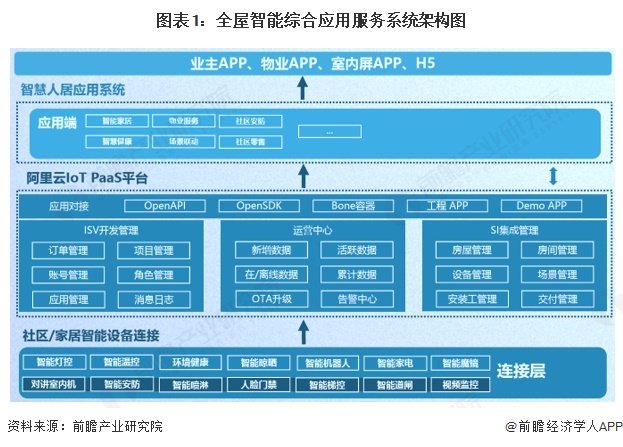
Industry Overview - The concept of "whole-house intelligence" refers to an integrated smart home system that combines smart lighting, security, audio-visual, and appliance control into a comprehensive home solution. This system allows for automated operations based on environmental and personal needs, enabling connectivity between individual smart products for a more personalized home experience [1][2] - The whole-house intelligent system relies on cloud platform capabilities and channel resources to create mature smart home applications, smart community applications, and market solutions, forming an IoT ecosystem that includes home device connectivity, automated control, data analysis, health care, community services, and new retail [1] Industry Chain Analysis - The whole-house intelligent field has developed a complete industrial chain, with upstream consisting of component suppliers, middleware suppliers, and software technology providers. The midstream includes whole-house smart home brand manufacturers that sell products directly to consumers and provide solutions to real estate and home decoration companies [2][5] Industry Development Status - The global whole-house intelligent industry is in a rapid development phase, supported by the maturity and integration of IoT, AI, and 5G technologies. This has facilitated easier interconnectivity between devices and enhanced system intelligence and interactivity. Market demand for convenient, healthy, and safe home environments is driving the transition from niche to mass markets [13][15] - In China, the whole-house intelligent industry is experiencing rapid growth driven by both policy and market forces, with a projected market size of approximately 222.4 billion yuan in 2024 [15][25] Competitive Landscape - The competitive landscape of China's whole-house intelligent industry can be categorized into three factions: traditional home appliance companies (e.g., Haier, Midea, Gree), internet companies (e.g., Xiaomi, Huawei), and other specialized firms. Traditional companies leverage supply chain and brand advantages, while internet firms possess strong technological and financial capabilities [17][19] Industry Development Trends - The Chinese whole-house intelligent industry is moving towards standardization in technology, market scenario development, and ecological competition. The combined push from policies, technology, and consumer demand is expected to facilitate a transition from rapid expansion to high-quality development, gradually building a more complete smart living ecosystem [23][25] - The market is expected to see a compound annual growth rate of 9.8%, with the market size projected to reach approximately 390 billion yuan by 2030 [25]
2025年中国车队管理系统行业功能、产业链、市场规模、竞争格局及发展趋势研判:物联网与人工智能技术不断突破,为车队管理系统带来更多可能性[图]
Chan Ye Xin Xi Wang· 2026-01-12 01:19
Core Insights - The fleet management system is a SaaS software designed for fleet operators to achieve efficient, safe, and controllable vehicle management and scheduling [1][7] - The demand for fleet management systems is increasing due to challenges in vehicle scheduling, high fuel consumption, and uncontrollable road conditions in logistics, transportation, and public transport sectors [1][7] - The market size of China's fleet management system industry is projected to grow from 8.652 billion yuan in 2019 to 19.276 billion yuan in 2024, with a compound annual growth rate (CAGR) of 17.38% [1][7] - By 2025, the market size is expected to reach 22.167 billion yuan, driven by technological advancements and expanded application scenarios [1][7] Industry Overview - Fleet management systems integrate vehicle data recording, satellite positioning, and data communication technologies, providing real-time monitoring and management of vehicles and drivers [3][7] - Key functionalities include vehicle scheduling, route planning, transport monitoring, fuel management, maintenance, and safety management [3][6] - The system enhances operational efficiency and safety, addressing issues such as inflexible scheduling and high operational costs [1][7] Industry Chain - The upstream of the fleet management system industry includes hardware providers (GPS devices, communication equipment) and software developers [4] - The midstream consists of software platform developers and solution service providers that integrate technologies and hardware to create comprehensive management platforms [4] - The downstream market encompasses logistics, passenger transport, public transport, and various enterprises with vehicle assets [4] Market Dynamics - The fleet management system industry is characterized by a diverse competitive landscape, with both domestic and foreign companies participating [9] - Notable domestic companies include Anhui Heli, Shenzhen Yuandao, and various software development firms [2][9] - The competition is shifting from single product offerings to systematic and intelligent services, with a focus on technological innovation and market penetration [9] Development Trends - Future trends include full-link digitalization and ecological collaboration, integrating fleet management with logistics and supply chain systems [14] - The systems will evolve towards predictive decision-making, utilizing AI and machine learning for proactive management [15] - Connectivity and cloud integration will enhance remote control capabilities and real-time data interaction between vehicles and management systems [16]


中国商业航天迎“质变元年” 卫星ETF规模开年接近翻倍
Zheng Quan Shi Bao· 2026-01-11 16:54
Core Viewpoint - The satellite industry chain has shown remarkable performance since the beginning of 2026, with significant growth in commercial aerospace, space stations, and Beidou navigation sectors, leading to substantial increases in satellite ETFs and related products [1][3]. Group 1: Market Performance - As of January 9, 2026, the China Satellite Industry Index has increased by 64.99% over the past month, while the National Commercial Satellite Communication Industry Index has risen by over 50% [1]. - Multiple satellite ETFs have seen performance increases exceeding 60% in the same timeframe, with total assets under management for satellite-related ETFs and linked products reaching 23.76 billion yuan, nearly doubling from 12.11 billion yuan at the end of 2025 [1]. - The Yongying National Commercial Satellite Communication Industry ETF has become the first satellite ETF to exceed 10 billion yuan in scale, currently standing at 11.769 billion yuan [1]. Group 2: Product Overview - There are currently four satellite industry indices in the market, with two having tracking products. The total scale of ETFs and linked products related to satellite investments exceeds 23.7 billion yuan [2]. - The Yongying National Commercial Satellite Communication Industry ETF is the only product tracking the National Commercial Satellite Communication Industry Index, with a total scale of 11.998 billion yuan across three products [2]. - The China Satellite Industry Index has ten tracking products, with five ETFs, two of which exceed 3 billion yuan in scale: the China Securities Satellite Industry ETF (3.42 billion yuan) and the Fortune China Securities Satellite Industry ETF (3.367 billion yuan) [2]. Group 3: Industry Outlook - Fund managers anticipate that 2026 will be a pivotal year for the acceleration of China's commercial aerospace industry, driven by high entry barriers, strong policy support, and clear order visibility in midstream sectors like rocket launches and satellite manufacturing [3][4]. - The recent successful launch of the Zhuque-3 rocket marks a significant resolution to the long-standing issue of insufficient launch capacity, with various rocket models set to conduct frequent launches and recovery tests in the coming months [4]. - Satellite communication is expected to serve as the foundational technology for 6G communication and support applications in autonomous driving, low-altitude economy, IoT, and space computing [4]. Group 4: Investment Considerations - The commercial aerospace sector is currently experiencing a convergence of industry, policy, and capital, indicating rapid development ahead [5]. - The focus for selecting relevant listed companies should be on "technical barriers + competitive advantages + order fulfillment," prioritizing firms with core technologies, strong competitive capabilities, and stable order visibility [6]. - Key indicators for observation include the proportion of R&D expenses, progress on research and matching projects, order visibility, and product gross margin levels [6].
澳柯玛入选2025年度中国消费名品
Xin Jing Bao· 2026-01-10 11:47
Core Viewpoint - Aucma has been recognized as a leading brand in China's consumer goods sector by being included in the 2025 National Consumer Goods List, highlighting its product quality, innovation, and strong user reputation [1] Group 1: Product Innovation and Technology - Aucma has established a dual-level R&D system focusing on both future and user-centered technology, resulting in over 3,500 high-value invention patents with a conversion rate exceeding 98% [2] - The company has made significant advancements in low-temperature preservation technology, launching the first domestic -40°C, -60°C, and -70°C low-temperature freezers, setting new records in home refrigeration [2] Group 2: Market Expansion and Product Offerings - Aucma is actively expanding its refrigerator market by applying advanced low-temperature technology, introducing the industry's first -40°C deep freezing refrigerator and various innovative models to meet consumer demands [3] - The company has received multiple accolades for its refrigerator products, including recognition in the "Good Products Shandong" list and the "China Home Appliance Health Star" award [3] Group 3: Customer Service and Satisfaction - Aucma has developed the "Golden Dolphin Five-Star Service Brand," enhancing its after-sales service system through AI technology and digital platforms to improve user experience and satisfaction [4] - According to the "2023 China Home Freezer Brand Reputation Research Report," Aucma ranked first in overall reputation among 20 brands, marking its 11th consecutive year of achieving this status [4] Group 4: Future Outlook - In 2026, Aucma aims to continue driving innovation and integrating temperature technology with digital advancements, contributing to the high-quality development of China's manufacturing sector [5]
