
健康管理

Search documents
2026年,中国入境游最热方式或是“医疗+旅游”?
Guan Cha Zhe Wang· 2026-01-28 11:36
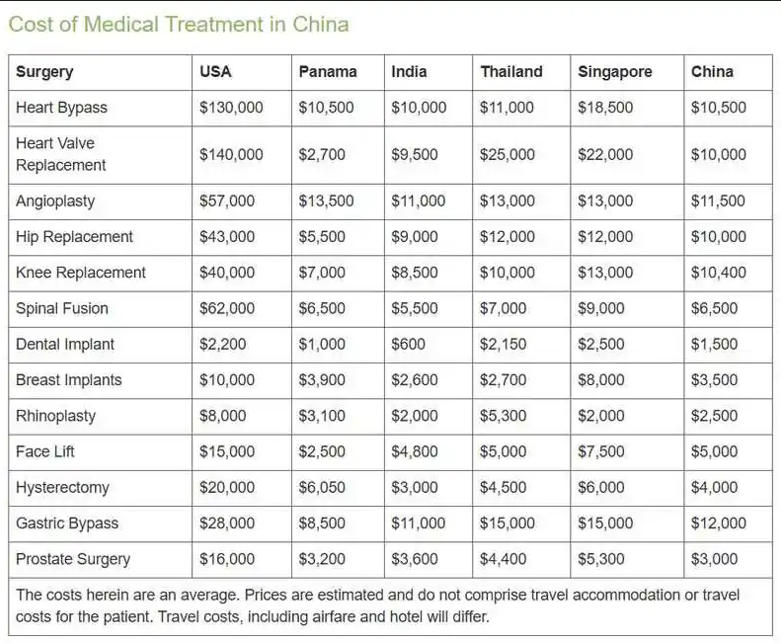
Core Insights - The trend of inbound medical tourism in China is gaining momentum, with foreign patients increasingly seeking medical services in major cities due to long wait times in their home countries [1][2] - The integration of inbound tourism and cross-border medical services remains underdeveloped, with many regions treating them as separate entities [1][10] - There is a significant disparity in medical resources across regions in China, which poses challenges for the coordinated development of inbound medical tourism [1][9] Group 1: Market Trends - Foreign patients are now visiting China not just for tourism but also for medical treatments, with hospitals in cities like Beijing and Guangdong seeing an increase in foreign patients [2][3] - The "medical + tourism" model is becoming popular, with packages being offered that combine medical care with leisure activities, as seen in cities like Hunchun and Boao [3][6] - The cost of medical procedures in China is significantly lower compared to Western countries, making it an attractive option for foreign patients [4][6] Group 2: Industry Challenges - The current growth in foreign patients is still a small percentage of the total patient volume, and there are concerns about the potential impact on domestic healthcare services [9][10] - There is a need for better integration between medical services and tourism, as the current models are often limited and not widely applicable [10][12] - The development of inbound medical tourism requires a clear strategy on whether to prioritize tourism or medical services, as this affects the direction of integration efforts [10][12] Group 3: Future Opportunities - China has the potential to become a leading destination for international medical tourism by leveraging its strengths in medical efficiency, quality, and cost-effectiveness [7][9] - The government is encouraged to support the development of traditional Chinese medicine as a unique selling point in the medical tourism market [11][12] - There is a call for national-level planning and investment to create a mature industry that meets international standards and addresses regulatory challenges [12]

昌平区南部医联体扩容,新添3家成员单位
Xin Lang Cai Jing· 2026-01-28 06:24
Core Viewpoint - Beijing Jishuitan Hospital has signed agreements with three additional medical institutions to expand the Changping District Southern Medical Alliance, enhancing the hierarchical medical system with a total of 15 medical institutions involved [1] Group 1: Medical Alliance Expansion - The newly added institutions include Changping District Traditional Chinese Medicine Hospital, North China Electric Power University Hospital, and Central University of Finance and Economics Hospital, each with distinct medical focuses [1] - The medical alliance now comprises a diverse range of facilities, including general hospitals, traditional Chinese medicine hospitals, community health service centers, and university hospitals [1] Group 2: Services and Support - Changping District Traditional Chinese Medicine Hospital will emphasize traditional Chinese medicine services such as acupuncture, massage, and chronic disease management [1] - The university hospitals will provide basic healthcare services, including common disease diagnosis, health management, and emergency care for students and staff [1] - Jishuitan Hospital will leverage its national-level specialties in orthopedics, burn treatment, and sports medicine to offer comprehensive technical support to the new member institutions [1] Group 3: Collaborative Mechanisms - The collaboration will cover areas such as precise diagnosis, discipline co-construction, and talent cultivation, establishing core mechanisms for bidirectional referrals, expert consultations, remote diagnosis, and mutual recognition of examination results [1] - The medical alliance has already conducted over a hundred expert consultations, surgical guidance, and business training sessions, effectively reducing the medical access radius for local residents and alleviating difficulties in seeking medical care [1]
投资海南自贸港,四大主导产业有何吸引力(上)
Hai Nan Ri Bao· 2026-01-27 02:21
Group 1: Tourism Industry - The tourism industry in Hainan is projected to receive 106 million domestic and international visitors by 2025, representing a year-on-year growth of 9.1%, with inbound tourists reaching 1.5005 million, a 35.2% increase [1] - Hainan is transforming its tourism sector from traditional offerings to a "tourism+" model, enhancing its attractiveness through the establishment of an international tourism consumption center and the implementation of policies such as the fifth and seventh freedom of the air and visa-free entry for citizens from 86 countries [1] - The unique duty-free shopping policy allows individuals to spend up to 100,000 yuan annually on tax-free purchases, significantly boosting consumer interest and investment potential in the tourism sector [2] Group 2: Health and Wellness Tourism - Hainan's climate and natural resources, including hot springs and rainforests, position it as a prime location for health and wellness tourism, particularly with the presence of the Boao Lecheng International Medical Tourism Pilot Zone [2] - The region offers favorable conditions for businesses in high-end medical and wellness sectors, facilitating the development of health management, rehabilitation, and medical beauty products [2] Group 3: Tropical High-Efficiency Agriculture - Hainan, as China's only tropical island province, serves as a significant source of winter vegetables and fruits, leveraging its unique breeding advantages to attract agricultural enterprises [3] - The Sanya Yazhou Bay Science and Technology City High-tech Zone has attracted over 2,800 enterprises in the breeding industry, providing comprehensive services for breeding, propagation, and promotion [3] - The free trade port policies allow agricultural processing companies to import high-quality agricultural equipment and materials duty-free, enhancing production efficiency and market competitiveness [3] Group 4: Investment Opportunities - The combination of resource endowments and open policies creates a golden opportunity for investment in Hainan's tourism and tropical agriculture sectors, making it an opportune time to invest in the free trade port [4]
搞金子、听播客、精打细算买买买:每日互动大数据为您打开这届“攒金青年”画像
Xin Lang Cai Jing· 2026-01-26 07:02
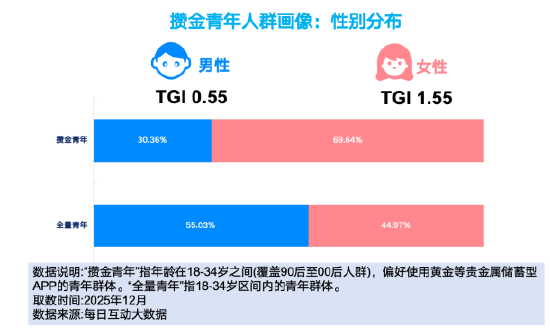
Core Insights - The article highlights the growing trend of "gold saving" among young people aged 18 to 34, who contribute over one-third of gold jewelry sales, indicating a shift towards using gold as a means of both consumption and asset risk management [1][23]. Group 1: Demographics and Preferences - "Gold saving youth" refers to individuals aged 18-34 who prefer using gold and precious metal savings apps, while "total youth" encompasses all individuals in the same age range [2][24]. - Among the gold saving youth, there is a higher proportion of female users, with a TGI (Target Group Index) of 1.55, indicating a stronger preference for gold accumulation compared to male users [3][27]. - The overall consumption level of gold saving youth is higher, with those in the high consumption segment being 1.92 times more prevalent than in the total youth group [5][29]. Group 2: Geographic Distribution - Preference for gold saving apps is notably higher among youth in first-tier cities, with a TGI of 1.4, particularly in cities like Shenzhen, Beijing, Hangzhou, Shanghai, and Guangzhou, which are economically vibrant and have significant gold jewelry wholesale markets [8][31]. - Shenzhen is identified as the largest and most complete gold jewelry wholesale distribution center in China, holding over 50% of the domestic market share, which supports the interest of gold saving youth in precious metals [8][31]. Group 3: Interests and Lifestyle - Gold saving youth exhibit diverse interests, showing a strong preference for ticketing apps (TGI close to 4) and podcast apps (TGI of 5.44) [11][33]. - They also enjoy sharing and beautifying their experiences, with significant preferences for photo editing apps, showing TGI values ranging from 3.03 to 6.52 [12][34]. - This demographic is highly focused on product quality and discounts, with TGI values for shopping apps like Yitao and Shénme Zhídé Mǎi reaching 8.83 and 4.2, respectively [14][37]. - Health management and quality of life are also priorities, with TGI values for health management apps at 5.21 and for food recipe apps at 2.81 [16][38]. Group 4: User Engagement and Market Trends - The weekly activity of gold saving app users correlates closely with gold price movements, with a notable 37.05% increase in app activity following a rise in gold prices from $2150 to $2350 per ounce in April 2025 [17][40]. - Significant peaks in monthly new user numbers for gold saving apps were observed in April and October, driven by gold price fluctuations and marketing activities [19][44]. - The user growth of gold saving apps shows clear seasonality and sensitivity to gold price changes, indicating a responsive market [20][44]. Conclusion - The insights reveal a rational yet passionate lifestyle emerging among gold saving youth, reflecting their desire for both material wealth and life management as they enter the new year [22][47].

中国远程医疗健康管理公司BFB HEALTH登陆港交所
Sou Hu Cai Jing· 2026-01-23 04:01
Core Viewpoint - BFB Health Limited, formerly known as 财讯传媒集团有限公司, aims to establish itself as the leading player in China's telemedicine and health management sector following its name change and rebranding [1] Group 1: Company Overview - The company officially changed its name to BFB Health Limited on January 22, with the stock code 00205.HK remaining unchanged [1] - As of the closing on the same day, BFB Health's stock price was 0.99 HKD, with a total market capitalization exceeding 1.2 billion HKD [1] - BFB Health is recognized as the first private enterprise listed in Bozhou, leveraging the region's abundant traditional Chinese medicine resources and a well-established health industry cluster [1] Group 2: Business Strategy and Funding - The company plans to allocate 50% of its secondary market financing towards AI upgrades in the health industry and new drug development, while the other 50% will focus on product iteration, brand building, and upgrading intelligent production lines [1][1] - BFB Health has achieved large-scale and standardized operations in telemedicine services, creating a closed-loop model of "online diagnosis + health management + product services" that aligns with the "Internet + healthcare" development path [1]
国锐生活涨超11% 公司加速转型数字医疗 机构指行业处于高速发展期
Zhi Tong Cai Jing· 2026-01-20 02:24
Company Overview - Guorui Life (00108) has seen a significant increase in stock price, rising by 11.49% to HKD 3.59, with a trading volume of HKD 4.1159 million [1] Acquisition Details - In December 2025, Guorui Life announced the signing of a share transfer agreement to acquire 78.2898% of Chunyu Doctor for a total consideration of RMB 269 million, thus becoming the controlling shareholder [1] - Chunyu Doctor is one of the early internet medical service providers in China, with a service network covering over 300 cities and having served more than 400 million users [1] Business Model - Chunyu Doctor has developed a comprehensive service system that includes online consultation, AI diagnosis, offline treatment, and health management [1] Industry Insights - The internet medical industry is currently experiencing rapid growth, with a market size exceeding RMB 100 billion and an annual growth rate of over 18% [1] - The primary user demographic consists of middle-aged and young individuals [1] - National policies are increasingly supportive of the industry, including the relaxation of treatment scopes and inclusion in health insurance, promoting innovation and standardized development [1] - The industry is driven by technologies such as mobile internet, big data, artificial intelligence, and 5G, with a competitive landscape characterized by leading enterprises and innovative niche markets [1]
港股异动 | 国锐生活(00108)涨超11% 公司加速转型数字医疗 机构指行业处于高速发展期
智通财经网· 2026-01-20 02:18
Company Overview - Guorui Life (00108) has seen a stock price increase of over 11%, currently trading at 3.59 HKD with a transaction volume of 4.1159 million HKD [1] - The company announced a share transfer agreement with Chunyu Doctor to acquire 78.2898% equity for a total consideration of 269 million RMB, becoming the controlling shareholder and officially transitioning into the digital healthcare sector [1] Industry Insights - The internet healthcare industry is currently in a rapid growth phase, with a market size exceeding 100 billion RMB and an annual growth rate of over 18% [1] - The primary user demographic consists of middle-aged and young individuals [1] - National policies have been introduced to support industry innovation and standardized development, including the relaxation of treatment scopes and inclusion in health insurance [1] - The industry is driven by technologies such as mobile internet, big data, artificial intelligence, and 5G, with a competitive landscape characterized by leading enterprises and innovation in niche markets [1]
央视市场研究(CTR)联合哔哩哔哩(B站)发布《BILIBILI 2026年轻人消费趋势报告》
Xin Lang Cai Jing· 2026-01-13 11:29
Core Insights - The report highlights the concept of "Intelligent Boiling," which reflects the evolving mindset and behavior of young consumers who use consumption as a means of self-identity and value voting [2][47] - Bilibili (B站) is positioned not just as a video platform but as a nurturing ground for the consumption mindset of young people, with 376 million monthly active users and an average daily usage time of 112 minutes [2][47] Group 1: Consumer Trends - Young consumers are directing their spending towards three main areas: "hardcore experiences" for enhancing life efficiency, "interest circles" for identity recognition, and "precise healing" for addressing inner states [6][51] - The report identifies eight key "boiling points" that represent the content hotspots and consumption trends relevant to young people, aiming to help brands find common ground with this demographic [6][51] Group 2: Key Boiling Points - Boiling Point 1: AI has transitioned from a technical symbol to a fundamental part of daily life, with 140 million users engaging with AI-related content monthly, and viewing time doubling [8][53] - Boiling Point 2: Virtual content serves as a core area for cultural creation and emotional expression, with young consumers investing in virtual identities and communities [12][60] - Boiling Point 3: Young consumers are exploring creative uses of products, leading to increased engagement and purchase intent when they see innovative applications [17][64] - Boiling Point 4: Authentic and relatable brand communication is crucial, as young consumers prefer brands that engage in genuine dialogue rather than preachy marketing [21][66] - Boiling Point 5: Young people are reshaping cultural confidence through participation in local trends, with a preference for domestic products [26][71] Group 3: Self-Dialogue and Emotional Management - Boiling Point 6: In a fast-paced society, young consumers are willing to pay for products that help manage their emotional energy and decision-making fatigue [31][76] - Boiling Point 7: Consumption is viewed as a means of self-value reconstruction, with investments in personal interests and skills [35][80] - Boiling Point 8: Young consumers focus on creating comfortable personal spaces, with a significant increase in content related to localized home and vehicle improvements, showing a 434% growth [38][83] Group 4: Brand Engagement Strategies - The report outlines a four-step marketing strategy for brands to effectively engage with young consumers, emphasizing community integration, emotional bonding, professional trust, and collaborative growth [40][85] - Brands are encouraged to adopt a long-term perspective on content as an asset, viewing each interaction as a contribution to building brand trust [43][88]


医疗援疆助力兵团诊疗水平再上新台阶
Xin Lang Cai Jing· 2026-01-12 19:03
Group 1 - The Xinjiang Production and Construction Corps (XPCC) has strengthened cooperation with counterpart provinces and cities in medical infrastructure, talent development, and advanced medical technology since the 14th Five-Year Plan, with a total investment of 1.45 billion yuan in 315 medical aid projects [1] - The establishment of high-level hospitals is accelerating, with the opening of the first national regional medical center in the XPCC and significant funding from Guangdong and Jiangsu provinces for hospital construction [1] - Medical aid teams are focusing on training medical personnel in the XPCC, resulting in the cultivation of 109 key physicians and the publication of 262 academic papers, significantly enhancing the medical service level [1] Group 2 - Experts from Beijing, Tianjin, and Henan have improved the ophthalmology capabilities of XPCC hospitals, with 63% of surgeries in secondary and tertiary hospitals being advanced procedures, allowing many patients to receive treatment locally [2] - The XPCC Health Commission plans to enhance the "Internet + Healthcare" support system during the 15th Five-Year Plan, leveraging digital technologies to extend quality medical resources to remote areas and promote high-quality development in healthcare [2]
风险减量应成保险业攻坚方向
Xin Lang Cai Jing· 2026-01-06 22:38
Core Insights - The insurance industry in China has made significant progress in risk reduction since 2025, leveraging new technologies such as IoT and AI to enhance risk management capabilities [1][3] Group 1: Risk Management Enhancements - The ability to identify risks has improved significantly, utilizing AI-integrated remote sensing technology for large-scale monitoring, which aids in precise agricultural insurance underwriting and claims [1] - Insurance companies are extending risk management to key sectors like energy and electricity, proactively identifying and mitigating risks at the source [1] - A multi-layered collaborative system is being established, connecting insurance companies with government agencies, technical institutions, and rescue forces to enhance disaster response and risk management [1] Group 2: Challenges in Risk Reduction - The industry faces challenges such as the lack of unified standards for risk reduction, which hampers collaboration and efficiency due to data barriers [2] - Building the necessary capabilities for risk reduction services is difficult and costly, leading to a dilemma between insufficient investment and high operational costs [2] - There is a challenge in establishing consumer trust and a clear business model for risk reduction services, as the focus is shifting from compensation to prevention [2] Group 3: Evolving Expectations and Industry Response - The increasing interconnectedness of the economy has led to new and unpredictable risks, necessitating proactive risk reduction to avoid pricing and underwriting challenges [3] - The consequences of risks have intensified due to socio-economic developments, highlighting the need for the insurance industry to shift from reactive compensation to proactive risk management [3] - The modern emphasis on human safety and quality of life is pushing the insurance industry to enhance its role in risk prevention and management [3] Group 4: Long-term Vision - In the long run, risk reduction is essential for transforming the insurance industry from a "cost center" to a "value creation center," enabling it to act as a stabilizing force in society [4][5]