
上海国际金融中心建设

Search documents
浦发银行董事长张为忠:对标领先金融中心,上海仍需从六方面发力
Xin Hua Cai Jing· 2025-12-07 14:13
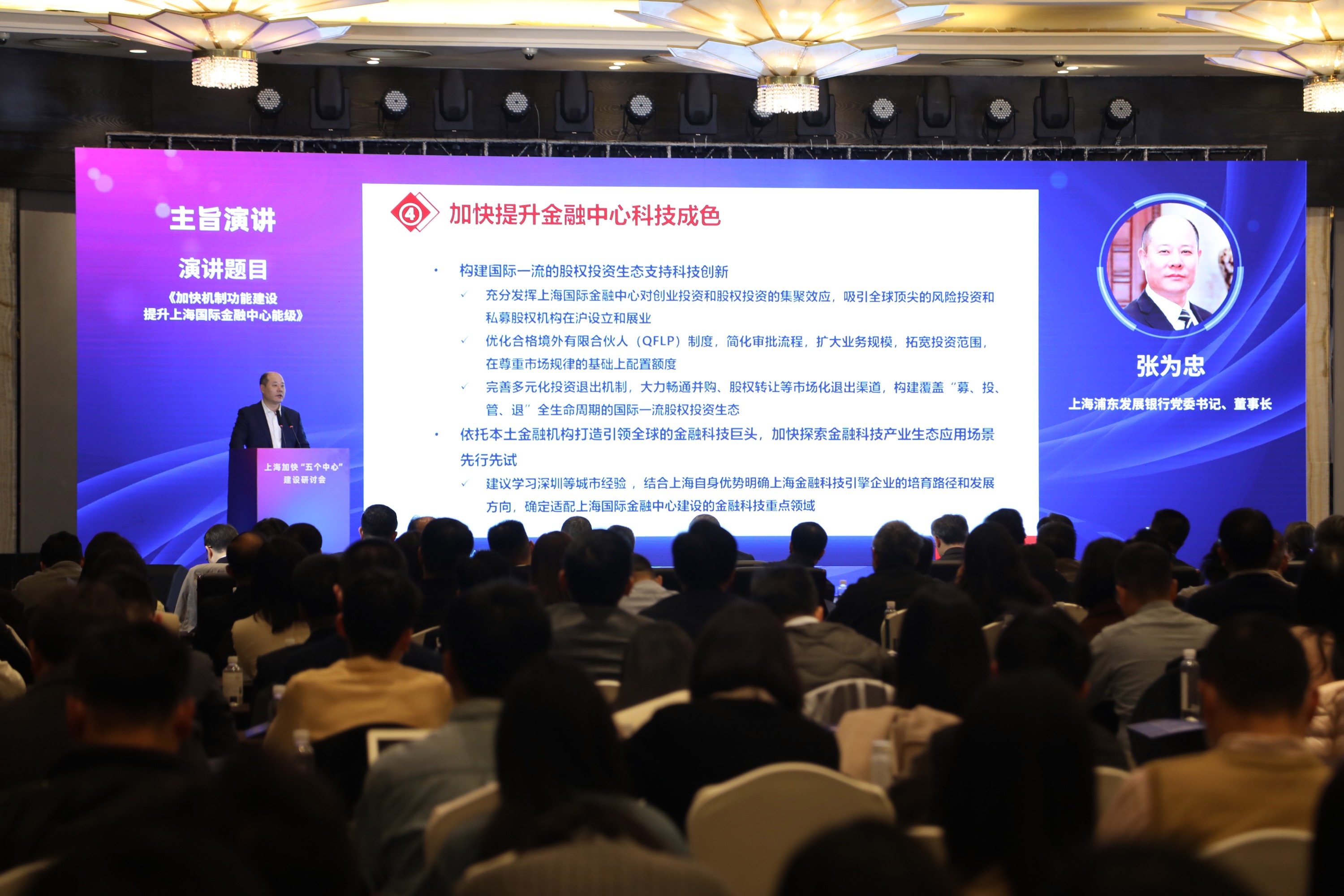
新华财经上海12月7日电(记者王淑娟)在7日举办的"上海加快'五个中心'建设研讨会"上,浦发银行董事长张为忠围绕上海国际金融中心建设的优势、挑战 与未来路径发表主旨演讲。他指出,经过多年发展,上海国际金融中心实现历史性跨越。对标全球领先金融中心,未来仍需在国际化、离岸金融体系完善、 规则参与等维度进行突破。 第三是产业协同优势。依托长三角制造业与科技产业高地,上海形成了金融与实体产业深度联动的独特生态。2024年上海GDP达5.39万亿元,跻身全球城市 前5位,其中三大先导产业贡献突出;更关键的是,上海制造业占比显著高于纽约、伦敦,这种"金融+实体"的均衡优势,成为区别于传统国际金融中心的核 心特征。 | . | 得運輸 | | --- | --- | | 3 | 不 | | し | で | | 5 | E | | 依托: | | | 先行: | રૂ | | J | | | 4 | | 五大优势奠定发展根基,产业与金融联动形成独特竞争力 张为忠总结了上海国际金融中心建设的五大核心优势,为进一步升级筑牢基础。 首先是规模与体系优势。上海金融市场年交易额超3600万亿元,不仅规模增速领先全球,更形成了覆盖股票、 ...


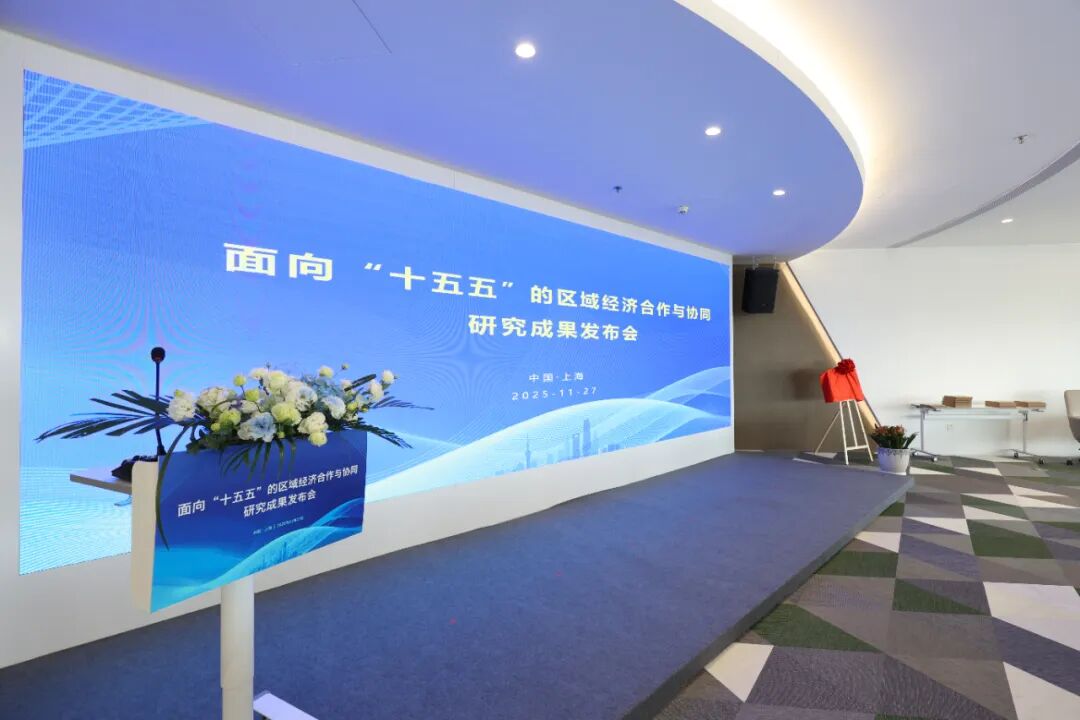
面向“十五五”,政产学研媒共话区域经济高质量发展
Guo Ji Jin Rong Bao· 2025-11-28 02:34
Core Viewpoint - The recent conference on regional economic cooperation and collaboration focuses on the "14th Five-Year Plan" and aims to provide intellectual support and practical references for high-quality regional economic development through the release of mid-term research results and application system construction [1][3]. Group 1: Research Outcomes and Their Importance - The research outcomes presented are foundational for regional economic and cooperative development under the "14th Five-Year Plan," emphasizing their forward-looking nature and practical value [3]. - The series of research results showcases the collaboration among government, industry, academia, research, and media, highlighting their theoretical and practical significance in regional economic cooperation [5]. - The research includes three main outcomes: a model for high-quality development in the Yangtze River Delta, exploration of Shanghai's international financial center construction, and reflections on regional economic cooperation and collaboration [9]. Group 2: Systems and Frameworks - The proposed system consists of three integrated components: institutional guarantee system, innovation-driven system, and financial empowerment system, each addressing different aspects of regional economic development [11]. - The institutional guarantee system outlines the economic connotations and construction processes of the Yangtze River Delta, emphasizing the importance of market and government collaboration [11]. - The innovation-driven system focuses on the role of technological innovation in leading regional economic development, aligning with the strategy of becoming a strong technological nation [11]. Group 3: Expert Review and Recommendations - The expert review team found the research comprehensive, data-rich, and methodologically sound, providing forward-looking and actionable development strategies for regional economic cooperation [12]. - Recommendations include establishing a coherent introduction to the three subsystems, enhancing the institutional guarantee system, and optimizing the financial empowerment system to improve Shanghai's role in regional economic development [14]. Group 4: Collaborative Platforms and Initiatives - The "Yangtze River Delta Regional Economic Research Workshop" was established to promote in-depth research and facilitate collaboration among government, industry, academia, and media [16]. - The workshop aims to create a strong application research team composed of various stakeholders to support regional economic cooperation and collaboration [16]. - The first roundtable meeting of the workshop discussed the importance of cross-regional collaboration and the need for unified institutional rules to facilitate regional market integration [18][19].
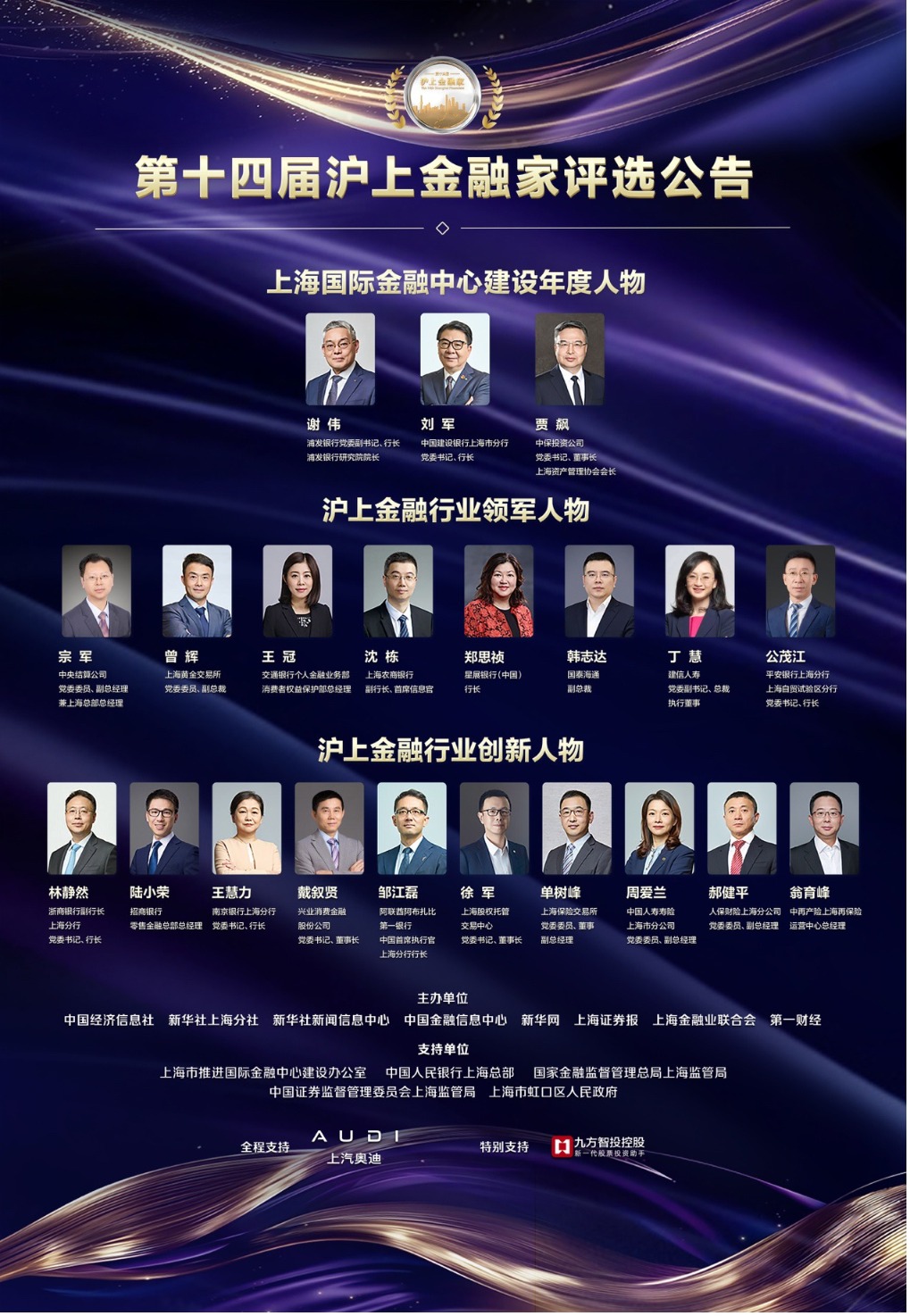
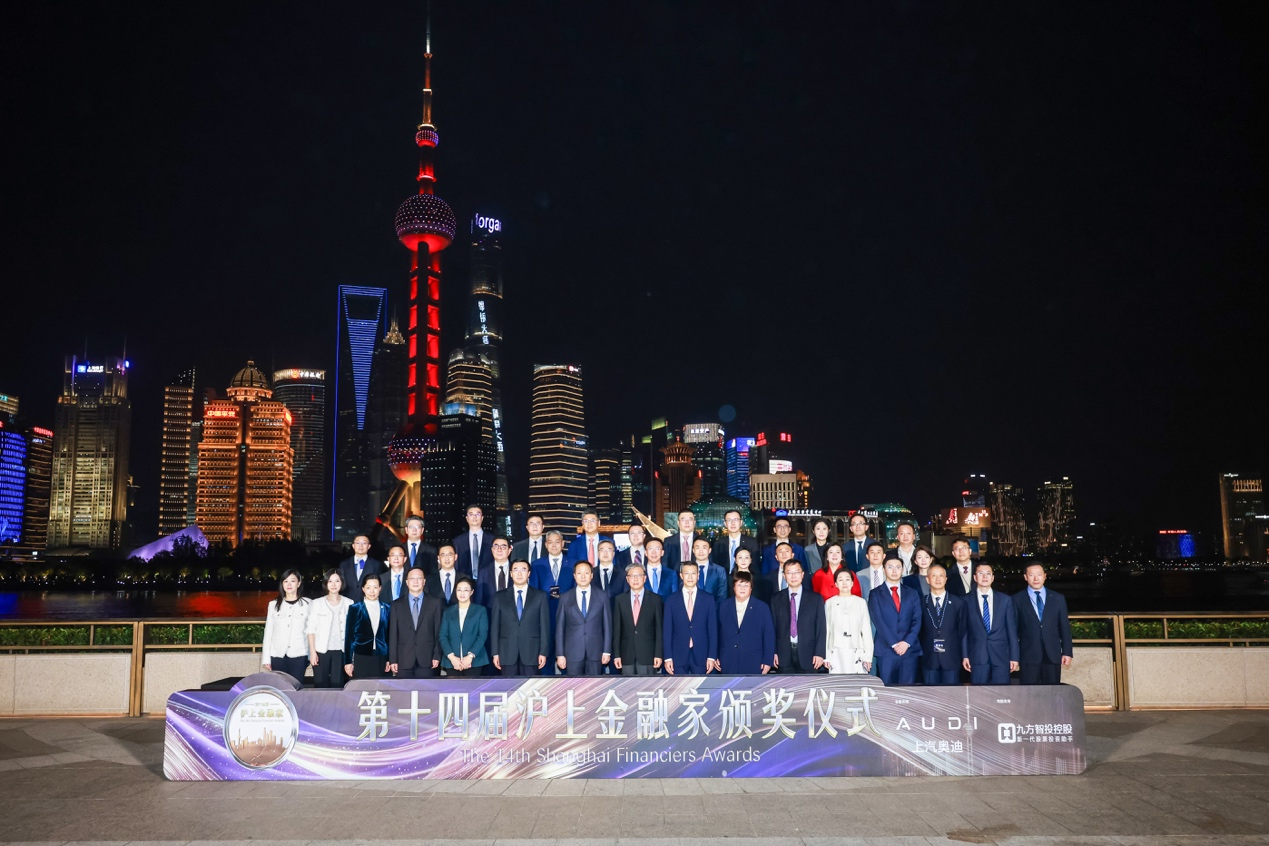
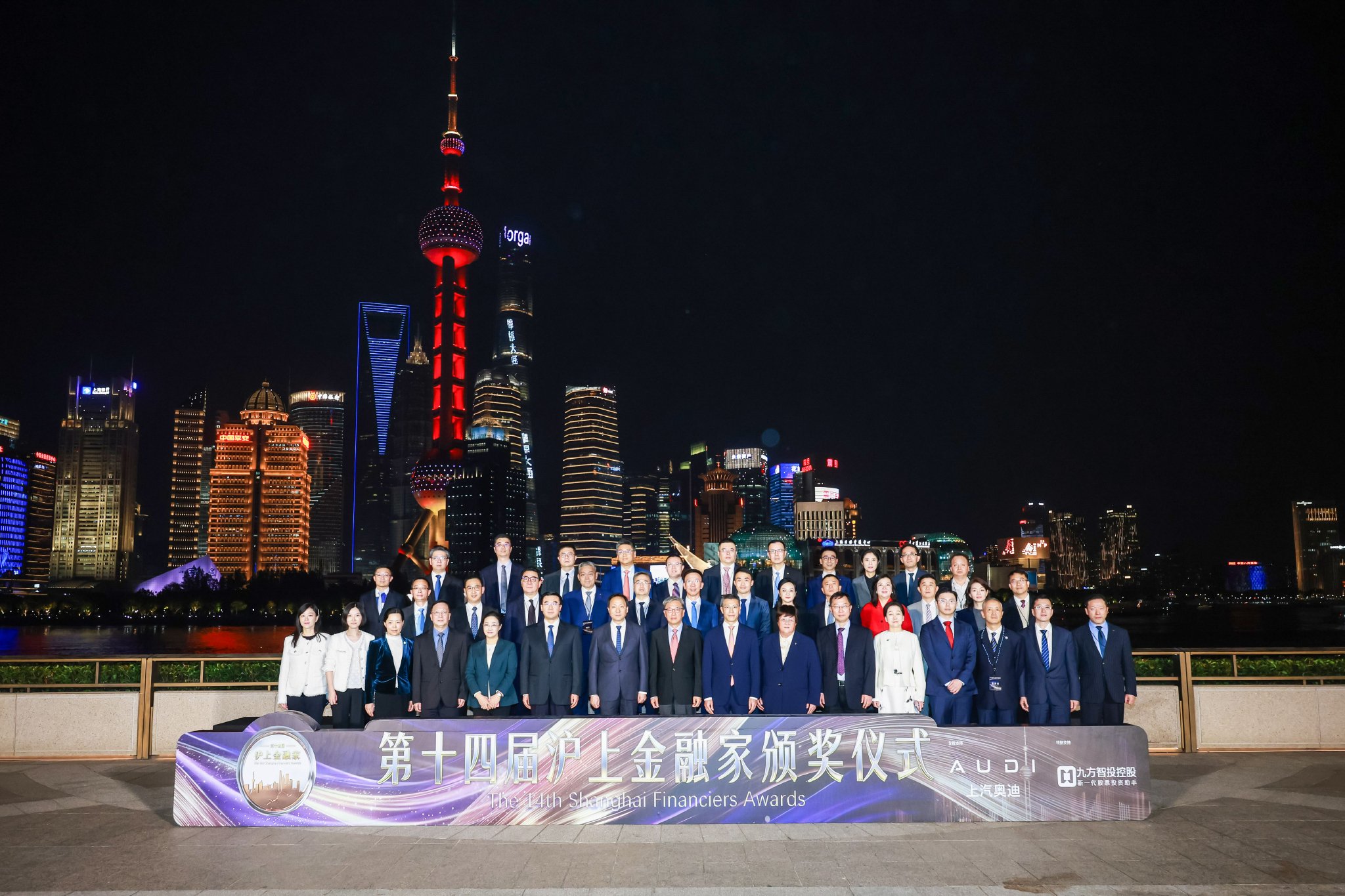
第十四届“沪上金融家”颁奖仪式11月23日敬请关注
Di Yi Cai Jing Zi Xun· 2025-11-23 01:38
Core Viewpoint - The "Shanghai Financial Professionals Selection" has become an important platform to showcase the new image of financial professionals in Shanghai and to inherit the spirit of Eastern financiers since its launch in 2011 [1] Group 1 - The event is co-hosted by several prominent organizations including the China Economic Information Service, Xinhua News Agency Shanghai Branch, and Shanghai Securities Journal [1] - The award ceremony will be live-streamed on November 23 at 17:00 [1] - The event is supported by various regulatory bodies and local government, highlighting its significance in the context of Shanghai's international financial center development [1]
第十四届“沪上金融家”评选揭晓 21位金融人才获奖
Di Yi Cai Jing· 2025-11-19 12:49
Core Insights - The 14th "Shanghai Financial Talent" awards were announced on November 16, recognizing 21 financial professionals in Shanghai for their contributions to the construction of the Shanghai International Financial Center [1][7] - The awards included three categories: "Annual Person for the Construction of Shanghai International Financial Center," "Leading Figures in Shanghai Financial Industry," and "Innovative Figures in Shanghai Financial Industry" [1][6] Award Recipients - The "Annual Person for the Construction of Shanghai International Financial Center" awardees include: - Xie Wei, Deputy Secretary of the Party Committee and President of Pudong Development Bank [6] - Liu Jun, Secretary of the Party Committee and President of China Construction Bank Shanghai Branch [6] - Jia Biao, Secretary of the Party Committee and Chairman of Zhongbao Investment Company [6] - The "Leading Figures in Shanghai Financial Industry" awardees include: - Zong Jun, Deputy General Manager of Central Clearing Company [6] - Zeng Hui, Deputy General Manager of Shanghai Gold Exchange [6] - Wang Guan, General Manager of Personal Financial Business Department at Bank of Communications [6] - Shen Dong, Vice President and Chief Information Officer of Shanghai Rural Commercial Bank [6] - Zheng Sizhen, President of DBS Bank (China) [6] - Han Zhida, Vice President of Guotai Junan [6] - Ding Hui, Deputy Secretary of the Party Committee and President of CCB Life [6] - Gong Maojiang, Secretary of the Party Committee and President of Ping An Bank Shanghai Branch [6] - The "Innovative Figures in Shanghai Financial Industry" awardees include: - Lin Jingran, Vice President and Secretary of the Party Committee of Zhejiang Merchants Bank [6] - Lu Xiaorong, General Manager of Retail Financial Headquarters at China Merchants Bank [6] - Wang Huili, Secretary of the Party Committee and President of Nanjing Bank Shanghai Branch [6] - Dai Xuxian, Chairman of Industrial Bank Consumer Finance [6] - Zou Jianglei, CEO of Abu Dhabi First Bank China [6] - Xu Jun, Chairman of Shanghai Equity Custody Trading Center [6] - Shan Shufeng, Deputy General Manager of Shanghai Insurance Exchange [6] - Zhou Ailan, Deputy General Manager of China Life Insurance Shanghai Branch [6] - Hao Jianping, Deputy General Manager of PICC Property and Casualty Shanghai Branch [6] - Weng Yufeng, General Manager of Zhongzai Property Insurance Shanghai Reinsurance Operations Center [6] Industry Developments - Since 2025, significant policies and measures have been implemented to support the construction of the Shanghai International Financial Center, leading to continuous improvement in its capabilities [7] - In the first nine months of 2025, the total trading volume of Shanghai's financial market reached 296.783 trillion yuan, a year-on-year increase of 12.7% [7] - The Shanghai financial market has seen growth in stock market capitalization and interbank bond market scale, ranking among the top globally [7] - The digital RMB international operation center has commenced operations, and pilot projects in green finance and technology finance have shown significant results [7] - The "Shanghai Financial Talent" awards have been held for 14 consecutive years, recognizing over 300 financial professionals, contributing to the soft power of the Shanghai International Financial Center and fostering a financial culture [7]
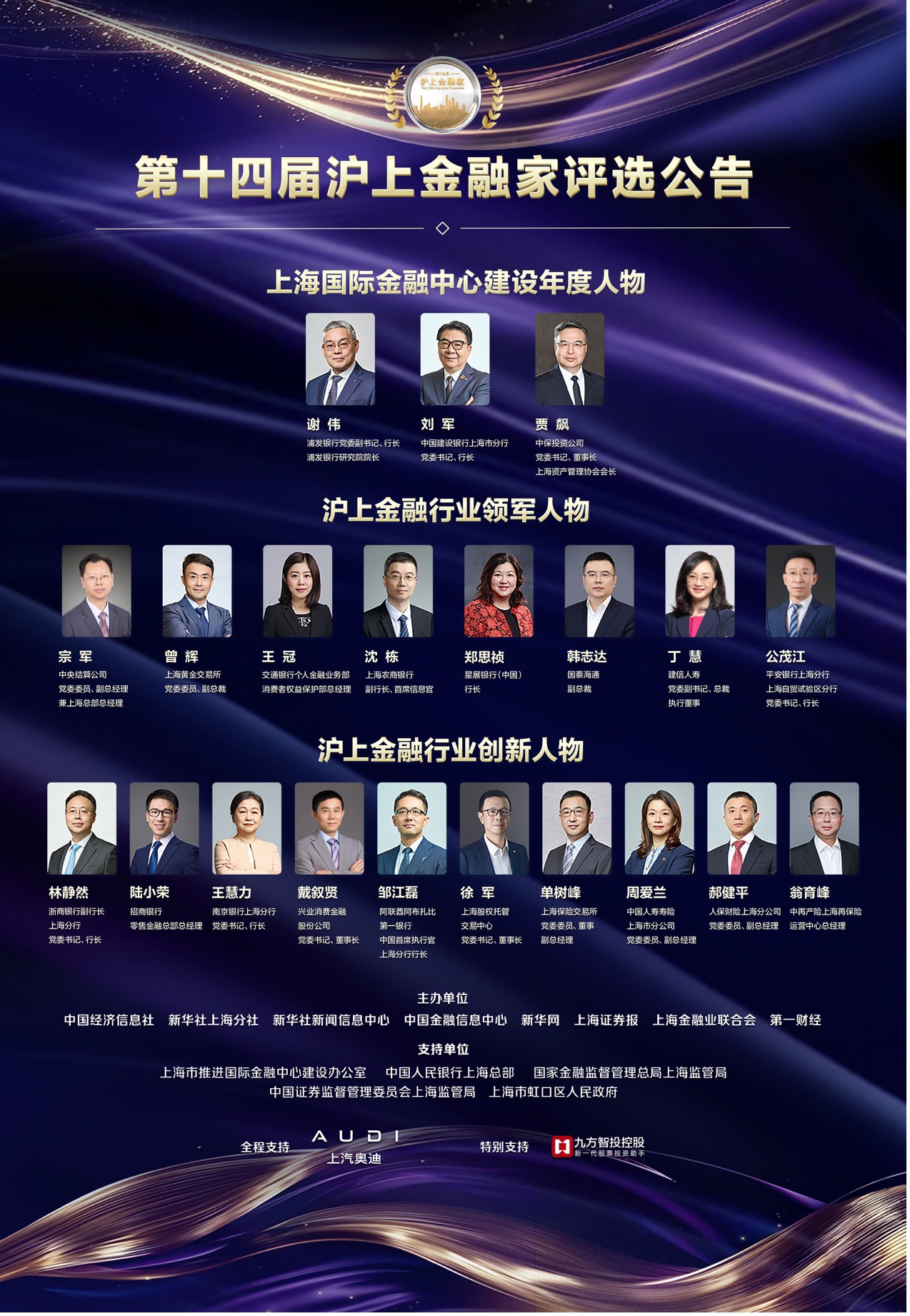
第十四届“沪上金融家”评选揭晓,21位金融人才获奖
Di Yi Cai Jing· 2025-11-19 12:12
Core Insights - The 14th "Shanghai Financial Professionals" awards were announced on November 16, recognizing 21 financial talents in Shanghai for their contributions to the construction of the Shanghai International Financial Center [1][8] - The awards included three categories: "Annual Figures for the Construction of the Shanghai International Financial Center," "Leading Figures in the Shanghai Financial Industry," and "Innovative Figures in the Shanghai Financial Industry" [1][8] Award Recipients - The recipients of the "Annual Figures for the Construction of the Shanghai International Financial Center" include: - Xie Wei, Deputy Secretary of the Party Committee and President of Pudong Development Bank - Liu Jun, Secretary of the Party Committee and President of China Construction Bank Shanghai Branch - Jia Biao, Secretary of the Party Committee and Chairman of Zhongbao Investment Company [7] - The "Leading Figures in the Shanghai Financial Industry" awardees include: - Zong Jun, Deputy General Manager of the Central Settlement Company - Zeng Hui, Deputy General Manager of the Shanghai Gold Exchange - Wang Guan, General Manager of the Personal Financial Business Department of Bank of Communications - Shen Dong, Deputy President and Chief Information Officer of Shanghai Rural Commercial Bank - Zheng Sizhen, President of DBS Bank (China) - Han Zhida, Vice President of Guotai Junan - Ding Hui, Deputy Secretary of the Party Committee and President of Jianxin Life Insurance - Gong Maojiang, Secretary of the Party Committee and President of Ping An Bank Shanghai Branch [7] - The "Innovative Figures in the Shanghai Financial Industry" awardees include: - Lin Jingran, Deputy President and Secretary of the Party Committee of Zhejiang Merchants Bank Shanghai Branch - Lu Xiaorong, General Manager of Retail Financial Headquarters of China Merchants Bank - Wang Huili, Secretary of the Party Committee and President of Nanjing Bank Shanghai Branch - Dai Xuxian, Secretary of the Party Committee and Chairman of Industrial Bank Consumer Finance - Zou Jianglei, CEO of Abu Dhabi First Bank China and President of its Shanghai Branch - Xu Jun, Secretary of the Party Committee and Chairman of Shanghai Equity Custody Trading Center - Shan Shufeng, Board Member and Deputy General Manager of Shanghai Insurance Exchange - Zhou Ailan, Board Member and Deputy General Manager of China Life Insurance Shanghai Branch - Hao Jianping, Board Member and Deputy General Manager of PICC Property and Casualty Shanghai Branch - Weng Yufeng, General Manager of Shanghai Reinsurance Operations Center of China Re [7] Financial Market Developments - Since 2025, significant policies and measures have been implemented to support the construction of the Shanghai International Financial Center, leading to continuous improvement in its capabilities [8] - In the first nine months of 2025, the total trading volume of Shanghai's financial market reached 296.783 trillion yuan, a year-on-year increase of 12.7%, with stock market capitalization and interbank bond market scale ranking among the top globally [8] - The digital RMB international operation center has commenced operations, and pilot projects in green finance and technology finance have shown significant results [8] Event and Support - The awards ceremony was attended by notable figures including Xu Yuchang, Secretary-General of Xinhua News Agency, and Gu Jun, Deputy Secretary-General of the Shanghai Municipal Government [1][8] - The event was organized by various institutions including the China Economic Information Service and supported by several governmental and financial regulatory bodies [9]
第十四届“沪上金融家”评选结果揭晓,21位金融英才分获三大奖项
Guo Ji Jin Rong Bao· 2025-11-17 13:58
Core Insights - The 14th "Shanghai Financial Talents" awards recognized 21 financial professionals for their contributions to the Shanghai International Financial Center [1][2] - Significant policies and initiatives have been implemented this year to enhance Shanghai's status as an international financial center, leading to a continuous improvement in its capabilities [1] - Shanghai's financial market saw a total trading volume of 2967.83 trillion yuan in the first nine months of the year, marking a 12.7% year-on-year increase [1] Group 1: Awards and Recognition - Three individuals were awarded "Annual Figures in the Construction of Shanghai International Financial Center," eight as "Leaders in Shanghai's Financial Industry," and ten as "Innovators in Shanghai's Financial Industry" [2] - Notable awardees include executives from major banks and financial institutions, highlighting the recognition of leadership in the financial sector [4][5] Group 2: Financial Market Performance - Shanghai's stock market capitalization and interbank bond market scale rank among the top globally, reflecting the city's financial strength [1] - The successful launch of the digital yuan international operation center and offshore bond issuance in the Shanghai Free Trade Zone are key developments [1] Group 3: Financial Innovation and Talent Development - The event featured the release of the first "Green Finance Development Index Report," emphasizing the connection between the securities industry and green finance [5] - The importance of a strong financial talent pool was highlighted as a critical resource for building a financial powerhouse and enhancing the international financial center [5][6] Group 4: Ongoing Initiatives and Discussions - A roundtable discussion included experts from financial infrastructure, banking, and fintech sectors, focusing on how technology can support the development of Shanghai as an international financial center [6] - The "Shanghai Financial Talents" awards have been held for 14 consecutive years, contributing to the soft power and cultural atmosphere of Shanghai's financial sector [7]
上海市市长龚正会见彭博创始人布隆伯格
彭博Bloomberg· 2025-11-17 11:54
Group 1 - Bloomberg's founder, Michael Bloomberg, visited Shanghai on November 17, where he met with Shanghai's mayor, Gong Zheng [2][3] - Mayor Gong expressed the desire for deeper mutual cooperation with Bloomberg and welcomed the hosting of important events like the Bloomberg Global Business Forum and Innovation Economy Forum in Shanghai [3] - Bloomberg highlighted the 30th anniversary of Bloomberg's operations in mainland China and reiterated the company's long-term support for Shanghai's development as an international financial center [3] Group 2 - Bloomberg aims to enhance connectivity between Shanghai's financial institutions and the global market, emphasizing the importance of collaboration with cities like New York [3] - Both parties expressed a commitment to deepen cooperation in areas such as urban governance and environmental protection [3]

增强上海国际金融中心软实力 第十四届“沪上金融家”评选结果揭晓
Zheng Quan Shi Bao Wang· 2025-11-17 09:27
Core Insights - The 14th "Shanghai Financial Talent" awards recognized 21 financial professionals for their contributions to the construction of Shanghai as an international financial center [1] - The awards have been held for 14 years, highlighting over 300 financial talents and significantly impacting Shanghai's financial culture and soft power [1] - Policies supporting the acceleration of Shanghai's international financial center construction have been implemented since 2025, enhancing its financial capabilities [1] Financial Market Performance - In the first nine months of 2025, Shanghai's financial market transaction volume reached 296.783 trillion yuan, a year-on-year increase of 12.7% [1] - Shanghai's stock market capitalization and interbank bond market size rank among the top globally [1] - The operational center for digital RMB and successful issuance of offshore bonds in Shanghai Free Trade Zone demonstrate significant advancements in green finance and technology finance [1] Talent Development and Challenges - The core value of the "Shanghai Financial Talent" awards is to recognize outstanding contributors to the international financial center's development and to inspire more talent to engage in this field [2] - The chairman of the Shanghai New Financial Research Institute emphasized that a strong financial talent pool is essential for building a financial powerhouse and is a key resource for the international financial center [2] - There is a notable shortage of talent in five key financial areas: technology finance, green finance, inclusive finance, digital finance, and pension finance [2] Recommendations for Talent Growth - The construction of Shanghai's international financial center is entering its 3.0 phase, focusing on expanding three types of financial talent: interdisciplinary talents familiar with finance and technology, international financial talents knowledgeable about both domestic and global markets, and leadership talents who understand both finance and management [2]
第十四届“沪上金融家”评选结果揭晓 21位上海金融英才分获三大奖项
Zhong Guo Jin Rong Xin Xi Wang· 2025-11-17 02:15
Core Insights - The 14th "Shanghai Financial Talents" awards recognized 21 outstanding financial professionals in Shanghai, highlighting the importance of talent in building a strong financial nation [1][2] - Key policies supporting the construction of Shanghai as an international financial center are set to be implemented by 2025, enhancing the city's financial capabilities [1][2] - Shanghai's financial market saw a total transaction volume of 2967.83 trillion yuan in the first nine months of 2025, marking a 12.7% year-on-year increase [2] Group 1: Awards and Recognition - The awards included categories such as "Annual Person of the Shanghai International Financial Center," "Leading Figures in Shanghai's Financial Industry," and "Innovative Figures in Shanghai's Financial Industry" [1][2] - Notable winners of the "Annual Person of the Shanghai International Financial Center" include leaders from major banks and investment companies [4][5] - The selection process involved self-nominations, committee nominations, media reviews, online voting, and expert evaluations [2] Group 2: Financial Market Performance - Shanghai's stock market and interbank bond market are among the largest globally, contributing to its status as a leading international financial center [2] - The city has successfully launched initiatives in green finance and technology finance, showcasing its role as a testing ground for financial reforms [2] Group 3: Talent Development and Future Prospects - The development of a strong financial talent pool is emphasized as a core element for building a financial powerhouse and enhancing international competitiveness [5][11] - Discussions during the event focused on how financial technology can further support the construction of Shanghai as an international financial center [5]
锚定“强大”,蹄疾步稳——上海国际金融中心提质升级续新篇
Xin Hua Wang· 2025-11-16 02:29
Core Insights - The construction of Shanghai as a strong international financial center is emphasized, with a focus on enhancing cross-border financial convenience and developing a robust asset management and risk management center [1][8][10] Group 1: Financial Market Developments - Shanghai's financial market has seen a total transaction volume exceeding 29.68 trillion yuan (approximately 4.5 trillion USD) from January to September, marking a year-on-year growth of 12.7% [4] - The Shanghai shipping index futures, launched over two years ago, have become active and stable, attracting attention from domestic and international financial professionals [2][3] - The international reinsurance center in Shanghai has attracted 26 insurance institutions, with 128 institutions having trading permissions, covering 14 countries and regions [3] Group 2: Financial Innovation and Talent Development - The introduction of the digital RMB international operation center and the successful issuance of offshore bonds in the Shanghai Free Trade Zone are part of ongoing financial reforms [2][3] - The need for a strong talent pool in finance is highlighted, particularly in emerging fields such as green finance and digital finance, emphasizing the importance of professionals who understand international financial laws and compliance [9][10] - The collaboration between technology and finance is underscored, with companies like Moer Thread, a domestic GPU manufacturer, showcasing the synergy between capital markets and technological innovation [5][6] Group 3: Policy and Strategic Initiatives - The Shanghai government is committed to deepening financial market reforms and promoting high-level financial openness, leveraging the Free Trade Zone for innovative cross-border financial services [8][10] - The recent launch of multiple futures options products reflects a strategic move to provide flexible risk management tools for enterprises [7] - The focus on serving the real economy and national strategies is evident, with initiatives aimed at enhancing financial services for aging populations and supporting new trade models [7][8]