
不想腐

Search documents
新华时评·聚焦“十五五”规划建议|保持反腐败永远在路上的清醒坚定
Xin Hua She· 2025-11-03 10:37
Group 1 - The core message emphasizes the importance of maintaining a clear and firm stance on anti-corruption as a means to ensure high-quality development and effective governance [1][2] - The "14th Five-Year Plan" period is highlighted as a time when the quality and scientific level of party building will steadily improve, providing strong support for Chinese-style modernization [1] - The need for continuous and effective implementation of the Central Eight Regulations and the eradication of various unhealthy practices is stressed, alongside the importance of addressing formalism and bureaucratism [2] Group 2 - The proposal calls for a comprehensive approach to anti-corruption, focusing on preventing corruption through a combination of deterrence, inability, and unwillingness to engage in corrupt practices [2][3] - The current anti-corruption landscape is described as severe and complex, with a significant emphasis on targeting corruption in areas with concentrated power, funds, and resources [3] - The importance of enhancing the supervision system of the party and state to prevent the abuse of power and eliminate conditions conducive to corruption is underscored [2]
保持反腐败永远在路上的坚韧执着
Yang Shi Xin Wen· 2025-10-24 03:00
Core Points - The Central Committee of the Communist Party held a press conference to introduce and interpret the spirit of the Fourth Plenary Session of the 20th Central Committee [1] - The Director of the Central Policy Research Office, Jiang Jinqian, emphasized the need to improve the supervision system of the Party and the state, focusing on the regulation and oversight of power allocation and operation [1] - The commitment to anti-corruption efforts was reiterated, highlighting a zero-tolerance policy towards corruption and a determination to continue the fight against corruption [1] Summary by Categories - **Policy Development** - The suggestion for the formulation of the 15th Five-Year Plan for national economic and social development was introduced [1] - The focus is on enhancing the supervision system to ensure effective governance [1] - **Anti-Corruption Measures** - The Party's unwavering commitment to anti-corruption was highlighted, with a focus on a comprehensive approach to prevent corruption [1] - The strategy includes a persistent effort to combat corruption through a multi-faceted approach [1]
永葆敬畏之心 打造过硬铁军
Zhong Yang Ji Wei Guo Jia Jian Wei Wang Zhan· 2025-10-16 01:05
Core Points - The article emphasizes the importance of maintaining a sense of reverence and responsibility within the disciplinary inspection and supervision agencies, highlighting the need for standardized, legal, and formalized practices to enhance anti-corruption capabilities and build a strong disciplinary inspection team [1][2][3][5][6] Group 1: Loyalty and Political Integrity - The article stresses the necessity of absolute loyalty to the Party, which should manifest in unwavering faith in the Party's beliefs, organizations, and policies [2] - It calls for strengthening political education among disciplinary inspection personnel to ensure alignment with the Party's core leadership and principles [2][3] - The need for improved political judgment, understanding, and execution capabilities is highlighted to combat actions that undermine the Party's authority [2][3] Group 2: Responsibility and Mission - The article outlines the unique political responsibilities of the disciplinary inspection agencies in promoting strict governance of the Party and emphasizes the importance of proactive engagement in anti-corruption efforts [3][4] - It discusses the long-term and complex nature of the anti-corruption struggle, urging a persistent and unwavering commitment to this cause [3] - The need for comprehensive training and capacity building for inspection personnel is emphasized to adapt to new supervisory and enforcement requirements [4] Group 3: Power and Justice - The article underscores the sacred power entrusted to the disciplinary inspection agencies by the Party and the people, emphasizing the need for fair and just exercise of this power [5] - It advocates for strict adherence to legal and procedural norms in the enforcement of discipline, ensuring that all actions withstand scrutiny from the public and history [5] - The importance of addressing corruption at the grassroots level and responding to public concerns is highlighted, promoting a people-centered approach to governance [5] Group 4: Discipline and Law - The article stresses the importance of self-discipline among inspection personnel, advocating for a culture of integrity and accountability within the agencies [6] - It calls for rigorous self-regulation and the establishment of mechanisms to prevent misconduct among disciplinary inspection staff [6] - The need for a proactive approach to identifying and addressing issues related to misconduct within the agencies is emphasized, ensuring that the power granted is not abused [6]
农业农村部:坚决肃清唐仁健严重违纪违法案件的负面影响
Xin Jing Bao· 2025-09-23 15:31
Core Viewpoint - The report from the Central Commission for Discipline Inspection emphasizes the need for the Ministry of Agriculture and Rural Affairs to learn from the serious violations of former Minister Tang Renjian and to implement strict measures to prevent corruption and promote high-quality development in the agricultural sector [1] Group 1: Actions Taken - The Ministry of Agriculture and Rural Affairs has organized various meetings, including special sessions and annual democratic life meetings, to address the issues raised by Tang Renjian's case [1] - The ministry is committed to a comprehensive approach to discipline, focusing on not only preventing corruption but also fostering an environment where corruption is not desired [1] Group 2: Learning and Implementation - The ministry is deeply studying and implementing the important speech by General Secretary Xi Jinping at the Fourth Plenary Session of the 20th Central Commission for Discipline Inspection, aiming to eradicate the negative impacts of Tang Renjian's case [1] - There is a strong emphasis on maintaining a strict tone, measures, and atmosphere in the ministry's operations to ensure effective governance and high-quality development in the agricultural sector [1]
风采 | 清风廉韵漾“鸠兹”记全国文明单位、安徽省芜湖市纪委监委机关
Zhong Yang Ji Wei Guo Jia Jian Wei Wang Zhan· 2025-09-22 00:47
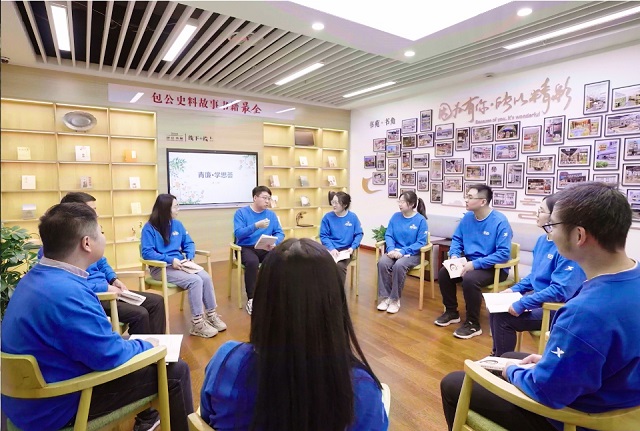
Group 1 - The core viewpoint emphasizes the integration of cultural construction into the supervision and law enforcement processes of the discipline inspection and supervision work in Wuhu City, aiming for high-quality development and a clean political ecology [2][5][9] - Wuhu City Discipline Inspection and Supervision Commission has been recognized as a national civilized unit, reflecting its commitment to promoting a clean and upright political environment [2][5] - The commission implements a dual approach of strict management and warm care to enhance the education and supervision of its cadre, ensuring they are loyal, clean, and responsible [3][4] Group 2 - The "Qingfeng 121" initiative combines physical exercise with open discussions among young discipline inspection cadres, fostering a healthy work environment [3][4] - The commission actively engages in community service and volunteer activities, such as "sending warmth and love," to enhance social responsibility and support rural revitalization [4][5] - The commission has established a comprehensive political supervision framework, focusing on specific tasks and areas to prevent and mitigate risks, with a clear implementation plan [5][6] Group 3 - In 2024, the commission handled 3,717 problem clues, initiated 1,336 cases, and imposed penalties on 1,371 individuals, demonstrating its commitment to combating corruption [6][7] - The commission emphasizes the importance of addressing grassroots corruption and has resolved 2,331 urgent issues raised by the public, enhancing community trust [6][7] - The commission has developed a series of recommendations to improve institutional mechanisms based on case analyses, aiming to strengthen governance in key sectors [6][8] Group 4 - The commission promotes the construction of a clean culture through various initiatives, including the establishment of the "Wuhu Book Room" with over 13,000 books and educational resources [8][9] - The integration of local historical figures into the promotion of integrity serves as a reminder of the importance of ethical governance [8][9] - The commission aims to maintain its status as a national civilized unit by continuously enhancing its efforts in cultural and ethical education [9]

以自我革命精神深化作风建设
Hai Nan Ri Bao· 2025-08-20 01:20
Group 1 - The core viewpoint emphasizes the importance of style construction as a fundamental guarantee for the development of the Party's cause, particularly in the context of the Hainan Free Trade Port entering a new phase of operation [1] - The leadership's role as a "key minority" is crucial for demonstrating and guiding the political ecology, requiring them to lead by example and address challenges in infrastructure and institutional innovation [2] - A three-tier governance mechanism is proposed, focusing on prevention, identification of "micro-corruption," and innovative education to strengthen discipline awareness among Party members [3] Group 2 - The principle of addressing both symptoms and root causes in style construction is highlighted, advocating for a combination of strategic and tactical approaches to maintain continuous pressure and accountability [4] - The need for a political ecology that integrates "dare not corrupt, cannot corrupt, and do not want to corrupt" is emphasized, with a focus on high-pressure tactics against corruption and the establishment of a culture of integrity [5] - A flexible strategy for confronting complex contradictions is discussed, advocating for targeted measures and support for innovative efforts while maintaining fairness and order in the construction of the Free Trade Port [6][7] Group 3 - The concept of "systematic governance" is introduced, which includes a collaborative institutional framework, integrated supervision mechanisms, and a multi-faceted approach to promote integrity and governance [8]
学有所悟 | 不断厚植廉洁文化土壤
Zhong Yang Ji Wei Guo Jia Jian Wei Wang Zhan· 2025-06-26 01:18
Group 1 - The core viewpoint emphasizes the importance of strengthening the construction of a clean culture in the new era as a fundamental project for the Party's self-revolution and a major political task [1] - The construction of a clean culture is essential for promoting the Party's self-revolution and ensuring that members are educated to avoid corruption [2][4] - The integration of traditional Chinese culture, revolutionary culture, and socialist advanced culture is crucial for nurturing a clean political culture [3] Group 2 - Strengthening the moral integrity of leaders is highlighted as a key aspect of clean culture construction, which serves as a benchmark for social moral development [4] - Continuous education on integrity is necessary to enhance the ability of Party members to resist corruption, making it a foundational aspect of the clean culture initiative [5] - Coordinated efforts and comprehensive leadership from the Party are essential for enhancing the ability to resist corruption and ensuring the effectiveness of clean culture construction [6]
时代专论|坚决打好反腐败斗争攻坚战持久战总体战
Zhong Yang Ji Wei Guo Jia Jian Wei Wang Zhan· 2025-06-19 00:56
Core Viewpoint - The article emphasizes the necessity of a comprehensive approach to the anti-corruption struggle, highlighting the need for a decisive, enduring, and systematic battle against corruption to ensure the integrity and purity of the Party [1][2][3]. Group 1: Anti-Corruption Strategy - The anti-corruption struggle must be characterized by a decisive offensive, a long-term commitment, and a systematic approach, reflecting the complex and persistent nature of corruption [2][4][6]. - The current anti-corruption landscape is marked by severe, stubborn, and recurring issues, necessitating a robust and multifaceted response [3][5][6]. Group 2: Challenges in Anti-Corruption - Corruption remains a significant threat, particularly in sectors with concentrated power and resources, such as finance, state-owned enterprises, and public health [3][4]. - The struggle against corruption is complicated by the intertwining of various interests and the evolving nature of corrupt practices, requiring a comprehensive and systemic response [6][7]. Group 3: Advantages in the Anti-Corruption Fight - The Party's foundational mission and strong leadership provide a solid foundation for the anti-corruption campaign, ensuring a unified direction and commitment [8][9]. - The Party's scientific theoretical guidance enhances its ability to navigate the complexities of governance and corruption, offering a clear framework for action [10][11]. Group 4: Institutional Mechanisms - A robust institutional framework is essential for effective anti-corruption efforts, including comprehensive regulations and a strong supervisory system [12][13]. - The integration of various supervisory mechanisms, including internal Party oversight and public accountability, is crucial for enhancing the effectiveness of anti-corruption measures [13][14]. Group 5: Community Engagement - The support and involvement of the public are vital for the success of anti-corruption initiatives, as a strong connection with the masses reinforces the Party's legitimacy and effectiveness [11][12]. - Promoting a culture of integrity and accountability within society is essential for sustaining anti-corruption efforts and preventing the resurgence of corrupt practices [19].
【第四十次】习近平:提高一体推进“三不腐”能力和水平 全面打赢反腐败斗争攻坚战持久战
Xin Hua She· 2025-06-06 02:36
Core Viewpoint - The article emphasizes the importance of advancing the anti-corruption struggle as a significant political battle that cannot afford to lose, highlighting the need for a comprehensive approach to prevent corruption at all levels of the party [1][3]. Group 1: Achievements and Strategies in Anti-Corruption - Since the 18th National Congress, significant achievements have been made in the anti-corruption struggle, including the establishment of a comprehensive leadership structure for anti-corruption work [2]. - The approach combines immediate measures with long-term solutions, ensuring that party members are deterred from corruption through fear, institutional constraints, and ideological education [2]. - A zero-tolerance policy is maintained towards corruption, with a focus on both preventing new cases and addressing existing ones, particularly in key areas [2][4]. Group 2: Institutional and Ideological Framework - A robust regulatory framework has been developed, enhancing the rigidity of the system to prevent corruption and ensuring that regulations are effectively implemented [2][5]. - The ideological foundation against corruption is strengthened through education on party values and traditions, aiming to instill a strong moral compass among party members [2][5]. - The integration of various supervisory mechanisms is emphasized to ensure comprehensive oversight of power and to prevent abuse [5][6]. Group 3: Leadership and Accountability - The article stresses the need for leaders, especially those in high positions, to maintain a high standard of self-discipline and to manage their surroundings effectively [6]. - The role of disciplinary inspection agencies is highlighted, with a call for them to adapt to new challenges in the anti-corruption landscape and to enhance their operational capabilities [6]. - There is a focus on the importance of public support and involvement in the anti-corruption efforts, reinforcing the idea that the struggle against corruption is a collective responsibility [5][6].
构建治理基层腐败问题长效机制
Zhong Yang Ji Wei Guo Jia Jian Wei Wang Zhan· 2025-06-04 01:19
Group 1 - The core viewpoint emphasizes the need for a systematic approach to combat grassroots corruption, advocating for a comprehensive strategy that includes deterrence, prevention, and motivation against corruption [1] Group 2 - Establishing a grassroots supervision network is crucial, focusing on scientific power distribution, standardized exercise of power, and effective supervision to address corruption in key areas such as rural revitalization, education, healthcare, and social security [2] - The responsibility of grassroots party organizations and functional departments must be clarified to create a collaborative work pattern involving various stakeholders in combating corruption [2] - A mechanism for regular collaboration should be established to enhance the effectiveness of grassroots supervision, utilizing big data and innovative public participation methods [2] Group 3 - Maintaining a high-pressure stance on corruption is essential, with a focus on case handling to demonstrate commitment and effectiveness in combating corruption [3] - Expanding sources of information for investigations by integrating data from various departments and utilizing big data techniques to improve the precision of problem detection [3] - Strengthening the coordination among different supervisory organizations to enhance the quality and efficiency of case handling [3] Group 4 - Emphasizing source governance is vital, with a focus on preventing corruption by addressing root causes and enhancing the awareness of integrity among grassroots officials [4] - Implementing strict execution of regulations and transparency in power operations to minimize discretionary power and improve governance effectiveness [4]