企业传承

Search documents
家族企业传承难助推日本私募股权热潮,行业人士:当心过热风险
Di Yi Cai Jing Zi Xun· 2025-10-20 06:52
Core Insights - Japanese family businesses are facing dual challenges of a lack of interested and capable successors and high inheritance tax rates, leading to an increasing trend of selling to private equity funds, which has fueled a private equity boom in Japan [1][3][4] Group 1: Market Trends - The annual transaction volume in Japan's private equity market has exceeded 3 trillion yen (approximately 20 billion USD) for four consecutive years, with a year-to-date increase of over 30% in transactions, reaching 29.19 billion USD [3] - Approximately one-third of Japanese small and medium-sized enterprise owners aged 70 or older will lack successors by 2025, creating a significant market for private equity transactions [3] - Over 90% of Japan's SMEs are family-owned, with more than 65% of private equity mergers and acquisitions stemming from succession issues [4] Group 2: Cultural Shifts - There has been a cultural shift among Japanese family business owners, who are increasingly considering selling their companies to private equity investors, including foreign firms, as a viable option [5] - Successful transformations by foreign private equity giants like KKR and Bain have alleviated concerns among Japanese business owners about losing control over their companies [5] Group 3: Regulatory and Economic Factors - Japanese government regulatory reforms since 2015-2016 have spurred private equity market growth by imposing external board member requirements and increasing capital return rates for listed companies [6] - The long-term depreciation of the yen has made Japanese assets relatively cheaper for dollar investors, further attracting global private equity funds [6] Group 4: Market Risks - Some market participants are warning of overheating risks in the Japanese private equity market, as increased capital inflow may lead to higher premiums being paid for transactions [6] - Despite the growth in private equity investments, they currently account for only about 0.4% of Japan's GDP, compared to 1.3% in the U.S. and 1.9% in Europe, indicating that Japan remains a developing market in terms of private equity maturity [7]


79岁曹德旺,交棒1600亿玻璃帝国
2 1 Shi Ji Jing Ji Bao Dao· 2025-10-18 15:18
Core Viewpoint - Fuyao Glass, the world's largest automotive glass manufacturer, has officially transitioned leadership from founder Cao Dewang to his son Cao Hui, marking the end of an era after 37 years of founding [2] Succession Process - The succession process at Fuyao Glass has been smooth due to the strong family values within the Fujian business community and Cao Dewang's 18 years of careful planning for his son's preparation [3][4] - Cao Hui was groomed for leadership through various roles, including hands-on experience in the glass workshop and market expansion efforts in Hong Kong and the U.S. [3][6] - Cao Dewang had previously dismissed the idea of appointing a proxy manager, emphasizing that his son, as his heir, had the necessary stock to make decisions for Fuyao [4][6] Transition Details - The leadership transition was initially expected to occur in January 2027, but Cao Dewang decided to retire early at the age of 80, believing it would benefit the company [6] - Cao Hui's return to Fuyao was facilitated by the acquisition of his startup, Sanfeng Group, in 2018, which was a crucial step in the succession process [8] Ongoing Influence - Despite the transition, Cao Dewang will continue to hold significant influence within the company as he remains a board member and honorary chairman [9] Corporate Governance - Fuyao Glass is noted for being the first listed company in China to introduce an independent director system, reflecting Cao Dewang's commitment to transparent corporate governance [11] - The company has continuously improved its governance structure, including the establishment of clear responsibilities for independent directors to protect minority shareholders [12] Financial Performance - As of October 17, Fuyao Glass's stock price was 63.48 yuan per share, with a market capitalization of 164.5 billion yuan [14] Legacy and Future Outlook - Cao Dewang's retirement signifies the end of a significant chapter for Fuyao Glass, with expectations on how Cao Hui will balance tradition and innovation moving forward [21]

曹德旺长子,掌权1700亿福耀玻璃
商业洞察· 2025-10-18 09:30
Core Viewpoint - The transition of leadership at Fuyao Glass, with founder Cao Dewang stepping down and his son Cao Hui taking over, marks a significant moment for the company, which has shown strong financial performance and global expansion in the automotive glass market [5][13][15]. Group 1: Leadership Transition - On October 16, 2023, Fuyao Glass announced that founder Cao Dewang resigned as chairman, passing the leadership to his son, Cao Hui, who has been groomed for this role since 1998 [5][7]. - Cao Hui has extensive experience within the company, having worked his way up from the workshop level and previously serving as vice chairman [7][12]. - The leadership change is expected to be smooth, with the company stating that it will not adversely affect normal operations [12]. Group 2: Financial Performance - Fuyao Glass reported a revenue increase to 11.85 billion yuan in the third quarter, with a net profit growth rate of 14% [15]. - The company's net profit has shown a consistent upward trend, increasing from 2.6 billion yuan in 2020 to an expected 7.5 billion yuan in 2024 [13]. - The stock price has risen over 90% since the beginning of 2025, with a market capitalization reaching 170 billion yuan [13]. Group 3: Global Expansion - Fuyao Glass has achieved a 34% global market share in automotive glass, serving high-profile clients such as Bentley, Mercedes-Benz, and BMW [15][31]. - In 2024, overseas revenue accounted for 44.72% of total revenue, with significant contributions from the U.S. subsidiary, which generated 6.312 billion yuan [20][21]. - The company has established a presence in 12 countries, overcoming challenges such as language barriers and cultural differences in international markets [28][30]. Group 4: Philanthropy and Social Responsibility - Cao Dewang has emphasized the importance of giving back to society, recently donating 8 billion yuan and establishing a high school through his charity foundation [35][38]. - The newly founded Fuyao University aims to provide affordable education while ensuring job security for its graduates [40][44]. - The company plans to distribute 2.349 billion yuan in interim dividends in 2025, reflecting its commitment to shareholder trust and social responsibility [46].
“企业必须传给儿子”,闽商传奇曹德旺80岁交班,捐出 1/3 财富建大学
Sou Hu Cai Jing· 2025-10-17 11:26
Core Viewpoint - The unexpected resignation of Cao Dewang as chairman of Fuyao Glass has drawn significant attention, especially following his recent media interview discussing the responsibilities of entrepreneurs [2][3]. Group 1: Resignation Details - Cao Dewang announced his resignation from the chairman position of Fuyao Glass, which surprised many as he had just spoken about his commitment to the company [2][3]. - He clarified that his health is fine and that he wishes to enjoy retirement, with management supporting his son, Cao Hui, as the successor [3]. - At 80 years old, Cao Dewang believes it is time for younger leadership to drive the company forward, emphasizing that stepping down would benefit Fuyao [3]. Group 2: Company Background and Achievements - Fuyao Glass, under Cao Dewang's leadership, has a remarkable history, starting from his acquisition of a local glass company in his 30s and achieving profitability in the same year [5][6]. - The company went public in the 1990s and began international expansion early, establishing factories in various countries, including the U.S. and Russia [6][7]. - Fuyao Glass reported a revenue of 33.302 billion yuan for the first three quarters of the year, a year-on-year increase of 17.62%, and a net profit of 7.064 billion yuan, up 28.93% [7]. Group 3: Philanthropy and Education Initiatives - Cao Dewang has shown a strong commitment to education, planning to invest 10 billion yuan in Fuyao University, which opened its doors to students this year [7][8]. - He has also made significant charitable contributions, reportedly donating over 12 billion yuan [9]. - The average monthly salary for Fuyao employees is around 10,000 yuan, with annual compensation per employee estimated at 189,000 yuan [8].

帮主郑重:曹德旺卸任,这不是退休,是福耀最稳的“交接棒”
Sou Hu Cai Jing· 2025-10-17 08:05
Core Viewpoint - The transition of leadership at Fuyao Glass, with 79-year-old Cao Dewang stepping down as chairman and passing the baton to his son, Cao Hui, is seen as a well-planned and strategic move that reflects the wisdom and foresight of an experienced entrepreneur [3][6]. Leadership Transition - On October 16, Fuyao announced that Cao Dewang resigned as chairman, and his son, Cao Hui, became the new chairman and legal representative. Cao Dewang emphasized the importance of allowing younger leaders to take charge as he approaches 80 years old [3][4]. - Cao Dewang will remain involved as a lifetime honorary chairman, focusing on strategic planning while allowing the management team to operate independently, demonstrating a balance between oversight and delegation [3][5]. Development of Successor - Cao Hui's path to leadership was not straightforward; he faced challenges and was intentionally placed in various roles to gain comprehensive experience, including six years in the factory and six years in sales in Hong Kong and the U.S. [4][6]. - This hands-on approach to leadership development is crucial for ensuring that the successor truly understands the company, which is vital for long-term success [4][6]. Corporate Governance and Philanthropy - Cao Dewang has decided to step back from direct involvement in Fuyao University, which he funded with 10 billion, indicating a willingness to relinquish control and trust in his team's capabilities [5][6]. - This ability to discern what to hold onto and what to let go of is highlighted as a mark of true leadership [5]. Long-term Stability - The transition is viewed as a well-prepared succession plan, ensuring that the company maintains its strategic direction and team cohesion, which is essential for long-term sustainability [6][7]. - The company’s foundation, built on reliable succession, a solid team, and ingrained corporate spirit, positions it well for future challenges [6][7].
曹德旺回应退休:我儿子也55岁了
Sou Hu Cai Jing· 2025-10-17 01:48
Core Viewpoint - Fuyao Glass announced the resignation of its founder and chairman, Cao Dewang, who will become the honorary chairman, while his son, Cao Hui, has been elected as the new chairman, indicating a strategic transition in leadership for sustainable development [1][5]. Group 1: Leadership Transition - Cao Dewang, aged nearly 80, stated it is time to retire and pass the company to his son and the capable team [3][6]. - Cao Hui has been involved in the company since 1989, starting from the bottom and recently appointed as the vice chairman [6]. - The company aims to become a century-old enterprise under the new leadership [6]. Group 2: Company Performance - In the first three quarters of the year, Fuyao Glass reported revenue of 33.302 billion yuan, a year-on-year increase of 17.62%, and a net profit of 7.068 billion yuan, up 28.93% [4][5]. - The company has a global market share exceeding 30%, with over 45% of its revenue coming from overseas markets, establishing itself as a leader in the automotive glass sector [4]. Group 3: Philanthropy and Education - Cao Dewang is recognized for his philanthropic efforts, having donated over 12 billion yuan, and has invested heavily in education, including the establishment of Fuyao University [5]. - Fuyao University, set to officially enroll students in the fall of 2024, will be managed by Wang Shuguo, a respected figure in the education sector [3][5].
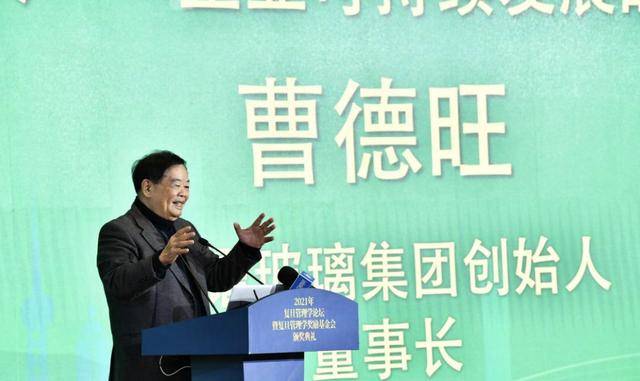
“玻璃大王”曹德旺卸任 交棒长子
Sou Hu Cai Jing· 2025-10-17 01:31
在福耀科技大学首次招生并正式开学后,79岁的"玻璃大王"曹德旺将全球最大汽车玻璃制造商福耀玻璃 (600660.SH;03606.HK)的接力棒,正式交到长子曹晖手中。 福耀玻璃10月16日公告,董事长曹德旺向公司提交了辞去董事长职务的报告,但曹德旺在辞去该职务后 仍作为公司董事继续履职,仍担任部分子公司的董事、董事长及法定代表人职务。自收到书面报告之日 起,其辞职报告生效。同时,福耀玻璃董事局审议通过选举曹晖为公司第十一届董事局董事长,同时担 任公司法定代表人及董事局战略发展委员会主任。曹晖即日起辞去副董事长职务。 对此,曹德旺16日晚接受智通财经采访时表示:"我80岁了,明年是我创业50周年,我应该选择退下来 让年轻人上,早退一年他(指曹晖)多受教育一年。福耀现在的管理团队非常优秀,董事长只是一个符号 而已,管理层很支持曹晖上来。"谈及接下来的工作重心,曹德旺说,重心还是不变,"这是我亲手办的 公司,那么大的公司,我必须像过去一样盯住各种变化。" 近年来,曹德旺将大量资金、时间和精力投入筹建福耀科技大学中。但他对智通财经称,接下来不会再 为此倾注太多精力,"福耀大学已经有校长了,学校的事情如果我再去深度管 ...
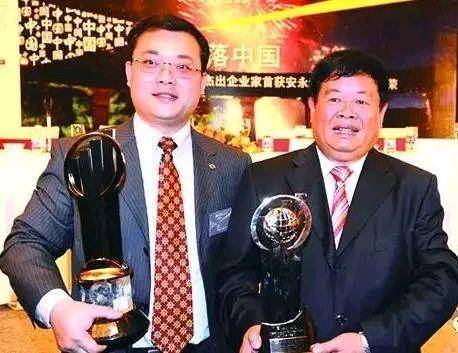
智慧有趣的曹德旺说,他该退休了
Shang Hai Zheng Quan Bao· 2025-10-16 16:40
10月16日晚,福耀玻璃发布公告称,公司董事长曹德旺向公司提交了辞去董事长职务的报告。公司同时 宣布,董事会已选举曹晖为公司董事长。这位中国知名企业家终于正式"交班"。 这一交接平稳有序,早在预料之中。 曹德旺曾多次公开表态,曹晖是未来的接班人。他在一次采访中直言不讳:"就因为他是我的儿子。"这 份坦率,正是曹德旺一贯的风格。 曹晖并非突然走到台前。自2015年起,他已担任福耀玻璃副董事长。这些年来,他成功地将自己隐藏在 荣誉之后,除了作为全国政协委员履职建言外,几乎从不对外发声。 去年4月底,福耀玻璃年度股东大会上,曹德旺就流露出退休意愿:"公司的事,我不管的,他们做得很 好。"这个"他们",指的就是曹晖和福耀的管理团队。 从2015年至2024年,福耀玻璃的营业收入从136亿元增长到392亿元,归属于上市公司股东的净利润从26 亿元增长到75亿元。这段业绩持续增长的时期,也正是曹晖逐渐担起重任的过程。 当时,曹德旺正全身心投入到福耀科技大学的建设中。他立志将这所学校办成"前所未有的大学",要把 它变成"世界一流名校"。今年9月,福耀科技大学迎来首届本科生,曹德旺也将重任交给了王树国校 长。 2017年,曹 ...
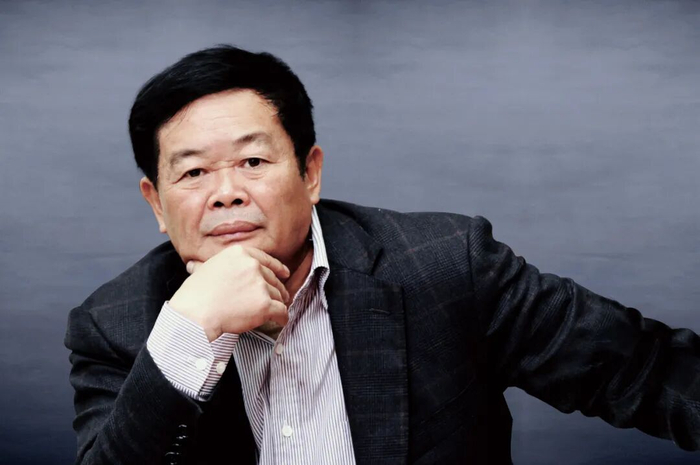
提前辞任董事长,曹德旺回应:我一股都没有减持,退下来对公司更有好处
Mei Ri Jing Ji Xin Wen· 2025-10-16 14:17
10月16日,福耀玻璃(600660)(SH600660,股价66.88元,市值1745亿元)迎来重大变动。公司宣 布,创始人曹德旺已于10月16日辞去董事长职务,但仍将继续担任公司董事。 同时,公司董事局已审议通过选举曹晖为公司第十一届董事局董事长。 对于此次辞任,这位传奇企业家在接受《每日经济新闻》记者采访时独家回应说,自己已80岁,选择在 这个年纪退下来,是因为他认为这"对福耀更有好处",要"让新一代人接手"。 他明确表示,退休后不会把精力放在福耀科技大学上,这是一个捐献项目,已由王树国接手管理。 值得注意的是,曹德旺本届董事长任期原本要到2027年1月才到期。 "我退下来对福耀更好" "我80岁了,(该)退休了。"曹德旺用带着福清特有口音的普通话说道。 福耀玻璃前三季度净利润同比增近三成 在宣布董事职务变动的同时,福耀玻璃也披露了强劲的2025年第三季度报告。报告显示,公司在2025年 前三季度实现了可观的业绩增长。 今年前三季度,福耀玻璃实现营业收入333.02亿元,比上年同期增长17.62%,公司归母净利润为70.64 亿元,比上年同期增长28.93%。 公司介绍了利润总额同比大幅增长的主要原因: ...
“玻璃大王”曹德旺交棒,一个时代的转身!
Sou Hu Cai Jing· 2025-10-16 13:38
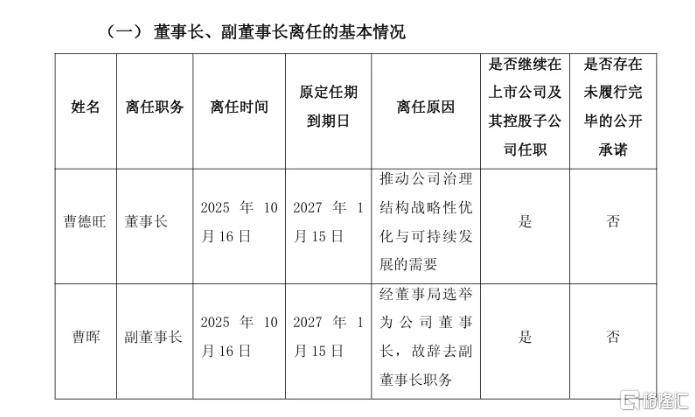
年近八旬的曹德旺,平静转身。 这位掌舵福耀玻璃数十年的的"玻璃大王",如今将卸下重担、开启退休生活。 这是一个时代的谢幕,也标志着中国改革开放后第一代民营企业家集体进入"终章"。 至此,福耀玻璃也将开启曹晖时代。 正式交棒 对于辞去董事长职务,曹德旺回应称,自己退下来对福耀更有好处。 10月16日,福耀玻璃宣布,董事长曹德旺辞去职务,其子曹晖接任。 其被委任为公司终身荣誉董事长。 福耀称,此次职务变动是推动公司治理结构战略性优化与可持续发展的需要,不会对公司正常经营活动产生不利影响。 不过,曹德旺也并非完全离开,而是退居二线。 根据公告,他在辞去董事长职务后仍将作为公司董事继续履职,以及部分子公司的董事、董事长及法定代表人职务。 同时,公司选举曹晖为新任董事长,并任命其为法定代表人及董事局战略发展委员会主任。委任曹德旺为终身荣誉董事长。 1970年出生的曹晖,是曹德旺的长子。 据悉,曹晖于1989年11月加入公司,自1998年8月至今任公司董事,自2015年8月起任公司副董事长,于2006年9月至2015年7月任本公司总经理。 值得注意的是,曹德旺本届董事长任期原本要到2027年1月才到期。 | | | | ...