区块链技术

Search documents
央行等八部门联合出手剑指虚拟货币、RWA代币化
Shang Hai Zheng Quan Bao· 2026-02-06 18:36
最后,《通知》明确提出,未经相关部门依法依规同意,境内主体及其控制的境外主体不得在境外发行 虚拟货币。 记者获悉,虚拟货币依托区块链技术,支持点对点交易,突破物理上的"国境"概念,相关风险极易跨境 传导,国际金融组织和中央银行等金融管理部门对此普遍持审慎态度。 其次,《通知》强调,未经相关部门依法依规同意,境内外任何单位和个人不得在境外发行挂钩人民币 的稳定币。 "挂钩法定货币的稳定币在流通使用中变相履行了法定货币的部分功能,事关货币主权。"权威专家表 示。 (上接1版) 虚拟货币相关业务,均被定性为非法金融活动。《通知》具体提出,在境内开展法定货币与虚拟货币兑 换业务、虚拟货币之间的兑换业务、作为中央对手方买卖虚拟货币、为虚拟货币交易提供信息中介和定 价服务、代币发行融资以及虚拟货币相关金融产品交易等虚拟货币相关业务活动,一律严格禁止,坚决 依法取缔。 ...
八部门发文!强化虚拟货币监管
Zhong Guo Zheng Quan Bao· 2026-02-06 14:22
中国人民银行网站2月6日消息,中国人民银行、国家发展改革委、工业和信息化部、公安部、市场监管 总局、金融监管总局、中国证监会、国家外汇局印发《关于进一步防范和处置虚拟货币等相关风险的通 知》。 权威专家介绍,2025年以来,虚拟货币、现实世界资产(RWA)相关市场炒作风气抬头,一些不法分 子借机浑水摸鱼,打着虚拟货币、RWA、"挖矿"等幌子开展非法集资、传销诈骗等非法活动,或利用 虚拟货币转移违法所得,严重侵害了社会公众的财产安全,扰乱经济金融正常秩序。《通知》旨在进一 步防范和处置虚拟货币、RWA代币化相关风险。 要点速览: 虚拟货币相关业务活动属于非法金融活动 境外单位和个人不得以任何形式非法向境内主体提供虚拟货币相关服务 未经相关部门依法依规同意,境内外任何单位和个人不得在境外发行挂钩人民币的稳定币 未经相关部门依法依规同意,境内主体及其控制的境外主体不得在境外发行虚拟货币 严格监管赴境外开展RWA代币化相关业务活动 持续整治虚拟货币"挖矿"活动 全面梳理排查并关停存量虚拟货币"挖矿"项目 严禁新增"挖矿"项目 严禁"矿机"生产企业在境内提供"矿机"销售等各类服务 《通知》明确,虚拟货币不具有与法定货币 ...
中国央行等八部门重申对虚拟货币的禁止性政策
Sou Hu Cai Jing· 2026-02-06 14:12
《通知》明确,虚拟货币不具有与法定货币等同的法律地位。比特币、以太币、泰达币等虚拟货币具有 非货币当局发行、使用加密技术及分布式账本或类似技术、以数字化形式存在等主要特点,不具有法偿 性,不应且不能作为货币在市场上流通使用。 《通知》强调,虚拟货币相关业务活动属于非法金融活动。在中国境内开展法定货币与虚拟货币兑换业 务、虚拟货币之间的兑换业务、作为中央对手方买卖虚拟货币等相关业务活动,涉嫌非法发售代币票 券、擅自公开发行证券、非法经营证券期货业务、非法集资等非法金融活动,一律严格禁止,坚决依法 取缔。境外单位和个人不得以任何形式非法向境内主体提供虚拟货币相关服务。 中新社北京2月6日电 (陶思阅)中国人民银行等八部门6日联合印发《关于进一步防范和处置虚拟货币等 相关风险的通知》(下称《通知》)。《通知》重申中国境内对虚拟货币坚持禁止性政策。同时,未经相 关部门依法依规同意,境内外任何单位和个人不得在境外发行挂钩人民币的稳定币。 虚拟货币依托区块链技术,支持点对点交易,突破物理上的"国境"概念,相关风险极易跨境传导。为切 实防范风险,《通知》明确提出,未经相关部门依法依规同意,中国境内主体及其控制的境外主体不得 ...
央行等八部门发文!升级虚拟货币监管政策
证券时报· 2026-02-06 13:38
有关部门负责人表示,长期以来,境内始终对虚拟货币相关业务活动保持禁止性的政策立场。虚 拟货币现阶段无法有效满足客户身份识别、反洗钱等方面的要求,存在被用于洗钱、集资诈骗、 违规跨境转移资金等非法活动的风险。 先看《通知》的主要内容: 事关虚拟货币! 2月6日,中国人民银行、 国家发展改革委 、工信部、公安部、市场监管总局、金融监管总局、 证监会、国家外汇局八部门发布《关于进一步防范和处置虚拟货币等相关风险的通知》(下称 《通知》)。此次《通知》整体延续了有关部门对虚拟货币的禁止性政策取向,并对挂钩法定货 币的稳定币、现实世界资产(RWA)代币化相关业务本质属性作出明确。 1. 虚拟货币相关业务活动属于非法金融活动。境外单位和个人不得以任何形式非法向境内主体提供 虚拟货币相关服务。未经相关部门依法依规同意,境内主体及其控制的境外主体不得在境外发行虚 拟货币。 2. 《通知》首次明确,未经有关部门依法依规同意,境内外任何单位和个人不得在境外发行挂钩人 民币的稳定币。 3. 在境内开展RWA代币化活动,以及提供有关中介、信息技术服务等,涉嫌非法发售代币票券、擅 自公开发行证券、非法经营证券期货业务、非法集资等非法金 ...


中国人民银行、中国证监会有关负责人答记者问
Sou Hu Cai Jing· 2026-02-06 13:31
中国人民银行、中国证监会有关负责人就《关于进一步防范和处置虚拟货币等相关风险的通知》答记者 问 近日,中国人民银行、国家发展改革委、工业和信息化部、公安部、市场监管总局、金融监管总局、中 国证监会、国家外汇局等八部门联合发布《关于进一步防范和处置虚拟货币等相关风险的通知》(以下 简称《通知》)。日前,中国人民银行、中国证监会有关负责人就《通知》有关问题回答了记者提问。 一、《通知》的出台背景是什么? 2021年,虚拟货币交易炒作活动盛行,扰乱经济金融秩序,危害人民群众财产安全。按照党中央、国务 院决策部署,中国人民银行联合有关部门共同发布了《关于进一步防范和处置虚拟货币交易炒作风险的 通知》,坚决打击虚拟货币交易炒作,整顿虚拟货币乱象,取得明显成效。 近期,受多种因素影响,虚拟货币、现实世界资产代币化相关投机炒作活动时有发生,风险防控面临新 形势、新挑战。为进一步完善监管政策,防范和处置虚拟货币、现实世界资产代币化相关风险,切实维 护国家安全和社会稳定,中国人民银行、国家发展改革委、工业和信息化部、公安部、市场监管总局、 金融监管总局、中国证监会、国家外汇局等八部门,会同中央网信办、最高人民法院、最高人民检察 ...
大溃败!谁杀死了加密市场的科技溢价?
Xin Lang Cai Jing· 2026-02-06 02:57
文章来源:麦通MSX研究院 作者:程智鹏 2026 年 2 月,全球资本市场呈现出一幅充满张力的双轨图景。纳斯达克指数在 AI 浪潮余温中维持着结 构性韧性,而加密货币市场却正在经历一场无声却深刻的出清。 这不是一次简单的周期性回调。根据 Coinglass 数据,仅 2 月初的 48 小时内,全网爆仓金额突破 25.8 亿美元,比特币价格一度击穿 7.6 万美元关口,较历史高点回撤超 41%。然而,相比于屏幕上跳动的红 色数字,一个更为隐秘且关键的信号正在华尔街的交易台上传递——历史性的相关性背离。 过去五年,加密资产曾被视为'带杠杆的纳斯达克指数',与科技成长股如影随形。但在 2026 年初的这 场调整中,这种锚定关系被打破。加密资产正在被系统性剥离出'风险资产'的组合,其波动特征开始呈 现出与黄金、大宗商品趋同的特征。这一信号暗示市场正在重新评估加密货币的属性,它不再被单纯视 为代表未来的科技革命,而是被降级为一种更多依附于供需博弈的另类商品。 麦通MSX研究院认为,在原生叙事枯竭与机构去杠杆的双重压力下,加密行业正在被迫告别那个试图 构建平行金融体系的草莽时代,转而开启一场残酷的'物种演化'——从颠覆 ...
跨境支付“新基建”护航民企“出海”逐浪
Zheng Quan Ri Bao· 2026-02-03 16:45
Core Insights - The article highlights the transformation of cross-border payment institutions from mere payment channels to essential infrastructure that empowers global trade, enhancing the competitiveness of Chinese manufacturing in the international market [1][4]. Group 1: Cross-Border E-commerce Growth - China's cross-border e-commerce has significantly expanded, with imports and exports projected to reach 2.75 trillion yuan by 2025, a 69.7% increase from 2020 [2]. - The demand for Chinese products, particularly in Africa, is growing, with high-end custom wigs selling for over $500, and even reaching approximately $650 in Nigeria [2]. Group 2: Payment Challenges and Solutions - Traditional cross-border payment methods face issues such as high fees, long transaction times, and currency management difficulties, making it challenging for private enterprises to operate internationally [2][3]. - Cross-border payment platforms like PingPong have introduced local wallet functions in Africa, improving transaction efficiency to seconds and allowing real-time settlements in local currencies [3]. Group 3: Role of Payment Institutions - Cross-border payment institutions are evolving into integrators of global financial networks, providing essential infrastructure for private enterprises to expand internationally [3][4]. - Companies like LianLian Technology have established a comprehensive global payment license framework, covering over 100 countries and supporting more than 130 currencies [5]. Group 4: Policy Support and Market Dynamics - The implementation of the Private Economy Promotion Law in May 2025 supports private enterprises in expanding international cooperation and investment [4]. - The cross-border payment sector is characterized by collaboration among various market players, including major platforms like WeChat Pay and Alipay, which cater to small and medium-sized enterprises [4]. Group 5: Future Development and Challenges - The cross-border payment industry is expected to grow as private enterprises accelerate their internationalization efforts, with many optimistic about future developments [6]. - Challenges remain, including the need for differentiated service coverage, risk management, and data security in cross-border transactions [6][7]. Group 6: Recommendations for Improvement - To address existing challenges, there is a call for systematic innovation, including the application of blockchain technology for enhanced transaction transparency and security [6][7]. - Strengthening local partnerships and leveraging AI and big data for dynamic risk modeling are recommended to improve real-time responses to cross-border transactions [7][8].
七星创客助力企业低成本获客,高复购率产品如何放大裂变效应
Sou Hu Cai Jing· 2026-02-02 11:58
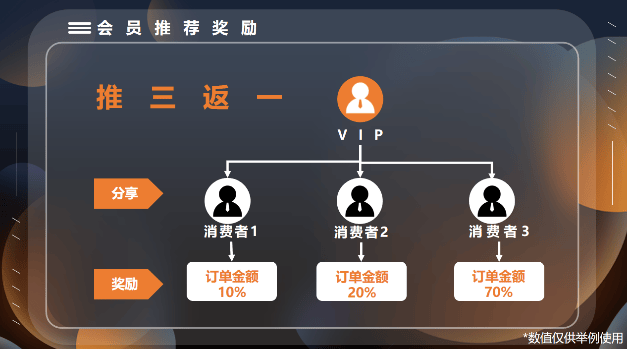
Core Concept - The "Qixing Chuangke" model transforms consumer behavior into entrepreneurial opportunities through a low-threshold recovery mechanism and a tiered incentive system, effectively addressing three major pain points in traditional recruitment [1] Group 1: Mechanism Overview - The "Push Three Return One" mechanism serves as the foundational incentive, allowing users to recover their initial investment by recommending a small number of new users, thus reducing participation risk [2] - An example illustrates that by recommending three users for a product priced at 1980 yuan, the total rewards can cover the initial cost, demonstrating the model's effectiveness [3] - The reward proportions can be customized based on industry specifics, encouraging higher returns for later recommendations to stimulate ongoing sharing [5] Group 2: Growth Structure - The tiered structure categorizes creators into seven levels, each with distinct upgrade conditions and benefits, creating a clear growth path that enhances user engagement and motivation [6] - High-level benefits include the "Bole Award," where creators at the third level and above can earn rewards from their direct subordinates' performance, fostering a mentorship mechanism [8] - The "Weighted Dividend" system allows creators to earn additional dividends based on the overall performance of the platform once they reach specific management levels [10] Group 3: Revenue Sources - Revenue is generated through direct commission for each new user referred, team-level rewards based on total sales, and special rewards for upper-level creators from their subordinates' performance [12] Group 4: Compliance Design - To avoid legal issues, the model emphasizes real product transactions, limits team rewards to three levels, and ensures transparent rules regarding commission and upgrade conditions [16][17][18] - Data security is prioritized through blockchain technology and a dual-layer risk control system to prevent fraudulent activities [19] - The total commission should not exceed 60% of the product's gross profit to maintain the company's profitability [20] Group 5: Conclusion - The "Qixing Chuangke" model is not just a growth tool but a new paradigm for reshaping user relationships, turning traditional buyer-seller dynamics into collaborative partnerships [21] - The success of this model relies on a combination of product strength, model design, and compliance to ensure sustainable development [22]
澳科质量申请基于DID的企业数据跨境共享系统专利,确保数据传输全过程可追溯
Jin Rong Jie· 2026-02-02 06:30
国家知识产权局信息显示,澳科质量(珠海横琴)科技有限公司申请一项名为"基于DID的企业数据跨 境的共享系统和方法"的专利,公开号CN121441505A,申请日期为2025年10月。 专利摘要显示,本发明公开了一种基于DID的企业数据跨境的共享系统和方法,涉及数据跨境共享和合 规管理技术领域。本发明的共享系统包括身份认证模块、数据使用方、数据提供方、审核模块、规则 集、数据传输模块和区块链;所有角色主体在区块链上注册DID及相关身份信息;本发明利用DID技术 为跨境数据共享中的各方提供可信的身份认证,借助区块链技术的去中心化特点,能够对跨境数据共享 过程中的所有操作进行记录与验证,确保数据传输的全过程可追溯,增强透明度。 作者:情报员 天眼查资料显示,澳科质量(珠海横琴)科技有限公司,成立于2023年,位于珠海市,是一家以从事软 件和信息技术服务业为主的企业。企业注册资本500万人民币。通过天眼查大数据分析,澳科质量(珠 海横琴)科技有限公司专利信息2条,此外企业还拥有行政许可4个。 声明:市场有风险,投资需谨慎。本文为AI基于第三方数据生成,仅供参考,不构成个人投资建议。 本文源自:市场资讯 ...
加密货币CEO成华尔街头号公敌
阿尔法工场研究院· 2026-02-02 04:08
Core Viewpoint - The ongoing conflict between Coinbase CEO Brian Armstrong and traditional banking leaders, particularly Jamie Dimon, highlights the growing tension between cryptocurrency and traditional financial institutions as the former seeks to establish itself in the mainstream financial landscape [2][3]. Group 1: Conflict and Tensions - Armstrong confronted Dimon at the World Economic Forum, where Dimon criticized Armstrong's views on cryptocurrency, calling them misleading [2]. - The banking sector is increasingly aware of the threat posed by cryptocurrencies, particularly as they begin to encroach on traditional banking services like consumer deposits [3][6]. - There is a significant disagreement between banks and Coinbase regarding whether cryptocurrency exchanges should offer regular returns to consumers holding digital tokens, with banks fearing this could lead to a loss of consumer deposits [3][6]. Group 2: Legislative Developments - The proposed Clarity Act could reshape everyday financial services, including bank deposits and electronic payments, and is currently a point of contention between banks and the cryptocurrency industry [6][7]. - The White House plans to convene meetings between banks and cryptocurrency industry representatives to seek a compromise on the regulatory framework [6][7]. - Armstrong has expressed a preference for no legislation over poorly designed laws that could hinder Coinbase's operations [7][26]. Group 3: Coinbase's Position and Strategy - Coinbase, valued at approximately $55 billion, aims to position itself as a mainstream financial service provider, offering a range of services beyond cryptocurrency trading [7][15]. - Armstrong has invested millions in lobbying efforts to influence cryptocurrency-related legislation and has established a Super PAC to support pro-cryptocurrency candidates [15][16]. - The company has a profitable partnership with Circle, allowing it to offer a 3.5% return to USDC holders, which is a competitive advantage in the current low-interest environment [23][24]. Group 4: Regulatory Challenges - The banking industry is lobbying against the Clarity Act, warning of a potential $6.6 trillion risk of deposit outflows if cryptocurrency companies are allowed to offer competitive returns [25]. - Armstrong has proposed creating a new category of stablecoin issuers that could offer rewards under stricter regulatory standards, aiming for a fair competitive environment [25][26]. - The outcome of the Clarity Act is seen as heavily dependent on Coinbase's stance, indicating the company's significant influence in the legislative process [26].