
危机公关

Search documents
专家谈“百果园董事长称在教育消费者成熟”:顾客是有专业导游的上帝,而不是任你摆布的木偶
Sou Hu Cai Jing· 2025-08-10 10:17
Core Viewpoint - The chairman of Baiguoyuan, Yu Huiyong, stated that the company focuses on educating consumers rather than catering to them, which has sparked significant public debate and backlash on social media [1][3]. Group 1: Company Response - Yu Huiyong emphasized that there are two types of business: one that exploits consumer ignorance and another that educates consumers to maturity [1]. - The video response from Yu Huiyong went viral, leading to trending topics such as "monthly salary of 20,000 can't afford Baiguoyuan" and "Baiguoyuan chairman claims to educate consumers" [3]. Group 2: Public Reaction - Many netizens criticized the company's approach, expressing sentiments like "who is educating whom" and questioning the need for consumer education [3]. - Economic scholar Bai Wenxi pointed out that the term "education" implies a hierarchical relationship, positioning Baiguoyuan as the teacher and consumers as students, which consumers found disrespectful [3]. Group 3: Recommendations for Improvement - Bai Wenxi suggested that Baiguoyuan should engage in crisis public relations and product transparency, including a public apology from the chairman and live-streaming of orchard inspections to enhance consumer trust [3][4]. - The scholar also noted that in the age of social media, executives should treat users as equals rather than subordinates, emphasizing the importance of respectful communication [4].


当CEO因道德丑闻登上热搜,团队该怎么办?
Hu Xiu· 2025-08-05 08:01
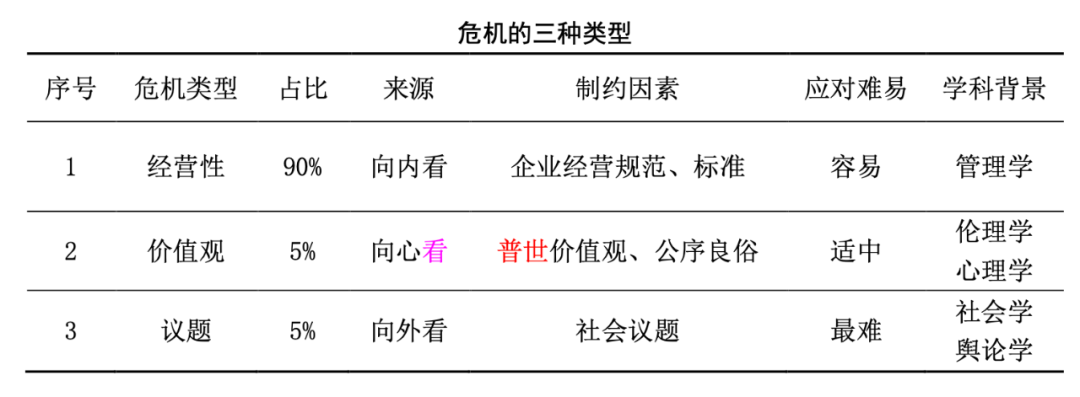
Core Viewpoint - The incident involving Astronomer's CEO and HR head has led to a significant reputational crisis for the company, prompting immediate internal investigations and leadership changes [2][3][6]. Group 1: Incident Overview - On July 16, 2025, Astronomer's CEO Andy Byron and HR head Kristin Cabot were captured in a compromising situation during a Coldplay concert, which quickly went viral on social media [1]. - Following the incident, the board of directors placed both individuals on administrative leave and initiated an internal investigation [2]. - On July 19, Andy Byron officially resigned as CEO, and co-founder Pete DeJoy was appointed as interim CEO, with Cabot also resigning shortly thereafter [3]. Group 2: Company Profile - Astronomer is valued at $1.3 billion and employs 350 staff, having achieved unicorn status in 2022 [5]. - The company offers Astro, a data platform powered by Apache Airflow, designed for building, running, observing, and managing data pipelines for data, analytics, and AI-driven applications [4]. Group 3: Crisis Management - The incident represents a moral misconduct crisis, with the board's response being considered standard and the resignations viewed as a necessary but dignified exit [6]. - The event generated substantial media attention, with over 22,000 news articles published within 24 hours and more than 15 million readers engaging with the content, comparable to other major news events [9]. - Google Analytics indicated a 15,000% surge in website traffic for Astronomer following the incident [10]. Group 4: Public Relations Strategy - The public relations team faced the challenge of managing the negative attention while leveraging the unexpected traffic to the company's advantage [11][12]. - The crisis was categorized as a values-based crisis, and the resignations of the executives helped to alleviate public sentiment [13]. - To redirect focus back to the company, the PR team decided to issue a formal statement regarding the resignations and enlisted Gwyneth Paltrow as a temporary spokesperson to create a humorous PR video [27][34]. Group 5: Video Campaign Impact - The video featuring Gwyneth Paltrow went viral, amassing over 36.5 million views and shifting the narrative towards a more positive brand image [35]. - Paltrow's video effectively communicated the company's core message, highlighted its main product, and promoted an upcoming event, successfully steering public attention back to the company's strategic objectives [41][42].
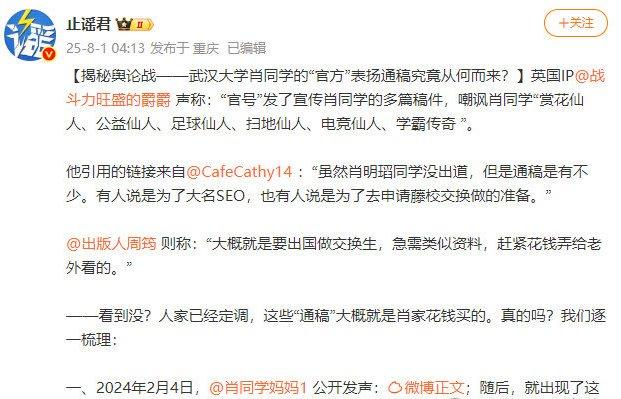
被忽略的疑点,武大事件的“通稿”……究竟是谁发的?细思极恐!
Xin Lang Cai Jing· 2025-08-01 15:05
Core Viewpoint - The article discusses the manipulation of public opinion surrounding a campus incident at Wuhan University, highlighting the emergence of SEO-driven positive articles aimed at reshaping the narrative around a student involved in the controversy [1][10][12]. Group 1: Media Manipulation - A collection of similar SEO articles praising the student emerged after the student's mother publicly spoke out, indicating a coordinated effort to create a positive image [4][5]. - The articles were disseminated through various media channels, including official media self-media accounts, suggesting a blend of official and unofficial narratives [4][5]. - The content of these articles was criticized for being generic and lacking news value, raising questions about the motivations behind their publication [7][9]. Group 2: Theories of Operation - Two main theories emerged regarding the origin of these articles: one suggesting a clumsy crisis management effort by the student's family, and the other proposing a more sinister, organized campaign to discredit the family [7][10]. - The first theory posits that the family sought to counteract negative public sentiment by commissioning positive articles, although the execution appeared poorly done [7][9]. - The second theory suggests a strategic "false flag" operation aimed at discrediting the family by portraying them as attempting to manipulate public perception, thus shifting the focus from the incident itself to the family's social status [10][12]. Group 3: Implications for Public Discourse - The incident reveals a troubling reality about public discourse being increasingly polluted by organized information warfare, where media platforms may compromise their credibility for short-term gains [16]. - The article emphasizes that the complexity of these operations indicates a deeper understanding of communication strategies, moving beyond simple attacks to more sophisticated agenda-setting [14][15]. - The involvement of organized groups with ideological motives raises concerns about the integrity of public discussions and the challenges faced by individuals in defending their positions against such orchestrated campaigns [16].
【世相百态】 爱康国宾陷入 危机公关困局的启示
Zheng Quan Shi Bao· 2025-07-31 21:37
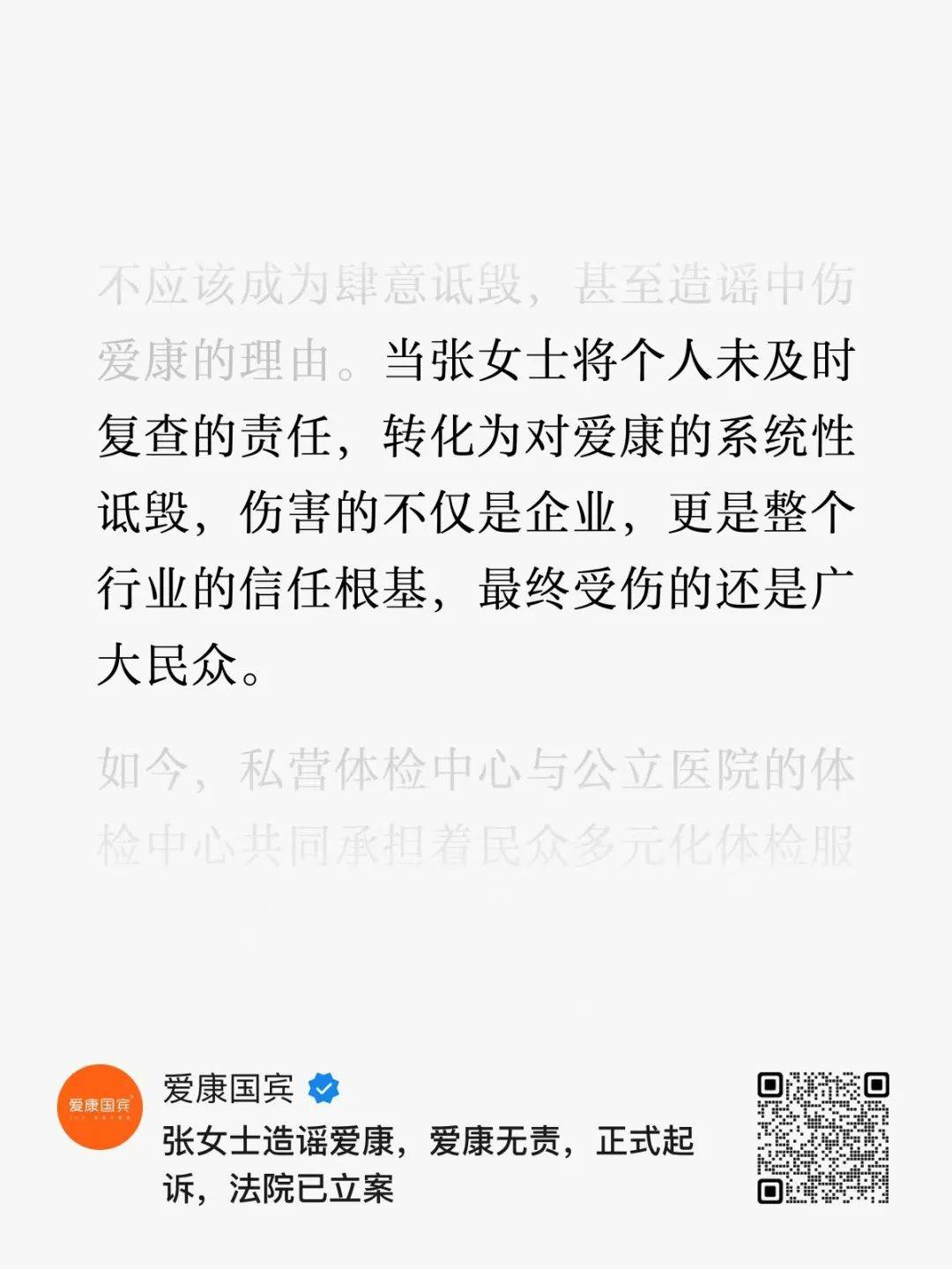
Group 1 - The core issue revolves around the crisis communication failure of the company, Aikang Guobin, in response to a lawsuit from a client alleging a decade of undetected cancer during health check-ups [1] - The company's press conference aimed to clarify the allegations but was perceived as a public relations failure, with the company's remarks interpreted as cold and evasive [1] - The negative public sentiment has been exacerbated by reports of frequent team changes within the company, administrative penalties in major cities, and a high volume of complaints on consumer platforms [1] Group 2 - Recent incidents across various industries, including Aikang Guobin, highlight the increasing scrutiny companies face as they grow, necessitating improved public relations capabilities [2] - In the service industry, rebuilding trust after a crisis is a complex and lengthy process, emphasizing the need for companies to address operational challenges and enhance service quality [2] - For medical disputes, effective crisis management requires a balance of factual evidence and emotional empathy, suggesting that private healthcare institutions should approach such situations with compassion and care [2]
消费舆警指数|爱康国宾事件持续发酵 企业与媒体如何共处?
2 1 Shi Ji Jing Ji Bao Dao· 2025-07-31 15:08
Group 1 - The core issue revolves around a public controversy initiated by a lawyer, Ms. Zhang, who claims that after ten years of health check-ups at iKang Guobin, she was diagnosed with late-stage kidney cancer by another institution, raising concerns about potential misdiagnosis or missed diagnosis [2][3] - iKang Guobin held a media briefing to assert that there was "no misdiagnosis or missed diagnosis" in Ms. Zhang's case and has filed a lawsuit against her for "fabricating facts and spreading rumors" [2][3] - The founder and CEO of iKang Guobin, Zhang Ligang, made controversial statements during the media briefing, suggesting that expecting a low-cost health check-up to detect all diseases is unrealistic, which further fueled public outrage [2][4] Group 2 - iKang Guobin's internal review and external expert evaluation concluded that they bore no responsibility for the alleged misdiagnosis, and they expressed willingness to accept third-party assessment [3] - The company's communication strategy, while showing a willingness to engage with the public, failed to alleviate consumer concerns, as the CEO's remarks were perceived as dismissive [4][6] - The crisis management approach taken by iKang Guobin highlighted the importance of clearly communicating core facts and addressing public concerns, which they did not effectively achieve [5][7]

致爱康国宾:危机公关时不要用 AI 写稿
虎嗅APP· 2025-07-31 09:50
Core Viewpoint - The article discusses the crisis communication failure of iKang Guobin in response to a customer's cancer diagnosis, highlighting the inadequacy of AI-generated responses in building trust during critical moments [3][4][19]. Group 1: Company Response - iKang Guobin's CEO stated that one cannot expect comprehensive disease detection from a low-cost health check, which became a focal point of public criticism [4]. - The company's reaction involved a strong denial and legal action against the customer, rather than addressing the emotional concerns of the public [3][10]. Group 2: AI in Crisis Communication - The article suggests that the company's public statement may have been generated by AI, characterized by a template-like structure and lack of genuine human emotion [5][6]. - AI's inability to convey trust and authenticity in communication is emphasized, as it lacks personal experience, intent, and accountability [8][9]. Group 3: Human Element in Communication - Effective crisis communication requires human empathy and the ability to acknowledge emotions, which AI cannot replicate [10][20]. - The absence of human oversight in AI-generated responses can lead to the amplification of irrational emotions and poor decision-making [12][15]. Group 4: Broader Implications - The reliance on AI for communication reflects a broader issue of undervaluing genuine human interaction in corporate settings [17]. - The article argues that communication should be viewed as a relational process rather than a mere transactional task, emphasizing the need for time and emotional investment [20].

【e公司观察】爱康国宾何以演绎危机公关困局?
Zheng Quan Shi Bao Wang· 2025-07-31 09:45
Group 1 - The core issue revolves around iKang Guobin's response to a lawsuit from a client alleging a decade of undetected cancer during health check-ups, which the company claims is unfounded [1] - iKang Guobin's press conference aimed to clarify the situation but was perceived as a failure in crisis management, with the company's comments interpreted as cold and dismissive [1] - The company's crisis communication strategy has been criticized for being inadequate, as public sentiment has shifted to highlight other negative aspects such as frequent team changes and numerous complaints [1] Group 2 - Recent incidents across various industries, including iKang Guobin, indicate that larger companies face increased scrutiny from the market, necessitating improved public relations capabilities [2] - Trust is crucial in the service industry, and once lost, rebuilding it is a complex and lengthy process, as evidenced by various service-related issues [2] - For healthcare disputes, crisis management requires a careful balance of facts and empathy, emphasizing the importance of genuine concern and reflection over mere defensive tactics [2]
致爱康国宾:危机公关时不要用 AI 写稿
Hu Xiu· 2025-07-31 01:04
Core Viewpoint - The incident involving Zhang, who claims that iKang Guobin failed to detect her cancer after ten years of health check-ups, has sparked significant outrage from both the customer and the company, leading to a public relations crisis for iKang Guobin [1][2]. Group 1: Company Response - iKang Guobin held a press conference to express their anger rather than apologizing or comforting the customer, and they have initiated legal action against her [2]. - The CEO of iKang Guobin stated, "Do not expect a health check costing a few hundred yuan to detect all diseases," which has become a focal point of public discourse [3]. Group 2: AI and Communication - The company's public statement was perceived as highly templated and lacking genuine human touch, leading to speculation that it may have been generated by AI [4][6]. - The use of AI in crafting the response has raised concerns about trust, as AI lacks the human elements of responsibility, experience, and intent that are crucial for effective communication [11][15]. Group 3: Crisis Management - Effective crisis communication requires acknowledging emotions and building trust, which iKang Guobin failed to do by focusing on their own anger rather than addressing customer fears [20][34]. - The absence of human elements in the communication process can lead to a lack of reflection and an amplification of irrational responses, as AI does not provide the necessary checks and balances that human involvement would [26][28]. Group 4: Broader Implications - The incident highlights a broader issue in corporate communication, where the desire for efficiency and safety can undermine the value of genuine human interaction [39][41]. - The reliance on AI for communication tasks may lead to a superficial approach that fails to address the complexities of human relationships and trust-building [40][46].
宗馥莉也曾是公关部长
虎嗅APP· 2025-07-16 10:41
Core Viewpoint - The article discusses the internal conflict within the Zong family, particularly focusing on Zong Fuli's handling of the crisis and predicts her eventual failure due to several unfavorable factors that contradict common sense [2][4]. Group 1: Crisis Management Insights - The article emphasizes the importance of clearly presenting facts during a crisis, rather than attempting to obscure the issue with new concepts or narratives [4][12]. - It highlights that traditional public relations strategies can be more effective than modern, attention-seeking tactics [16]. - The author suggests that the first party to present a favorable narrative will have the upper hand in the conflict [16]. Group 2: Factors Contributing to Zong Fuli's Challenges - Three detrimental "flow" factors are identified that are undermining Zong Fuli: the illegitimacy of children from extramarital affairs, the crumbling reputation of her father, and the problematic "big female lead" persona being attributed to her [5][6]. - The article argues that the emotional and irrational nature of the current situation has overshadowed rational business logic, complicating the crisis further [6]. Group 3: Recommendations for Effective Public Relations - The author proposes that Zong Fuli should avoid using politically correct narratives that could backfire and instead focus on a more straightforward approach to public relations [9]. - It is suggested that the focus should be on high-quality content and institutional media to clarify the situation rather than engaging with lower-tier social media commentary [9]. - The article advises against the "big female lead" narrative, recommending that Zong Fuli should instead project loyalty to her father's legacy and the company [9].

宗馥莉也曾是公关部长
Hu Xiu· 2025-07-16 00:39
Core Viewpoint - The article discusses the internal conflict within the Zong family, particularly focusing on Zong Fuli's handling of the crisis and the implications of her public relations strategies. It emphasizes the importance of adhering to common sense in crisis management and the potential consequences of mismanaging public perception and legal matters. Group 1: Crisis Management Insights - The first priority for private enterprises facing a crisis is to clearly outline the facts and choose solutions based on those facts, rather than attempting to obscure the crisis with new concepts [5][6][10] - The article highlights three detrimental trends in the current crisis surrounding Zong Fuli: the inheritance issues related to illegitimate children, the crumbling public image of her father, and the problematic portrayal of Zong Fuli as a "leading lady" [7][9][12] - Effective crisis communication should avoid using politically charged narratives that could backfire, and instead focus on clear, logical storytelling through reputable media channels [12][26] Group 2: Public Perception and Media Strategy - The article suggests that the current media landscape is fragmented, and the first entity to present a favorable narrative will have a strategic advantage in the ongoing family conflict [26][27] - It argues that traditional public relations methods, such as presenting a coherent and truthful narrative, are often more effective than modern tactics that rely on social media and viral content [26][28] - The importance of professional communication in complex situations is emphasized, as relying on social media commentary is unlikely to yield positive results [27]