
日本军国主义

Search documents
【军国主义警示录·战争罪行】二战时期,朝鲜半岛沦为日军战备掠夺场
Huan Qiu Shi Bao· 2025-12-25 22:54
【环球时报综合报道】编者的话:近日,二战时期被日军强制征兵的韩籍遇难者遗属,对日本靖国神社 提起诉讼,要求其撤下擅自被合祀的先人牌位。靖国神社合祀14名太平洋战争甲级战犯,而日据时期被 强征的2万多名韩籍人员也合祀于此,引发遇难者家属强烈抗议。1910年开始,朝鲜半岛被日本殖民统 治35年,经济民生受到严重破坏。二战期间,朝鲜半岛沦为日军战备掠夺场,20万朝鲜青年被强行征 兵,数万妇女被强掳为"慰安妇",日军的野蛮行径给朝鲜半岛带来深重灾难。 1910 年朝鲜半岛彻底沦为日本殖民地 19世纪中叶,除了西方列强,完成倒幕运动的日本也开始觊觎朝鲜王朝,日本内部"征韩论"盛行。1875 年,日本派出"云扬"号等三艘战舰前往朝鲜海域挑衅,并借机向朝鲜发动进攻,冲突以日本获胜告终。 1876年,日本迫使朝鲜签署不平等条约《江华条约》,取得了自由勘测朝鲜海口、领事裁判权、贸易优 惠等诸多权利。自此,朝鲜开始沦为日本的半殖民地。 通过各种"征兵制度",日本把至少20万朝鲜青年强行拉入军队,让这些青年在各大战场充当日本军国主 义的炮灰,一部分人甚至被安排到"神风""回天"等自杀特攻队。 劳务方面,根据战后日本提供的数据,19 ...

俄外交部发言人:建议日本修建“日本军国主义受害者纪念堂”
Xin Hua She· 2025-12-25 15:36
扎哈罗娃认为,日本应该为日本军国主义的受害者建造一座纪念堂,"每年——甚至更频繁地—— 派人前往敬献祭品,以此忏悔自身犯下的罪行"。 扎哈罗娃说,俄方再次呼吁日本停止粉饰自身历史上惨无人道暴行的企图,全面承认第二次世界大 战的结果。 新华社莫斯科12月25日电(记者赵冰)俄罗斯外交部发言人扎哈罗娃25日表示,建议日本在其境内 修建一座"日本军国主义受害者纪念堂",以忏悔自身犯下的罪行。 在当天俄外交部例行记者会上,扎哈罗娃回答新华社记者关于"有消息称,日本首相高市早苗或将 参拜靖国神社"的提问时说,靖国神社是日本军国主义的象征,里面供奉着被远东国际法庭判处死刑的 甲级战犯。"日本军国主义夺去了多少人的生命、又是如何残害平民的,我们甚至难以想象,但这些都 是有历史记载的事实。" ...
这篇重磅述评,把这股日本逆流说透了
Xin Lang Cai Jing· 2025-12-25 15:19
Group 1 - The core argument of the articles revolves around the resurgence of militaristic ideologies in Japan, particularly through the actions and rhetoric of politicians like 高市, which threaten the post-World War II international order [4][5][7]. - The historical roots of 高市's actions are linked to the incomplete reckoning with Japan's militaristic past after the Cold War, allowing right-wing sentiments to flourish [4][5]. - 高市's statements regarding Taiwan are seen as a deliberate political maneuver to distract the Japanese public from domestic issues and align with right-wing agendas [5][8]. Group 2 - The articles highlight a clear historical narrative that connects Japan's current right-wing movements to its militaristic past, suggesting that the ideologies have never been fully eradicated [4][7]. - 高市's rhetoric is characterized as a revival of militaristic thought, echoing pre-war sentiments and attempting to reshape historical narratives to evade national responsibility [7][8]. - The international community's response to 高市's actions is framed as overwhelmingly supportive of China's stance on regional peace and justice, indicating a shift in global dynamics compared to the past [8].

国防部:对日本右翼势力姑息纵容必遭反噬
Xin Lang Cai Jing· 2025-12-25 09:08
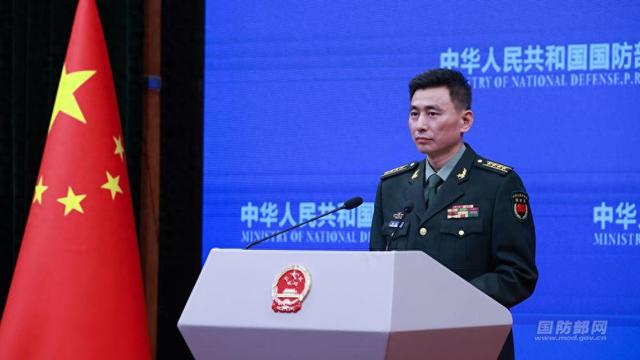
12月25日下午,国防部举行例行记者会,国防部新闻发言人张晓刚大校答记者问。 记者:据报道,日本政府或于近期制定2026年度防卫预算,规模可能高达9万亿日元,再创历史新高, 将重点发展远程打击能力、推进自卫队编制调整及发展太空作战力量等。请问发言人有何评论? 张晓刚:众所周知,《波茨坦公告》明确必须毫不留情永久铲除日本军国主义及其土壤,只有从政治和 法律上限制日本战争权,从思想上消除日本战争根源,才能建立和平、安全与正义的新秩序;日本应完 全解除武装,不得维持能使其重新武装的产业。《日本投降书》承诺"忠诚履行《波茨坦公告》各项规 定之义务"。白纸黑字、历历在目。日本却公然背弃国际法义务,违背自身宪法规定和政治承诺,大幅 提升防卫预算、扩军备战,信誉何在?意欲何为? 实际上,二战后日本政府未能彻底清算军国主义,右翼势力从未真心反省侵略历史,也从未正视其对亚 洲乃至世界人民犯下的滔天罪行,妄图复活军国主义为祸人间,怎能不让人高度警惕担忧?除恶不尽后 患无穷,姑息纵容必遭反噬。国际社会应携手阻击日本右翼势力倒行逆施的危险图谋,共同捍卫二战胜 利成果和战后国际秩序,维护世界和地区和平稳定。 本文转自【新华社】; ...
寰宇平:警惕日本军国主义阴魂不散
Ren Min Ri Bao· 2025-12-25 03:43
Core Viewpoint - The article discusses the resurgence of militarism in Japan, particularly through the actions and statements of political figures like Prime Minister Sanae Takaichi, which reflect a troubling trend of historical revisionism and militaristic rhetoric that threatens regional and global stability [1][9][16]. Group 1: Historical Context and Current Developments - The article highlights the historical context of Japanese militarism, tracing its roots back to events such as the First Sino-Japanese War and the Pacific War, where Japan used the concept of "crisis" to justify military aggression [3][4]. - Recent statements by Japanese leaders, particularly Takaichi's assertion that "Taiwan's issues" could trigger Japan's collective self-defense, mark a significant shift in Japan's military posture and reflect a revival of militaristic ambitions [1][9]. Group 2: Ideological Underpinnings - The article outlines the ideological foundations of Japanese militarism, including the "Emperor-centered" view and the promotion of a sense of racial superiority, which have historically justified Japan's expansionist policies [4][7]. - The militaristic ideology is further reinforced by cultural elements such as the glorification of war and the dehumanization of enemies, which have been perpetuated through education and public discourse [6][11]. Group 3: Political and Military Implications - The rise of "new militarism" in Japan poses significant risks to regional peace, as it undermines commitments made in international agreements regarding Taiwan and other territorial issues [16][20]. - Japan's military budget has seen unprecedented increases, with plans to enhance its defense capabilities, indicating a shift from a defensive to a more aggressive military stance [12][17]. Group 4: International Reactions and Consequences - The article notes that Japan's militaristic rhetoric has drawn criticism not only from neighboring countries but also from within Japan, highlighting a growing concern over the potential for conflict [16][22]. - The international community, including countries like China and South Korea, has expressed strong opposition to Japan's revisionist history and militaristic ambitions, emphasizing the need for accountability and historical reflection [20][24].
人民日报寰宇平:警惕日本军国主义阴魂不散
Ren Min Ri Bao· 2025-12-24 23:57
Core Viewpoint - The article discusses the resurgence of militaristic rhetoric in Japan, particularly through the statements of Prime Minister Kishi Nobuo regarding Taiwan, which are seen as a reflection of Japan's unresolved militaristic past and a challenge to international order [1][9][16]. Group 1: Historical Context - Japan's militaristic expansion has historically been justified through the notion of "crisis," as seen in events leading to wars such as the First Sino-Japanese War and the Pacific War [3][4]. - The ideology of Japanese militarism is rooted in concepts like "Emperor-centered nationalism" and "Bushido," which have been manipulated to promote a sense of superiority and justification for aggression [4][5]. Group 2: Current Political Climate - Recent statements by Japanese leaders, particularly regarding Taiwan, indicate a shift towards militaristic policies, with Kishi Nobuo suggesting that a crisis in Taiwan could justify Japan's collective self-defense [1][12]. - The Japanese government is increasing its defense budget significantly, with plans to raise it to a record approximately 11 trillion yen, indicating a move towards a more aggressive military posture [12][17]. Group 3: Cultural and Educational Implications - There is a push within Japan to revise historical narratives in education, downplaying or denying events like the Nanjing Massacre, which reflects a broader trend of historical revisionism [13][24]. - The revival of militaristic values in education, such as the potential reintroduction of the "Military Code," signals a return to pre-war ideologies that glorify sacrifice for the state [14][11]. Group 4: International Relations and Reactions - Japan's recent militaristic rhetoric and actions have drawn criticism from neighboring countries and the international community, raising concerns about regional stability and Japan's commitment to post-war agreements [16][22]. - The Chinese government has formally protested against Japan's militaristic statements, emphasizing the historical context of Japan's actions in Taiwan and the need for accountability [22][20]. Group 5: Future Outlook - The article warns that if Japan continues down this path of militarism, it could lead to significant geopolitical tensions and undermine the post-war international order established after World War II [21][24]. - The potential for a resurgence of militarism in Japan poses risks not only to regional peace but also to Japan's own future stability and international relations [17][19].
警惕日本军国主义阴魂不散(寰宇平)
Ren Min Ri Bao· 2025-12-24 22:59
Core Viewpoint - The article discusses the resurgence of militarism in Japan, highlighting the dangerous implications of recent political statements and actions by Japanese leaders, particularly regarding Taiwan and historical revisionism related to Japan's wartime actions [1][9][16]. Group 1: Historical Context and Military Resurgence - Japan's militaristic rhetoric has resurfaced, with Prime Minister Kishi Nobuo linking Taiwan's situation to Japan's collective self-defense, marking a significant shift in Japan's post-war stance [1][9]. - Historical patterns show that Japan has often framed its military actions as responses to perceived threats, a tactic that has been used since the late 19th century to justify invasions [3][4]. - The ideology of Japanese militarism is deeply rooted in cultural narratives that promote national superiority and the sanctification of war, which have been perpetuated through education and political discourse [5][6][7]. Group 2: Political and Military Developments - The Japanese government has increased defense spending significantly, with a budget proposal for 2025 that includes an additional 1.1 trillion yen, raising total defense expenditures to a record 11 trillion yen [12]. - There is a push within Japan to redefine the Self-Defense Forces as a national defense army, moving away from the post-war pacifist constitution [12][14]. - The political climate in Japan is shifting towards a more aggressive military posture, with calls for a departure from the "peace constitution" and an increase in military capabilities [11][12]. Group 3: Cultural and Educational Implications - The rise of "new militarism" in Japan is accompanied by efforts to revise historical narratives in education, downplaying or denying wartime atrocities such as the Nanjing Massacre [13][20]. - There is a concerted effort by right-wing factions to instill a sense of nationalism that glorifies Japan's military past, which poses risks for future generations [11][13]. - The use of historical revisionism in textbooks reflects a broader trend of denying Japan's wartime responsibilities, which could lead to increased tensions with neighboring countries [13][20]. Group 4: International Relations and Regional Stability - Japan's recent military rhetoric and actions have strained relations with China and South Korea, raising concerns about regional stability and the potential for conflict [16][22]. - The international community is increasingly wary of Japan's militaristic resurgence, with calls for accountability regarding its historical actions and commitments to peace [22][24]. - Japan's attempts to redefine its military role and historical narrative could undermine established international norms and provoke responses from other nations [21][24].
向世人讲透掩盖在历史长河中的罪恶(创作谈)
Ren Min Ri Bao· 2025-12-24 22:32
Core Viewpoint - The TV series "Crimes Against Humanity" aims to reveal the atrocities committed by the Japanese Unit 731 during World War II, emphasizing the importance of historical accuracy and the need to prevent the resurgence of militarism [1][4][6] Group 1: Historical Context and Significance - The series was released on the National Memorial Day for the victims of the Nanjing Massacre, highlighting the ongoing need to remember and confront historical atrocities [1] - It aims to provide a comprehensive understanding of Unit 731, including its organizational structure, medical support, and military objectives, to expose the essence of Japanese militarism [4][5] Group 2: Creative Approach and Narrative Techniques - The series employs a multi-threaded narrative style, which presents challenges but also enriches the storytelling by incorporating various perspectives, including those of ordinary citizens [5] - It utilizes historical recordings at the end of each episode to reinforce the authenticity of the narrative and to remind viewers of the unresolved nature of these historical crimes [5] Group 3: Artistic Responsibility and Audience Engagement - The creators emphasize the need to respect historical facts and avoid sensationalism, ensuring that the narrative remains focused on the core themes of the series [2][4] - The production aims to engage the audience through diverse audiovisual techniques while maintaining a commitment to the serious subject matter [2]

人民日报寰宇平文章:警惕日本军国主义阴魂不散
Xin Hua She· 2025-12-24 16:05
Core Viewpoint - The article emphasizes the persistent threat of Japanese militarism, highlighting recent actions and statements by Japanese officials that suggest a revival of militaristic ideologies and a disregard for historical accountability [1][10][18]. Group 1: Historical Context and Current Developments - The article discusses the historical context of Japanese militarism, tracing its roots back to various conflicts and the ideologies that justified Japan's expansionist actions [3][4][5]. - Recent statements by Japanese Prime Minister Kishi Nobuo linking Taiwan's situation to Japan's self-defense rights are seen as a provocative shift towards militarism, marking a significant departure from post-war pacifism [1][10][13]. Group 2: Ideological Underpinnings - The article outlines how the militaristic ideology in Japan is intertwined with concepts like "Kōkashikan" (the belief in Japan's divine right to rule) and the glorification of the samurai spirit, which have been manipulated to support militaristic agendas [4][5][6]. - The notion of "self-defense" has been historically used to justify aggressive military actions, reflecting a pattern where Japan portrays itself as a victim to rally domestic support for expansionist policies [3][5][6]. Group 3: Political and Military Implications - The article highlights the increasing military budget, which has reached a record of approximately 11 trillion yen, indicating a shift towards a more aggressive military posture [13]. - The push for revising military terminology and the potential elevation of the Self-Defense Forces to a formal military status are seen as steps towards normalizing militarism in Japan [13][14]. Group 4: Cultural and Educational Aspects - The article points out the ongoing efforts to revise historical narratives in educational materials, downplaying or denying Japan's wartime atrocities, which is part of a broader trend of historical revisionism [14][15]. - The influence of right-wing groups in shaping public perception and education about Japan's militaristic past is noted, with implications for future generations [12][14]. Group 5: International Relations and Regional Stability - The article discusses the implications of Japan's militaristic resurgence on regional stability, particularly in relation to China and Korea, where Japan's historical actions continue to evoke strong reactions [17][20]. - The potential for Japan's militarism to disrupt the post-war international order and provoke conflicts is emphasized, with calls for the international community to remain vigilant against these trends [21][22].
警惕!日本自卫队的“靖国旧梦”
Xin Hua She· 2025-12-24 08:31
Core Viewpoint - The article highlights the concerning resurgence of militaristic sentiments in Japan, particularly through the activities of the Self-Defense Forces (SDF) and their connections to the Yasukuni Shrine, which symbolizes Japan's militaristic past [2][4][5]. Group 1: Activities and Traditions - A video showing students from the National Defense Medical College participating in a collective visit to Yasukuni Shrine has gone viral, indicating a troubling trend of militarism [2]. - The National Defense Medical College has a long-standing tradition requiring students to participate in a "night march" to Yasukuni Shrine at least once during their four years of study [2]. - On August 15, Japan's defeat day, members of the SDF in uniform are frequently seen visiting Yasukuni Shrine, reflecting the infiltration of historical revisionism into the SDF [2][4]. Group 2: Internal Regulations and Violations - The Ministry of Defense has internal regulations prohibiting collective visits to shrines by SDF personnel, but these rules are increasingly ignored [3]. - In January 2024, a senior SDF officer led a group to Yasukuni Shrine, which was later downplayed as a "private visit" despite the public nature of the event [3]. - The SDF has been criticized for using Yasukuni Shrine as a "historical education base," further blurring the lines between military training and nationalistic indoctrination [3]. Group 3: Educational Content and Historical Narratives - The curriculum at the National Defense Medical College includes textbooks that reflect the Yasukuni perspective, distorting historical events to portray Japan's military actions as defensive [4]. - A former professor criticized the college for inviting speakers who support the justification of Japan's wartime actions, indicating a troubling trend in military education [4]. - In April 2024, an SDF unit publicly referred to World War II as the "Greater East Asia War," showcasing the influence of Yasukuni ideology [4]. Group 4: Personnel and Leadership Connections - The appointment of a former SDF officer as the head priest of Yasukuni Shrine marks a significant intertwining of military and religious leadership [4]. - The advisory board of Yasukuni Shrine includes several former high-ranking SDF officials, indicating a deepening relationship between the SDF and the shrine [4]. Group 5: Broader Implications and Concerns - Japan's military expansion and the rhetoric surrounding national security have raised alarms about a potential return to militarism, with officials openly discussing military interventions [4][5]. - The glorification of Yasukuni Shrine and its association with military sacrifice poses risks of fostering a mindset conducive to war preparations [5].