
能源制裁

Search documents
美国制裁俄罗斯石油公司,有效吗?为什么现在实施
Sou Hu Cai Jing· 2025-10-26 04:27
Group 1 - The U.S. has imposed significant sanctions on Russian oil giants Rosneft and Lukoil, targeting their assets in response to Russia's ongoing military actions in Ukraine [1][3][5] - The sanctions include freezing all U.S. assets of these companies and extending to their subsidiaries, with potential secondary sanctions on foreign banks that engage with them [3][5] - The sanctions are expected to impact Russia's energy exports significantly, as Rosneft and Lukoil account for nearly half of Russia's oil exports [5][15] Group 2 - The sanctions are part of a broader strategy involving U.S. allies, including the UK and EU, who are also preparing to announce new sanctions against these companies [5][11] - Domestic pressure in the U.S. is mounting for strong actions against Russia, with public support for sanctions and Republican lawmakers criticizing any perceived softness towards Russia [11][19] - The effectiveness of these sanctions in compelling Russia to negotiate remains uncertain, as Russia has adapted to previous sanctions and established alternative trading partnerships [19]

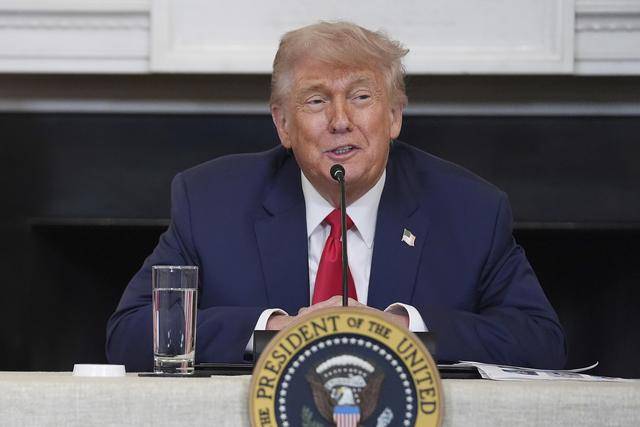
俄罗斯对华卖气暴涨39%,还要合并3能源巨头,借此打破欧盟制裁
Sou Hu Cai Jing· 2025-10-24 16:40
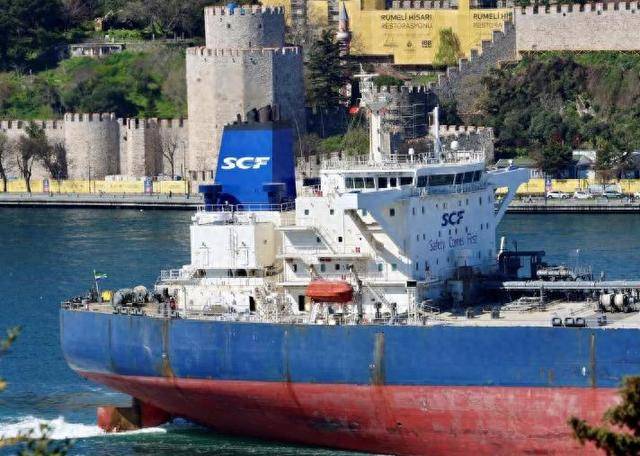
Group 1 - The EU has reached an agreement on the 19th round of sanctions against Russia, which will officially take effect after the summit on October 23, covering energy and finance sectors [1] - Slovakia's approval was crucial for the sanctions, as it heavily relies on Russian gas and receives significant transit fees, highlighting the economic considerations of member states [1] - The sanctions include a comprehensive ban on Russian LNG, effective from 2027, and a price cap on Russian crude oil set at $47.6 per barrel, further tightening the financial pressure on Russia [3] Group 2 - The U.S. Treasury has also imposed sanctions targeting major Russian oil companies, freezing their domestic assets and prohibiting transactions, indicating a coordinated effort between the U.S. and EU [4] - The EU's increasing reliance on U.S. LNG, which has doubled since 2021, raises concerns about energy security and geopolitical implications for Europe [4] - Russia is adapting by increasing LNG exports to Asia and considering mergers among its major oil companies to strengthen its market position and circumvent sanctions [6] Group 3 - The sanctions are causing significant economic strain in Europe, with natural gas prices nearing five times that of the U.S., leading to layoffs in key industrial sectors [7] - Norway has become the largest gas supplier to the EU, but the reliance on U.S. LNG is seen as a potential geopolitical risk [7] - Public sentiment in Germany is shifting towards a desire to restore Russian gas supplies, reflecting the growing pressure on European governments to balance political decisions with economic realities [7]
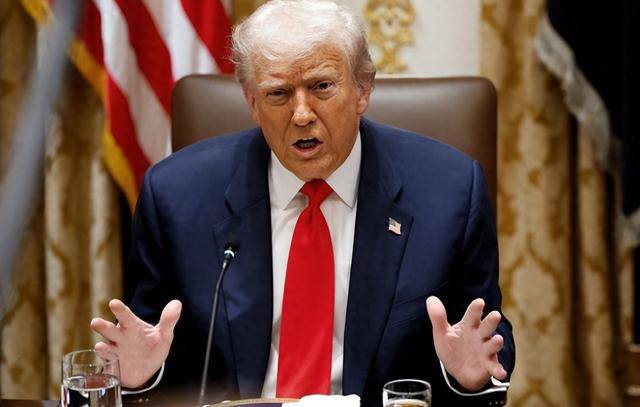
特朗普终于下决心,对俄罗斯挥下重拳直指能源命脉,中也没能幸免
Sou Hu Cai Jing· 2025-10-23 23:17
Group 1 - The Trump administration imposed sanctions on two major Russian oil companies, Rosneft and Lukoil, freezing all their assets in the U.S. and prohibiting any transactions with them [1][3][5] - The sanctions are part of a broader strategy to cut off Russia's energy revenue and weaken its military capabilities, marking a significant shift in U.S. policy towards a more aggressive stance [3][7][9] - The sanctions include financial freezes, trade bans, and shipping restrictions, aiming to eliminate Russia's access to the dollar and euro settlement systems [7][19][29] Group 2 - The European Union announced its 19th round of sanctions against Russia, which includes a phased ban on liquefied natural gas (LNG) imports, a significant move given the EU's previous hesitance to target this sector [11][13][15] - The EU's measures also target "shadow fleets" of vessels suspected of facilitating the transport of Russian oil and LNG, with 117 ships added to a blacklist [15][27][29] - The coordinated actions between the U.S. and EU indicate a strategic alignment to comprehensively disrupt Russia's energy export network while minimizing the impact on their own energy structures [19][31][32]
Dow futures dip as investors digest sanctions shock: 5 things to know before Wall Street opens
Invezz· 2025-10-23 12:03
Group 1 - Dow futures experienced a slight decline as investors reacted to mixed corporate earnings and macroeconomic challenges [1] - IBM's earnings negatively impacted the market sentiment early in the trading session [1] - Oil prices surged following the introduction of new restrictions on Russian exports by the US and EU [1] Group 2 - Heightened trade tensions between the US and China contributed to the overall market uncertainty [1] - New energy-related sanctions on Russia added to the macroeconomic headwinds faced by investors [1]
欧盟成员国就在2027年底前禁止俄罗斯天然气达成立场共识
Di Yi Cai Jing· 2025-10-20 09:33
Core Viewpoint - The EU member states have reached a consensus to ban Russian natural gas by the end of 2027 [1] Group 1 - The decision reflects a unified stance among EU countries regarding energy independence from Russia [1] - The timeline set for the ban is by the end of 2027, indicating a strategic long-term approach [1]
美国的能源霸权“碰钉子”了
Jin Tou Wang· 2025-10-17 07:09
Core Points - The U.S. government is actively lobbying major Western countries, including India and Japan, to stop importing oil from Russia as part of sanctions against the country [1][2] - India has become the largest supplier of oil to India since the Russia-Ukraine conflict began, despite U.S. pressure through tariffs [1] - Japan continues to purchase Russian Sakhalin blend crude oil, which is crucial for its energy security, and has rejected U.S. calls for high tariffs on China and India due to their oil purchases [2] Group 1 - The U.S. Treasury Secretary has communicated with Japan's Finance Minister about the need to halt Russian energy imports [1] - India's stance on Russian oil imports remains ambiguous, focusing on consumer interests amid a volatile energy market [1] - Both India and Japan are employing strategies to maintain their current energy import levels without directly confronting the U.S. [2] Group 2 - India has symbolically reduced individual batch purchases of Russian oil while maintaining overall imports [2] - Japan is using a "technical delay" strategy to continue fulfilling long-term supply contracts with Russia [2] - The International Energy Agency reports that Japan has been forced to purchase high-priced U.S. shale gas due to sanctions on Russia [2]
美财长贝森特向日本施压:停止进口俄罗斯能源
Sou Hu Cai Jing· 2025-10-17 03:05
Group 1 - Japan's Finance Minister, Kato Katsunobu, met with U.S. Treasury Secretary Yellen to discuss Japan's energy imports from Russia and the U.S.-Japan economic relationship [1][3] - Yellen expressed the expectation for Japan to stop importing Russian energy, while Kato did not provide a direct answer, emphasizing Japan's commitment to G7 coordination [1][3] - Japan has recently lowered the price cap for Russian crude oil imports from $60 to $47.60 per barrel, aligning with the EU's sanctions [3] Group 2 - Despite the G7 agreement to gradually stop importing Russian oil, Japan continues to purchase Sakhalin blended crude oil, which is crucial for its energy security, accounting for about 9% of its LNG imports [3] - Japan imported 599,000 barrels of crude oil from Russia from January to July this year, representing 0.1% of its total imports [3] - The U.S. government is encouraging allies, including Japan, to purchase more American LNG, with Japan signing multiple procurement agreements but lacking a specific deal for the Alaska LNG project [3]
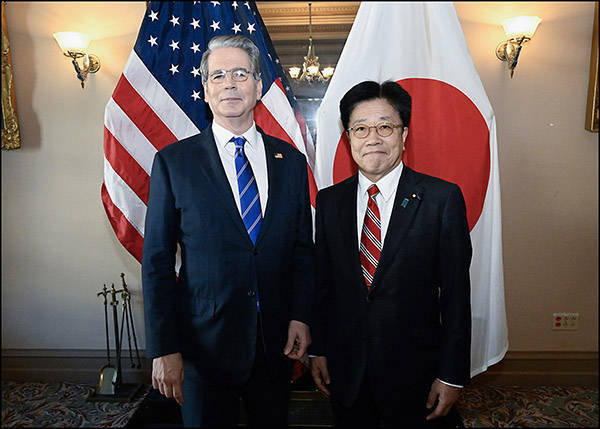
施压印度后,美国又将目标对准日本:停止进口俄罗斯能源
Huan Qiu Wang· 2025-10-16 06:20
Core Points - The U.S. Treasury Secretary, Janet Yellen, urged Japan to stop importing energy from Russia during a meeting with Japan's Finance Minister, Shunichi Suzuki, on October 15 [1][3] - Japan has continued to import Russian natural gas despite the ongoing Russia-Ukraine conflict, indicating a divergence in energy policies between the U.S. and Japan [3][4] - The discussion also included the importance of increasing economic pressure on Russia as part of the G7 commitments, highlighting the geopolitical implications of energy imports [3] Group 1 - U.S. Treasury Secretary called for Japan to halt Russian energy imports [1][3] - Japan's response was non-committal, emphasizing continued cooperation with G7 on Ukraine [4] - The meeting underscored the ongoing tensions regarding energy policies amid the Russia-Ukraine conflict [3][4] Group 2 - The U.S. government has been pressuring other countries, including India, to reduce Russian oil purchases [4] - India's government is in discussions with the U.S. regarding energy cooperation while prioritizing domestic consumer interests [4]
武契奇:理解俄罗斯朋友的利益
Zhong Guo Xin Wen Wang· 2025-10-14 13:43
塞尔维亚石油工业公司的大股东为俄罗斯公司,塞尔维亚政府持有少量股份。2025年1月初,美国对俄 罗斯石油生产商以及塞尔维亚石油工业公司实施制裁。制裁已于10月早些时候全面生效。 来源:中国新闻网 "我们正经历一段艰难时期,但我可以告诉塞尔维亚民众的是,塞尔维亚不会出现石油、石化产品短 缺,也不会出现任何其他大规模的能源危机。"武契奇说。 塞尔维亚石油工业公司的大股东为俄罗斯公司,塞尔维亚政府持有少量股份。 武契奇还说:"我们的俄罗斯朋友收到了我们的信息,我们理解他们的利益,并将尽一切努力维护塞尔 维亚的最佳利益。" 武契奇:理解俄罗斯朋友的利益 编辑:万可义 中新网10月14日电 据塔斯社报道,在美国对由俄罗斯企业控股的塞尔维亚石油工业公司实施制裁之 际,塞尔维亚总统武契奇当地时间13日在社交媒体上发帖称,塞方与俄代表团就能源问题进行了会谈, 他对此次会谈具有建设性等感到满意。 报道称,武契奇表示:"我们刚刚与俄罗斯代表团就塞尔维亚新独立国家和能源问题完成了重要会谈。 我对此次会谈的开放性、建设性和诚意感到满意。双方都有这种感觉。" 武契奇还向塞尔维亚民众保证,不会出现能源短缺。 广告等商务合作,请点击这里 ...
美国制裁俄企控股的塞尔维亚石油工业公司之际,塞俄举行会谈,武契奇发声
Huan Qiu Wang· 2025-10-14 08:08
【环球网报道 记者 张江平】据塔斯社等媒体报道,在美国对由俄罗斯企业控股的塞尔维亚石油工业公 司实施制裁之际,塞尔维亚总统武契奇13日在社交媒体上发帖称,塞方与俄代表团就能源问题进行了会 谈,他对此次会谈具有建设性等感到满意。 武契奇还称,塞尔维亚政府继续以民众利益为出发点,为塞尔维亚的未来而采取行动。 塞尔维亚石油工业公司的大股东为俄罗斯公司,塞尔维亚政府持有少量股份。美国对塞尔维亚石油工业 公司的制裁已于本月早些时候全面生效。据法新社报道,对于美国制裁塞尔维亚石油工业公司,武契奇 9日在一次讲话中称,这对塞尔维亚来说是"坏消息","给我们整个国家带来极其严重的影响"。 另据彭博社11日报道,武契奇在接受媒体采访时透露,美方曾要求他将塞尔维亚石油工业公司国有化以 规避制裁。"我告诉他们,'这对我来说不可接受'。"武契奇当时称,"我们不喜欢侵占他人资金和财 产。" "我们刚刚与俄罗斯代表团就塞尔维亚石油工业公司和塞尔维亚能源有关问题进行了重要会谈,我对会 谈的开放性、建设性和真诚感到满意。"武契奇称,"现在是艰难时期,我们面临沉重负担。但我可以对 塞尔维亚民众说,塞尔维亚不会出现石油和石油产品短缺或严重的能源 ...
