
药品集中带量采购

Search documents
群益证券:维持复星医药“买进”评级目标价26.5港元
Xin Lang Cai Jing· 2025-10-29 07:33
公司2025年前三季度及Q3单季营收均有小幅负增长,主要是仿制药品受到药品集中带量采购续标以及部分地方药品集中带量采购的影响,但前三季度创新药保持较快增长,前三季度创新药收入 Q3毛利率微升,研发费用同比增加较多 公司Q3单季度综合毛利率为48.4%,同比提升0.3个百分点,主要受益于高毛利率创新药产品占比提升推动,Q3期间费用率为44.1%,同比增1.4个百分点,其中销售费用率下降1.4个百分点, 群益证券发布研报称,预计复星医药(02196)2025-2027年实现净利润33.2亿元、39.6亿元、47.7亿元,YOY分别+19.9%、+19.4%、+20.4%,EPS分别为1.2元、1.5元、1.8元,对应 群益证券主要观点如下: 公司业绩 公司25Q1-Q3实现营收293.9亿元,录得归母净利润25.2亿元,YOY+25.5%,扣非后归母净利润15.7亿元。分季度来看,公司Q3单季度实现营收98.8亿元,录得归母净利润8.2亿元,YOY+ 集采影响总体营收,创新产品延续较快增长 风险提示:新产品研发进度及销售不及预期,药品集采及国谈降价超预期,商誉减值风险 责任编辑:史丽君 ...
\t复星医药(600196.SH):第三季度净利润为8.21亿元,同比增长4.52%
Ge Long Hui· 2025-10-29 03:53
Core Viewpoint - Fosun Pharma (600196.SH) reported a decline in revenue for Q3 2025, primarily due to the impact of centralized drug procurement policies, while maintaining growth in innovative drug sales [1] Financial Performance - Q3 revenue was 9.879 billion yuan, a year-on-year decrease of 5.46% [1] - Net profit for Q3 was 821 million yuan, reflecting a year-on-year increase of 4.52% [1] - For the first three quarters, net profit reached 2.523 billion yuan, showing a year-on-year growth of 25.5% [1] Market Impact - The revenue decline is attributed to the continuation of centralized procurement and the initiation of new procurement processes in certain regions [1] - Despite the revenue drop, the income from innovative drugs showed steady growth during the same period [1]
第十一批药品集采正式开标,55种药品全部成功采购
Xin Jing Bao· 2025-10-29 03:18
Core Insights - The National Healthcare Security Administration (NHSA) announced the results of the 11th batch of centralized drug procurement, with 55 drugs successfully procured and 453 products from 272 companies qualifying for selection, expected to benefit patients by February 2026 [1][2] Group 1: Procurement Details - A total of 55 drugs were included in this procurement, covering common medications in areas such as anti-infection, anti-allergy, anti-tumor, blood sugar reduction, blood pressure reduction, blood lipid reduction, and anti-inflammatory pain relief [1] - The procurement involved participation from 46,000 medical institutions and 794 products from 445 companies submitted bids [1] Group 2: Selection Mechanism - The procurement emphasized "stability in clinical use and quality assurance," introducing a flexible reporting method allowing medical institutions to choose between category-based or brand-based reporting, with 77% of institutions opting for brand-specific reporting [1] - An innovative "revival" mechanism was introduced to expand the range of selected companies, resulting in 129 additional products gaining selection eligibility [1] Group 3: Pricing Strategy - The procurement process did not focus solely on the lowest price; instead, it included a "price anchor" mechanism to prevent extreme low pricing, leading to a higher selection rate and a noticeable reduction in average price differences compared to previous batches [2] - Eight drugs and 12 companies were required to submit a "price rationality declaration" during the public notice period, with non-compliance resulting in disqualification and potential future participation restrictions [2] Group 4: Historical Context - Over the past seven years, the NHSA has continuously advanced centralized procurement, incorporating 490 types of drugs and various high-value medical consumables such as cardiac stents, artificial joints, and cochlear implants [2]
国家集采药品 成都企业多个产品拟中标
Sou Hu Cai Jing· 2025-10-29 02:54
Core Insights - The latest round of national centralized drug procurement in China has successfully awarded contracts for 55 drugs, with 453 products from 272 companies qualifying for selection, expanding the total number of covered drugs to 490 [1] Group 1: Company Participation - Kelun Pharmaceutical and Yuandong Biological, two listed pharmaceutical companies from Chengdu, announced a total of 14 products that are likely to be selected in the recent procurement round [1] - Kelun Pharmaceutical reported that it and its subsidiaries participated in the 11th national drug procurement, with 12 products likely to be selected across various treatment areas including liver disease, oncology, and mental health [3][4] Group 2: Product Details - The 12 products from Kelun Pharmaceutical cover a range of diseases, including chronic liver disease, ovarian cancer, depression, and chronic obstructive pulmonary disease, showcasing the company's diverse product portfolio [3] - The proposed winning prices for Kelun's products vary significantly, from 2.11 yuan per bag for a specific injection to 195.37 yuan per box for an oncology drug, indicating a wide range of medication price points [3] Group 3: Financial Impact - For the 12 products proposed for selection by Kelun, most had zero sales revenue prior to this procurement, with only a few products generating minimal revenue in 2023 or 2024 [3] - Yuandong Biological announced that its selected products, including a specific injection and a tablet, contributed to a small percentage of the company's total revenue for the first nine months of 2025 [4] Group 4: R&D Investment - Yuandong Biological has maintained an average R&D investment of over 20% of its revenue in the past three years, leading to a high conversion efficiency with at least 10 new formulations approved for market each year [4]



第十一批国家集采纳入55种药品
Zhong Guo Qing Nian Bao· 2025-10-29 02:17
Core Insights - The eleventh batch of national organized drug procurement has produced selection results, including 55 types of commonly used drugs across various fields such as anti-infection, anti-allergy, anti-tumor, blood sugar reduction, blood pressure reduction, blood lipid reduction, and anti-inflammatory pain relief [1] - The procurement aims to achieve goals of stabilizing clinical use, ensuring quality, preventing excessive competition, and avoiding collusion [1] - The selection process has become more competitive compared to previous batches, but measures such as excluding products with a scale below 100 million, setting "anchor prices" to prevent extreme low-price impacts, and introducing a revival mechanism have maintained a relatively high selection rate [1] Summary by Categories Procurement Details - A total of 55 drugs were included in this procurement round, covering essential therapeutic areas [1] - The average price difference of selected products has significantly narrowed compared to previous batches, indicating effective measures against excessive competition [1] Quality Assurance - Bidding companies are required to have experience in producing similar types of drugs, and production lines must not have violated quality management regulations in the past two years [1] - The drug regulatory authority will conduct comprehensive supervision and inspection of selected products post-procurement [1] Future Implications - The results of this procurement round will be officially announced, with expectations that patients nationwide will have access to high-quality and affordable selected drugs by February 2026 [1]
第十一批国采公布中选结果;复星医药前三季度净利同比增长26%
2 1 Shi Ji Jing Ji Bao Dao· 2025-10-29 00:08
Policy Developments - The "14th Five-Year Plan" emphasizes accelerating the construction of a Healthy China, implementing a health-first development strategy, and enhancing public health capabilities [2] - The plan aims to improve the healthcare system, promote the integration of traditional Chinese and Western medicine, and support the development of innovative drugs and medical devices [2] Drug and Device Approvals - Shanghai Pharmaceuticals' bromide pyridostigmine sustained-release tablets have received production approval from the National Medical Products Administration, which is expected to enhance market share and competitiveness [3] - The company has invested approximately RMB 16.009 million in the research and development of this drug [3] Financial Reports - Fosun Pharma reported a 26% year-on-year increase in net profit for the first three quarters of 2025, despite a 4.91% decline in revenue [4] - Haisheng Pharmaceutical achieved a 40.89% increase in revenue and a 47.16% increase in net profit for the first three quarters of 2025 [5] Capital Market Activities - New Tian Di has entered a strategic cooperation agreement with Nanjing Zhihe Pharmaceutical to develop GLP-1 long-acting peptide innovative drugs [6][7] - WuXi AppTec signed strategic cooperation memorandums with NEOM and the Saudi Ministry of Health to explore localized new drug R&D and production services [8] Industry Events - The results of the 11th batch of national drug centralized procurement were announced, including 55 drugs aimed at stabilizing clinical needs and ensuring quality [9][10] - The procurement process has raised the qualification thresholds for bidding companies and aims to prevent collusion in pricing [10] Intellectual Property Developments - The Deputy Director of the National Intellectual Property Administration of China met with representatives from the International Pharmaceutical Alliance to discuss patent protection and dispute resolution mechanisms [11] Shareholder Actions - BioVeda, a major shareholder of AoJing Medical, has completed a share reduction plan, selling 1.3555 million shares, which represents 1% of the company's total equity [12]

民生无小事丨让集采药品真正成为人民健康的“守护盾”
Xin Hua Wang· 2025-10-28 23:43
Core Viewpoint - The article emphasizes the importance of ensuring the quality of drugs in the national centralized procurement system, which aims to provide affordable and reliable medications to the public while maintaining stringent quality standards [1][2]. Group 1: Drug Procurement Success - The 11th batch of national centralized drug procurement successfully included 55 types of drugs, contributing to a total of 490 quality and affordable essential and life-saving drugs available to the public over the past seven years [1]. - The centralized procurement policy has effectively reduced drug prices by leveraging volume to negotiate better rates, benefiting patients in terms of medical costs [1]. Group 2: Quality Assurance Measures - Ensuring drug quality is critical; the procurement process has tightened quality controls, focusing on well-established "old drugs" with a history of clinical use, while excluding high-risk drugs from the current procurement [1]. - New procurement rules set strict quality thresholds, requiring bidding companies to have relevant production experience and compliance with drug production quality management standards [1]. Group 3: Regulatory Oversight - The regulatory authorities will conduct comprehensive supervision of selected drugs, with the power to revoke procurement qualifications if quality issues arise during post-selection inspections [2]. - Continuous quality monitoring throughout the drug production, distribution, and usage processes is essential, alongside the responsibility of pharmaceutical companies to prioritize drug safety [2].
第十一批国家药品集采中选产品价差缩小;荃信生物与罗氏达成授权交易
Mei Ri Jing Ji Xin Wen· 2025-10-28 23:15
Group 1: National Drug Procurement - The 11th batch of national drug centralized procurement includes 55 drugs, covering common medications in areas such as anti-infection, anti-allergy, anti-tumor, blood sugar reduction, blood pressure reduction, and blood lipid reduction [1] - The average price difference of selected products has significantly narrowed compared to previous batches, indicating a more competitive environment [1] - Measures such as excluding products with a scale below 100 million yuan, setting "anchor prices" to prevent extreme low-price impacts, and introducing a revival mechanism have maintained a relatively high selection rate, promoting rational competition and industry innovation [1] Group 2: Xingqi Eye Pharmaceutical - Xingqi Eye Pharmaceutical reported a net profit increase of 105.98% in the first three quarters, with revenue of approximately 1.904 billion yuan, a year-on-year increase of 32.27% [2] - The increase in revenue is primarily attributed to the sales growth of eye drop products, demonstrating strong market competitiveness [2] - This performance is expected to enhance investor confidence and attract more capital into the company [2] Group 3: Novartis - Novartis reported a 5% revenue growth in the Chinese market for the first three quarters, with total revenue of 4.1196 billion USD, a year-on-year increase of 11% [3] - The company has ten blockbuster products with cumulative sales exceeding 1 billion USD each, indicating solid market competitiveness [3] - However, the slowdown in revenue growth in the Chinese market is noteworthy amidst a complex global economic environment [3] Group 4: Qianxin Biotech and Roche - Qianxin Biotech has entered into a global exclusive licensing agreement with Roche for its self-developed long-acting dual antibody QX031N, receiving an upfront payment of 75 million USD and potential milestone payments up to 995 million USD [4] - QX031N targets TSLP and IL-33, showcasing the company's R&D competitiveness and recognition from multinational pharmaceutical companies [4] - This collaboration is expected to attract more capital attention to China's innovative drug sector and promote overall industry development [4] Group 5: Haili Biotech - Haili Biotech responded to regulatory inquiries regarding its semi-annual report, explaining the high accounts receivable due to industry downturn pressures and efforts to maintain core customer relationships by extending payment terms [5] - While this strategy aims to stabilize customer relations, it may increase bad debt risks if accounts receivable are not effectively collected, potentially eroding profits [5] - Investors are advised to closely monitor the company's accounts receivable management measures and changes in the industry environment to assess its long-term investment value [5]

第十一批国家集采拟中选结果公布:272家企业453个产品拟中选
Zhong Guo Jing Ying Bao· 2025-10-28 23:02
10月28日,上海阳光医药采购网公示了第十一批国家组织药品集中带量采购拟中选结果。 此次集采共纳入55种药品,覆盖抗感染、抗过敏、抗肿瘤、降血糖、降血压、降血脂、消炎镇痛等领域常用药品。全国共4.6万家医药机构参加报量,445家 企业的794个产品参与投标。其中,272家企业的453个产品获得拟中选资格。 拟中选结果公示时间为10月28日至31日。 (文章来源:中国经营报) 截至目前,国家医保局共开展十一批国家组织药品集采,成功采购490种药品。 ...
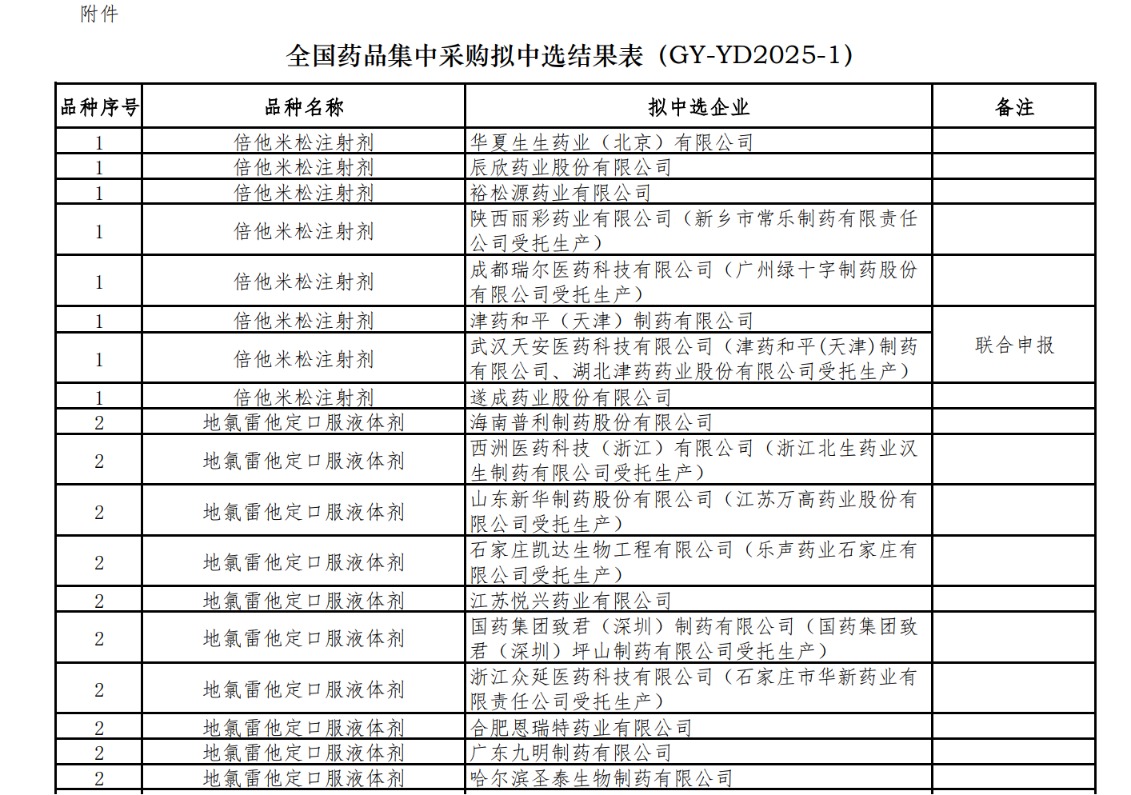
直击第十一批国采:企业报价平稳 453个产品获拟中选资格
2 1 Shi Ji Jing Ji Bao Dao· 2025-10-28 18:15
Core Insights - The eleventh round of national organized drug procurement has selected 55 drugs, enhancing accessibility and affordability for patients [1][2] - The procurement aims to stabilize clinical use and ensure drug quality while preventing excessive competition and collusion among companies [3][4] Group 1: Procurement Details - A total of 4.6 million medical institutions participated, with 445 companies submitting bids, resulting in 453 products from 272 companies being shortlisted [1] - Key selected drugs include Dapagliflozin and Pravastatin, both of which achieved over 1 billion yuan in sales in 2024 [1] - The procurement process has successfully completed 11 rounds, acquiring a total of 490 drugs [2] Group 2: Market Competition and Pricing - The procurement introduced measures to prevent excessive competition, such as not collecting bids for products priced below 10 million yuan and setting a price anchor at 50% of the average price [3][4] - The average price difference for selected products has decreased compared to previous rounds, indicating a more stable pricing environment [3] - The procurement rules restrict any single company from winning more than 50% of the total procurement volume for a specific drug, promoting market diversity [6] Group 3: Clinical and Quality Assurance - The procurement process allows medical institutions to report quantities based on either generic names or specific brands, with 77% of institutions opting for brand reporting [5][6] - The focus on children's medication has been emphasized, with adjustments made to ensure the availability of suitable formulations for pediatric patients [7] - Stringent quality control measures are in place, including consistency evaluations and increased regulatory oversight for low-bid companies [8] Group 4: Industry Impact - The procurement is expected to indirectly support innovation by stabilizing profits for generic drugs, allowing companies to invest in research and development [8] - The introduction of a "revival mechanism" for non-selected bids provides companies with a second chance to secure market share, reducing market volatility [8] - The industry is witnessing a shift towards innovation, with an increasing number of companies focusing on developing new drugs rather than solely relying on generics [8]