Electric Vehicle (EV)

Search documents
Honda ends production of its Acura EV in the US, citing 'market conditions'
Business Insider· 2025-09-24 18:20
Core Viewpoint - Honda is retracting its plans for the Acura ZDX electric vehicle due to unfavorable market conditions, indicating a broader trend among automakers to reassess their electric vehicle strategies [1][2]. Group 1: Honda's Decision - Honda is ceasing production of the Acura ZDX electric crossover in the U.S., which was produced by General Motors in Tennessee, confirming the vehicle's limited market presence in North America [1]. - The decision aims to align Honda's product portfolio with customer needs and market conditions, with plans to introduce the all-electric Acura RSX in 2026 and hybrid-electric models currently in development [2]. Group 2: Market Performance - Since its launch in May 2024, Honda has sold over 19,000 ZDXs in North America, but the company has announced a 30% cut in EV investment through the 2031 fiscal year due to a slowdown in EV market expansion [3]. - EV sales in North America have only increased by 5% in the first four months of the year, contrasting sharply with 25% growth in Europe and 35% in China, highlighting a significant regional disparity in EV adoption [3]. Group 3: Industry Trends - Other automakers are also scaling back their electric vehicle plans, with Hertz pausing a purchase of 65,000 EVs and Ford canceling plans for electric three-row SUVs while still pursuing an EV truck [5]. - Bentley's recent decision to continue investing in combustion engines, despite earlier commitments to electric vehicles by 2035, reflects a dip in demand for luxury electric vehicles [6].



Tesla Records 17.3K Insured Registrations In China During 3rd Week Of September, Sales Grow Over 33% - Tesla (NASDAQ:TSLA)
Benzinga· 2025-09-23 09:47
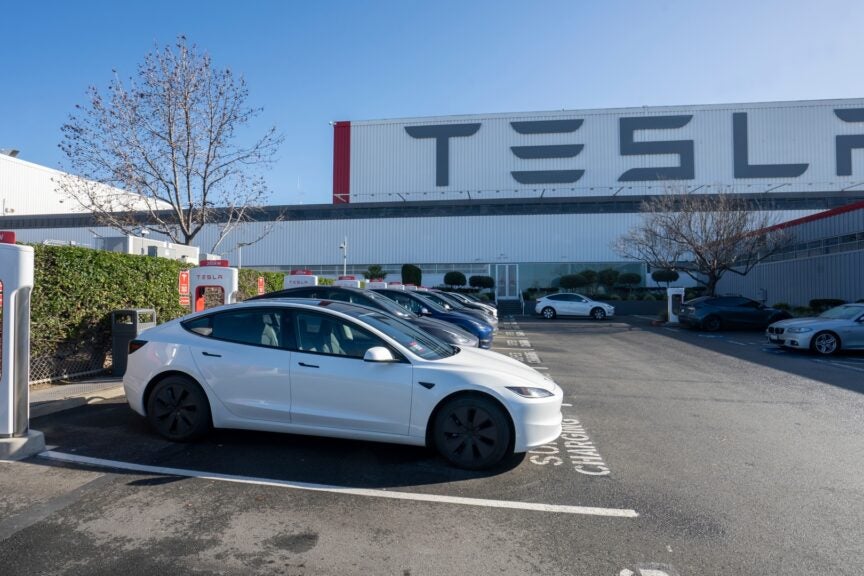
Core Insights - Tesla Inc. has experienced significant growth in sales within the Chinese market, with a 33.2% increase in new insured registrations during the week of September 15 to September 21 [2] - Despite the growth in China, year-to-date sales are down 5.9% compared to the same period last year, indicating challenges in maintaining overall sales momentum [3] - Tesla's sales in Europe have declined by 40.2%, and the company has captured less than 40% market share in the U.S. for the first time since October 2017, highlighting a lackluster performance in other regions [4] Sales Performance - Tesla recorded 17.2K new insured registrations in China for the week of September 15 to September 21, marking a 33.2% increase from the previous quarter [2] - Sales grew over 12.7% compared to the previous week and 25.6% year-over-year [3] - This week represented Tesla's third-highest sales week of the year and the highest week of the current quarter [3] Regional Challenges - The company is facing a significant decline in sales in Europe, with a reported 40.2% drop [4] - In the U.S., Tesla's market share has fallen below 40%, a notable decrease since October 2017 [4] Product Developments - Tesla has discontinued the RWD long-range version of the Cybertruck in the U.S., which was priced at $69,990, as the company struggles with sales of the EV pickup [5] - Despite these challenges, Tesla is on track to exceed analyst expectations for third-quarter deliveries, contributing to a surge in its share price [5] Legal Issues - Tesla is facing a lawsuit in China from over 7 customers who are seeking refunds and damages for not receiving Full Self-Driving (FSD) capabilities, despite having paid for the feature [6]

VWAGY's Porsche Delays EV Plans, Cuts Profit Outlook for 2025
ZACKS· 2025-09-22 15:40
Group 1 - Volkswagen AG's subsidiary, Porsche, has delayed its electric vehicle rollout due to weaker demand, challenges in China, and higher U.S. tariffs, leading to reduced profit forecasts for 2025 for both Porsche and Volkswagen [1][4] - The upcoming SUV above the Cayenne, initially planned as a fully electric model, will now launch with combustion engine and plug-in hybrid options, while the Panamera and Cayenne will continue to offer combustion and hybrid variants into the 2030s [2][3] - The delay in EV adoption means certain all-electric models will launch later than planned, and Porsche is rescheduling the development of its next-generation EV platform for the 2030s, reflecting slower-than-expected demand for high-end battery-electric vehicles [3][4] Group 2 - The rescheduling of the EV platform will incur depreciation and provisions that could impact 2025 operating profit by up to €1.8 billion, prompting Porsche to revise its outlook for a positive sales return of up to 2%, down from the previous estimate of 5-7% [4][8] - Porsche is now targeting a medium-term operating return on sales in the low double digits, with business growth expectations lowered to up to 15%, compared to the earlier guidance of 15-17%, and an automotive EBITDA margin of 10.5-12.5%, down from 14.5-16.5% [4][8] - Volkswagen has also lowered its profit margin forecast to 2-3%, compared to the previous guidance of 4-5% [4][8]
Ford Layoffs a Sign of Its Crippled EV Business
247Wallst· 2025-09-17 13:15
Group 1 - Ford Motor Co. has cut 1,000 workers in Germany due to slow electric vehicle (EV) sales [1]

中国电池材料:商用车乘势而上-China Battery Materials_ Commercial Vehicle Builds on the Momentum
2025-09-03 13:23
Summary of Key Points from the Conference Call Industry Overview - **Industry**: China Battery Materials, specifically focusing on Electric Vehicle (EV) batteries - **Date**: August 31, 2025 Core Insights - **Battery Installation Data**: In July 2025, China’s EV battery installation was 63.7 GWh, reflecting a decrease of 3% month-over-month (MoM) but an increase of 43% year-over-year (YoY) [1][2] - **Year-to-Date Performance**: Cumulative EV battery installations for the first seven months of 2025 reached 402.8 GWh, representing a 49% increase YoY [1][2] - **Commercial Vehicle Segment**: Commercial vehicles accounted for 16% of battery installations in the first seven months of 2025, up from 10% in 2024, indicating a shift from Internal Combustion Engine (ICE) vehicles to Battery Electric Vehicles (BEV) [1][7] - **Market Share of Top Manufacturers**: The top two battery manufacturers, CATL and BYD, held a combined market share of 66% in July 2025, with CATL at 43% and BYD at 22%, both down by 1 percentage point MoM [2][5] Market Dynamics - **Battery Chemistry**: Lithium Iron Phosphate (LFP) batteries continued to dominate the market with a 79% share in July 2025 [1] - **Commercial Vehicle Battery Size**: The average battery size for commercial vehicles increased to 160 kWh per unit in 2025, up from 110 kWh in 2024, driven by the growing demand for larger batteries in special vehicles [7] Company Insights - **Top Picks**: Recommended stocks in the battery space include CATL, EVE Energy, and Hunan Yuneng, all of which are under observation for potential upside catalysts [1] - **Valuation Metrics**: - CATL is valued at HK$425/share based on a target EV/EBITDA of 16.6x for 2025, implying a P/E of 28.2x for 2025 and 22.4x for 2026 [12] - EVE Energy is valued at Rmb59.20/share, with a focus on its core battery business and other contributions [15] - Hunan Yuneng is valued at Rmb51.9/share, reflecting a cautious outlook due to surplus supply in the LFP cathode industry [17] Risks Identified - **CATL Risks**: Potential risks include lower-than-expected EV demand, increased competition leading to reduced market share, and higher raw material costs [13][14] - **EVE Energy Risks**: Risks include impacts from COVID-19-like situations, slower EV penetration in a low oil price environment, and rising raw material costs [16] - **Hunan Yuneng Risks**: Key risks involve lower-than-expected LFP cathode shipments, worse-than-expected gross profit margins, and higher expenses [18] Additional Insights - **Commercial Vehicle Transition**: The transition of special vehicles such as refrigerated trucks and garbage trucks from ICE to BEV is a significant trend contributing to the growth in battery installations [7] - **Market Share Trends**: The decline in market share for leading manufacturers like CATL and BYD may indicate increasing competition in the EV battery market [2] This summary encapsulates the essential insights and data from the conference call, providing a comprehensive overview of the current state and future outlook of the China battery materials industry, particularly in the EV segment.



Prediction: Rivian Sales Will Soar 300%-Plus Over the Next 3 Years If This Happens
The Motley Fool· 2025-08-24 09:15
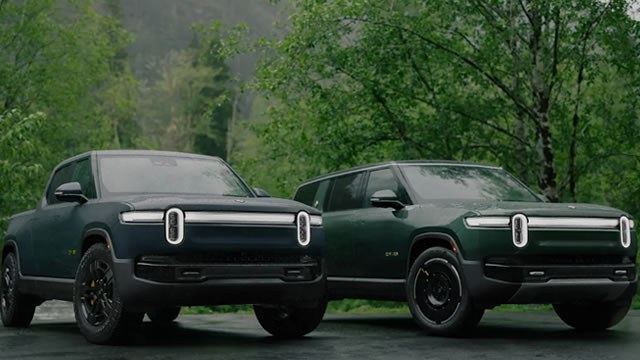
Core Viewpoint - Rivian is poised for significant sales growth in 2026, with the potential to increase sales by over 300% due to the introduction of new mass-market vehicles priced below $50,000 [2][10]. Sales Growth - Since going public in 2021, Rivian's sales have surged by over 515,000%, reaching more than $5 billion, although recent growth has slowed to just 2.1% since June 2025 [1][10]. - Rivian's sales trajectory mirrors that of Tesla, which saw explosive growth after launching its mass-market vehicles [5][7]. Product Launches - In 2026, Rivian plans to begin shipments of three new mass-market vehicles: the R2, R3, and R3X, all expected to be priced below $50,000 [8][10]. - The introduction of these models is anticipated to make Rivian vehicles accessible to a broader customer base, similar to Tesla's experience with the Model 3 and Model Y [6][10]. Market Positioning - Rivian's current stock valuation is significantly lower than Tesla's, trading at 2.7 times trailing sales compared to Tesla's 12.9 times, suggesting potential for growth as new models are launched [11]. - Despite Tesla's expected sales decline of 5% this year, Rivian is projected to grow sales by 6.5%, indicating a positive outlook for the company [12].

Where Will Ford Be in 3 Years?
The Motley Fool· 2025-08-17 11:00
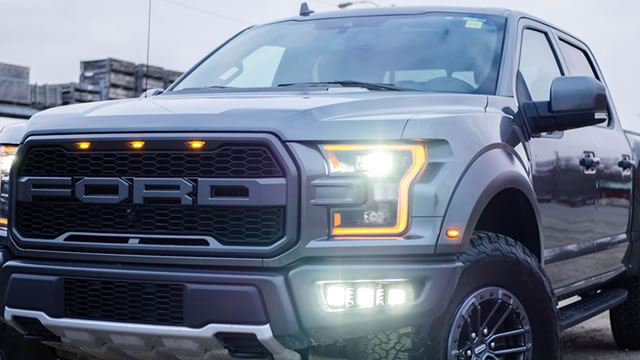
Core Insights - Ford is undergoing significant changes to compete in the electric vehicle (EV) market, with plans to launch a new EV lineup starting with a $30,000 pickup truck by 2027 [1][5][9] Group 1: New EV Platform - Ford will introduce a new EV platform, the Ford Universal EV Platform, by 2027, which will reduce parts by 20%, have 40% fewer workstations, and allow for 15% faster assembly [4] - The company plans to invest $2 billion to convert a Kentucky factory for this new vehicle lineup and an additional $3 billion for a battery factory in Michigan [5] Group 2: Profitability Focus - Ford is focused on achieving profitability with its new EV ventures, recognizing the urgency of the situation as competition intensifies, particularly from Chinese automakers [6][8] - CEO Jim Farley emphasized the need for a sustainable and profitable business model from the outset, moving away from past failures in the industry [7] Group 3: Challenges Ahead - Ford faces challenges from tariffs, which have already cost the company approximately $800 million, with projected impacts on pre-tax adjusted profit increasing to $3 billion [10] - The company must navigate a changing EV environment as federal EV credits are set to expire, which may affect demand for its new affordable EV model [11] Group 4: Market Reception and Future Outlook - There are uncertainties regarding customer demand for Ford's new EVs, particularly the feasibility of delivering a $30,000 pickup truck [12] - The company's stock performance is likely to be influenced by its success in executing its EV strategy over the next few years [13]
Every Time Musk Ships A Tesla, These EV Sidekicks Quietly Profit
Benzinga· 2025-07-25 18:05
Core Insights - Tesla Inc is not only a headline maker due to Elon Musk but also relies on various suppliers that contribute to its electric vehicle (EV) success [1] - Companies like ON Semiconductor, Albemarle, and Panasonic play crucial roles in Tesla's supply chain, enhancing vehicle performance and battery production [2][3] Group 1: Key Suppliers - ON Semiconductor Corp is a leader in silicon carbide chips, essential for improving EV efficiency, and is a significant supplier for Tesla [2] - Albemarle Corp, a major lithium producer, remains integral to Tesla's battery strategy despite lithium price fluctuations, thanks to its scale and long-term contracts [2] - Panasonic Holdings Corp has been a consistent battery partner for Tesla, and its U.S.-based production may gain strategic importance due to tightening tariffs on Chinese imports [3] Group 2: Market Dynamics - New tariffs imposed by the U.S. and EU on Chinese-sourced EV parts may lead Tesla to shift towards North American or friend-shored supply chains [4] - Companies like Quantumscape Corp, which is developing solid-state battery technology, and Aptiv PLC, which supplies advanced driver-assistance systems (ADAS), are positioned to benefit from Tesla's pivot [4] Group 3: Investment Opportunities - Investors seeking to capitalize on Tesla's growth without the associated volatility can explore infrastructure investments linked to these key suppliers [5] - The increasing pressure for localization and tariffs may enhance the value of these supporting companies in the EV ecosystem [5]

Why Is Wall Street So Bearish on Tesla? There's 1 Key Reason.
The Motley Fool· 2025-07-24 08:30
Group 1: Tesla's Market Performance - Tesla's market cap has surpassed $1 trillion again, with shares approaching new all-time highs [1][5] - The average Wall Street price target for Tesla is $299.56 per share, indicating a 10% downside potential over the next 12 months [1] - Tesla stock is priced at 12.2 times sales, which is higher than competitors Rivian and Lucid, trading at 2.9 and 9.3 times sales respectively [7] Group 2: Analyst Sentiment and Sales Growth - Analysts are generally bearish on Tesla due to stagnating revenue projections and a decline in EV sales, with a 4.4% year-over-year drop in April [2][3] - Despite the bearish outlook, some analysts, like Dan Ives, believe Tesla's robotaxi division could significantly increase the company's value, potentially doubling the stock price by the end of 2026 [5][8] - Competitors such as Rivian and Lucid are expected to grow between 5% and 75%, contrasting with Tesla's projected stagnation [3]

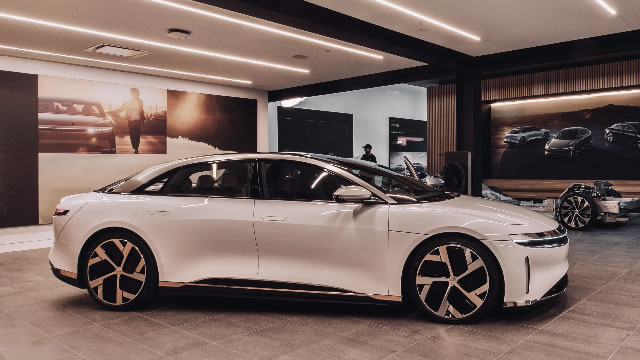
Here's Why Lucid Stock Could Double and Jump to $5
The Motley Fool· 2025-07-19 22:50
Core Viewpoint - The automotive industry, particularly the electric vehicle (EV) sector, is showing potential for growth, with Lucid Motors emerging as a notable player despite challenges [1][10]. Group 1: Company Performance - Lucid Motors has achieved a record delivery of 3,309 vehicles in the second quarter, marking the seventh consecutive quarter of year-over-year delivery gains [3][4]. - The company aims to produce and deliver approximately 20,000 vehicles by 2025, necessitating a significant increase in delivery output in the latter half of the year [4]. Group 2: Product Development - The production of Lucid's Gravity SUV is ramping up, targeting a larger market compared to its luxury Air sedans, with the addressable market for the Gravity projected to be six times larger [5]. Group 3: Financial Position - As of the end of the first quarter, Lucid had $5.76 billion in total liquidity, which is expected to sustain operations until the second half of 2026 [9]. Group 4: Market Sentiment and Future Outlook - For Lucid to potentially double its stock price to around $5, it must successfully ramp up Gravity SUV production, improve cost efficiency, and demonstrate the ability to reach gross profitability [7][8]. - The current sentiment in the EV market is challenging, but there is optimism for a turnaround in 2026, coinciding with the full-scale shipping of the Gravity and the introduction of new midsize SUVs [10][11].